Category: Childrens Health

  • How to Reduce Your Child’s Stress before the Big Game – Full-time Nanny.com

    How to Reduce Your Child’s Stress before the Big Game – Full-time Nanny.com

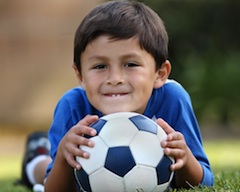
    Just like adult athletes, children who participate in competitive sports can and do experience stress. Whether it is self-inflected stress resulting from a desire to perform well, or stress inflected by well-meaning parents and coaches who want their kids to win, it’s important that adults recognize that kids suffer from pregame stress and that they take the necessary steps to reduce it.

    Be supportive

    Remind yourself that your role as a parent is to be a cheerleader for your child.  Recognize the good things that he does.  Remember that it’s okay if he makes mistakes because if he isn’t making mistakes, he isn’t learning.  Praise him for having the courage to try and remind him that whether he wins or loses you are always in his corner.

    Have your child write about his stress

    According to a study performed at the University of Chicago, students who wrote about stress before taking a test did better on the test.  Sian Beilock, a professor of psychology at the University of Chicago, is one of the leading experts on “choking under pressure”.  Her research has shown that writing about what is stressing a child can help them avoid choking during a big game.  Stress can cause the prefrontal cortex, the part of the brain that retains information about performing a task, to overload and shut down.  When this happens, it is said that the person, “chokes,” or freezes up and can’t perform up to his ability.

    Encourage your child to practice a lot 

    When he practices his skills he will become more confident in his abilities and worry less about messing up.  The more integrated a skill becomes the easier it is to perform the skill automatically.

    Watch what your child eats the day of the game

    Avoid caffeine and sugars before a big game because both substances can lead to feeling jittery.  According to WebMD, a good meal choice is something that includes complex carbohydrates and is low-fat, such as whole-grain pasta, pizza, or a bean and rice burrito.  Eating a few hours before the game will give his body time to start digesting the food and provide the fuel that he needs to perform well. 

    Teach your child to visualize a positive outcome

    Leading athletes visualize themselves performing well during a competition.  Your child can utilize this technique as well.  By visualizing himself performing well his body can bring the vision to fruition.  Help him avoid thinking about failure as that can increase his stress levels.

     Laughter also increases circulation and causes muscles to relax, thereby decreasing the stress that your child feels.

    Encourage your child to take a few deep breaths before the game starts 

    Have your child place his hand on his abdomen just above his waistband and ask him to sigh.  Ask him to relax his shoulders and then take a deep breath in through his nose and feel how his abdomen goes out.  Then count to 3 and blow the breath out through his mouth.  He should be able to feel his abdomen go in.  Repeat this process a few times until he feels calmer. 

    Make your child laugh

    According to the Mayo Clinic in Rochester, MN, laughter increases oxygen to the body, which increases the production of endorphins.  Endorphins are feel-good chemicals released by your brain.  Laughter also increases circulation and causes muscles to relax, thereby decreasing the stress that your child feels.  Laughter may also increase personal satisfaction over time.

    Focus on fun!  

    Remind your child that he is playing this sport because he enjoys it.  Help him focus on having fun and enjoying playing the game.  If he can shift his focus away from what is stressing him out and onto having a good time he will forget all about his anxiety.

    Utilizing these techniques should help decrease your child’s stress and performance anxiety.  If it does not, you may want to look into taking him to a sports psychologist who specializes in sports related struggles.  There are treatments such as cognitive behavior therapy or medications that could help.

    Great post by Full-time Nanny.com check out here site http://www.fulltimenanny.com/

  • Chocolate Milk is good for your recovery!!

    Chocolate Milk is good for your recovery!!

    Dump the after game snacks and hand out the Chocolate Milk. Yes, you heard me right. Believe it or not thats the “theory”.

    When you take a look sports drinks they have very similar attributes to those of chocolate milk. The Indiana University conducted a study in conjunction with a grant from the dairy council. They wanted to put this theory to the test. The results were,

    “As compared to the commercial products tested, (sports recovery drinks), chocolate milk is an effective recovery aid following exhausting exercise.”

    Why is chocolate milk good for youth soccer players after a game?

    The study found that athletes who drank chocolate milk after an intense bout of exercise were able to workout longer and with more power during a second workout compared to athletes who drank commercial sports beverages.

    Researchers stated, “Chocolate milk contains an optimal carbohydrate to protein ratio, which is critical for helping refuel tired muscles after strenuous exercise and can enable athletes to exercise at a high intensity during subsequent workouts.”

    Some points…

    1. Kids don’t drink to “re-hydrate” like athletes. They drink only when they are thirsty or when something tastes good.  Tricking them into drinking more because something tastes great makes sense for any one who has dealt with young athletes.
    2. The addition of protein is good for muscle recovery, growth and refueling.
    3. Milk is naturally high in Potassium, In fact a class of milk and a Banana are wonderful together.
    4. Chocolate milk naturally contains both salt and potassium – key electrolytes that can be depleted during extended exercise.
    5. One cup contains more protein than an a large egg.
    6. Chocolate milk is 85% water, making it a very effective fluid replacement after exercise.
    7. Chocolate milk and other flavored milks have less sugar than sodas and most juice drinks…and pack a whole lot more nutrition. All milk has about 14 grams of natural sugar (lactose) per cup, so if you see 20 grams of sugar listed on the label of chocolate milk, only around 6 grams is added sugar

    Confirming these results was a study by Dr. Janet Walberg-Rankin and co-workers at Virginia Tech.  This study compared body composition and muscle function responses to resistance training in males who consumed a carb drink (Gatorade) or chocolate milk following each training session. Chocolate milk consumption immediately after each workout tended to increase lean body mass and body weight compared to supplementation with carbs. This study clearly shows that carbs-only post-exercise beverages don’t cut it.

    Make sure its non-fat

    The one thing you want to keep however is that you want to select a non-fat or skim chocolate milk.

    • Forty-eight percent of the calories in whole milk come from fat;
    • 33 percent of the calories in 2% milk come from fat;
    • 20 percent of the calories in 1% milk come from fat, and 0 percent of the calories from skim milk come from fat.

    So, when reaching for chocolate milk as your post-workout recovery drink of choice, choose the non-fat version.

    Before you start laughing about handing out chocolate milk after a game, think about the junk in the snack box they’re about to eat.

    Must give this a go!!

    -End

    I always like to hear your opinions and views. If you feel you have something to say, please comment below or email me info@thecoachdiary.com If, you don’t have anything to add then please forward this on to a friend. As always, thanks for reading.

    I’m also on twitter @Coachdiary


  • Austin Speight brought to you By Tsports.ie

    Austin Speight brought to you By Tsports.ie

    Coerver is coming to Newbridge

    Austin Speight is an association football coach and former player. Speight was born in Belfast, Northern Ireland and played football for Stockport County, although he did not play a Football League game for them. In the 1981/82 season he played two league games for Finn Harps in the League of Ireland.
    After retiring from his playing career, he coached at West Ham United, Stockport County, Manchester City, Blackburn Rovers and Crewe Alexandra. He has coached all over the World at the highest level but mainly Australia, Ireland, USA, UAE.

    Coaching Background

    Speight holds the UEFA Pro Licence. He is the UK and Ireland director of coaching organisation for Coerver Coaching & the Pro Soccer International Group.

    Coerver

    When: Sunday 19th February 2012
    Where: Newbridge Town Football Club
    Time: 12 to 4pm
    Price: €50 (Includes Coerver DVD)
    What: Intro talk with Power point presentation
    • Ball Mastery, movement, speed, mental and physical, passing and receiving, small sided games etc
    • De-brief with players
    • De-brief with coaches
    • Q&A
    • Questionnaire

    Biography:

    He has worked at the highest level in England since age 28 as a coach & has worked with some of the games biggest names including David Beckham, Steven Gerrard, Joe Cole, Frank Lampard and Man United latest £20m purchase Phil Jones to name a few.
    Former coach at the following clubs:
    • West Ham United (92-95)
    • Stockport County (95-98)
    • Manchester City (98-99)
    • Blackburn Rovers (99-06)
    • Crewe Alexandra (06-07)

    See Coerver website: http://www.coerver.ie/

    Who are Tsports.ie

    is a new sport suppliers of sports and leisure equipment and sports team wear in Leinster. Our sales policy is a commitment to providing competitive prices, high quality products choice and value in all categories of sport. With over 3,000 products across 3 brands our main brand PUMA we are one of Irelands Premier Sports Equipment Retailer.
    With over 5 years experience we have established contracts, we take great pride in our customer service, and always offer a huge range of products at very competitive prices. Our experienced staff are always on hand to help with any enquiries you may have. Special discounts are available to Sports Clubs and Societies.
    • In house garment printing facility
    • Embroidery service available

    For more information contact:

    Newbridge Co Kildare

    Opening hours: Monday – Friday 9am – 9pm, Saturday 9am – 7pm
    Contact: 045-487794 Mobile: 087-4152278
    Sale Rep: 085-1415746
    Email: enquiries@tsports.ie
  • Irish Kids disappoint the worlds best Academy coaches..

    Irish Kids disappoint the worlds best Academy coaches..

    The reality is that our kids are far less superior to our Iberian neighbours and why? Well the game in Europe is age appropriate and the focus is to develop the kids technically, allowing more touches of the ball and encouraging them to express themselves by taking risks and being spontaneous. They want the kids to enjoy the game and play with a smile, be flamboyant, take the players on….Dribbling is taught at a very earlier age and always encouraged.

    Encourage more touches

    Kids begin learning with smaller size balls; when I lived in Portugal we played and trained with size 2 and size 3 balls (in our spare time we played with a Futsal or Olympic handballs) all the time. Using smaller size balls allows kids to get a feel for the ball and its much easier to control with both feet.It’s also much easier to master a skills. Bigger footballs are heavier and harder to control for younger kids. Futsal has a huge part to play in this country and every child taking up football or Soccer should really begin with Futsal. Kids need to be learning and developing in the game with small sided games, i’e. 3v3s, 4v4s  or 5v5s etc

    Currently our focus is results driven, leagues, cups, top goal scorer, getting the ball forward and playing bigger kids over the smaller more technical and why? Well to win of course…..!

    Why do we have an All Ireland competition for 9 and 10 year old’s…totally daft???!!! 

    What they said!

    This year 3 FCBarcelona coaches, 1 Sporting Club de Portugal Coach, 1 Sporting Braga Coach and Horst Wein to name a few all had the opportunity to watch Irish kids of various ages and abilities and they all expressed the same concerns, Irish kids are not intelligent (Game intelligence) and technically very poor.. “They weren’t able to take instructions in and could not understand the basis of a very simple phase of play”

    I don’t blame the kids, the blames lies with SFAI, The leagues, FAI, The Coaches. The fact is we have leagues at such a young age and this takes the focus from away from developing over winning. Something that could so easily be rectified with a board meeting. We don’t have enough qualified coaches working at the youngest age groups. Although we have some of the best surfaces and facilities in Europe and much better than facilities local clubs in Brazil, Spain or Portugal and out kids are provided with the best equipment and enthusiastic coaches (who give up their time for no pay) in most cases.

    We are not making the most of these beautiful GREEN pitches we have all over Ireland. With these surfaces, its a shame we don’t encourage and coach total football, like our European neighbours. We still look to England for solutions, which we won’t find in a hurry as they themselves are looking towards the Bay of Biscay.

    The Leagues

    If you look at our league structures they are solely focused on winning and fast tracking kids to the adults game of 11v11 players on full sized pitches and what has this done for developing kids in Ireland? Well, not much, we are producing less kids every year for the English market. Yeah we still get the handful that go across the water but as research has shown its not long before they return home.

    A recent report stated in an average year, 50 young Irish footballers are contracted to play with British clubs. But according to a recent study carried out by the Professional Footballers Association (PFA), 85% subsequently fail to make the grade as professional footballers.

    In May I spoke to the coordinator of the SSG of one of Dublin’s biggest leagues, I asked why are we playing competitive leagues as such a young age  and why 11v11 at age 11 even 12? (which is still pretty much the case, we just moved the age group).  I was astonished to hear the negative attitude of this person, he/she was more concerned with the response of what the big DUBLIN clubs would do if changes were made. Not to my surprise, they showed no concern for the kids or even expressed an opinion of youth development.

    We have come along way, but we still have a long way to go….. we’ll get there…one day. Its never to late to make change. The changes are coming but when the game is run by volunteers don’t expect things to happen quickly. Finance will have a big part to play if we are to see nation attitude change towards developing young kids. A player centred approach is what is required from bottom to top.

    Some interesting Stats: 

    • On average 50 kids go to England every year, 18 sign contracts
    • 94% who are good enough to get deals with an English club, don’t get as far as a second contract.
    • 75% come home and never play at League of Ireland level.
    • Liverpool Academy stated: 98% of players who are taken in by the English academy fall out by the time they are 18
    • Only 0.021% of u21’s players currently playing in the Barclays u21 league will make it to the premier league.
    • 10% of players in premier league academies make it to the professional game.
    • Over 4000 registered pros in the UK.
    • PFA estimate Over 700 kids released every year by English clubs as per Oshor Williams of the PFA’s education department, which offers support and training to prepare them for a life outside professional football. Of those entering the game aged 16, two years down the line, 50% will be outside professional football. If we look at the same cohort at 21, the attrition rate is 75% or above.
    • There are about 297 former professional footballers currently in prison. 150 young offenders 147 adults
    • Most are under 25 and around 87% sentenced for drugs offences.
    • 40% of pro footballers go bankrupt within five years of leaving the game.
    • 33% divorced with a year of retirement.

    There are 12,500 players in the English academy system, but only 0.5% of under-nines at top clubs are likely to make it to the first team. There are also suggestions that drop-out rate in football is similar to other sports, such as rugby union, which can lose 76% of players between the ages of 13 and 16.

    Sources ( XPRO,BBC Sport and The PFA)

    -End

    I always like to hear your opinions. Please comment below or email me info@thecoachdiary.com If, you don’t have anything to add then please forward this on to a friend. Thanks for reading. I’m also on twitter @Coachdiary

  • What makes a Champion?

    What makes a Champion?

    Champions come in all ages and sizes. My best friend was a champion. My cousin was a champion. Many I worked with are champions. Many of you who are reading this are champions. Children become what they learn in most cases. And if wer’e lucky, they also learn what they’re taught. But children learn the most by doing!

    The key word here is children. The earlier we begin to teach our little ones correct principles, the more likely that they will grow up living these principles. They will seldom grow apart from them. Their Brains are like sponges, soaking up every little bit of information we teach them.

    The single most important thing to teach children is to believe in themselves. This is the foundation of every champion.

    Appreciation

    Todays society is severly lacking in appreciation. Children will not become little champions if they are not taught to appreciate. Think of all the things that warrant appreciation.

    • Family
    • Health
    • Food
    • Roof over their head
    • Friends
    • Teachers
    • Animals
    • Nature
    • Planet
    • God
    • Pocket Money
    • Clothing
    • Football Coach
    • Equipment
    • Facilities
    • Transportation…the list goes on and on.

    Make every teachable moment count

    ” You yourself must be teachable if you are to teach” – Audrey Hunt

    Humility is being teachable. We can be confident, knowledgable, intelligent and still be humble.

    Real champions have humility and are teachable. They set high standards for themselves. When they fail (and they do), they pick themselves up and begin again. A  piano student once asked his teacher how many times must I practice, the answer is always the same – ” until you get it right.” The same goes for any sport and including football.

    I encourage all kids to become champions, I push them to better themselves and I would always encourage them to give it their all, leave nothing at home. They are not doing it for me they become the best for themselves and no-one else.

    “It doesn’t matter how many times we are given good advice, it won’t help us one bit if we do not have a teachable spirit”

    Are you up to it?

    If you can answer yes to the following questions, you then can be sure you are teachable and in return able to teach your children.

    • Do I admit it when I’m wrong?
    • Do I become defensive when I’m criticised?
    • Am I open to new ideas?
    • Do I ask questions?
    • Am I a good listener by listening more than talking?
    • Do I have self-discipline?
    • Do I give up easily?
    • Do you bring out the best in others?
    • Am I self-serving?

    There is no greater calling than that of a teacher/coach. Teacher, coaches can influence peoples lives the most. Some children, its all they have and these people can make someone feel loved and accepted, when no one else did.

    Being a teacher/coach with the right intentions is one of the greatest gifts children can receive..being one with the wrong intentions can literally crush a child!

  • The Facts: Lay off the kids and let them enjoy the game

    The Facts: Lay off the kids and let them enjoy the game

    In an average year, 50 young Irish footballers are contracted to play with British clubs. But according to a recent study carried out by the Professional Footballers Association (PFA), 85% subsequently fail to make the grade as professional footballers.

    I don’t know about the rest of Ireland but it makes me laugh when I hear 11 years old being groomed for Clubs in the UK and told that they will be getting pro contracts when they turn 16…that 5 years away! Most player can change every 6 months not to mention that they still have to hit puberty. I wish some of these so called adults who are meant to be guiding this young and sometimes vulnerable kids would just back off and let the kids enjoy the game without the added pressure of trying to become a professional footballer. At the end of the day its all about money and the next best thing!

    The facts don’t lie and some of the most promising young footballers never even get a change at league of Ireland never mind the UK. Players should be focusing on developing themselves, learning the game and not trying to compete against a other team members or player from another club. Every young sports kid should be trying to better themselves both in sport, education and life.

    Expectations must be directly associated with the age and maturity of the child, to often we are asking our players to do things that fully grown men do and then we ridicule when they can’t perform they way the pros do. Unfair and difficult expectations bring possible negative results. ( failure). The child’s self esteem is built on his successes, not his or her failures.

    Some interesting Facts

    • In 2009 their were around 390 young players contracted to UK clubs and beyond
    • The main issues facing young players are homesickness, Injury, Career Advice (Or Not) and Disciplinary Issues.
    • Most players released by clubs are left out in the cold and generally have to sort out his or her own future.
    • A percentage do not return home to Ireland because they feel they will be perceived as failures.
    • 85% of all young players who sign  pro contract at 16 will not be playing their trade at that club when the turn 19. Many are forced to play non-league or look for a career outside of football.
    • Most have neglected their education and have little or no skills.
    • Trials are permitted but they must fall between the 14-16 age bracket and during certain times of the year
    • In 2010 the FAI players Support Service and High performance Units jointly hosted 2 information seminars for parents and guardians of players likely to pursue a pro career abroad. The first one was attended by 36 parents of players and the second 21 . In total 57 players.

    The facts don’t lie

    and we as coaches must not be filling children and parents head with false expectations. Most kids who make the grade, were never talked about at a young age and went under the radar right up until they made their professional debuts.

    Most of these players were late developers and had proper support and guidance by their parents, coaches and guardians at a very young age. They didn’t live with the pressures and expectations that some young talented kids have to live with.

    They receive encouragement in a consistent manner and were thought values thus allowing to develop confidence in themselves and do better in life.

    Research: UK Welfare Officer DFA Report

  • Sport in Ireland

    Sport in Ireland

    I recently read a report by the sports council on School Children and Sport in Ireland. These are some of the excerpts from this report.

    The Facts – Main Findings of the ERSI School Children & Sport in Ireland

    The main health benefits commonly associated with physical activity for children are improved increased academic performance, cardiovascular performance, strengthening of the musculoskeletal system, reduced stress and anxiety, enhanced self-esteem, reduced risk of chronic disease such as hypertension, type 2 diabetes, obesity and cardiovascular disease.

    The relationship between lack of physical activity and obesity has become a particularly important issue in recent years because of concerns about the rapidly rising incidence of obesity among children and adults (National Task Force on Obesity, 2005).

    Children’s Physical, Personal, Social and emotional Development

    In addition to its benefits for health, sport also makes an important contribution to children’s physical, personal, social and emotional development, a fact that underpins the place of physical education in the school curriculum (see, e.g., Department of Education and Science, 2003). While the contribution of physical education to children’s overall development is widely recognised, it is often lamented that sport and physical education are the poor relations of the school curriculum and receive less time and attention than examination subjects (MacPhail and Halbert, 2005).

    However it has also been recognised that, whatever the role of PE in schools, extra-curricular sport is a central focus of the life and identity of many schools and plays a major role in defining what Lynch (1989) calls their ‘hidden curriculum’ – the ethos and informal structures and processes that play a large role in defining the character of schools and the overall educational experience encountered by students (see also Lynch and Lodge, 2002).

    In order to appreciate the role of sport in schools and thus in children’s education and development, it is therefore necessary to look beyond PE and take account of extra-curricular sport and the sometimes central significance it has in school life.

    The surveys on the Health Behaviour of School-aged Children generally found lower levels of physical activity: less than 40 per cent of girls and just over 60 per cent of boys reported that they exercised four or more times per week (Kelleher et al., 2003, pp. 64-65; see also Hickman et al., 2000).

    Indirect evidence suggests that children are less active now than their counterparts of 50 years ago (Boreham and Riddoch, 2001).

    As the Surgeon General in the United States has pointed out, a typical fast food meal consisting of cheeseburger, French fries and soft drink (1,500 calories) would take 2½ hours jogging at 10 minutes per mile to work off, and one jelly-filled doughnut is the energy equivalent of one hour of walking at a moderate pace (Department of Health and Human Services, 2001).

    At primary level,

    PE is delivered by class teachers rather than specialists. Primary teachers often undertake a PE element in their basic professional training or in-service training in PE but the general perception is that primary teachers are poorly equipped to deliver PE (MacPhail and Halbert, 2005, p. 300). Other problems at primary level include the lack of facilities and insufficient time, all of which lead to a general under-provision of PE at primary level (ibid.; see also National Children’s Office, 2004, p. 25).

    The remit of sports policy extends over the whole field of competitive and recreational sport for the entire population. Its key aims include increasing public participation in sport, raising performance levels in sport and supporting high level sports competition (Irish Sports Council, 2003).

    At the same time, increased reliance on sports clubs and the funding they receive under sports funding programmes as a means to support PE and sport in schools may have drawbacks. The most obvious is that the sports that some people view as already too dominant in schools – that is, team based competitive sports – may become more dominant still. Thus, for example, the Youth Field Sports programme is wholly oriented to GAA games, soccer and rugby, typical examples of the kinds of sport that cause concern in this regard. A further possible problem is that supports to schools delivered through local sports clubs could be supply driven rather than demand led: they will be distributed not primarily on the basis of the needs of schools but on the basis of the capacity of sports clubs to deliver – and that capacity might be in greatest supply in better-off areas where sport in schools may be already reasonably well catered for.

    The minimum amount of moderate-to-vigorous physical activity now widely recommended for young people is 60 minutes per day on all, or most, days of the week.

    Indicates relatively low levels of physical activity overall, especially among girls (we must keep in mind here that the data for weekdays refer to an average over five days, which might often entail a combination of some days with a lot of exercise and other days with little or even none). Averaged in this way, only 49 per cent of boys and 31 per cent of girls exceeded the one-hour exercise threshold per weekday, while 4 per cent of boys and 4 per cent of girls did no exercise at all on those days.

    Attitudes to Sport – Page 38

    Students were asked two sets of items that tapped into their attitudes to sport. The first set, which asked for their responses to a set of statements about sport that were generally favourable in tone, is displayed in Table 3.15. The striking feature of the students’ attitudes revealed by these items is how positive they are. The vast majority of students indicate that they enjoy PE and sport; they think they are good at sport, their families encourage them to play sport, and they consider themselves as sporty types. A smaller majority agrees that that they enjoy sport only if they are doing well at it, but one-third disagrees with this view. Attitudes are more divided in connection with playing when there is lots of pressure to win: half the students like to play under that circumstance but 43 per cent do not.

    Full statements – ‘I enjoy PE and sport in school’; ‘I enjoy doing sport and exercise in my leisure time’; ‘I am good at sport and exercise’; ‘My family encourages me to do sport and exercise’; ‘I only enjoy sport and exercise if I do it well; ‘I am a sporty type of person’; ‘I like participating in sport where there is lots of pressure to win’.

    Page 39

    A second set of attitudinal items examined students’ feelings about a number of possibly negative aspects of sport (Table 3.17). The majority of students were not particularly bothered by most of these items, though substantial minorities had problems with most of them. For example, 29 per cent minded getting hot, sweaty or dirty either ‘a lot’ or ‘a bit’ and 38 per cent had similar attitudes to playing sport in bad weather. The one aspect of sport that a majority of students did not like was ‘If you get left out because you are not good enough’: one-third of students minded this a lot and a further quarter minded it a bit. Thus, the risk of feeling excluded in sport stands out as a widespread negative concern in what otherwise is a generally positive picture.

    School Children & Sport in Ireland – 5th and 6th Grade – Page 60

    Principals in primary schools report that the vast majority of schools provide PE classes but the number of those classes per student is low. As Figure 5.1 shows, 62 per cent of schools provided timetabled PE classes once a week and 31 per cent did so two or three times a week. Of the 137 schools sampled, only 3 held timetabled classes less than once a week, and 3 held classes four or more times a week.

    Table 5.1 shows the range of activities children undertook in PE, based on a question to children about the sports they played in PE over the past year. Soccer was the most common, having been played by 72 per cent of children, and Gaelic football was next, with 69 per cent. Basketball was the most common sport among girls, having been played by 71 per cent of girls. It is notable that the proportion of primary school students who recorded swimming as an activity they had undertaken in PE over the past year (53 per cent) was much greater than the corresponding proportion among second-level students (13 per cent).

    As Figure 5.2 shows, the main reason that the primary pupils give for not participating more in sports is the feeling that they are already doing enough. This is the case for both boys and girls (58 per cent of boys, 43 per cent of girls). Not having enough spare time and the school not offering the sport are two other reasons but on a much lesser scale. The results on this question indicate that there is no general feeling of discouragement with sport among the pupils, nor that girls feel very differently on this question from boys.

    Pupil Teacher Ratios and Teachers involved in Sport

    Table 5.6 shows the numbers of teachers and students in the schools in the primary school sample and the ratios between them. The pupil-teacher ratio in primary schools is on average 16 pupils with a maximum of 26. Out of a total average staff of 9 teachers per school, 6 were involved in sport with the pupils. There are, on average, 25 students per teacher involved in sport.

    Travel

    As Table 5.7 shows, the majority of Irish primary school children are driven to school, either by car (55%) or by bus (18%). Almost one in four children walk to school and less than one in twenty cycle to school. Of the children who walk or cycle to school the vast majority spend a quarter of an hour or less doing so (89.1 per cent for walking, 87.7 per cent for cycling). Thus, as in the case of second-level students, it is clear that travel to school is not a significant source of physical activity for primary school children.

    Television viewing and other Extra-Curricular Activities

    Table 5.9 shows that high levels of television viewing are common, with one in five boys and almost one in six girls watching more than four hours a day during the week and somewhat higher proportions doing so at the weekend. One in ten boys watches six hours or more television a day at weekends. The largest groups of children watch two to three hours of television per day, both during the week and at weekends.

    Over Weight and Obesity -School Children & Sport in Ireland (p.73)

    This chapter has been concerned with overweight and obesity among students in the second-level and primary schools samples. Among second-level students, 4.5% of boys and 3.8% of girls were found to be obese, and a further 15.4% of boys and 16.6% of girls were overweight. Taking these two categories together, approximately one in five second-level students was either obese or overweight. In fifth and sixth classes in primary schools, levels of obesity and overweight were of a broadly similar magnitude: 3.8% of boys and 4.3% of girls were obese, and a further 15.7% of boys and 15.8% of girls were overweight.

    Among second-level students, 4.5 per cent of boys and 3.8 per cent of girls were found to be obese, and a further 15.4 per cent of boys and 16.6 per cent of girls were overweight. Taking these two categories together, approximately one in five second-level students was either obese or overweight. In fifth and sixth classes in primary schools, levels of obesity and overweight were of a broadly similar magnitude: 3.8 per cent of boys and 4.3 per cent of girls were obese, and a further 15.7 per cent of boys and 15.8 per cent of girls were overweight.

    Obesity Conclusion

    When we examined the relationships between measures of sports participation and physical activity on the one hand and body-mass on the other, we found no strong patterns of association. This is in keeping with the findings of research in other countries, where relationships in cross-sectional data between physical activity and risk of overweight or obesity have sometimes been found to be present and sometimes not, and when present, have usually been found to be weak. The lack of a robust relationship between physical inactivity and risk of obesity in research findings may arise either because measures of physical activity do not adequately capture real variations in energy expenditure or because variations in energy expenditure are too small to counteract the effects on weight of other factors, of which diet is likely to be the most important. There is some indication from our data that very high levels of exercise, well in excess of the minimum levels recommended by international authorities, may have an effect on body mass. This possibility has recently been raised in international discussion of the adequacy of existing recommendations regarding minimum levels of physical activity required to avoid weight gain, but we would need more refined measures than those available to us here to explore this question further.

    Main Findings of the ERSI School Children & Sport in Ireland

    Sport in Primary School

    As in second-level schools, PE is widely provided in primary schools, but usually only once a week. Again echoing the situation in second-level schools, extra-curricular sport in the school and sport in clubs outside the school are more important than PE as outlets for physical activity among children. Team sports dominate the activities undertaken in the school – and here too, as in second-level schools, basketball is an important sport in the school but is much less prominent in the non-school context. Primary schools differ from second-level schools in the prominence of swimming and dance in the activities they undertake, both in the school and out of it (dance in this context presumably often means Irish dancing).

    Primary schools seem to be worse off than second-level schools for sports facilities – they are more dependent on off-site facilities (except for basketball) and generally have access to a narrower range of facilities. Over 60% of children in fifth and sixth class in primary school watch two hours or more of television per day. Of the factors in children’s lives that were measured in the data, parents’ participation in sport had a positive effect on children’s participation in sport. So too did participation in other extra-curricular activities such as music or singing classes, suggesting that the more active children tended to be more active across a number of domains. The level of sports facilities in school had a positive effect on sports participation in the school, while television viewing had a negative effect on sports participation outside the school.

    To see the full report go to http://www.irishsportscouncil.ie/