Category: Irish Grassroots Football

  • Sign Up to The Silent Sideline Weekend

    Sign Up to The Silent Sideline Weekend

    Please support the campaign to help improve participation in Youth Sports.

    Sign Up Now

    Weekend of 29th & 30th March 2014

    Listen to the first interview about the SSLW by clicking on this link> ‘GAME ON’ 2FM 

    Fill out my online form.

    ====                                                                                                                                  

    I always like to hear your opinions. Please comment below or email me info@thecoachdiary.com If, you don’t have anything to add then please forward this on to a friend. Thanks for reading. I’m also on twitter @Coachdiary

  • Competing To Get Better and Better…

    Competing To Get Better and Better…

    The most important thing to remember is that you must keep the fun in coaching. You’re sole aim is to make the kids you coach fall in love with the game. When kids enjoy playing, they will compete at their optimal level.

    So is competition a good thing?

    I believe it is. I also believe that with young kids (certain ages) it makes no difference if they are playing a friendly game or league game. In fact some of the kids I coach (u13s), don’t ask until the end of a game if it was league or just friendly. With competition I believe It’s about finding out how well you can do something under a certain type of pressure. For me, It’s about getting better with each and every game or training session. Everyone should compete to succeed; to be the best you can be. Absolutely it’s about winning, but performance is much more important. Improving 1% each and every-time you train.

    ‘The motivation comes from a belief that almost anything can be mastered if you’re willing to put in the hours to master it. If you’re going to do something, do it as best as you can’

    Self-Competition provides more motivation than Competition with Others. I always say to the players, that working hard to get better and better is something you can control. Getting better improves performance, if each and every player is training to improve with 100% desire then team performance also improves. I can only control me – being the best I can be. I am the only thing completely within my control. No one else can control that.  To have a good outcome, a person has to focus on and commit to doing the work that is needed to improve.

    ‘Yes, it is also about winning. Actually, it’s about wanting to win, working to win and preparing to win’

    As a coach, I always want players who are good competitors and great learners. Some players who are gifted, might not be challenged and sometimes can be hard to get motivated. They can even be lazy. The best players will Train how they play, always with intensity and always with desire. They won’t accept anything less. Working hard in training always carries over to a game. In fact the harder you work in training makes the game become much easier. These players can handle anything.

    Some Parents Ruin Kids Sports

    For many years now competition has become so important to adults, so much so that we have allowed our demands and winning mentality control the kids game.  Our culture has embraced a “win-at-all-costs” mentality. Kids and coaches are under so much pressure to win today, that the fun has been taken away. The professional game philosophy is now controlling a recreational sport. Bad sportsmanship, adult egos, verbal abuse, bullying and even player burn-out are rampant in the game today. Children no longer feel like they have the ability to learn by themselves. Adult control the game so much, that the kids are now believing that they can’t learn without adult involvement.  ‘

    ‘It becomes unhealthy when the competitor is forced to compete or feels that they have to compete in order to gain love or status within the family.’

    Competition can be healthy when it provides feedback to kids about their performance and improvement, when winning is not the sole or primary objective, and when kids get to learn about themselves under challenging situations. Under these circumstances, competition can teach invaluable lessons our children do not typically learn in the classroom.

    Kirk Dwyer, Shiffrin’s coach and headmaster of Burke Mountain Academy puts it: “She truly believed that the focus should be on the process of getting better and not race results. She does that to this day. Everyone on the World Cup says they want to race like they practice, but how many actually do it? Mikaela can because she’s not thinking about trying to win. She’s thinking about getting better.”  Mikaela Shiffrin is a World Cup alpine ski racer with the U.S. Ski Team

    Competition-Quotes-Competitive-Sports-Winning-Quote-Picture

    The pressure to win is so much part of youth sports it’s upsetting. Every year we lose lots of really talented kids, even coaches and referees step away because of the nonsense from adults on the sidelines. We are also seeing a great many kids drop out of disengage from sports before they reach secondary school, which is when we really want them staying in sport. Again we go back to not having fun, for the number one reason why. And when we go further into the stats the pressure to win from adults and coaches alike it whats making it less fun to be involved with. If we look at why officials leave again the pressure win. The abuse they get for making mistakes that may or may not have cost the game.  We have lost all perspective about what is important for children, and we are teaching some really negative things at a very young age about playing sports.

    Solution to the problem? 

    Competition can be a double-edged sword for kids, promoting positive values under the right conditions but creating negative environments that are demotivating under the wrong ones. Coach to keep kids playing. Coach with the intention to teach, to make the players better. Enjoy how you Coach and transfer that into how the kids play. Competition should be fun for the kids, after all we want them to compete because that’s part of the game – winning and losing. However we must teach our kids that being a real winner involves more than just the result at the end of the game.

    1. I value respect and I expect the kids I coach to respect each other. We must make sure our youth are respectful at all times to everyone involved. I will not tolerate disrespect or abusive language towards anyone.
    2. Honesty is another value. Players should be taught to be honest and show sportsmanship at all times. Play by the rules.
    3. Working hard is also another value of mine, children must understand that to get better you must work hard.
    4. Win or Lose you must always be gracious including those who didn’t win. You learn more in defeat then you do in winning.
    5. Be thankful to the coach and the volunteers  who have helped them along the way.
    6. Never cease to stop learning. You can never learn enough.

    The act of competing and the result of the competition are two different things. You can compete to your optimum level and still lose. In knowing you did your best for the team still makes you a winner. A player should not be judged on the weekends game, that is only one occasion of many. Judge him on how hard he/she worked to improve.

    It is critical that coaches, educators, and parents work to teach kids these valuable lessons from competition. That way, win or lose, our children will learn, grow, and be better prepared for life, which (like competition) provides highlights, adversity, and continual opportunities to play well with others and treat opponents with dignity and respect.

    So, this weekend and every weekend let’s not forget to encourage them for their efforts, team work, sportsmanship and skills. No matter what, we will still love our kids just as much.

    GET INVOLVED

    SILENT SIDELINE WEEKEND 29-30 MARCH 2014 

    ==

    I always like to hear your opinions. Please comment below or email me info@thecoachdiary.com. If, you don’t have anything to add then please forward this on to a friend. Thanks for reading. I’m also on twitter @Coachdiary

  • Physical Literacy

    Physical Literacy

    It seems obvious to me but today children don’t play like they did in previous generations.

    The development of fundamental movement skills and fundamental sports skills that permit a child to move confidently and with control in a wide range of physical activity – The Canadian Sport Centre(Higgs, Balyi, Way, Cardinal. Norris and Bluechardt 2008)

    In October 2013 I had an interesting conversation while working with with RCD Espanyol academy coach Enrique Mattheo. He had recently noticed that their youngest academy groups needed more coordination and balance training compared to when he began at the academy. His explanation was simple. Due to technology, environmental and safety restrictions children are no longer out doing what children used to do ie free play, climbing trees. Before, children would start at the academy already possessing a certain amount of physical literacy. This is not the case anymore.

    Movement is a fundamental part to being human. It is essential for good health. Ability to move was at one time a daily part of any child’s life. A child with good physical literacy will have the competence and ability to use a variety of fundamental movement skills and confidence to apply these skills in different situations. In modern society it seems that this is unlikely to occur naturally. There was time when most children progressed into adult life with sufficient levels of physical literacy. Freeplay and self organised learning environments such as street football took care of this. Organised sport seems to be the only time we can guarantee our children the chance to learn, practice and develop their movement skills. Seemingly this is proving to not be enough.

    The ability to carry out fundamental movement skills has many benefits. The obvious one is physical, such as fitness and motorskills. Cognitive skills in the area of understanding and problem solving along with social, emotional and motivational development also benefit. If children begin playing football with the ability to execute fundamental movement skills, it will be easier for the coach to contextualise these skills and help the child apply them to the sport. This in turn will give the child confidence to be creative when applying a skill. By being creative we mean that the child will invent new solutions to problems, thus working with the physical (motorskills) and the cognitive (decision making) all within a social context.

    ‘A child with good physical literacy will have the competence and ability to use a variety of fundamental movement skills and confidence to apply these skills in different situations.’

    Who is responsible for developing physical literacy?

    We are social learners, we learn from what our environment offers us. Many think that learning happens only in adult constructed environments (school, organised sport) and what is worse, our children are starting to believe it. Physical education and organised sport play a vital part in the process but they should not be seen as the only opportunities to learn and practice. Parents and adults should encourage a more spontaneous attitude to sport and free play.

    Can it be argued that we are overprotecting our children?

    Many a sporting childhood is driven by adult supervision with adult competition rules. This can mean that the only time a child plays a sport is when it is organised. One solution to this problem and to encourage development of fundamental movement skills is that children should be encouraged to engage in a variety of sports. Many parents feel more secure with early specialisation but why place the burden of athletic development on one sport at such a young age? Taking in to account the problems Enrique experiences at the RCD Espanyol academy, can we say that this is becoming a standard situation that we all must deal with? Therefore in anticipation of future problems perhaps a fitting and relevant model for today’s children could be “Early exposure with delayed specialisation”. Early selection of talent runs the risk of making the player pool smaller. What if we delay high volumes of training at an early age and encourage a more spontaneous attitude to sport, indeed a variety of sports and delay specialisation. Could it be that the longer you delay your selection of talent the more efficient your system?

    Two Studies

    A study at Essex University led by child fitness expert Dr Gavin Sandercock was very revealing. A study group of 215 10 year olds in 2008 were compares with 309 children of the same age in 1998. It was found that in the 2008 group

    1. Arm strength fell by 26%
    2. Number of sit ups performed fell by 27.1%
    3. One in 10 children could not hold their weight when hanging from bars compared to one in 20 in 1998.

    What was interesting with this study is that both test groups had the same body mass index (BMI). So giving their declining strength, the 2008 group were likely to have more fat and less muscle than the 1998 group.

    A study from GIH Stockholm found that the average 16 year old had lost 10% of the Vo2 Max compared with 10 years ago which indicates lack of movement and sport participation.

    Post by Swedish Educated UEFA A Coach & Sports Director at EspanyolFootball.com Mark O’Sullivan. You can follow Mark @markstkhlm

    ==

    I always like to hear your opinions. Please comment below or email me info@thecoachdiary.com. If, you don’t have anything to add then please forward this on to a friend. Thanks for reading. I’m also on twitter @Coachdiary

  • It’s Our Turn To Talk

    It’s Our Turn To Talk

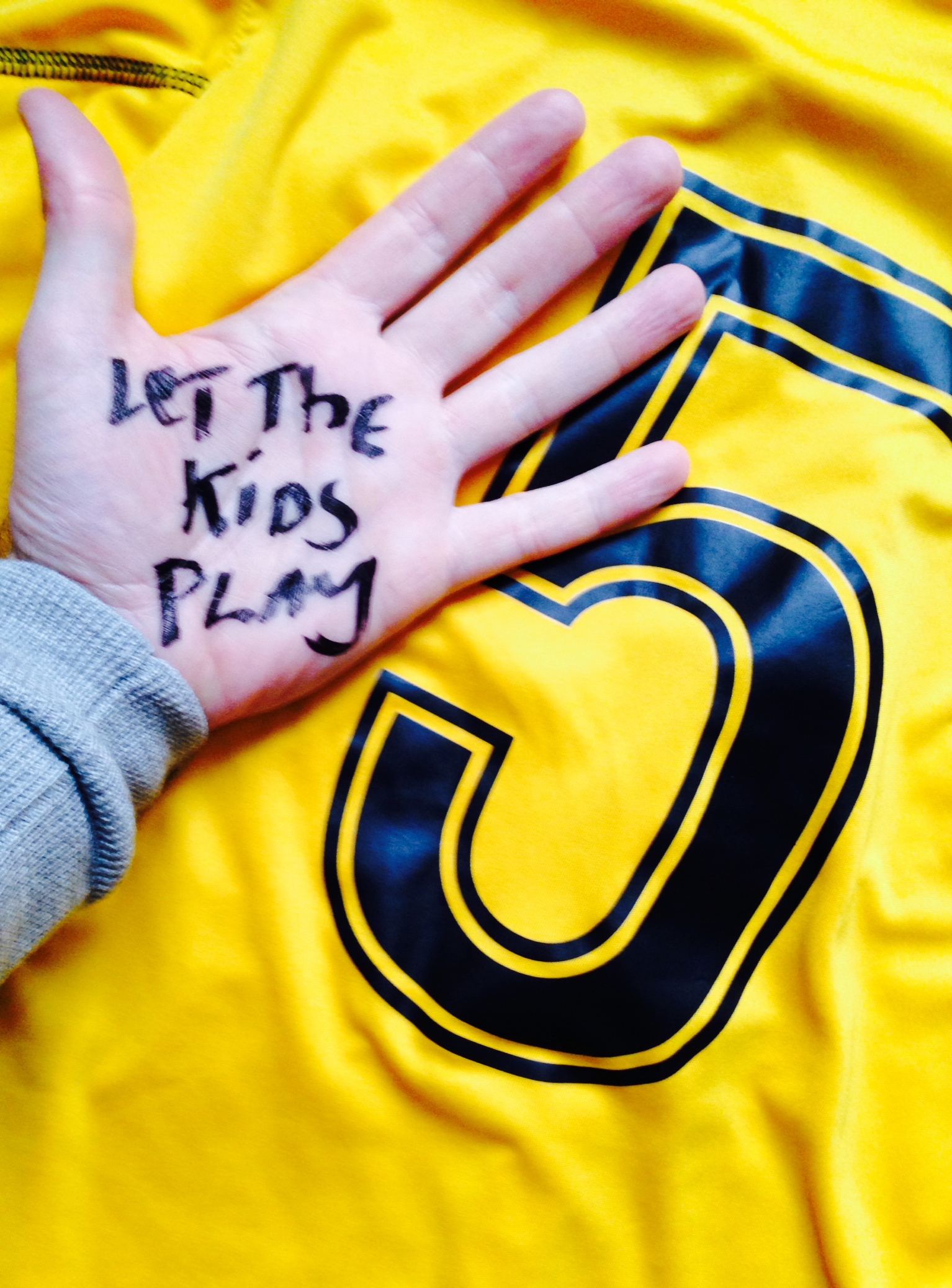
    Our hands say many things about us,  Remember, when as a child we would write things that we didn’t want to forget on our hands, – these messages were important to us as they had significant meaning. Science shows that your brain works differently when literally writing something, and recent studies, show that kids learn more effectively when actually forming words with a pen or pencil. Thats way we feel it just as important to write your feelings down.

    ‘It’s our turn to talk’ 

    We are always asking our players to communicate with each other on the pitch, however I have noticed over the last few years in coaching that it is virtually impossible for a child to communicate if 5/6 adults are screaming instructions at him or her. Support the Silent Sideline Weekend

    We are looking for kids who play sport to start communicating how they really feel about participating. How they really feel about all the instruction they get from adults each and every weekend. We want to hear their voices and this will be a time when they are allowed to talk.

    So what is this really about?

    Well, we are re-creating these messages; meaningful messages coming from the kids and written by kids. Only, they will be using their hands & arms to communicate how they feel about sport (See attached pic). These messages will make us adults realise that at the end of the day, it’s just a game –  a game played by children for children at their playground.

    ‘If you think in your mind, that you are coaching bunch of learners, then the process changes. The kids will have to leave training having learnt something from you’ – Mike O’Toole (Photographer & Coach)

    What do we need?

    We are looking for children age 6 to 19 both boys and girls across all sports codes to partake in this exercise. This is there opportunity for them to be listened too, it’s time for them to have their say.

    ‘Many think that learning happens only in adult constructed environments (school, organised sport) and what is worse, our children are starting to believe it.’ – Mark O’Sullivan

    These messages will come from the kids and written by the kids. The images and video content will then be collated send around the world via social media, we hope to create a ripple effect and inspire other nations to do the same. If you want to get involved, simply follow the process below and we will be in touch.

    Ideally I’m looking for teams in the Fingal Area, however it’s really about the messages from the kids, if you want to get involved just enter your details below.

    Any questions, just ask!

    Photography by Mike O’Toole

    Simply complete the application form below and we will be back in touch.

    Fill out my online form.

    ==

    I always like to hear your opinions. Please comment below or email me info@thecoachdiary.comIf, you don’t have anything to add then please forward this on to a friend. Thanks for reading. I’m also on twitter @Coachdiary

  • SHHhhhh ‘just, let them play’ Silent Sideline

    SHHhhhh ‘just, let them play’ Silent Sideline

    I first heard about this idea some years back even before I set up this blog. I believe it started in the US. It’s something I have been meaning to try and push with all the leagues across the country for some time now and I had originally posted something back in 2011 I think. This year I’m going to make this happen, one way of another but I will need your help.

    Too often in kids sports; adults, parents and coaches become overly vocal in their approach to working with young athletes. However well-intentioned some of them may be, the results are not always positive. With a Silent Sideline Weekend, the coaches and parents are asked to keep talking to a bare minimum on the sidelines. One coach from each team will be given the task to instruct (not during the game), whilst everyone else stays silent.

    ‘If you don’t like something, change it. If you can’t change it, change your attitude.’ – Maya Angelou

    Supporters are allowed to clap to show their enthusiasm but adults/Coaches are restricted from coaching their kids from the sideline. This is a weekend when kids can make decisions for themselves, without having adults shout 5/6 different instructions at them. When adults scream from the sidelines they’re not just invading the children’s playtime, they’re preventing children from learning the game in a natural manner. Sideline screaming is just ignorance, we need to educate adults on stages of development. We expect far to much from children at a very young age. We must not forget, we are talking about children not adults.

    How does it work? 

    • No Shouting Instructions.
    • No Shouting at the ref.
    • No Shouting at the opposition.
    • Absolutely No shouting when a player is about to receive to ball or pass it.
    • Silent at all times.
    • Kids voices heard everywhere.

    With the sidelines quiet, players have the chance to make their own split-second decisions on the pitch and learn by them. Instead of being distracted by the stream of noise that usually exists, the kids on the pitch get the opportunity to communicate with one another, deciding who will take the throw ins, the goal-kicks, free-kicks or the corner kicks etc. This also gives them time to think and focus on what they are about to do.

    Why? 

    The focus of the weekend is not to take the atmosphere out of the kids’ game but instead try and encourage less coaching from the line. I want every team in Ireland in organised leagues in ever sport to conform to the ‘Silent sideline’ weekend. Not everyone is going to agree with this idea, but one thing is for sure the kids will!

    ‘You should hear children’s voices, not hear parents SHOUTING, ‘Come on ref, what was that?’ ” he said. ”We want to have a positive environment for the kids to play in.’

    I’m aware that many teams have some great coaches & parents who may already give minimal instruction and focus on the positives in a game more than others. This exercise is to highlight the over coaching from adults on the sideline across kids sports in Ireland and mainly soccer. I think a lot of kids will benefit from this even if they are use to hearing encouraging words every weekend.

    You can be sure that one population that favours the silence is the referees. They will love this, and I’m sure they would love to have it every weekend.

    What’s Expected from Participants?

    • To get all clubs and leagues to sign up across the whole of Ireland and other countries.
    • Clubs to manage this initiative internally with our support and the support of their members.
    • Clubs should select 2 sideline supervisors to keep people calm and explain the process.
    • Each club should have a silent sideline ambassador.
    • Absolutely NO shouting or directing from the sidelines
    • Coaching staff to speak to players at halftime and when making changes ONLY.
    • Clapping allowed for goals scored and effort for both sides.
    • No directing or advice from adults at anytime.
    • Absolutely no questioning of referee in charge of game at anytime.
    • Rope the pitches and provide a designated area for parents.
    • Kids voices are all we want to hear.
    • Lollipops could be a fun way of helping people stay silent!
    • PDF flyer available on request.

    Can you imagine a weekend when kids voices were heard everywhere……..I can!!

    ‘just, let the kids play’

    Lets make this happen; let’s start talking about it….!! If any leagues and/or club administrators are reading this, please get in touch. I have just emailed you all.

    If this doesn’t make you think about the damage we are doing to kids every weekend, then maybe A Players Message To Parents will!

    Please LIKE this post or COMMENT below if you’re in!

    Weekend of 29th & 30th March 2014

    Listen to the first interview about the SSLW by clicking on this link> ‘GAME ON’ 2FM 

    Fill out my online form.

    ====                                                                                                                                  

    I always like to hear your opinions. Please comment below or email me info@thecoachdiary.com If, you don’t have anything to add then please forward this on to a friend. Thanks for reading. I’m also on twitter @Coachdiary

  • How Children Learn

    How Children Learn

    It is so important to understand how children learn, so we can match their opportunities to their strengths. In today’s world, children are taught to start everything we learnt, much much earlier. They are also given instruction at a very young age, everything they do is organised & planned. In many ways, we are teaching them that they can’t learn by themselves nor to we provide the environment for them to learn alone or even learn with play.

    We can set high expectations while remaining true to developmentally appropriate practice. Other research finds imaginative play helps children develop self-regulation skills, social skills such as problem solving and communication, and cognitive flexibility and creativity. Here are the key elements to how children learn:

    • Children Are Good Observers
    • Children Respond Well to Open-Ended Questions
    • Children Are Researchers
    • Children Benefit from Positive Models
    • Positive Suggestions Guide Children
    • Children Learn Through Play
    • Playing For Long Periods, Develops Persistence 
    • Children Learn By Visualising
    • Children Learn By doing
    • Children Learn From each other
    • Children Learn From Making Mistakes
    • Children Learn With Support

    Bring Back Play and Creative Learning

    We have to remember that children like to do, not watch. The more hands-on experiences children have, the more curious and capable they become and, best of all, the more joy they feel at learning “a number of things”. When they are successful as something, they will be the first to show you.

    ====

    I always like to hear your opinions. Please comment below or email me info@thecoachdiary.com If, you don’t have anything to add then please forward this on to a friend. Thanks for reading. I’m also on twitter @Coachdiary

  • COACHTALK: Footblogball with Jesus Enrigue Gutierrez Major ‘Guti’

    COACHTALK: Footblogball with Jesus Enrigue Gutierrez Major ‘Guti’

    This is an interview by Mark O’Sullivan with Jesus Gutierrez.

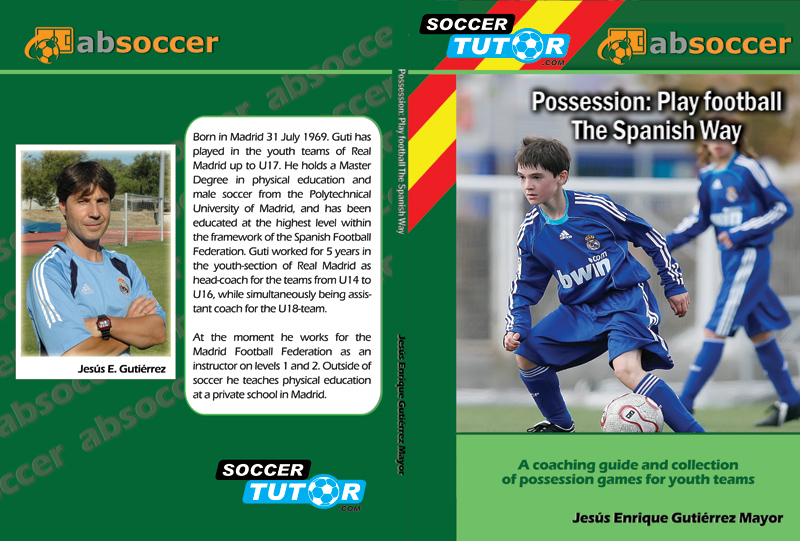
    Guti is educated at the highest level within the framework of the Spanish Football Federation. He worked for 5 years at the Real Madrid academy as head coach for the U 14- U 16 teams and is currently an instructor for coach education with the Madrid Football Federation.

    His brilliant book – Possession: Play football the Spanish way is an insight into the philosophy of coaching young players, dealing with the practical and theoretical side of developing game intelligence. Mark started, by asking him about his work with his various football organisations.

    FOOTBLOGBALL: Can you give us a brief account of your work in Futbolconcept and as technical director in Escuela Deportiva Moratalaz?

    JESUS GUTIERREZ: Together with my 4 partners we have created a company with the aim to improve the coaching. We have our own approach to teaching football, we call it “TRAINING BY CONCEPTS”. We have developed special software for coaches, including a lot of training tasks that follow our ideas. It will be available in English really soon. My position in the company is Director of the International Department.

    In relation to Escuela Deportiva Moratalaz, I’m the Technical Director. We are a very humble football school here in Madrid. We work with almost 700 players in 35 teams, with ages between 4 and 5 up to senior. We have an agreement with Real Madrid, so they can have first choice with our best players. My job is coordinating the coaching, following our “Training by Concepts” philosophy and being sure that everyone is working in the way we want and according to our Model .

    FOOTBLOGBALL: Research suggests that young players only retain 18% of concepts that are learned passively but 68% of what which is learned actively. This implies a more player centered approach rather than coach centered one. Can you suggest how you can achieve this using your methods?

    JESUS GUTIERREZ: No doubt ! The player should be the protagonist in his own learning. The idea of the coach giving all the information to the player is not a good one. Young players must learn to make their own decisions , analyse what’s happening around them ( teammates and opponents). Simple repetition is boring for children. They come every day to training because they want to enjoy themselves, they want to play football and, sadly, there’re a lot of times when we the coaches prepare very boring exercises for them. They don´t like standing around listening to the coach and repeating a lot of drills. They just love to play. It is very simple to understand. So we offer the players a very active training. We start with a small sided game. No worries about injuries. They don´t need a hard warm up. They arrive most days by running to training. So the first thing we give them is the ball and a game. After playing 5-10 minutes, they will pay more attention to what the coach is saying. All our training tasks are in relation to games situations (concepts). So we try to work with them according to their age and to the situations they are going to experience in the real game. Our main goal is helping the players to identify these situations and choose the right decision. Them all must learn to understand the game, to decipher what’s happening at every moment.

    FOOTBLOGBALL: What are the basic and essential tasks that young players should often practice?

    JESUS GUTIERREZ: Technique is very important in football, of course but we don´t need to perform the same passing and control drill 100 times. I can do that on my own, after school, when I’m free, during the weekend, in my garden, with my father…I need a real coach to explain the game to me, one who helps me to read the different situations I can find myself in. So the training tasks we create and use are always in relation to the competitive game: myself, the ball, my teammates, the opponents and, most of the time the goals.A big mistake is thinking that young players are not ready to play matches until they can perform most of the technical skills. Maybe it should be the other way around. Let’s put the players into the game, let’s check their weak points and then from the training session let’s prepare an individual plan for them in order to improve in those areas that we have identified. Possession games, position games, small side games, 1 vs 1, 2 vs 2. Attacking-defending (against real opposition), matches with tactical aims,…everything around the game. Replicating what they will experience in the competitive game.

    FOOTBLOGBALL: In a possession based style that is the main feature of your book, perception is one of the most vital parts in the Perception- Understanding- Decision – Action chain. The ability to constantly take in quality information, enabling the player to deliver and perform the best action for a particular moment. How do you suggest that we introduce the value of perception in our sessions at grassroots level?

    Guti with kidsJESUS GUTIERREZ: Maybe the answer is really simple: put the players into the real game situation. When players are practicing a dribbling exercise with no opponent they don’t need to pay attention to anything but the ball. Every time we introduce just a light opposition in the training we are forcing the player to analyse what is happening around him. Checking over his shoulder before receiving. Passing the ball to the correct foot or to the space in front. Playing with the first touch or creating time to control and turn; dribbling and protecting the ball. Players never have to take into account all these questions when you are training without opposition. They are performing nothing in relation to perception and decision-making!!

    FOOTBLOGBALL: Do you think that there is a common misunderstanding with regard to small sided games? That sometimes they don’t reflect the real game that the player experiences on match day?

    JESUS GUTIERREZ: We should understand there is not just a magical tool in training. All methods have both positive and weak points. Nobody should state that small side games are not good tasks for football training, but you cannot base all your training sessions on these kind of drills. If players get used to only playing in a 15 x 15 m area and in competition they must play in a 60 x 40 m (seven a side) field they will be lost. So we need to help them to feel comfortable in the space they will finally play.

    FOOTBLOGBALL: Do you think that there is a need for isolated technique training for kids when they begin playing organised football? Some coaches feel it necessary but others think that it is more important to play and learn the game first with a focus on fun.

    JESUS GUTIERREZ: In my opinion, first thing is “waking” the players’ interest for the game. Having fun while training. As I explained above, let them play and then analyse their performance, detect their mistakes and help them to improve. But first is the GAME!

    FOOTBLOGBALL: During some recent work I did with RCD Espanyol a topic that we discussed was balance and coordination training for kids. It was felt that kids socialise and play in a different way now . They are rarely outside climbing trees playing street football experiencing free play etc …. It was felt that there is an even greater need to work on balance and coordination and general motor development of young players when they begin with organised football. Do you agree?

    JESUS GUTIERREZ: I can agree with this way of thinking. Coordination, balance, stretching. Everything is covered in order to improve the players level. But remember, don´t “steal” time from the ball to attend to all of these other questions. In our football school we place a very high importance on coordination , but players come 15-30 minutes before their training session begins. So once they put their foot on the field, we forget about everything and concentrate on the ball and the game.

    FOOTBLOGBALL: Can you tell us one thing through your work that you have learnt in 2013?

    JESUS GUTIERREZ: Although I defend our training methodology, every way of training has something useful that you can use. Your ideas should constantly be checked. Don´t close your eyes to other opinions. A lot of top players reached the highest level practicing with very different coaches and methods. You must be always willing to learn from others.

    Follow Jesus @Susen_31 and Follow Mark @markstkhlm 

    I base a lot of my training on the content of this book, the best €15 I have ever spent. I am planning to bring Jesus to Ireland in 2014; to find out more subscribe to the blog or join the Facebook Event Page 

    ========

    I always like to hear your opinions. Please comment below or email me info@thecoachdiary.com If, you don’t have anything to add then please forward this on to a friend. Thanks for reading. I’m also on twitter @Coachdiary