Category: Irish Grassroots Football

  • Who’s up for Coerver?

    Who’s up for Coerver?

    Coerver Coaching originally came to Ireland in 2008, thanks to an invitation from Salthill Devon F.C.

    The well known Galway club invited Austin Speight, the UK and Ireland director for Coerver Coaching, to discuss the possibility of working in partnership with Coerver to develop their players and coaches.

    The club loved the programme and offered to provide a base for Coerver Coaching at their top class facility. Since then, Coerver has established academies across Galway, Dublin, Dundalk, Drogheda, and Limerick.

    NDSL

    In Dublin, Coerver is responsible for the training of the N.D.S.L. coaching staff and has developed a plan to assist the N.D.S.L. to grow and become the leading representative district in Ireland. This includes providing the technical curriculum for their programme across all age groups.

    In March 2011, a Coerver Coaching Workshop was attended by 150 coaches at the Oscar Traynor Development Centre in Coolock. Shamrock Rovers are also discussing the possibility of incorporating Coerver into their club to follow the lead of many top professional clubs in the UK & around Europe.

    Coerver Coaching

    is suitable for all ages and abilities, especially those between the ages of 5 and 16, between which time young players go through ‘the golden years of learning’. Coerver provides players and coaches not only with optimum content in terms of the curriculum taught, but also ensures that it is delivered using the most effective teaching methods.

    Coerver Coaching can help a young player to improve their speed and skills and learn how to use them effectively in order to gain maximum benefit, regardless of their age, ability or position. Coaches can learn the secrets to effective technical skills coaching and get more ideas for fun and challenging drills to use in their sessions.

    Adidas

    Coerver is supported and partnered by leading football brand Adidas, a relationship dating back over 20 years. This allows Coerver exclusive access to Adidas sponsored clubs such as Chelsea, Liverpool, Bayern Munich, Ajax Amsterdam, A.C. Milan, and Real Madrid. Last year Coerver brought players, coaches, and parents from their Irish based academies to the Chelsea F.C. Academy, where the players were coached by the Chelsea coaching staff. Further trips are planned for Liverpool and Ajax Amsterdam later this year.

    Coerver Coaching – A solution of the Technical deficiences in Irish Football. Coerver coaching is the world’s No.1 Soccer skills teaching method, allowing the development of skilled, confident, creative players based on a foundation.

    [media id=13]

    In the UK, Coerver is widely regarded as the No.1 programme for educating coaches and developing top class technical players. The Premier League has appointed Coerver Coaching to provide a training programme for all academy coaches, with a heavy technical focus – the key foundation upon which other parts of the game can be built. This places Coerver at the forefront of player development.

    Globally, Coerver Coaching has a prestigious heritage in the game, operating in 28 countries and having contributed to the development of hundreds of professional players around the world over its 27 year history. They are endorsed by some of the biggest names in football including Sir Alex Ferguson, Arsene Wenger, Liam Brady, Franz Beckenbauer, and Gerard Houllier, as well as national associations such as the French Football Federation, the Spanish FA, the English FA, Football Federation of Australia, and the Japanese FA.

    Coerver Diploma

    This year has seen Coerver launch the brand new Coerver Coaching Youth Diploma which caters for
    coaches of all levels. The diploma has already taken place at Birmingham City, Fulham, Manchester City, Bristol City, and Glasgow, and will visit Dublin on August 13th and 14th at the Oscar Traynor Development Centre (N.D.S.L. Centre) in Coolock, North Dublin. The Diploma in Birmingham was attended by Real Madrid 1st team coaches, as well as coaches from many of the top professional clubs across the UK.

    The Youth Diploma launch in Dublin will see Coerver Coaching Co-Founder and Specialist Skills Advisor to the Premier League, Alf Galustian providing expert tuition to all attendees. Alf has gained a reputation over the last 30 years as being one of the leading technical skill teaching experts in the World.

    For more information on Coerver Coaching and the upcoming youth diploma in Dublin, log on to www.coerver.co.uk/ireland or email anthony.oneill@coerver.ie

    Coerver Coaching Youth Diploma Dublin

  • Top International Soccer Coach Points the Way For Irish Youth Soccer

    Top International Soccer Coach Points the Way For Irish Youth Soccer

    His name Horst Wein and most of you probably have never heard of him before, to many he is perhaps the most famous mentor of soccer coaches and trainers around the world.

    He has taught coaches in over 53 countries covering 4 continent and has written 31 sport related text-books, including 4 for soccer. He is an Olympic silver medal coach and was the first coach from the western world to be invited to train athletes in the former Soviet Union in the late 70’s.

    “Football for everybody, everybody for football”

    So far

    He has worked as a consultant with Inter Milan, Leeds United, Sunderland and for various Olympic games and currently works cooperatively with the Centre for Research and Studies (CEDIF) of the Royal Spanish Football Federation. He regularly travels the world helping other adapt the game of soccer to better suit the young players, he recently designed the USA project for schools in Central and North America and NIKE UK appointed him as head coach for their famous Premier Football training programme and we soon be coming to Ireland to introduce us to his Youth Soccer Development Model, a model that is being rolled out all over the world.

    Before Soccer

    Before turning 15 years ago to Soccer, Horst Wein’s methods were already successfully experienced and applied in other team sports, like field hockey and ice hockey. Nineteen member countries of the International Hockey Federation are using his “Development Model in thousands of clubs and schools, whilst in Finland, one of the top countries in ice hockey, the young hockey players are learning quicker than ever and at the same time enjoying their practise and their rich and attractive competition program thanks to the methods of Horst Wein and those of the former captain of the Finish Ice Hockey team at three Olympic Games, Juhani Wahlsten.

    *What you are about to read has been taken from Archives written about him, so you could say this is from the “Horst mouth”

    Horst Wein Concept

    Horst Wein always been convinced that one way of promoting the game of football and persuading more youngsters to take up the sport is, to make the practise of football more enjoyable, attractive and from the learning point of view more effective!

    Few children relish hours of boring practice, but if ones make the training pleasant and easily understood for the teacher and the young players and furthermore one combines it with a stimulating variation of different competitions which are considering the actual level of physical and mental capacities of the children, that’s a different proposition.

    Wein, having learnt through his intensive travelling that many countries still use inadequate methods in youth soccer, believes that he is able to solve their big problem. He looked at the way subjects like mathematics or languages are taught progressively in schools and thought the same principles could be applied to the teaching of team sports.

    Before introducing his ideas in the “Centro Piloto del Calcio Giovanile” of the Italian Football Federation in Rome, in 1986 taught his revolutionary football principles to the youth soccer coaches of FCBarcelona.

    The encouragement given by the coaches in Rome and FC Barcelona stimulated Wein to publish his method in his first football text book “Programmed learning in Youth Football” in Italian language which 10 years later went in the 5th edition and was also published in Spain under the title “Fútbol a la medida del niño” (“Football tailored to the child -An optimal coaching and learning model to unlock and develop the innate potential of young football players”) by the “Centre of studies, development and research of the Royal Spanish Football Federation”.

    After the great acceptation of his philosophy by Italian, Spanish, Portuguese and South American coaches (supported by his popular coaching clinics for coaches and the success of his second book “Fútbol a la medida del adolescente” (“Football tailored to the adolescents”), several famous football clubs in different countries ( for instance Inter Milan, Peñarol Montevideo, UNAM “Pumas” of Mexico, Cruz Azul, Real Sociedad de San Sebastian and Universidad Católica de Chile) decided to invite him to demonstrate and later on adopt his methods.

    “ It is not sufficient to teach  your players well, it’s essential for future successes to prepare them better than others”

    (Horst Wein).

    The Approach

    One of the problems in coaching soccer is the complexity and variety of situations which the player is required to face. There is also a considerable range of techniques and skills which the handling of those situations demands. In this different approach to develop young soccer players with the FOOTBALL DEVELOPMENT MODEL, Horst Wein doesn’t simply list the skills to master at each age group but the situations most commonly encountered in football. These are incorporated in a progressive sequence of several simplified games. For each of them the educational aims and the skills, that are necessary to successfully resolve particular game situations, are clearly defined. However, the skills are only taught (with help of advanced programmed “corrective exercises or games “) when the player has realised in the proceeding competitive simplified game a lack of a certain ability or capacity which prevented him from succeeding.

    At all 5 levels of formation Horst Wein manages to construct a solid bridge between learning a subject and applying it some moments later in a simplified training game or official competition. Training and competitions are always seen as a unit, one being tightly linked to the other. The players are always highly motivated in their training because they see the practise game orientated and not isolated from the competition as frequently observed in youth football.

    Back to Natural Ways

    Wein believes that all things in nature have a gestation period and must progress through a natural sequence until reaching maturity. Natural learning in any team sport should work the same way!

    The step-by-step approach is one of the keys to success in his model, which uses the brain’s innate ability to make memory-building connections. Each accomplishment is broken down into a series of small steps, gradually and methodically leading to the final goal, the mastering of the 11-a-side game.

    Level 1

    First the young players from 7 years onwards are exposed to a program of ” Games for developing basic skills and capacities”. Once the youngsters have mastered a great variety of multilateral tasks (incl. the “Football-Decathlon”), they progress to the program of simplified games 2 v 2s and 3 v 3s.

    Here they can experiment and improve on the skills and basic tactical behaviours which they learnt before when they were exposed to a great variety of stimuli included in the dribble games, games for tackling, games for passing, controlling and shooting and multilateral games.

    Level 2 and 3

    Of the formation, the players understand and learn to play successfully the competitions of “Mini Football” which is considered an ideal base to prepare the 8 and 9 years old players (together with the practise of several simplified games for teams made up by 3 and 4 players) to face with 10 and 11 years the more complex and difficult problems included in 7-a-side soccer.

    Finally with 12 and 13 years the young players show their excellent skill level and football intelligence in the competition of 8-a-side football which is played between the two penalty areas of the full-size filed on mobile 6m x 2m goals, always with a frequent interchange of players.

    Every two years the difficulty and complexity of the competition are increased in harmony with the physical and intellectual growth of the players. That means that the competition (as well as the contents and methods used in the training program) is adapted at each stage of development of the young player to his characteristics and not vice-versa. In this way the child always has the feeling of accomplishment, will love the game and want to come back for more.

    The Progression

    The young soccer player progresses slowly from one unit or game to the next one, confronted continuously with slightly more complex and difficult problems, just like lessons received in mathematics in school. The progression occurs when the technical and tactical requirements of one simplified game or competition are understood and mastered to a high degree. Advancing in Horst Wein’s detailed program of teaching and learning to play football the natural way, the coach of the young football player experiments that training is a process of development by gradually increasing demands.

    “It is not sufficient to develop your players well, it’s essential for future successes to prepare them better than the others!”

    (Horst Wein)

    Football Developmental Model

    Following his proposal for a FOOTBALL DEVELOPMENT MODEL step by step , similar to what happens in all schools with the teaching of mathematics, languages or other signatures, will enable less experienced soccer teachers or coaches to let young soccer players grow over eight years of effective and enjoyable practice of simplified games (with the respective corrective games and formative competitions ) into the full game of football.

    The result is already known: a more intelligent and more complete football player.

    With an integrated approach to learning, children get encouraged in all 5 levels of formation to make during the practice of many simplified games and their attached corrective exercises/games constantly connections between technical execution, tactical and overall knowledge and other important capacities like vision, co-ordination, anticipation, will and physical qualities. Never the mistake is done, like in traditional education theories, to compartmentalise the coaching of the game of soccer in discrete disciplines (techniques, tactics, physical fitness and mental preparation).

    Instead children always experience and enjoy the game in Wein’s “Football Development Model” as a dynamic whole.

    In Summary

    What are the common development problems that all our young players are facing and what are we doing to address these, what plan have the SFAI or FAI or whoever wants to take control of Youth soccer in this country for the future of the KIDS game?

    Many of the Provinces, Various Academies and Clubs are addressing some of these issues – but only in isolation, I mean can you name more then 5 clubs that are actually putting the correct structure in place with the emphasis on DEVELOPMENT? Demanding coaches develop over winning?

    We need a common strategy and action plan so that we can make progress as a nation. It is understood that successful player development programs require at least 10 years before success can be clearly demonstrated. Therefore, we should start now and if we do not have our own model, which I don’t believe we do unless someone is writing one as I type….? then perhaps we adopt Horst Wein’s?

    It can be over looked, it is one that many of the top clubs and federations in the world are currently adopting. Can we afford not too?

    Coming To Ireland

    Horst Wein will be in Dublin from July 22nd – 25th for a promotional visit and then return to complete a coaching seminar  in September.

    If you want to find out more about his July or maybe your club or league would like to host this legend, get in touch

    Contact Antonio info@thecoachdiary.com or Dermott Dalton dermot@3dmarketing.ie, and new website launching soon www.thebeautifulgame.ie come and listen to the man, what have you got to lose, only your bad coaching habits!!!!

    Research: Horst Wein’s Material and Books

    If you have the time (9mins) take a look at this post about “The Little Stars”https://www.thecoachdiary.com/?p=2697

    When

    Friday 22nd July at 7pm – Portmarnock Sport and Leisure Club  (€10 entry)

    Saturday 23 July 10am – PSLC

    Saturday 23rd  TBC

    Sunday 24th TBC


  • Younge People of Ireland

    Younge People of Ireland

    A complete review of the structures and organisations of youth soccer in this country should be conducted by the FAI ASAP.

    It’s time for more Innovative, Younger, Experienced, Trained and Academic peoples to take over the running of our game. For too long we have sat back and listened to morons week after week in our Clubs, Leagues and certain members of SFAI tell us how the game should be run. This game belongs to the kids not the adults, you were asked to supervise and organise not RUN the kids game with adult ideas and notions.

    You been at this for way to long..

    The problem with these people is that they are so far removed from the game; do they know what an  7 or 8 years needs and wants. Do you think a child wants to travel half way across Dublin or other areas to play a game that he/she may only get 5 minutes of playing time, which consists of running after a ball whilst screaming coaches and parents call out various instructions, do you?

    Have you even walked soccer parks on a Saturday or Sunday morning and if you have why aren’t you doing anything about it?  Are you aware of the level of abuse children are receiving on our soccer pitches every week, in training etc?

    Why DO the same people control soccer in this country, why do the same people sit on committees for years and years with NO vision, NO goals, NO Mission, No Forward Thinking Ideas?

    The problem with committees in Irish soccer is that they’re usually made up of MEN over the age of 60, who in my mind are mostly unfit and unwilling to make change!  It was 52 years ago when they were 8, how can they possibly understand…

    Where are the reports?

    What reports have been done for Irish Youth Soccer, when was the last report done about the state of our game and some of these people decisions on controlling how the kids game should be structured.

    Continue with the leagues structures and the inappropriate age games i.e playing  11v11 before age 13, the winning at all cost attitude which start at the younger ages with the introduction of leagues by the administrators; keep going with your brainless ideas and attitude that “all coaches want leagues at the younger ages” its detrimental to our game and we will only produce a handful of talent, talent that was born to play not trained to play.

    The success of youth coaches should not be judged on the numbers of victories but on the number of players they are able to develop each season to become members of their senior or representative squad. On a long term developing will always outplay winning.

    “ When you do what you have done always, you will never reach any further” (Horst Wein)


  • test

    test

    Tuesday 8pm – The Coach Diary is testing something and email is down..apologies should be back up shortly

  • Who’s game is it anyway….

    Who’s game is it anyway….

    I came across this very well written article and it kind of sums up the game through this country of ours. It actually sadden me when I read it but then I felt relieved that someone had actually wrote it. Its very long but definitely worth the read. Here it goes →

    Is it yours?  Is it your clubs?  Is it your players?  Is it your managers, coaches or parents?  The leagues?  The F.A.I.? Who?

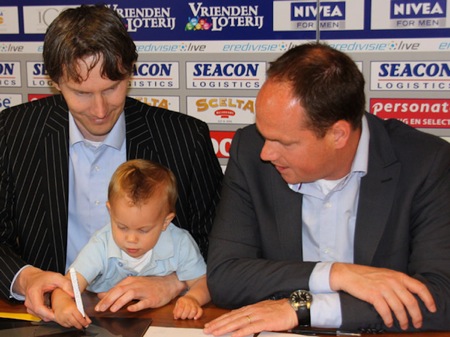
    Pic.1 year old signs soccer contract with dutch club VVV-Venlo

    Answer

    As far as I can see when I try to answer those questions I come up with the same answers every time, the answer is the big clubs and their never ending need to win, win, win and sell players to keep them in the style they are accustomed to.

    I spoke to a man who’s been involved in football for most of his life, 35 years with one club; I asked him about his thoughts on his contribution to grassroots football in all that time.  He told me “I think we provided a great service for the youth in our area”, I told him I thought that was a very noble thing to do, so I asked him had any of his players gone on to play representative level or professional football?

    “Well we had resigned ourselves to being a community club and we did the best we could”.

    I asked him when did his club apply for the position of community club?  “We didn’t, that’s just the way it is”, so I asked him why?  “I don’t know, it just is”, “we trained a lot of great players that went on to great things”, so I asked him, great things for whom?  He told me “the club that they left us to join, we put a lot of effort into them and then they were poached”.

    So there it is that’s the answer to the big question, the big clubs run the show and the rest of us try and try but ultimately fail to progress our own clubs because of how the game is controlled at the top by the chosen few.  If you are reading this then I’m sure you know yourself who the chosen few are, and I think that you can assume I am not writing this on their behalf.

    “if I had known I may have thought twice about getting involved in the first place”

    I run a small kids section in a club, I got into football 10 years ago having never played or being associated with any club, so I had no pre-conception of how the game was structured, if I had known I may have thought twice about getting involved in the first place.  My oldest son got to the magic age and wanted to do what all his friends were doing, play football.  He was five at the time, I took him along to my local club for trials, wow, what a rush for the young lad, he made the team, only problem was, the team didn’t have a manager, so I put myself forward and took the job, after all how hard could it be?

    So I starting getting my coaching badges, “small sided game workshops”, then the new era came in from the F.A.I., The FUNdamentals, “Kick Start 1”, “Kick Start 2” and then onto my latest badge the “Youth Cert”, and numerous books and seminars, all worth while and value for money.  The message was simple, let the kids have fun and enjoy themselves, hopefully along the way I could help develop these kids into football players in a fun environment.

    Kids must have FUN

    So I started with this idea in mind that the kids must have fun and enjoy the game, I had the idea, every player that shows up gets at least half a game, good bad or indifferent, they all got to play.  I was happy with the players I got at the start and I was happy I would commit to bringing the team to its natural conclusion finishing when they could no longer play kids football.

    That didn’t last long, the more I got into the game, the more I saw how ridiculous the whole thing was.  Within the first couple of years I became aware of the need to win and get promoted to the top division, so that you could keep the team together.  I started not giving all the players the correct amount of playing time, I even got involved in the idea that I needed to get new players in to replace the weaker players in the team, but then I had the other problem that as the team became successful and started to push towards the top division, I then had to worry about players on the team being poached by the big clubs, so you get promoted and the players are taken, you get relegated and the players are taken, you stay were you are and the players get taken.  The magic words whispered into the parents ears “How many players have that club got across the water?” “We can get you trials, we can sort it all out, we can make sure that he doesn’t miss the boat”.

    “New Players every-time”

    When I started with my older lad’s team, we played one of the big clubs at under 7, as far as I remember our boys beat them, but that was the last time, every time after that we lost by heavier and heavier margins every game.  I have no problem with the losing, but the interesting thing is each time we played we had the same team as before, but not the big club, new players every time until they got such an unbalanced side in comparison to ours it was pointless playing them.  Not because we kept losing, but because it unsettled the better players (and more importantly their parents) in our team who thought they would be left behind and not get a chance at whatever it was that all the kid’s chase.

    It’s a strange thing how things go but because of the system in place, 8 of my current team are one time rejects of the big clubs, being told they are no longer good enough to make it!

    Which is another point, how did I end up with so many new players (rejects from other clubs), because I had started to buy into signing new players to make the team better, instead of making the players I had better, by default making the team better, which would have been the correct way to do it.

    How many get to play professional football? Not many is the answer.

    I now run two teams, just finished Under 14 and Under 10, the under 14’s are about to fold because of the way the system works.  I’m not sure about the Under 10’s, we just lost a couple of players to one on the big clubs that in itself I can live with, but the issue I have is the fallout because of the club hopping.

    I’ll explain what I mean.

    My under 10’s had eleven players, all there since 5 years old, loads of effort getting them trained to the level they are now at, 2 players leave us, that leaves us with 9 players, not enough to start 11 a side.  2 players rejected from the club that my players have joined, what next for the 2 rejects, “who cares, they are not good enough”. I then go to our second under 10 team and tell the manager that I need 4 of his players, now he doesn’t have enough players for 11 a side, the players that he has left are going to be the weakest players that we have, what happens to them, “who cares, they are not good enough”, gone, finished with football, washed up after 5 years of training and playing.

    Why,

    because the emphasis is not about development of players, it’s about winning, winning at all costs, doesn’t matter about the players that are rejected by the big club, doesn’t matter about the kids that we cannot make up a team for, only thing that matters is the unquenchable desire for the big clubs to win and sell and make money and by the constant struggle of the little clubs to hold onto their own players.

    u7s losing games, how can this be?

    I set up a nippers academy 2 years ago, it’s been a great success, a new team has come out of it each year, the kids are happy, parents are happy or at least I thought they were, until I went along to watch last years under 7’s play a match.  A couple of the parents approached me with some concerns about a couple of games that we lost, and they were thinking of bringing their kids to a better club next season, they had already been contacted by a big club.  Can’t be proved as poaching because the kids being courted won’t complain because they think that they are now on their way to Manchester United or wherever.

    Success Vs Development = Bad Parents Vs proper Coaches

    I was approached by two young coaches that wanted the chance to run a team, we decided to give the next batch of players graduating from our academy to them to coach.  The new coaches are full of experience, full of knowledge about the game, full of enthusiasm, going to get more badges and can’t wait to get started, this all sounds great, but is there any point to it, can they have success? I don’t mean the success of winning, I mean the success of doing it right from the start, great coaching, great team spirit, positive attitude, but is that enough?

    Whats the Point?

    If they are lucky enough to unearth the next Messi, Beckham or even a Robbie Keane, what then?  Do they live in fear that the child will be poached and then the team breaks up, what’s the point?  Our coaches all have badges, they all try to help the kids develop and above all have fun as per the F.A.I. FUNdamentals of coaching (Stage 1). All this so that in a few years certain clubs come and cherry pick the best of the kids leaving us to pick up the pieces.  Nine times out of ten the only result is the team that we have been building folds and we have to start again.

    Better coaching will lead to a bigger pool of quality players

    I am not looking to win, lose or draw, I don’t mind what kids show up to join one of our teams.  If we have enough players and can get a suitable manager then we will have a team.  If we start in the bottom division so what, no problem, keep trying, keep training, if we are lucky enough to have some talented players and we can make them better, great, we are still happy.

    The point is it shouldn’t matter what the level of the player, if you are not obsessed with getting to the top at all costs.  If your players are good enough then they will break through no matter what.  Imagine if you had to keep what you started with, how would that be? No problem for me or my club. We would put effort into the coaching because that would be the difference, and better coaching across the board has to be a recipe for a greater number of well coached players.   Generally every team has a good mix of players at most levels, some great, some average, some not so good.

    It’s this that would make the players better because the level of coaching would have to improve.  The F.A.I. has their emerging talent system in place that would ensure that the elite players would not get overlooked.

    What lessons are kids learning? Certainly not loyalty, definitely not team work.  It’s everyman for himself.  Forget about your teammates so long as “I” make it.

    AGM

    I tried to speak about this at a recent league AGM and was hushed up and told there is no way to sort this system out, but they are wrong.  The board spoke about freedom of movement.  It seems to me if they were worried about freedom of movement then we would not have transfer deadlines, players should just be able to move whenever and wherever they wanted to with no regard to anyone but themselves.

    The board talked about a proposed new rule that the Kildare league are trying to introduce stopping players travelling a certain amount from the school they attend. One of the big clubs was up in arms about this, suggesting that the league organise buses to ship managers from Dublin down to Sligo to the S.F.A.I. A.G.M. to block the Kildare League’s proposed rule change.  Why are they trying to block this?

    What we need is to abolish transfers altogether.

    OK, there will always be some instance when a player has no option, and has to move.  Simple, the secretary of the club the player is signed for issues a release form. Done!

    There are loads of reasons for this not to work, mostly you will find the reasons will come from the clubs that cause this situation in the first place, we have nothing to lose and everything to gain.  We will be left to run our “Mickey Mouse” clubs without interference.  Who gives anyone the right to make our teams fold or make it so difficult that good or dare I say it great coaches pack it in because the rug keeps getting pulled from underneath them.

    The current system only breeds a notion of win at all costs.  If it is to be changed, we need to change it.  If we don’t then we can no longer sit back and moan that “it’s all their fault, they made our team disband because of poaching”, it will be your own fault because you did nothing about it.

    Its all about the MONEY

    All of the people that I have spoken to so far are in favour of making a change.  I have spoken to twenty clubs so far and two leagues, they too are in favour of finding a solution. This will not be an easy thing to change but I feel that it needs to be done and is worth the effort.  I’m not interested in players that play for another team, I don’t care how good they are, I think that it’s ludicrous that some of the clubs within a stones throw of my own club resort to getting players from all over the country.  I know of 7 and 9 a side player’s travelling from Waterford and Cavan to Dublin to play, and under 13’s from Kerry, Longford and Kildare playing for Dublin teams. What is the point, why is there such a need to win?  There has to be a reason, the reason is money!  Sell to England and reap the rewards.  Why else?  If you know of another reason then I would love to know.

    Whose needs are they trying to meet?  It’s not their own player’s, because as soon as a better player comes along the child will lose their place in the team; it’s not the country lads who have to get carted up and down.  Again we come back to winning and selling.

    As if all that wasn’t bad enough, let’s say for arguments sake, I do find a future star and coach the child until they are 11 years old, child gets poached, and then at 13 or 14 the child is sold to an English club.  The money made on the sale is only backdated for coaching from the child’s 12th birthday.  So not only do we lose the child from our team after all those years of coaching, the big club makes all the money!

    As long as we allow this situation to continue, and I say “we” because it is we that lets it continue.

    The proposal

    I am currently putting together a proposal to submit for next years S.F.A.I. A.G.M. Although this will be a big, big change the basics of it will be:

    The first club you sign for is your club, until your club Secretary signs a release form allowing you to become a free agent.

    OR

    If you cannot get the required release form, you become a free agent if you do not participate in associated football for one full playing season.

    That’s it, simple really!

    If you are interested in trying to change the status quo then I would urge you to contact me and share your ideas, my contact details are below.

    Yours in sport.

    Derek Keogh
    Children’s Secretary.
    Killester United

    Derek@KillesterUnited.com
    Mob: 086 3016292

    The opinions expressed in this article are mine,
    and do not represent Killester Sports and Social Club.

    P.S.
    I thought it couldn’t get any worse but I was wrong.

    I spoke earlier about our new underage team and the two young coaches that would run the team, too late; the team has folded before their first training session. I spoke to one of the coaches; he told me that he would not be joining us for next season! What? “I have decided that I would not be able to attract the calibre of player at your club that I need to progress”, “I only want to work with 1st rate players, I discussed this with ********* F.C. and they can provide the correct class of player so I will be joining them next season”.

    I told him that I could provide him with a new €200,000 pitch, changing rooms. Great winter training facilities including astro and indoor hall, still not enough. Remember we are talking about 5 and 6 year olds!

    Do you know any 2nd rate kids of that age? I rest my case, for the moment.


    The Coach Diary – No point in me adding to this, just want to thank Derek for allowing me to post his message

  • The English FA Respect programme

    The English FA Respect programme

    I recently was researching the English FA grassroots site and saw that they were up for a UEFA Grassroots Award for their RESPECT programme . The programme which is trying to ensure respect for referees and a more relaxed attitude from parents towards youngsters playing the game.

    “The English Football Association has taken a radical new approach to tackling bad behaviour from fans and players by launching Respect FC. The aim of the club is not to win silverware or secure a Champions League place; its goal will be to unite fans against the ugly side of the beautiful game to create a safe and enjoyable environment in which it can take place”.

    Respect FC

    “Appointing comedian and avid Bristol City fan Mark Watson as Chairman, the Club has been founded through concern from both the top level of the game and the grassroots community around abuse towards referees and poor sideline behaviour. Respect FC is not your usual football club; it’s a football club made up of people from all walks of life, with one collective goal – to bring Respect back to the game we all love”.

    [media]

    “For every fan that joins Respect FC, The FA has pledged to put £1 back into the Respect initiative within grassroots football (up to the value of £50,000). Members of the Club will be able to vote online at www.RespectFootballClub.com to say how this money is used at the end of the 2010-11 season”.

    Alex Horne, The FA General Secretary, added: “Football fans from all clubs and all leagues have a collective responsibility to let others know that they will not stand for this behaviour from the grassroots of the game up to the international stage. That’s why we’re asking everyone, to ask everyone, to join the club and together win the match against bad behaviour.”

    FC Respect Ireland

    Respect is the collective responsibility of everyone involved in soccer to create a fair, safe and enjoyable environment in which the game can take place. However week after week parents, players, coaches and fans consistently abuse the refs throughout various parts of Ireland and I think its time we ran this abuse out of our game and set-up our own Respect programme in Ireland – “FC Respect”

    Respect is winning

    A recent research from The English FA should that 40 per cent of players, coaches and referees think the Respect programme has improved their experience of the game. The majority of participants surveyed were also aware of the Respect programmes key objectives with 68 per cent recognising that Respect aims to create a safe and enjoyable environment for the game. Since the RESPECT programme was rejuvenated the English FA have already witnessed the benefits it has made to the game.

    On field discipline
    Dissent cautions across top four divisions of the professional game were down by nine per cent last season (2009-10).
    Referee recruitment and retention
    Referee numbers are up 7.4 per cent year-on-year.
    Assaults on referees
    Assaults on referees are down 13 per cent year-on-year.
    Experience of the game
    40% of the grassroots football community has seen their experience of the game improve as a result of measures introduced through the Respect programme.
    Support within the game
    17,000 FA coaches were trained in Respect measures last season
    752 leagues have signed up to Respect.

    Lets get our own campaign going this year, its never to late to start anything…FAI are you reading this…?

  • The Little Team of Stars

    The Little Team of Stars

    Could you ever imagine coaching a team that never wins a game or never evens scores a goal and usually is on the end of a 10-0 thrashing. Could you imagine what the drive home in the car would be like for some of these players.

    Quote “The tiny stars of Margatania FC are not giants on the pitch nor off. They’re an under-7 squad who will freely admit that goals aren’t their thing. But you don’t see any of the tantrums or soccer spats that mar the professional game in these true sportsmen. They may be young, their only goal of the year may have come in their last game of the season, but they truly love the game.

    The ‘Little Team’ featured in this short film remind us of all that is truly great in sport: Teamwork – Positive attitude and Respect”.

    The team was formed when two schools from the Catalan city of Vilanova i la Geltrú not to far from Barcelona pooled their resources:

    “As congratulations from around the world were posted to the team’s website on their Vimeo appearance, they finally scored a goal — making it 271 conceded – 1 scored for the season. The blog post (below) is abridged and translated from Catalan:

    “Last game of the season, and things changed a lot since the first game. All of us have learned the meaning of teamwork, and are increasingly learning the value of what we each do in different positions; helping each other and appreciating the work of our keeper who dares to stand between the sticks. Although everyone was happy with the results of this season, the team deserved that goal.

    It looked increasingly clear [in the last game] that the goal could come at any time. Those charged with getting it were Gerard and Emma, ​​but we needed to make a pass before shooting on goal. I called, I told them it was time and gooooooooooool!

    At last, we have finally got this long-awaited goal [through] Emma.

    Now we can finish the season happy, giving joy to the parents who have been at every game and helped the team to keep their heads up — and joy to the players of Margatània.

    Thank you children!”

    A beautiful video of children enjoying themselves and really does put into context that soccer is just a game and enjoyed by all no matter what level they play at, WIN or LOSE the kids always have FUN!

    -End

    I always like to hear your opinions and views. If you feel you have something to say, please comment below or email me info@thecoachdiary.com If, you don’t have anything to add then please forward this on to a friend. As always, thanks for reading.

    I’m also on twitter @Coachdiary