Month: June 2011

  • Who’s game is it anyway….

    Who’s game is it anyway….

    I came across this very well written article and it kind of sums up the game through this country of ours. It actually sadden me when I read it but then I felt relieved that someone had actually wrote it. Its very long but definitely worth the read. Here it goes →

    Is it yours?  Is it your clubs?  Is it your players?  Is it your managers, coaches or parents?  The leagues?  The F.A.I.? Who?

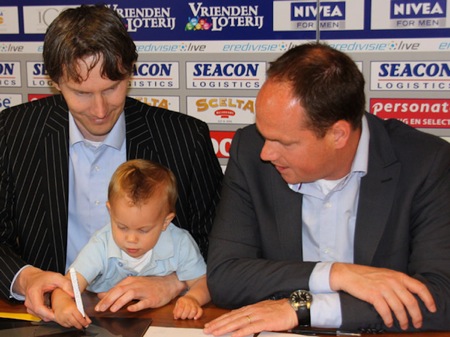
    Pic.1 year old signs soccer contract with dutch club VVV-Venlo

    Answer

    As far as I can see when I try to answer those questions I come up with the same answers every time, the answer is the big clubs and their never ending need to win, win, win and sell players to keep them in the style they are accustomed to.

    I spoke to a man who’s been involved in football for most of his life, 35 years with one club; I asked him about his thoughts on his contribution to grassroots football in all that time.  He told me “I think we provided a great service for the youth in our area”, I told him I thought that was a very noble thing to do, so I asked him had any of his players gone on to play representative level or professional football?

    “Well we had resigned ourselves to being a community club and we did the best we could”.

    I asked him when did his club apply for the position of community club?  “We didn’t, that’s just the way it is”, so I asked him why?  “I don’t know, it just is”, “we trained a lot of great players that went on to great things”, so I asked him, great things for whom?  He told me “the club that they left us to join, we put a lot of effort into them and then they were poached”.

    So there it is that’s the answer to the big question, the big clubs run the show and the rest of us try and try but ultimately fail to progress our own clubs because of how the game is controlled at the top by the chosen few.  If you are reading this then I’m sure you know yourself who the chosen few are, and I think that you can assume I am not writing this on their behalf.

    “if I had known I may have thought twice about getting involved in the first place”

    I run a small kids section in a club, I got into football 10 years ago having never played or being associated with any club, so I had no pre-conception of how the game was structured, if I had known I may have thought twice about getting involved in the first place.  My oldest son got to the magic age and wanted to do what all his friends were doing, play football.  He was five at the time, I took him along to my local club for trials, wow, what a rush for the young lad, he made the team, only problem was, the team didn’t have a manager, so I put myself forward and took the job, after all how hard could it be?

    So I starting getting my coaching badges, “small sided game workshops”, then the new era came in from the F.A.I., The FUNdamentals, “Kick Start 1”, “Kick Start 2” and then onto my latest badge the “Youth Cert”, and numerous books and seminars, all worth while and value for money.  The message was simple, let the kids have fun and enjoy themselves, hopefully along the way I could help develop these kids into football players in a fun environment.

    Kids must have FUN

    So I started with this idea in mind that the kids must have fun and enjoy the game, I had the idea, every player that shows up gets at least half a game, good bad or indifferent, they all got to play.  I was happy with the players I got at the start and I was happy I would commit to bringing the team to its natural conclusion finishing when they could no longer play kids football.

    That didn’t last long, the more I got into the game, the more I saw how ridiculous the whole thing was.  Within the first couple of years I became aware of the need to win and get promoted to the top division, so that you could keep the team together.  I started not giving all the players the correct amount of playing time, I even got involved in the idea that I needed to get new players in to replace the weaker players in the team, but then I had the other problem that as the team became successful and started to push towards the top division, I then had to worry about players on the team being poached by the big clubs, so you get promoted and the players are taken, you get relegated and the players are taken, you stay were you are and the players get taken.  The magic words whispered into the parents ears “How many players have that club got across the water?” “We can get you trials, we can sort it all out, we can make sure that he doesn’t miss the boat”.

    “New Players every-time”

    When I started with my older lad’s team, we played one of the big clubs at under 7, as far as I remember our boys beat them, but that was the last time, every time after that we lost by heavier and heavier margins every game.  I have no problem with the losing, but the interesting thing is each time we played we had the same team as before, but not the big club, new players every time until they got such an unbalanced side in comparison to ours it was pointless playing them.  Not because we kept losing, but because it unsettled the better players (and more importantly their parents) in our team who thought they would be left behind and not get a chance at whatever it was that all the kid’s chase.

    It’s a strange thing how things go but because of the system in place, 8 of my current team are one time rejects of the big clubs, being told they are no longer good enough to make it!

    Which is another point, how did I end up with so many new players (rejects from other clubs), because I had started to buy into signing new players to make the team better, instead of making the players I had better, by default making the team better, which would have been the correct way to do it.

    How many get to play professional football? Not many is the answer.

    I now run two teams, just finished Under 14 and Under 10, the under 14’s are about to fold because of the way the system works.  I’m not sure about the Under 10’s, we just lost a couple of players to one on the big clubs that in itself I can live with, but the issue I have is the fallout because of the club hopping.

    I’ll explain what I mean.

    My under 10’s had eleven players, all there since 5 years old, loads of effort getting them trained to the level they are now at, 2 players leave us, that leaves us with 9 players, not enough to start 11 a side.  2 players rejected from the club that my players have joined, what next for the 2 rejects, “who cares, they are not good enough”. I then go to our second under 10 team and tell the manager that I need 4 of his players, now he doesn’t have enough players for 11 a side, the players that he has left are going to be the weakest players that we have, what happens to them, “who cares, they are not good enough”, gone, finished with football, washed up after 5 years of training and playing.

    Why,

    because the emphasis is not about development of players, it’s about winning, winning at all costs, doesn’t matter about the players that are rejected by the big club, doesn’t matter about the kids that we cannot make up a team for, only thing that matters is the unquenchable desire for the big clubs to win and sell and make money and by the constant struggle of the little clubs to hold onto their own players.

    u7s losing games, how can this be?

    I set up a nippers academy 2 years ago, it’s been a great success, a new team has come out of it each year, the kids are happy, parents are happy or at least I thought they were, until I went along to watch last years under 7’s play a match.  A couple of the parents approached me with some concerns about a couple of games that we lost, and they were thinking of bringing their kids to a better club next season, they had already been contacted by a big club.  Can’t be proved as poaching because the kids being courted won’t complain because they think that they are now on their way to Manchester United or wherever.

    Success Vs Development = Bad Parents Vs proper Coaches

    I was approached by two young coaches that wanted the chance to run a team, we decided to give the next batch of players graduating from our academy to them to coach.  The new coaches are full of experience, full of knowledge about the game, full of enthusiasm, going to get more badges and can’t wait to get started, this all sounds great, but is there any point to it, can they have success? I don’t mean the success of winning, I mean the success of doing it right from the start, great coaching, great team spirit, positive attitude, but is that enough?

    Whats the Point?

    If they are lucky enough to unearth the next Messi, Beckham or even a Robbie Keane, what then?  Do they live in fear that the child will be poached and then the team breaks up, what’s the point?  Our coaches all have badges, they all try to help the kids develop and above all have fun as per the F.A.I. FUNdamentals of coaching (Stage 1). All this so that in a few years certain clubs come and cherry pick the best of the kids leaving us to pick up the pieces.  Nine times out of ten the only result is the team that we have been building folds and we have to start again.

    Better coaching will lead to a bigger pool of quality players

    I am not looking to win, lose or draw, I don’t mind what kids show up to join one of our teams.  If we have enough players and can get a suitable manager then we will have a team.  If we start in the bottom division so what, no problem, keep trying, keep training, if we are lucky enough to have some talented players and we can make them better, great, we are still happy.

    The point is it shouldn’t matter what the level of the player, if you are not obsessed with getting to the top at all costs.  If your players are good enough then they will break through no matter what.  Imagine if you had to keep what you started with, how would that be? No problem for me or my club. We would put effort into the coaching because that would be the difference, and better coaching across the board has to be a recipe for a greater number of well coached players.   Generally every team has a good mix of players at most levels, some great, some average, some not so good.

    It’s this that would make the players better because the level of coaching would have to improve.  The F.A.I. has their emerging talent system in place that would ensure that the elite players would not get overlooked.

    What lessons are kids learning? Certainly not loyalty, definitely not team work.  It’s everyman for himself.  Forget about your teammates so long as “I” make it.

    AGM

    I tried to speak about this at a recent league AGM and was hushed up and told there is no way to sort this system out, but they are wrong.  The board spoke about freedom of movement.  It seems to me if they were worried about freedom of movement then we would not have transfer deadlines, players should just be able to move whenever and wherever they wanted to with no regard to anyone but themselves.

    The board talked about a proposed new rule that the Kildare league are trying to introduce stopping players travelling a certain amount from the school they attend. One of the big clubs was up in arms about this, suggesting that the league organise buses to ship managers from Dublin down to Sligo to the S.F.A.I. A.G.M. to block the Kildare League’s proposed rule change.  Why are they trying to block this?

    What we need is to abolish transfers altogether.

    OK, there will always be some instance when a player has no option, and has to move.  Simple, the secretary of the club the player is signed for issues a release form. Done!

    There are loads of reasons for this not to work, mostly you will find the reasons will come from the clubs that cause this situation in the first place, we have nothing to lose and everything to gain.  We will be left to run our “Mickey Mouse” clubs without interference.  Who gives anyone the right to make our teams fold or make it so difficult that good or dare I say it great coaches pack it in because the rug keeps getting pulled from underneath them.

    The current system only breeds a notion of win at all costs.  If it is to be changed, we need to change it.  If we don’t then we can no longer sit back and moan that “it’s all their fault, they made our team disband because of poaching”, it will be your own fault because you did nothing about it.

    Its all about the MONEY

    All of the people that I have spoken to so far are in favour of making a change.  I have spoken to twenty clubs so far and two leagues, they too are in favour of finding a solution. This will not be an easy thing to change but I feel that it needs to be done and is worth the effort.  I’m not interested in players that play for another team, I don’t care how good they are, I think that it’s ludicrous that some of the clubs within a stones throw of my own club resort to getting players from all over the country.  I know of 7 and 9 a side player’s travelling from Waterford and Cavan to Dublin to play, and under 13’s from Kerry, Longford and Kildare playing for Dublin teams. What is the point, why is there such a need to win?  There has to be a reason, the reason is money!  Sell to England and reap the rewards.  Why else?  If you know of another reason then I would love to know.

    Whose needs are they trying to meet?  It’s not their own player’s, because as soon as a better player comes along the child will lose their place in the team; it’s not the country lads who have to get carted up and down.  Again we come back to winning and selling.

    As if all that wasn’t bad enough, let’s say for arguments sake, I do find a future star and coach the child until they are 11 years old, child gets poached, and then at 13 or 14 the child is sold to an English club.  The money made on the sale is only backdated for coaching from the child’s 12th birthday.  So not only do we lose the child from our team after all those years of coaching, the big club makes all the money!

    As long as we allow this situation to continue, and I say “we” because it is we that lets it continue.

    The proposal

    I am currently putting together a proposal to submit for next years S.F.A.I. A.G.M. Although this will be a big, big change the basics of it will be:

    The first club you sign for is your club, until your club Secretary signs a release form allowing you to become a free agent.

    OR

    If you cannot get the required release form, you become a free agent if you do not participate in associated football for one full playing season.

    That’s it, simple really!

    If you are interested in trying to change the status quo then I would urge you to contact me and share your ideas, my contact details are below.

    Yours in sport.

    Derek Keogh
    Children’s Secretary.
    Killester United

    Derek@KillesterUnited.com
    Mob: 086 3016292

    The opinions expressed in this article are mine,
    and do not represent Killester Sports and Social Club.

    P.S.
    I thought it couldn’t get any worse but I was wrong.

    I spoke earlier about our new underage team and the two young coaches that would run the team, too late; the team has folded before their first training session. I spoke to one of the coaches; he told me that he would not be joining us for next season! What? “I have decided that I would not be able to attract the calibre of player at your club that I need to progress”, “I only want to work with 1st rate players, I discussed this with ********* F.C. and they can provide the correct class of player so I will be joining them next season”.

    I told him that I could provide him with a new €200,000 pitch, changing rooms. Great winter training facilities including astro and indoor hall, still not enough. Remember we are talking about 5 and 6 year olds!

    Do you know any 2nd rate kids of that age? I rest my case, for the moment.


    The Coach Diary – No point in me adding to this, just want to thank Derek for allowing me to post his message

  • The English FA Respect programme

    The English FA Respect programme

    I recently was researching the English FA grassroots site and saw that they were up for a UEFA Grassroots Award for their RESPECT programme . The programme which is trying to ensure respect for referees and a more relaxed attitude from parents towards youngsters playing the game.

    “The English Football Association has taken a radical new approach to tackling bad behaviour from fans and players by launching Respect FC. The aim of the club is not to win silverware or secure a Champions League place; its goal will be to unite fans against the ugly side of the beautiful game to create a safe and enjoyable environment in which it can take place”.

    Respect FC

    “Appointing comedian and avid Bristol City fan Mark Watson as Chairman, the Club has been founded through concern from both the top level of the game and the grassroots community around abuse towards referees and poor sideline behaviour. Respect FC is not your usual football club; it’s a football club made up of people from all walks of life, with one collective goal – to bring Respect back to the game we all love”.

    [media]

    “For every fan that joins Respect FC, The FA has pledged to put £1 back into the Respect initiative within grassroots football (up to the value of £50,000). Members of the Club will be able to vote online at www.RespectFootballClub.com to say how this money is used at the end of the 2010-11 season”.

    Alex Horne, The FA General Secretary, added: “Football fans from all clubs and all leagues have a collective responsibility to let others know that they will not stand for this behaviour from the grassroots of the game up to the international stage. That’s why we’re asking everyone, to ask everyone, to join the club and together win the match against bad behaviour.”

    FC Respect Ireland

    Respect is the collective responsibility of everyone involved in soccer to create a fair, safe and enjoyable environment in which the game can take place. However week after week parents, players, coaches and fans consistently abuse the refs throughout various parts of Ireland and I think its time we ran this abuse out of our game and set-up our own Respect programme in Ireland – “FC Respect”

    Respect is winning

    A recent research from The English FA should that 40 per cent of players, coaches and referees think the Respect programme has improved their experience of the game. The majority of participants surveyed were also aware of the Respect programmes key objectives with 68 per cent recognising that Respect aims to create a safe and enjoyable environment for the game. Since the RESPECT programme was rejuvenated the English FA have already witnessed the benefits it has made to the game.

    On field discipline
    Dissent cautions across top four divisions of the professional game were down by nine per cent last season (2009-10).
    Referee recruitment and retention
    Referee numbers are up 7.4 per cent year-on-year.
    Assaults on referees
    Assaults on referees are down 13 per cent year-on-year.
    Experience of the game
    40% of the grassroots football community has seen their experience of the game improve as a result of measures introduced through the Respect programme.
    Support within the game
    17,000 FA coaches were trained in Respect measures last season
    752 leagues have signed up to Respect.

    Lets get our own campaign going this year, its never to late to start anything…FAI are you reading this…?

  • Divided by the Regions Final in Braga

    Divided by the Regions Final in Braga

    “Six wins out of six since qualifying” have given Dito hope as Braga head into the final, where they meet a Leinster & Munster side “under no pressure” according to Gerry Smith Irish Manager.

    Ten years after experiencing UEFA Regions’ Cup final disappointment, hosts Braga hope to go one better when they meet a Leinster & Munster side heading into the Barcelos fixture “under no pressure”.

    Braga

    Braga lost the 2001 showpiece 4-2 on penalties to Czech outfit Central Moravia, but, unlike on that occasion, they come into the final with a 100% record in this edition of Europe’s premier amateur competition. Dito, capped 17 times by Portugal at senior level, knows how big an occasion it will be for his Braga players when the week-long tournament concludes in the Cidade de Barcelos from 19.30CET on Tuesday.

    “We are here after collecting six wins out of six since qualifying,” he said. “We have scored 17 goals in the process, so we will approach the match with a lot of confidence.Although it is a unique opportunity for them, my players are very calm and relaxed. History is just around the corner for them and they know that.”

    Irish Hopes

    Gerry Smith, whose Leinster & Munster side progressed from Group B with two wins and a draw, is happy to assume the role of underdog. “We’re going to enjoy it,” he said. “It’s a one-off and, as Dito said, there will probably be two different styles on display: continental and British, which we’re trying to deviate from.

    “We’re a very hard-working side and we’re in this final under no pressure − the pressure is on the home team, that’s a fact. They’re here and all the expectation is on them to win the competition.”

    A Portuguese champion in 1987 with Lisbon giants SL Benfica, Dito has won silverware at the highest level − for his counterpart, reaching the final is a rich reward for over a decade’s service at the helm of the Republic of Ireland’s amateur side. “I was never privileged to play for my country, Dito has, but it’s absolutely fantastic for a small nation like ours,” said Smith.

    “If you had said this to me a week ago when we arrived I’d have taken both hands off you. We’re looking forward to it, these experiences don’t come around too often, and for a team to get to any European final is an amazing achievement. I had to pinch myself this morning when I woke up, realising that we’re going to compete in the final with a great football nation and an excellent coach.”

    For Dito the job is only half done, but for Braga to become Portugal’s first winners of the competition they must breach a Leinster & Munster defence which has conceded just one goal in six matches in the 2010/11 competition.

    “Our first goal was to qualify for the final,” added Dito. “All the information we gathered before the tournament pointed to the fact the Irish team were one of the main favourites to be in the final and for once statistics were right. They are here because they deserve it.”

    The Coach Diary wishes both nations a great game. I’m always split in half when my 2 countries play!

    Article By Wayne Harrison UEFA.COM

  • The Little Team of Stars

    The Little Team of Stars

    Could you ever imagine coaching a team that never wins a game or never evens scores a goal and usually is on the end of a 10-0 thrashing. Could you imagine what the drive home in the car would be like for some of these players.

    Quote “The tiny stars of Margatania FC are not giants on the pitch nor off. They’re an under-7 squad who will freely admit that goals aren’t their thing. But you don’t see any of the tantrums or soccer spats that mar the professional game in these true sportsmen. They may be young, their only goal of the year may have come in their last game of the season, but they truly love the game.

    The ‘Little Team’ featured in this short film remind us of all that is truly great in sport: Teamwork – Positive attitude and Respect”.

    The team was formed when two schools from the Catalan city of Vilanova i la Geltrú not to far from Barcelona pooled their resources:

    “As congratulations from around the world were posted to the team’s website on their Vimeo appearance, they finally scored a goal — making it 271 conceded – 1 scored for the season. The blog post (below) is abridged and translated from Catalan:

    “Last game of the season, and things changed a lot since the first game. All of us have learned the meaning of teamwork, and are increasingly learning the value of what we each do in different positions; helping each other and appreciating the work of our keeper who dares to stand between the sticks. Although everyone was happy with the results of this season, the team deserved that goal.

    It looked increasingly clear [in the last game] that the goal could come at any time. Those charged with getting it were Gerard and Emma, ​​but we needed to make a pass before shooting on goal. I called, I told them it was time and gooooooooooool!

    At last, we have finally got this long-awaited goal [through] Emma.

    Now we can finish the season happy, giving joy to the parents who have been at every game and helped the team to keep their heads up — and joy to the players of Margatània.

    Thank you children!”

    A beautiful video of children enjoying themselves and really does put into context that soccer is just a game and enjoyed by all no matter what level they play at, WIN or LOSE the kids always have FUN!

    -End

    I always like to hear your opinions and views. If you feel you have something to say, please comment below or email me info@thecoachdiary.com If, you don’t have anything to add then please forward this on to a friend. As always, thanks for reading.

    I’m also on twitter @Coachdiary

  • English FA plans will help the kids REACH the crossbar

    English FA plans will help the kids REACH the crossbar

    ‘When the adults come to take the nets down, they use a step ladder,’ he said. ‘How am I expected to save shots in a goal that big?’

    2013

    Question like these will be a thing of the past come 2013, (wow, that’s ages away…do it now) well in the UK anyhow. That is when changes to grass roots football will be implemented by the Football Association, fundamentally changing the development of young players and altering everything about the way the game is played: from the goal, the pitch sizes to the team numbers and even league formats and age calculations. So for that young boys questions of a tiny goalkeeper standing alone in acres of sodden pitch, protecting an area designed to test men twice his size and unable to stop any ball that goes over his fingers – will be a thing of the past.  Kids will play in games and pitches appropriate to their age and size.

    Gareth Southgate

    The Football Association’s head of elite development, spoke recently and said “this will be taken this around the UK to convince sceptics during a consultation process which ends in September. It will then be put before the annual meetings of county associations next May, with the next 14 months used to prepare before its permanent introduction at the start of the 2013-14 season”. Although the the FA hope many leagues will pre-empt this date by changing their formats this year.

    The Changes

    • u7s & 8s play 5v5
    • u9s, u10s play 7v7
    • u11s, u12s and u13s play 9v9
    • u14s play 11v11 on smaller pitches

    Bringing England in line with Spain, Portugal, Holland and Germany and within a year of France and Italy, we in Ireland could do we adopting what our neighbours are doing for the good of the kids and their development. I mentioned before how Scotland and Wales had already taken a leap and made drastic changes to their GR game. As per usual we are last to implement change and no point in 1 league in Dublin and some outside the doing it. This needs to be brought in across Ireland and if teams can’t field players for 9v9s or 11v11 then they continue with the 7v7 for longer. Everything that can be done must be done to make games fair and age appropriate. Making sure that these changes are all about the kids that PLAY and NOT the ADULTS.

    (Size of the ball needs to be changes also)

    Southgate expressed how “More goals, touches and improved skill should be the result of all these changes. In the UK Goals and pitches will be of appropriate size, and markings will be displayed inside existing pitches in different colours (great idea), following the design of an indoor sports hall in which various games co-exist”.

    ‘People have seen the way that the likes of Barcelona have played this year and they’re asking: ‘Why can’t our kids play that way? ”We want them to play that way. We feel that what we are proposing will give them the environment to develop those skills.

    ‘We have down the years produced some technically gifted players but we want to increase that pool of talent so that if our best one or two players get injured, there is a bigger talent pool to come in.’

    The research involved in the project showed that children who are slow to physically mature are also being forced out of the game before they have a chance to have a crack at professional level.

    ‘It benefits the physically stronger players but there’s a real danger that we lose the smaller, more technically gifted ones.

    Southgate thinks the idea of introducing smaller teams and smaller pitches will help to encourage a player the size of Lionel Messi come through the English system, rather than be bullied out of it. ‘In 11-a-side matches there are fewer touches for players,’ the former Middlesbrough manager said.

    ‘If we go to that format too young then it becomes much more of an athletic-based game. We have huge pitches that kids can’t get around. ‘It benefits the physically stronger players but there’s a real danger that we lose the smaller, more technically gifted ones. ‘There is a high drop-out of players in that nature.’

    Similar to what the NDSL have proposed

    There will be no leagues in professional academies until the under-18 age group, but grass roots clubs will be allowed to publish tables from under-12. Before that, clubs will play friendlies between league members, with November, and perhaps February and May set aside as competition months organised in various forms.

    “There could be a knock-out competition within the league, or two leagues that pair the top six clubs against each other, then the bottom six against each other,”said English National Development Manager Nick Levett.

    Quote “We are not looking to make football non-competitive, the league will still keep a record of the results to gauge the strengths of teams, but there is nothing less competitive than being stuck in a league that is too good for you or too weak.

    ‘This way, teams are constantly assessed and can be paired against opponents of appropriate strength. A team who would have no chance of winning might suddenly win a competition, a team who have been winning easily will be tested.

    ‘Not having official tables doesn’t mean you don’t have competition. There is a league in the North West that spends £20,000 a year on trophies and medals. One club spent £6,000 on end-of-season prizes.’ The point is, kids think differently about football. Adults value medals and let a bad result spoil the weekend; children like the game and quickly get over an adverse result unless pressured to think differently.

    Levett

    said “there were 44 groups of children aged eight to 12 interviewed by the FA and the results were intriguing. They tend to know their year of birth rather than the more complex branding of under-nine or under-10. So, from 2013, club football will run in years, as in hockey. Your kid will play for Ramshackle Rovers 2000 or 2001, the oldest boy born January 1 and the youngest December 31. (I’m thinking, why wait do it now!)

    (This will come into affect this year for us) In fact most of these ideas are not to similar to what Tony Gains and the NDSL are implementing this coming season.

    The goalkeeper, Robert, (the boy behind that great quote) who was the catalyst for so much of this debate, had one year trying to defend the same size goal as Petr Cech and quit. He plays only school football now.

    The challenge of convincing the English associations rests with Levett, who needs 75 per cent approval by next May.

    Quote ‘I’m not saying don’t play 11 against 11 on a full-size pitch,’ he said. ‘I’m just saying, if you wish to, please show us the evidence that this is for the best: because we can’t find any”.

    SFAI AGM

    With the SFAI AGM meeting on this Saturday in Sligo, it will be interesting to see what comes of it and what great ideas the MEN not kids that manage kids football come up with this year. (Unfortunately I can’t make it down as I’m helping to run a charity event for Dyspraxia Ireland)

    This post will be going straight to Mr Michael O’Brien, Chairman of the SFAI and The South Dublin Football League. inbox. It would please me even more if he Subscribed to my site.

    Click on the link to see who else is on the SFAI Council http://www.sfai.ie/sfai_council.htm what I’d love to know is how many of these members are Grassroots Coaches, FAI Coaches, Teachers, Child Psychologists, Youth Development Officers, Parents of children who left the game because it wasn’t fun anymore, what about someone that actually speaks on behalf of the kids that PLAY, after all this is why we organise this game in the first place!

    Conclusion

    Personally I would like to see the FAI stepping in at this stage and revamping the entire structure of grassroots soccer in Ireland. The time is now!!! Many coaches, parents, managers have been wanting changes for many years and we are just that little to slow to react.

    There is a reason why continental kids are technically streets ahead of Irish and English kids. An Irish kid receives the ball and looks up to pass it, an Iberian kid receives a ball and looks up to dribble past you!

    “To get something done a committee should consist of three men, two of whom are absent“.

    Research: Martin Samuel, Nick Levett,  Gareth Southgate.


  • Footblogball: Interview with Hibernian Youth coach – Colin Jack

    Footblogball: Interview with Hibernian Youth coach – Colin Jack

    Colin Jack is a Youth coach at Hibernian FC and Mark from Footblogball spoke to him this week in Sweden at a Coerver coaching camp in Stockholm and he started by asking him…

    Q.The Scottish FA  teamed up with the Scottish Youth Football Association to launch a new National Player Pathway from March 2011. Within your role at  Hibernians  how do you take part in this initiative?

    A. The player pathway is purely for recreational players, whereas at Hibernian we deal with professional youth players. However, in my opinion the national player pathway is something of benefit to the grassroots game in Scotland. This provides the basis for where Hibernian and other pro clubs pick there players and by giving kids a structured environment to play organised football is great.

    Obviously this needs to be matched by the kids playing as much football away from these games/tournaments as possible. But the key thing remains at the young age of getting kids to fall in love with the game of football. This is absolutely key, so no pressure need to be applied to the kids, just pure enjoyment.

    Q.It is claimed that it is the first time in Scotland, all children playing club football will play a format of the game that relates best to their age.We at Footblogball read a little more into this statement as a sort of acceptance of the death of “street football” or any form of spontaneous football. What are your feelings on this?

    A. There is two areas of youth football in Scotland 1; recreational or boys club football for amateur young players, with a range of playing abilities and 2; Pro-youth where the best players are recruited by the clubs and play fixtures every weekend. I think the fact that there are two separate bodies the SFA and the SYFA is a cause for concern as there is a clash of interests and also for the organisation of the game within regional areas. I think there needs to be one sole body in which all football decisions are taking with regards to recreational and professional play. These decisions could be taken with debate involving the organisers from each area/region.

    I think what the Scottish FA mean by this is that every club team will play an organised game at the weekend. Rather than before when kids from different areas would play different rules and games. Some areas play 7 aside at 8 and some 8 or 9 aside. So I think its important everybody follows a pathway which is best for all.

    In this respect I think the Scottish FA have managed to do this. A loose framework for organised club football. However, I do think they also need to address the purely recreational side of the game, whatever your standard. In Scotland it has become near impossible to play street football, however, there is many artificial areas available to kids to play football. Key I think is to get kids to love the game, encouraged to play and perhaps even have a coach or organiser at each venue to make sure the kids are playing in a safe environment. This could be just purely in an overseeing capacity where no coaching takes place.
    So, organised club football at the weekend in the recreational sector and organised football throughout the week where kids can turn up and play for no cost and no coaching. The key is just to get kids playing football at any time of the day. They then go to there clubs for coaching.

    Q. The only adult involvement in football when I was between the ages of 6 and 10 was being called in by my parents for dinner. All this of course has changed where adult expectations such as competative drive means kids hardly have time to fall in love with football, to play for fun and  develop their skills and creativity in a stress free environment. Has the Scottish Youth Football Association or you in your role as a coach at Hibernians done anything to address this situation? How do you personally feel about this?

    A. What is absolutely clear here, is that in order for kids to get any better at football they must fall in love with the game and become mini-football experts, in terms of ball skills but also understanding the game and the professionalism which should go hand in hand with the game. This also helps create friendships and a more respectful community around the game.
    The Scottish FA have introduced ‘street football’ and other programs designed to look at kids playing football for no fee in areas, but this is down to funding again and some can’t be continued due to the lack of money. This is something I think the Scottish FA need to address. I cannot speak for all off Scotland but I do no feel the Scottish FA does enough along with clubs to play enough football. In my opinion, and as previously stated, getting kids to the local park just to play football is key. Play with friends and stop playing the computer is key.

    Q. Recently you were in Stockholm at a Coerver coaching camp for kids. How did this come about? What age groups were you working with? Did you notice any differences between the Swedish kids and the Kids from Scotland with regard to how they play the game, expectations even at a such a young age

    A. I had the opportunity to come across to Stockholm with Coerver as I work with Coerver in Scotland on a part time basis. I have been abroad before with Coerver to both Norway and Portugal and I thoroughly enjoyed my time in Stockholm. I find Coerver a useful tool in teaching kids the basic skills and I believe when applied properly can be of great benefit to players. However, this is needed to be mixed and matched with other training and the coaches own ideas on the game to produce quality training. Coerver on its on is merely a technique acquisition session not a skill and game related session.

    The kids in Stockholm were fantastic, the behaviour and culture was obviously much more different to Scotland. Kids in Stockholm can obviously speak English relatively fluyently and this helped me enourmously but also helped the kids. With learning another language the kids had a more rounded and appreciative nature, this is perhaps to do with the awareness of other cultures.

    In Scotland I feel kids can only speak English and do not have an awareness of outside cultures, perhaps due to georgraphy, but it is something that I think is key. The Swedish kids were much more appreciative and there behaviour was exemplary compared to kids in Scotland. I do not know the social situation in Sweden but perhaps this is something to do with it as kids in Scotland can tend to come from a range of social backgrounds.
    The kids in Stockholm football wise were very much more tuned into what was needed, when practice time came the kids were solely focused on this. Coerver involves lots of repetitive drills and the kids, despite being of varying age, seemed to enjoy this aspect.

    Further more, when asking the kids to do the techniques in match situations they were very keen to replicate this and understand the context of when a technique would be used which then turns into a skill. The kids were also extremely fit and agile and all enjoyed healthy lunches, something that is not replicated in Scotland. This all contributed to the more ‘football is a profession’ atmosphere compared to that of Scotland where there is still a certain culture that attaches itself to the game.

    One point I think is absolutely key and I would like to reemphasize this, is that kids need to play football. This does not mean coaching after coaching  but just solely football. Small sided games and games created on the spur of the moment need to return and I think everybody can do something to help this.

    Colin Jack: In his own words.

    • I’m 23 and currently studying History and Politics at Stirling University  in Scotland.
    • I currently work part time at Hibernian where I take the under 17 team and assistant coach at the under 19 team, this season we won the east of Scotland shield and got to the semi final of the Scottish cup.
    • Despite being only 23 I have worked at Hamilton Academical FC academy where I took the under 11s and under 12s, I also worked for Heart of Midlothian Academy doing there technical sessions for the under 9s, 10s and 11s.
    • I have also worked for Coerver Scotland for over 5 years where I coach all standards of players, I have worked with them in Portugal, Sweden and Norway.I work and continue to work with the Scottish football association, for nearly 4 years now, in community projects and school of football scheme.
    • I am currently sitting my advanced children license in which I have 3 months to go. I have passed my youth award and children  award in coaching and hold the south of Scotland coach of the year for 2007.
    • I also play semi-pro football in Scotland but currently am injured for the last year. Before though I played at various semi and pro teams but never excelling to take me to a higher level
    • My aims include coaching in a full time capacity at a professional club and achieving my UEFA A badge. I also want to work abroad and hopefully in time become a first team coach at a professional club.

    Interview by Footblogball

  • Have some RESPECT

    Have some RESPECT

    Last week I dropped into the a u9s tournament in south Dublin, a well run event and plenty of other activities on display for all the kids to enjoy. As I was leaving the park I stopped to talk to a friend who was watching one of the games, a penalty was awarded for a hand ball, one of those decision that a ref has a split second to make and one that some refs give and others don’t, “ball to hand, hand to ball” kind on thing.

    Once again verbal abuse was launched at the young referee for making a honest decision, the man in question was well into his 50’s (a parent coach) and been carrying on for most of the time I was there and for about 5 to 10 minutes after the penalty was missed by the young lad.

    Soon, the ref had enough and ordered the man out of the park, reluctant to go and the situation had turned sour; kids started to get involved with some even crying. The man’s young daughter soon started shouting at the ref saying, “that’s my dad, you can’t send him away” ….after a short time all was resolved and the man was allowed to stay (No apology was offered tho)

    Bad for the game

    To often this kind of nonsense from uneducated morons goes on and we as coaches/managers/parents have to try and stamp this out of the game. Referees are mostly honest people, they make mistakes like all of us and I for one totally respect what they do and I wouldn’t do their job for all the money in the world. Like them or not we need them….and if adults continually abusing refs then kids will follow, this men/women should be respected; kids should learn how to respect their elders and adults should learn how to control themselves and if they can’t then they need to be removed from the game. This is a kids game, adults need to take a step back away from the line, back so far that they can’t hear what the kids are saying, far enough so that they can’t get involved in the game….Its time to start acting responsibly!

    Teaching your kids manners and discipline

    Teaching essential social skills in your kids is one of the most important (and sometimes dreaded!) tasks of good parenting . These basic social skills can impact and define the rest of their lives right from the playground to the family, school classroom, the pitch and finally workplace and relationships. Hence providing a good foundation becomes essential.

    Actions speak louder than words, when it comes to kids. Most of the times we teach kids through our body language and unconscious actions as compared to sitting them down and telling them consciously. Kids learn naturally by observation and imitation and hence it becomes important for us, as parents to set a good example and walk the talk or at least only talk about that which we can walk too!

    If we can’t be disciplined ourselves and control our frustration and anger on a football pitch what hope have kids that play. Teaching kids discipline is a fundamental part of life and our game; we as adults need to start being disciplined ourselves before we expect the kids to follow suit.

    “Kids learn naturally by observation and imitation”

    St. Petersburg psychologist Dr. Herb Goldstein has outlined a philosophy of winning. Key to this philosophy is the belief that:

    • Winning is not the most important objective and losing is not a sign of failure.
    • Neither success nor failure depends on the outcome of a contest or on a won-lost record.
    • Success is related to effort – you are never a “loser” if you have given your best.

    Probably the most important things parents can do is to ensure that their child has a good coach. The right coach can make a child’s sports exposure a good one, but the wrong one can ruin it—perhaps turning a youngster off to sports for good. That parent/coach abusing the ref at the u9s tournament is a bad coach, and parents have a right to step in and questions his motives.

    Parents & Coaches need to do more than cheer from the sidelines to guarantee that their child has fun in sports. Perhaps the best thing a parent can do is to help fit the triumph and frustration of sports into a balanced healthy life. It is really not that important how many medals and trophies a youngster brings home.

    He or she is your child first and an athlete second. Cheer your kid on, but give the whole team your enthusiasm, win or lose, and let them know that it’s not the score that counts but the FUN!

    The Coach Diary