Month: October 2013

  • Messi with 27, Ronaldo with 24..

    Messi with 27, Ronaldo with 24..

    So you are probably wondering what I’m taking about: Hatricks by two of the world greatest players and so far this year Ronaldo has scored 6 and Messi has 4. No doubt, Ronaldo’s arrival at Madrid in 2009, has been the makings of Messi sensational scoring and since then the two have, without doubt been the world GREATEST players.

    We have witnessed an incredible pattern merge over the years and once Ronaldo settled in Madrid the two have gong toe to toe in the scoring stakes.

    On the 20th November 2010, Ronaldo scored 3 against At.Bilbao and Messi scored 3 against Almeria. Almost a year later on the 24th September 2011, Messi scored 3 against At.Madrid and CR7 scored 3 against Rayo Vallecano. This year, on the 27th of January 2013, CR7 scored 3 against Getafe and Messi answered with 4 against Osasuna. Finally on the 18th September 2013, Messi score 3 v Ajax and Ronaldo 3 v Galatasaray, both in the Champions League

    This is what has happened since 2007, Messi first full season at FCB (Messi established himself as a first team player 06-07 season).

    Messi’s, 27 Hat-tricks  

    10/3/2007

    • Liga: Barcelona-Real Madrid 3-3

    6/1/2009

    •  Spanish Cup: Atlético Madrid-Barcelona, 1-3

    10/3/2010

    •  Liga: Tenerife-Barcelona 0-5

    14/3/2010

    •  Liga: Barcelona-Valência, 3-0

    21/3/2010

    •  Liga: Saragoça-Barcelona, 2-4

    6/4/2010

    •  Champions League: Barcelona-Arsenal, 4-1* (*4 goals)

    21/8/2010

    •  Supercup: Barcelona-Sevilha, 4-0

    20/11/2010

    •  Liga: Almería-Barcelona, 0-8

    12/1/2011

    •  Liga: Barcelona-Bétis, 5-0

    5/2/2011

    •  Liga: Barcelona-Atlético Madrid, 3-0

    17/9/2011

    •  Liga: Barcelona-Osasuna, 8-0

    24/9/2011

    •  Liga: Barcelona-Atlético Madrid, 5-0

    29/10/2011

    •  Liga: Barcelona-Majorca, 5-0

    1/11/2011

    •  Champions League: Viktoria Plzen-Barcelona, 0-4

    22/1/2012

    •  Liga: Málaga-Barcelona, 1-4

    19/2/2012

    •  Liga: Barcelona-Valência, 5-1* (*4 golos)

    29/2/2012

    •  Friendly: Argentina-Switzerland, 3-1

    7/3/2012

    •  Champions League: Barcelona-Bayer Leverkusen, 7-1** (**5 goals)

    20/3/2012

    •  Liga: Barcelona-Granada, 5-3

    2/5/2012

    •  Liga: Barcelona-Málaga, 4-1

    5/5/2012

    •  Liga: Barcelona-Espanyol, 4-0* (*4 goals)

    9/6/2012

    Friendly: Argentina-Brazil, 4-3

    20/10/2012

    •  Liga: Deportivo-Barcelona, 4-5

    27/1/2013

    •  Liga: Barcelona-Osasuna 5-1* (*4 golos)

    14/6/2013

    •  Friendly: Argentina-Guatemala, 4-0

    1/9/2013

    •  Liga: Valência-Barcelona, 2-3

    18/9/2013

    •  Champions League: Barcelona, Ajax, 4-0

     Total: Barcelona, 24; Argentina, 3

     Messi By the Year

    • 2007: =1
    • 2009: =1
    • 2010: =6
    • 2011: =6
    • 2012: =9
    • 2013: =4


    Blatter prefers ‘good boy’ Messi to ‘hairdresser fan’ Ronaldo

    And now onto Ronaldo’s, 25 Hat-tricks

    12/1/2008

    • Premier League: Manchester United-Newcastle, 6-0

    5/5/2010

    •  Liga: Majorca-Real Madrid, 1-4

    23/10/2010

    •  Liga: Real Madrid-Racing, 6-1* (* 4 goals)

    20/11/2010

    • Liga: Real Madrid-Ath Bilbao, 5-1

    22/12/2010

    •  Spanish Cup: Real Madrid-Levante, 8-0

    9/1/2011

    • Liga: Real Madrid-Villarreal, 4-2

    3/3/2011

    • Liga: Real Madrid-Malaga, 7-0

    7/5/2011

    • Liga: Sevilha-Real Madrid, 2-6* (* 4 goals)

    10/5/2011

    • Liga: Real Madrid-Getafe 4-0

    28/8/2011

    •  Liga: Saragoça-Real Madrid, 0-6

    24/9/2011

    •  Liga: Real Madrid-R. Vallecano, 6-2

    22/10/2011

    •  Liga: Málaga-Real Madrid, 0-4

    6/11/2011

    •  Liga: Real Madrid-Osasuna, 7-1

    17/12/2011

    •  Liga: Sevilha-Real Madrid, 2-6

    12/2/2012

    •  Liga: Real Madrid-Levante, 4-2

    11/4/2012

    •  Liga: Atl Madrid-Real Madrid, 1-4

    30/9/2012

    •  Liga: Real Madrid-Deportivo, 5-1

    3/10/2012

    • Champions League: Ajax-Real Madrid, 1-4

    9/1/2013

    •  Spanish Cup: Real Madrid-Celta de Vigo 4-0

    27/1/2013

    •  Liga: Real Madrid-Getafe, 4-0

    9/2/2013

    •  Liga: Real Madrid-Sevilha, 4-1

    6/9/2013

    •  WC Qualifier Brazil 2014: Irlanda do Norte-Portugal, 2-4

    17/9/2013

    • Champions League: Galatasaray-Real Madrid, 1-6

    30/10/2013

    Liga: Real Madrid-Sevilha, 7-3

     Ronaldo’s Total: Man. United, 1; Real Madrid, 22; Portugal, 1

    Ronaldo By The Year

    • 2008: 1 (Messi =0)
    • 2010: 4 (Messi =6)
    • 2011: 9 (Messi =6)
    • 2012: 4 (Messi =12)
    • 2013: 6 (Messi =4)

    Messi and Ronaldo are natural rivals with their obvious dichotomies. Messi’s good v Ronaldo’s evil; the finesse and humility of the Argentine v the power and arrogance of the Portuguese; Messi and Ronaldo are still special; phenomenons even, the subject of reminiscences over the next half-century and long may it continue.

    Thanks to MaisFutebol Portugal for the content. 

    ==========================================================

    I always like to hear your opinions. Please comment below or email me info@thecoachdiary.com If, you don’t have anything to add then please forward this on to a friend. Thanks for reading.

    I’m also on twitter @Coachdiary

  • The Coach Diary Quotes & Much More..

    The Coach Diary Quotes & Much More..

    I’m starting this post, to share my quotes and opinions with you. All of them are inspired by other coaches, comment and posts from the blog. Please feel free to use, share or even add to them.

    These quotes are written with the intention to keep me inspired each and every time I coach. I hope you too get some inspiration from them.

    I hope you enjoy them.

    How children learn and how we should teach

    May 2015

    “You cannot put your motivation on someone else. Motivation is internal”

    Activity + Stress & Pressure = Avoidance. Create an environment where they can be successful and feel good about what they are doing and that is the internal engine for motivation. The things we love doing give us pleasure. Give us personal satisfaction.

    When we think of things we don’t like doing, they are generally things that cause us stress and tension.

    Learning should be fun. Learning should be positive. Learning should motivate.

    Activity + Satisfaction = Motivation

    April 2015

    “Players should be seen as children first, students second and players last“ TCD

    “Failing to win is not failure. Teams improve, players improve, coaches learn something and that is success. There is success in defeat. You can play a great game and someone else can just play better. Failing to win can just be bad luck”. – TCD

    “If a child isn’t making the right decisions, then he/she doesn’t know how or hasn’t been given the chance. One of the great joys of coaching is watching children DO!!” – TCD

    March 2015

    “I didn’t change. I’m just learning from my experiences and constantly improving myself” – TCD

    “One way to get better is surround yourself with better people” TCD

    “Every child can learn, just not on the same day or the same way” TCD

    February 2015

    “Kids can only perform at their optimum level in an environment that feels safe. One that is emotionally safe, where they can’t be afraid of failing, where they can’t be afraid of making mistakes. If they are, they will get tense and tight and tentative and that will interfere with the fluidity of their muscles, which will translate into performance on the pitch. When children have the freedom to express themselves, creativity flourishes”.

    “The biggest enemy to learning is the ever talking coach” – TCD

    “Every child can learn, just not on the same day or the same way” TCD

    “Coaches who love coaching, teach players to love learning” TCD

    January 2015

    “Over the years I have learnt to speak less and less on the sidelines. When players make mistakes during the game, try and bite your tongue and let that anger pass. Shouting or screaming at your players is actually counterproductive and will only cause them to play worse. You can certainly point out what they did wrong, but that moment is not the best time to do it. Write it down and speak to them in a 1v1. In every game there are coaching moments and you need to pick the right ones. Directly after a mistake is not one of them. Try and spend more energy focusing the players on what they need to do to correct the mistake, rather than staying with the mistake”. – TCD

    “Your attitude is like a price tag, it shows how valuable you are” – ?

    December 2014

    “A coach should be “demanding without being demeaning.” TCD

    “The curse of knowldege “Just because we taught something, does not mean it was learnt” – TCD

    Sleep plays a big role in consolidating the learning, so we really don’t get to see what the player has learnt until the game i.e. training game or organised fixture. Don’t expect to see perfection and success in every session. However you might well see some of what they learnt during the game. All children develop at different stages and some will get things sooner than others, that’s why it’s so important to be patient and not force the process of learning. As coaches (adults) we want to see learning straight away, but it just doesn’t happen like that. Remember, children are not mini adults. TCD

    November 2014

    “Kids just cannot perform at their best every time they play. Why? Well because that’s not how life/sports works. Your best one week may not be the same as your best the following week. The life lesson here is no matter what the outcome, you did your best and there is always next week” – TCD

    “Until your players know that you care, they don’t care what you know” @TomBatesCoachng

    “A coach will effect more people in a year than those who never coach, will in a lifetime” – TCD

    “Every child is gifted. They just unwrap their presents at different times” – TCD

    “Children need the freedom to play and learn on their own. Play is not a luxury. Play is a necessity.” – TCD

    October 2014

    Another weekend upon us. Unfortunately some people will get emotionally involved in their kids game and potentially ruin the experience for everyone. Watching you child play is a fantastic experience, so live with those moments not in them. Think before you act – especially when you are in front of young people. They don’t want you to fight their battles. They want you to be there, be supportive and watch them play. The process of learning, does not come down to that single game. Be proactive – not reactive. If you are unable to control your emotions, for the sake of the young KIDS that play, then best to stay away and return when you are in control of those emotions. – TCD

    You have a big part to play in affecting your players. In all three aspects.

    Physical;
    Psychological;
    Social.

    Don’t underestimate your responsibility when it comes to coaching kids.

    You can’t just throw a ball out and expect to achieve the above objectives.

    The four points below, can help you:

    1. You have to work hard on developing them and getting to know them.
    2. Getting better as a coach with every training session and game. (Knowledge)
    3. How you are as a coach will depend on your leadership. (Self Awareness)
    4. You must want to learn and develop.

    “How times have changed. I now evaluate the game based on what has happened in the game and not necessarily the result. It’s easy to learn nothing from a big win and leave thinking that was great but there are always areas you can improve on” – TCD

    “Every person on the team is different, has something to offer and comes with a story. Get to know your players better. The best way to build team cohesion is in 1v1 chats”  – TCD

    “LUCK: Happens when you work hard. The harder you work, the luckier you get; it’s more likely to happen to those who give 100 percent everytime” – TCD

    September 2014

    “I use to think that shouting (Trying to make them fear me) was how i motivated players but all this does is distract the player from his/her performance. It raises their anxiety levels and it certainly doesn’t create mental toughness; it actually does the opposite of that. There is a time and place for raising your voice, however you get far more from your players by treating them with respect than humiliating them. If you coach with fear you’re doing it wrong’’ – TCD

    “Learning is a gift. Even when pain is your teacher”

    Coaches are not always right. No matter how good of a coach you are or how many trophies you have won, at some stage you will get it wrong (I have already this season). Coaches don’t always have the answers. They don’t always make the right decisions. They don’t always say the smartest things. They do NOT always make the right decisions. Many can’t articulate their feelings without being abusive. They don’t understand every child they work with. They don’t always look outside of the sport for the answers to a child’s problems. They don’t see the child as a child. They can be insensitive and lack understanding of players needs. They can be unfair, even to their own child. They can rude and aggressive. Kids coaches are prone to making mistakes. Not all decisions work out, not all the decisions are the right ones. We are human like everyone else, it’s part of the process to getting better. Dr. Goldberg stats “The fact of the matter is that coaches are human and as a consequence of this human condition their performance as a teacher is always limited by and filtered through their personality, life experiences, knowledge of the game, personal problems, maturity and psychological sophistication. While some coaches are absolutely brilliant teachers and should be cloned, other coaches are abysmal and abusive and should only be allowed to work with inanimate objects” TCD

    August 2014

    ‘Energy flows where your attention goes. If you always focus on mistakes then don’t be surprised if the players are focused on avoiding them’ TCD

    “Learning starts with failure; the first time to fail begins the education” TCD

    “If you think of children learning as a path, you can picture them walking along step by step, rather than been pushed, dragged or carried along” TCD

    July 2014

    I’m yet to meet a kid that deliberately my mistakes or plays to lose. So, when they do make mistakes, it is not done on purpose! So, why do we treat them as if that’s exactly what they did?!!! The next time a player makes you irritable or disappoints you, DON’T SHOUT AT THEM OR RIDICULE THEM! Try to HELP them. Make them understand what they did wrong and come up with ways to show them how to learn by it and correct it. Keep your emotions in check and instead of screaming the general nonsense we so commonly hear on the sidelines, try to take note (observe) of what you need to do to improve that individual. Intelligent coaching begins when you shift your frame of taught from ridicule to constructive praise. – TCD 

    As a coach, if you focus on winning you are going to have a very frustrating experience working with kids. – TCD

    ‘Failure is the fastest way to learn’ – TCD

    We now live in a sports crazed society, even kids sports can take over an artificial importance. We see coaches and adults going nuts when young athletes make mistakes or under-perform. Winning can motivate players to cheat, coaches can even encourage it. Then we see parents going mental on the sidelines, pushing their kids to do more when they have given all they have got. Expecting their kids to be like the pro’s when they are just kids. In no way are these kind of behaviours acceptable and nor should we ever tolerate them. Kids sport is not about winning, it’s about playing. That’s why kids play.They like to win. They enjoy competing but Children don’t value winning as much as adults do. They value playing more! TCD

    June 2014

    ‘When we learn something new as coaches: The challenge is to implement what we have learnt and then work on it. The challenge is DEDICATION, the challenge is taking that learning into our coaching’ – TCD

    The laws of learning: EXPLANATION, DEMONSTRATION, IMITATION AND REPETITION. You create the correct habit that can be produced without thought under pressure. Skill is being able to execute not only properly but quickly. – TCD

    ‘Children play sport because it’s fun. Take the fun away and you take the kid away’ – TCD

    ‘There is a great deal of love involved with coaching. That’s what a team should be to a coach’ – tcd

    May 2014

    The single most important question you can ask your child is, why do you play sport? Before you ask that question, ask you yourself the same question. If their reason is not the same as yours, – then you have one choice, forget about yours and accept theirs. TCD

    “One thing I’ve learnt about players who play with a smile, you rarely remember their mistakes but never forget when they smile” TCD

    “Being a role model is the most powerful form of teaching. Kids need good role models more than they need critics. This is the most important responsibility you have as a parent and a coach”. TCD

    “Not enough coaches are trained to coach. A win at all cost philosophy is a major factor in creating a negative environment for kids who play sport. The person who uses this style of philosophy is often commanding or authoritarian and does not provide an enjoyable environment for players. The problem with so many coaches, is that they rarely have any formal training when it comes to creating a positive and healthy learning environment. A developmental leadership style is one way of creating good performances and a fun environment” TCD

    April 2014

    “If a kid is trying but can’t seem to understand what your saying, raising your voice to that child, never helps”

    “Children don’t see what you see. They see what they see.” TCD


    “If you’re not improving your coaching methods every week. Then don’t expect your players to improve every week.” TCD


    “If a kid is trying but can’t seem to understand what your saying, raising your voice to that child, never helps” tcd

    March 2014

    “A lot of what I talk about, might seem like it’s not relevant to recreational sport. I firmly believe; if you coach then you should want to be the best coach you can be. That might mean learning to be a professional in an amateur sport.” TCD

    “Be aware of your behaviour on the line. Ask yourself, what impact is this having on me & the players, right here, right now? Try this sometime: The six-second rule is so called because 6 seconds is the time it takes to capture the flight or fight response (ie: avoid the emotional hijacking). When someone has said or done something that triggers your hot button (gets you angry), take a deep breath and count 1..2..3..4..5..6 seconds before you respond. Try it.” TCD

    “Football would be an even better game if players, coaches and parents learnt to respect the learnings of the game and the referees, before they begin their long journey with the sport.” TCD

    February 2014

    “Children are not mini adults. Children develop at different ages. Don’t force the process.” TCD

    “One of the most important things for players is their intelligence; the ability to make the right decisions, under pressure in the game. Having an excellent relationship with the ball is part of this intelligence.” TCD

    “Those who can, do. Those who can do more, volunteer. To all those dedicated people who believe in hard work and no pay! But that’s ok, cause you’re priceless!” TCD

    January 2014

    “Truly great players’ don’t focus on winning, they focus on improving each and every day. A player should always train how he/she plays, but very few actually do. To be the best you can be, you should always focus on getting better.” TCD

    “Your number 1 aim as a coach is to make sure the players you coach fall in love with the game.’ Having fun, is one way of doing just that.” TCD

    “It’s limited freedom that prevents them from exploring.” TCD

    December 20th 2013

    “Children learn through play.” TCD

    “I’m not in this world to live up to your expectations and you’re not in this world to live up to mine”  Bruce Lee

    November 21st 2013

    “When it comes to coaching, I can never stop learning and evolving. My coaching style does not allow me to stop” TCD

    “If you really want to better your team, you must better yourself” TCD

    “The process, is much more important than winning” TCD

    October 2013

    “If your team lost, don’t blame the players, the weather, the ref. Look at why they lost (If you weren’t observing you will probably never know) and ask yourself ‘are you doing enough to improve these players?’ What can I do to make them better? If you are truly focused on developing over winning, you will learn more in defeat than in victory. The makings of a truly great coach.” TCD

    September 2013

    “Coaches who makes excuses over their teams performance, need to look beyond the players. Shouting ‘Keep the ball’ and coaching ‘Keep the ball’ are two entirely different things.” TCD

    August 2013

    “It’s not about convincing people there’s a problem — many of us see that. It’s about convincing them that there’s a better way.” TCD

    *Quotes inspired by Coach John Wooden, Carol D’Weck, Dan Abrahams, John O’Sullivan, Jerry Lynch, Vern Gambetta, Horst Wein to name a few….

    -End

    I always like to hear your opinions. Please comment below or email me info@thecoachdiary.com, if you don’t have anything to add then please forward this on to a friend.

    Thanks for reading. I’m also on twitter @Coachdiary

  • Funino is the future!

    Funino is the future!

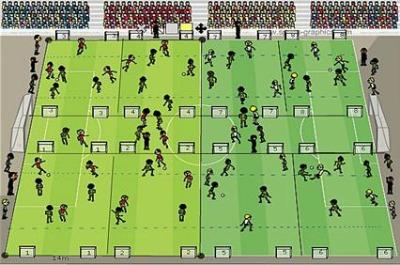
    Ireland is evolving and so are the methods of the many coaches around the country, but of all the small sided games programmes, FUNINO is the most creditable and the best format for developing the game of football.

    If you have heard of Funino you can download the ‘Ultimate Mini Game with Four Goals’ programme at the bottom of this article. Funino is the most excited game in the world and the only one designed to unlock creativity and game intelligence. Developed by the Horst Wein, a University Lecture and former German and Spanish Olympic Hockey Teams Coach. His methods have been used for over 20 years by the Royal Spanish Football Federation, for 7 years by Australian Football Federation and now the Mexican football Federation has published the first volume of “Futbol a la medida del nino”.

    “There was once a time when street football and free play was the norm. Then we become adults wanted to control it , make it organised and forgot the child in all of us” UEFA B Coach Mark O Sullivan

    What makes this even more relevant is an Irish man called Dermot Dalton of thebeautifulgame.ie is helping Wein re-write his methods, which are now being used by the North Dublin School Boy League. The programme which is designed for 7 to 9 year olds is currently being employed by six Professional Clubs in the German Bundesliga. A game that can be used for older players in training and even up-to and including professional level.

    Funino

    This is a game for young players to discover the magic of The Beautiful Game with a programme designed especially for them:

    • Experience the “renaissance of street football” in the 21st century.
    • Be the best coach you can be, creating a player-centred environment where young talent flourishes.
    • Introduce your players to game intelligence while establishing their technique, in a player-centred, game-oriented programme.
    • 32 official  games
    • 24 Preparatory/corrective games
    • 20+ important game variables

    Horst Wein’s training programme for 7-9 year olds is based on his proven game of Mini-Football, now called which is the abbreviation for “ Futbol a la medida del Niño” or “football designed for children.”

    The programme is the result of 27 years of innovation, practice and continuing improvement and is part of the Horst Wein Youth Football Development Model, which is the official textbook of the Spanish Football Federation since 1993 and is used by FC Barcelona, Athletico Bilbao and many top clubs around the world. This breakthrough approach to inducting young children into the game of football obviously has an emphasis on FUN so that children come to fall in love with the game from the earliest ages. It has been called the “Revival of Street Football. “

    NDSL

    Last Monday saw the official Funino programme launch at the NDSL headquarters. 20 mini pitches inside a full 11 aside pitch for a group of boys and girls age 8 and 9. A total of 85 kids turned out to experience the programme first hand. This is another great leap by the NDSL in trying to re-structure the grassroots game, who are the first league in Ireland to introduce this format. The training will continue every Monday from 6 to 7pm for u9s and 7 to 8pm for u10s and spaces are still available.

    The Benefits of the 3v3

    • The two wide goals at each end encourage young players to use the wings in attack and open up the play.
    • Playing with 2 goals stimulates greater reading and understanding of the game, including peripheral vision, perception and decision making skills before executing any actions.
    • Stimulates, more than any other traditional football game, intelligence, perception, imagination and creativity.
    • Sufficient space and time allows children to read the game and play constructive football and to develop basic communication skills.
    • More time and space, better reading of the game and better decision-making and skill execution means less mistakes.
    • Due to the fact that the same basic game situations appear again and again (i.e. the 2v1 situation) the young players learn very quickly.
    • In FUNino, 8 and 9 year olds enjoy more touches on the ball, treating it as their best friend. No long clearances or wild and dangerous kicks can be seen in which players “violate the ball”.
    • Players attack and defend in a triangular formation for better communication and collaboration. Positioning in the field is easy.
    • Allows an all round development of all participants as there are no fixed positions in a team which would avoid too early specialization. Everybody has to attack as well as to defend, using the whole pitch.
    • Usually there are lots of goals and goalmouth action.
    • Each player scores more than one goal per game.
    • All the players get to experience a starring role in this dynamic game.
    • All 3 players, including the weaker ones, play a critical role in this game and are involved mentally and physically throughout the game. Nobody can hide!

    We, at The Beautiful Game, believe that our proven youth development model can achieve a number of important goals at the same time:

    1.  All children get to enjoy the game of football as children (and not as mini-adults) as the game(s) are tailored to their needs.
    2. Children have the opportunity to reach their full potential, whatever that is, through an optimal development model, including a player-centred approach, that is games-oriented (rather than drills) and a guided discovery coaching style (rather than the traditional instruction style).
    3. As the model is more inclusive and fair than the traditional elitist model, there are many social and character/lifestyle benefits emanating from this approach.

    FUNINO 1-DAY COACH TRAINING CLINICS

    There will be a one day Funino course held the NDSL on Saturday 2nd November and Sunday 9th November. T

    Saturday 2nd November 2013

    9am – 4.30pm

    OR

    Sunday 10th November

    9am – 4.30pm

    Oscar Traynor Centre, Coolock

    €90 (including printed Funino manual)

    For further details on Funino contact dermot@thebeautifulgame.ie or call Dermot on 086 8513339.

    Download the FUNINO BROCHURE OCT 2013

    ==========================================================

    I always like to hear your opinions. Please comment below or email me info@thecoachdiary.com If, you don’t have anything to add then please forward this on to a friend. Thanks for reading.

    I’m also on twitter @Coachdiary
  • The Coach

    The Coach

    Coaches have so many different styles and personas, but one thing is for sure they all start out with the right intentions. So what sets the very best apart from the rest?

    About Life

    The very best coaches are life coaches, they teach the player much more than the tactical and technical aspects of a game, they prepare the athlete for life by sharing wisdom and insight based on experience. They will look to build a players confidence and trust in a though provoking and creative process that inspires them to maximise their personal, technical and tactical potential. Coaches help players improve their performances.

    They will always have the best interests of the players at heart, they will never do it for their own benefit and generally the best coaches have only one interest, to develop each player individually and collectively, build a great team. One thing is for sure, if a player reaches the very top it was through his own efforts and desire, with the guidance and help from a coach or two along the way. Coaching alone will not lead him/her to success. Commitment, the will to work hard and always striving to do their best and improve at least 1% every time they train, is where the real success comes from, the 6 inches between a players ears is how you work on it..

    They key to being successful as a coach is always be willing to learn.

    “As a coach you are responsible for the process, the player is responsible for the results, which are a matter of the players intentions, choices and actions supported by the coaches efforts and applications of the coaching process”.

    What makes a good Coach?

    Firstly, a good coach must be willing to learn and to learn you need to be willing to develop. Developing your coaching knowledge comes from being involved, practicing your methods and having the desire to go and attend courses (contact you local governing body), – opening up your mind by reading and studying different methods. You must be willing to evolve, listen and learn from others and the players you coach. A good coach understands that different people have different learning patterns and doesn’t stick to one forceful method to draw out a person’s talent just because that worked before. Players don’t need to feel nervous and put down at the same time, you should have just as much heart as his players. The way you communicate is also so important, players learn by doing not by watching you do. So make sure your message is short and always demonstrate the task, use your players but don’t always pick the same one. Try not to step in too often, let the game be the teacher. You can learn a lot from just observing.

    “It’s not experience that makes a coach great (although it does help); it’s the quality of their coaching,”

    I think it’s important to know the reasons why kids take up a sport. Many studies have asked the questions and the answers never seem to change:

    • To have fun and play;
    • To be with their friends;
    • To learn about the sport & improve their game related skills;
    • To compete;
    • To work on their fitness;
    • To do something I’m good at.

    A good coach supports, rewards, teaches, and makes a sport fun.

    Surprise; “winning” didn’t even make the top ten reasons. Study after study comes up with the same #1 result. Kids play sports for the fun of it. And not having fun is one of the major reasons 70 percent of kids quit playing sports by the time they’re 13. Most often it’s parents and coaches who want to win. Kids hardly care. For them, winning is just icing on the cake. They’re focused on simpler things. Most kids would rather play on a losing team than sit on the bench of a winning one. That doesn’t mean that kids don’t value winning, just that they prefer playing. If you want your players enjoying sports, all you have to do is make sure they are having fun.

    When it comes to looking at the reasons why children stop playing, it’s all of those in reverse.

    “Traditional coaching had been entirely teacher-directed and largely technique-orientated, whilst today emphasis is directed on tactical problem solving through games play”Lynne Spackmann

    I always tell my players to never give up and always do the best you can do, train with 100% commitment, with focus and the conscious mind.

    Build from the roots

    Alex Ferguson was a leader, when he arrived at Manchester United he had a vision, he had values and beliefs. He new how important it was to build from the ground. He put all his efforts on getting the best kids and working to develop the ones he already had. Starting with the foundations was key to his success.

    Sir Alex Ferguson: From the moment I got to Manchester United, I thought of only one thing: building a football club. I wanted to build right from the bottom. That was in order to create fluency and a continuity of supply to the first team. With this approach, the players all grow up together, producing a bond that, in turn, creates a spirit.

    When I arrived, only one player on the first team was under 24. Can you imagine that, for a club like Manchester United? I knew that a focus on youth would fit the club’s history, and my earlier coaching experience told me that winning with young players could be done and that I was good at working with them. So I had the confidence and conviction that if United was going to mean anything again, rebuilding the youth structure was crucial. You could say it was brave, but fortune favours the brave.

    Write down your Values

    Let’s face it. You can’t teach your players all the hundreds of life lessons there are to teach. But if you FOCUS on a small set of core values every day in your training, you can have a tremendous positive effect on your players. Your values will remind you who you are. Share them with your players. It’s important that an organisation also has its own values. Write them down and make sure you stick to them.

    “The goal of the staff at La Masia is to provide young kids with an education that goes far beyond football tactics and technique; it makes them good people, with strong values.” FCB

    When JOHN WOODEN, the great coach at UCLA finished 2nd year, his father gave him a card entitled, 7 Suggestions to follow, they were:

    • Be true to yourself.
    • Help others.
    • Make each day your masterpiece.
    • Drink deeply from good books, especially the Good Book.
    • Make friendship a fine art.
    • Build a shelter for a rainy day.
    • Pray for guidance and count and give thanks for your blessings each day.

    Wooden kept a copy of the card in his pocket the rest of his life and used these philosophies in coaching. I suggest you do the same and keep your values with you all the time. Another important task is to set down your rules early in relation to training and playing. A rule I use is, if you don’t train then you don’t start the game but you will always play. Players will respect you more if you stick to the rules and beliefs you have.

    “A coach shouldn’t be too easy with the ‘it’s just a game, go have fun’ stuff. He should train the team hard — but be able to encourage, motivate and direct without shouting.”

    Don’t leave commitments in your brain. Write them on paper. This does two things. First, it creates clarity by defining in specific terms what your value means. Second, it keeps you committed since it is easy to dismiss a thought, but harder to dismiss a value printed in front of you.

    Develop a style of Play

    When winning is all that matters, the smaller creative kids don’t get much of a look in. Usually the bigger, early developers get more football with suits a more direct style of play. Develop a style that suits every player big, small whatever. A good coach will have 15/16 players (11 aside) no more and each player will be working hard to get a place in the team. Don’t be like so many where these unfortunate 5 substitutes will get very little game time during the year, players learn best by playing not watching.

    Don’t be focused on results, coaches become more concerned with results than the style of football played or the natural expression of creativity and skill by the young players. “Kick and rush” and the “long ball” win out in the end. The constructive possession-based football that we have all come to admire in Spain cannot flourish in such a climate.

    Most importantly be fair to your players focus on development of the player and stick to the plan, they will reap the benefits in later years.

    “A good coach isn’t obsessed with winning but will motivate you and your team to want to win.”

    Prepare your sessions and make them FUN!

    Firstly, be on time (start on time) allows you time to prepare and sends out a message that you like punctuality. It’s important you prepare your sessions and work on at least one game related exercise per session and do it well. If you’re coaching younger the kids, the more variety the better. Make sure you include the ball with everything you do. Kids love being on the ball and they love showing off, so give them an opportunity to show you what they can do and always finish with a game.

    I’m forever complaining about the lack of dribbling skills Irish players have and despite everything we teach them. The biggest factor is that players are not given the freedom to express themselves through dribbling. In our anxiety to rush the adult passing game, we restrict the players’ individual freedom and in later years we end up with players who cannot beat a man or use their skills to devastating effect in attack. In every part of the pitch there are opportunities for players to go 1v1 or 2v1, in these situations players should be confident enough to take risks and dribbling must be encouraged. Always re-visit what you worked on and ask the players questions.

    “When it comes to development programs, what we are really talking about is creating an environment within which gifted players have the best opportunity to flourish.”

    Whats the rush

    Playing in leagues at very young ages means that we don’t actually encourage coaching at all, we create managers, who specialise in winning tactics and not in developing players. we focus on the winning and teaching the kids to play. What’s the rush, let the kids develop in age specific and related exercises. Some progressive organisations have already made great strides by introducing less-competitive structures and small-sided games. This will go a long way towards creating a healthy environment where young talent excels. Coaches who play favourites every week are definitely high on the lists of “what not to do” in coaching. A good coach is “one who does not recruit a load of new players each season just because of their skills but takes the ones he has and works with them to improve.”

    “A good coach understands that respect is to be earned and understands that they do not control the team, they are part of the team,”

    Always be in control

    Horst Wein stated, “Parents and coaches shouting from the sidelines is very unhelpful to young players for so many reasons. Firstly, they often cannot actually hear what is being said, and often it is confusing when there is more than one voice to listen to. Secondly, none of us responds well to orders, and thirdly, it puts the players off their game. This culture of over-coaching and too much “input” from the sidelines actually thwarts the decision-making ability of young players, which is a very important part of their development if they are to make it to the higher levels of the game. Be in control of the sideline and most importantly, let the parents know, that the only one who should be directing is the coaching staff and even at that, we want minimal instruction. This is their time to show you want they have learnt in training.” Don’t let that parent who thinks he knows it all, control your line and/or control the decisions of a referee. If he is so keen bark his orders maybe ask him would he like to take over a team at the club. All too often commanding parents are ruining the game for everyone involved.

    “Good coaches have the ability to tell you what needs improving, without making you feel bad.”

    Observe the game

    A good way to take you voice out of the action is to observe and take some notes. As Paul Swenson rightly put it, “The one thing that best summed up what separated the best coaches from the rest, was their highly developed skill of observation. These coaches had learned to critically observe their teams and players play, and then put their observations through an objective analysis that would help them identify strengths and weaknesses, that would enable them to more efficiently guide their players to become better. During games these coaches do not obsess about whether or not their team will win. They are calm and relaxed, carefully observing what their players and team are doing. To be effective at this it is necessary that they write their observations down. And it is amazing, that through this practice of observing and taking notes, that a soccer coaching intellect begins to develop, and a clear picture of where their team is really at begins to form.

    Through observation, a practiced skill, coaches are able to set targeted training goals, and through more observation, measure “tangible” progress.”

    It was said in a recent interview with Alex Ferguson,  “Early in his career, he delegated managing practices to assistant coaches so he could simply watch and observe what was going on with each individual player. He said, “I don’t think many people fully understand the value of observing.”

    Quite often we, as coaches, hinder the player’s development rather than aid it. The term “over-coaching” has often been used about this effect.

    “If the enjoyment of the game is taken away by adults who rant and rave on the touchline and the grassroots game becomes, in effect, a computer game controlled by dad’s, the opportunity for young players to plant the seeds of a lifelong love affair with the game will be diminished”Les Howie

    To Conclude:

    It’s important as a coach not to do the following:

    • Do not making winning your priority.
    • Never want to win more than the kids themselves.
    • Don’t risk a players safety.
    • Don’t select the best and forget about the rest every week.
    • Don’t be negative towards your players.
    • Never ridicule a players mistakes and don’t allow team mates to ridicule a player either.
    • don’t stop them from taking risks.
    • Don’t lose the head.
    • Never go back on your word or values.

    Negativity from the sideline bookmarks in a player’s brain and could effectively knock his/her confidence for the rest of the game. Be in control of your words and before you open your mouth, think about how your words will affect the player in question and team. Sadly, criticism does not correct mistakes but creates even greater pressure and consequently more mistakes.

    Another important aspect of good coaching is uniform. I don’t understand why clubs tolerate a coach not wearing the club colours. By being presentable sends out a good message to the players and expect the same from them. Practice what you preach.

    Most of what I spoke about above, is all habits – you either have good ones of bad ones, in any case the players will adapt to either. Habits make you, who you are. The key is controlling them and being consistent with everything you do. If you really want a habit to stick, then repeat it everyday for 21 days, this is how long it takes your brain to adapt to change.

    Don’t forget to make your session fun. We have moved away from line drills, give every player a ball and don’t have them waiting around for one. The more touches they get the better they will become!

    Make it a positive one! 

    ==========================================================

    I always like to hear your opinions. Please comment below or email me info@thecoachdiary.com If, you don’t have anything to add then please forward this on to a friend. Thanks for reading.

    I’m also on twitter @Coachdiary

  • Observation

    Observation

    My last post was about Match Analysis and the benefits of using notes during the game. With that I received an email from Paul Swenson a coach in the US. He told me about the clubs newsletter and how he had developed some game day observation sheets.  Most of the coaches are parent coaches.

    Pauls purpose was three fold:

    1. To underscore the importance of observation as a primary coaching tool.
    2. The game day sheets were a way to get coaches to think about appropriate themes they might not otherwise focus on.
    3. Most of my coaches, on some level, feel like they need to be trying to constantly “fix” things by telling players what to to during games, instead of letting the kids play and more objectively thinking about things they could work on in training. It’s my biggest problem. I have always told them they need to observe, so I finally created a tool for them to do that.

    “during games these coaches do not obsess about whether or not their team will win. They are calm and relaxed, carefully observing what their players and team are doing.”

    He went on to say “Your recent blog post inspired me to revisit this theme in my weekly email to coaches.”

    He asked the question: “What separated the best coaches from the rest of the coaches?”, “I wanted their opinion, because through their experiences they had worked with, watched and been mentored by some of the best soccer educators in the land.”

    Was the answer ‘sophisticated technical knowledge of the game?’ No. There are no secrets out there on how the game of soccer should be played. There are countless books and videos, courses and websites on how to coach soccer.” “Having an understanding of how the game of soccer should be played is certainly important, but once the wisdom is attained, how is it then taught to the players? Technical knowledge alone is not enough.”

    “Was the answer “a coach who knows how to dig deep inside their players and motivate them?” No. The best coaches understand that a player’s passion to play must come from within and not be coach dependent. In fact the best coaches understand that they will only have a player for a chapter in their playing life and it will serve their players better if they can empower players to learn to be independent, creative and self reliant whenever, and with whoever they are playing with or against, no matter the coach or the team they happen to be with.”

    Paul went on to talk about observation and the importance of taking notes.

    Obeservation

    The one thing that best summed up what separated the best coaches from the rest, was their highly developed skill of observation.”

    Through practice these coaches had learned to critically observe their teams and players play, and then put their observations through an objective analysis that would help them identify strengths and weaknesses, that would enable them to more efficiently guide their players to become better.

    “Communicate to the parents that you and you alone are the coach and that spectators shouting anything but encouragement from the sidelines is unacceptable.”

    During games these coaches do not obsess about whether or not their team will win. They are calm and relaxed, carefully observing what their players and team are doing. To be effective at this it is necessary that they write their observations down. And it is amazing, that through this practice of observing and taking notes, that a soccer coaching intellect begins to develop, and a Clear picture of where their team is really at begins to form. Through observation, a practiced skill, coaches are able to set targeted training goals, and through more observation, measure “tangible” progress.

    When Saturday Came

    On Saturday I observed a game from the parents side, where one coach in particular was non-stop directing their players and their voice was clearly heard all the way across the field, a constant stream of instruction. I was thinking, if the coach sees so many problems, it would be more effective for that coach to observe and take notes, and try to pick up on some patterns so they can effectively address them in training. The thing about a soccer game is that is DESIGNED to present problems to players, yet our tendency can be to want to solve the problems for the players while they are playing.

    How does that help to create players who are learning to solve their own problems and learning to make their own choices? In addition, on the parents side, there was a constant chorus of parents shouting instructions, often contradictory at the same time. Can you imagine what is like for the players on the field in this confusing hyped up atmosphere? With the coach and the parents shouting a jumble of instructions at players, how does that contribute to a relaxed environment where the players feel free to make their own choices and are not afraid to make mistakes, let alone try and communicate with each other?

    On game day it is so important that we let our players show us what they can do, and that we learn from it by observing and writing down our observations. It is also our responsibility as a team’s coach to protect our classroom, the game environment, and communicate to the parents that you and you alone are the coach and that spectators shouting anything but encouragement from the sidelines is unacceptable. You can’t overemphasise this one. It is interesting, because I see many coaches who do understand this importance of letting the kids play, and observing – some with notebook in hand. And more and more are jumping on board. If you haven’t, it’s not too late to start. Let your journey to be the best coach you can be begin today.

    TCD would like to Thank Paul Swenson for this content.                                                                                                  MRYSL Director of Coaching, REC                                                                                                                    www.mrysl.com

    -End

    This is a great message to all coaches, it says so much about what the role of the coach, mentor and/or parent. In this carefully crafted newsletter, Paul highlights so many great points about the benefits of taking notes and observing from the line. The very best coaches give minimal instruction and are constantly observing. Like he says, “it’s never too late to start”, it’s never too late to change your coaching mindset. Start by observing more and coaching less.

    I always like to hear your opinions. Please comment below or email me info@thecoachdiary.com If, you don’t have anything to add then please forward this on to a friend. Thanks for reading.

    I’m also on twitter @Coachdiary

  • Using Match Analysis

    Using Match Analysis

    Last weekend I started using a Match Analysis sheet for the team. I have used them before, but never really felt right at the time. This current bunch of players i’m working with, are ready. Collecting data in sports originates from the US but is widely used across the world in many sports. Soccer is certainly a late comer to analysis.

    The Concept

    This concept is widely used in the professional game and it is also part of the UEFA B license course. Personally I don’t think this is something you should use in SSG and really should only be used when coaching 11v11 or ages 13 and above. That would be Phase 3, Training to Train Phase as listed on the FAI player pathway. However there are ways of collecting very basic data in the SSG which will certainly benefit the player and coach.

    So to get everyone involved I asked the subs to split the task and share the work. This is a great way to keep them involved in the game. At halftime I allowed them to share the stats with the players, I used the same process at full-time. Even after one game, this was probably the first time ever I have heard the players be so in-tune with each others and themselves.

    As well as this I have asked the players to keep a diary of their training and match days. Noting the things they did well; how they felt before, during and after the game. Go as far as writing what they had for breakfast and how they felt before the game.

    The Benefits

    What are the benefits of Analysing a Game 

    • It’s a great way of keeping everyone involved, even the parents.
    • One thing is for sure, you will definitely see the game differently when using them.
    • It’s widely used to collect data from an opposing team, to highlight areas where they are most effective. Coaches who are aware of opponents strategies and tactics are most likely to be able to counteract the opponents strengths and exploit their weaknesses.
    • We all struggle to recall sequences of events accurately and often fail to recognise where a sequence of positive play originates, or where errors evolve and players’ view of the game can vary greatly.
    • Notational analysis gives the coach a factual record of data – of what does not lie. However, the method of data collection needs to be reliable, objective and relevant to the level of play. Most importantly it must add value to the player and coach.
    • There is no one method to collecting stats, nor is there one method for each level of the game. So use whatever you feel helps, get the best information back to your team.
    • There are two types of Analysis: team and player activity. Most generally focuses on player activity (name, position), what the action was (shot, free-kick), the time it occurred, where the action took place on the pitch (in attack or in defence) and the outcome of the event (was it a success?).
    • I would start with team performance first.
    • If using player, focus on 1-3 players per week, for them it will be more about performance improvement game by game. This could be done by a parent and again it’s another way of keeping them quiet on the line and could allow you do work on team stats also.
    • Capturing data can have a significant effective on leadership, player and team development.
    • It’s important that the data stored and even archived to see how trends and strategies develop over time.
    • Another use is to assess players pre-season over a series of matches.
    • If you can use video to back up your stats, this is best way to show the players exactly what your talking about and highlight the good aspects of a game.
    • If you are thinking of using data at the younger ages, I would suggest recording basic match information like opposition name, venue, date/time but more importantly who played and for how long, maybe even recoding how many times you played out from the back or 1v1s won etc – ensuring that an accurate record of playing time for these youngsters is kept by game, over a season.

    There are lots of data recording tools available, one which is widely used is  Stazpack, so whatever level of team you manage the collection and analysis of data aids both coach and player development. See also Performa Sports. I have attached my Match Analysis sheet, use it if you like or even add your own ideas and don’t forget to share them.

    Download TCD Match Analysis 2013 which I last updated on 29.11.13. 

    =====================================================

    Thanks to @lisafallonsport for inspiring me to devise my own. 

    I always like to hear your opinions. Please comment below or email me info@thecoachdiary.com If, you don’t have anything to add then please forward this on to a friend. Thanks for reading.

    I’m also on twitter @Coachdiary