Author: The Coach Diary

  • A Healthy Philosophy of Winning

    A Healthy Philosophy of Winning

    An important issue requiring clarification is the difference between professional and developmental models of sport. Professional sport is a huge commercial enterprise, where the major objectives are directly linked to their status in the entertainment industry. The goals of professional sports are to entertain and to make money. Financial success is of primary importance and depends heavily on winning.

    In a developmental model, sport is an arena for learning, in which the ultimate objective is to develop the individual. The most important product is not wins or dollars, but the quality of the experience for young athletes. In this sense, sport participation is an educational process whereby youngsters can learn to cope with realities they will face in later life. Although winning is sought after, it is by no means the primary goal. Profit is not measured in terms of euros and cents, but rather in terms of the skills and personal characteristics that are acquired.

    Most youth sport programs are oriented toward providing a healthy recreational and social-learning experience for youngsters. They are not intended to be miniature professional leagues. Unfortunately, some coaches get caught up in the “winning is everything” philosophy that characterises much of our sport culture. This is not to say that coaches should not try to build winning teams, but some- times winning becomes more important for the coach than it is for the athletes. Winning will take care of itself within the limits of your athletes’ talents and the quality of instruction they receive. In your role as a teacher, it is important to recognise that skills are most likely to develop within a positive and happy relationship between you and your athletes. And while happy athletes don’t always win, they need never lose.

    Young athletes can learn from both winning and losing. But for this to occur, winning must be put in a healthy perspective. More exactly, there is a four-part philosophy that Mastery Approach coaches communicate to their athletes.

    Young athletes can learn from both winning and losing. But for this to occur, winning must be put in a healthy perspective. More exactly, there is a four-part philosophy that Mastery Approach coaches communicate to their athletes.

    1. Winning isn’t everything, nor is it the only thing. Young athletes can’t possibly learn from winning and losing if they think the only objective is to beat their opponents. If youngsters leave your program having enjoyed relating to you and to their team- mates, feeling better about themselves, having improved their skills, and looking forward to future sport participation, you have accom- plished something far more important than a winning record or a league championship.

    2. Failure is not the same thing as losing. Athletes should not view losing as a sign of failure or as a threat to their personal value. They should be taught that losing a game is not a reflection of their own self-worth.

    3. Success is not equivalent to winning. Winning and losing apply to the outcome of a contest, whereas success and failure do not. How, then, can we define success in sports?

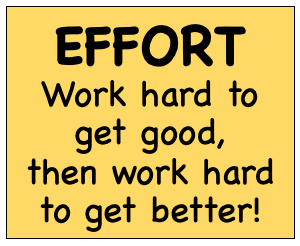
    4. Athletes should be taught that success is found in striving for victory. The important idea is that success is related to commitment and effort! Effort is within athletes’ zone of control. They have complete control over the amount of effort they give, but they have only limited control over the outcome that is achieved. “You have no control over results. All you can do is play to the best of your abilities. Success is YOU giving everything that YOU have.”

    The core idea in the Mastery Approach emphasises that success is achieved in striving to be your best. Thus, the focus is not on competing with others and trying to outdo them, but on developing one’s own abilities to the maximum. We saw this concept captured in John Wooden’s definition of success, and College Football Hall of Fame coach Frosty Westering expressed the same idea in this statement: “Doing your best is more important than being the best.”

    If you can impress on your athletes that they are never “losers” if they commit themselves to doing their best and giving maximum effort, you are bestowing a priceless gift that will assist them in many of life’s tasks. When winning is kept in a healthy perspective, the most important coaching product is not a won-lost record; it is the quality of the sport experience provided for the athletes.

    How can you teach a mastery-oriented philosophy of winning?

    First, have regular discussions about it. You must continually remind athletes about the importance of effort. Second, back up your words with actions. In other words, don’t just talk about effort, do something about it! Third, help athletes set individualised goals specific to them, and encourage them to work toward them. If they’re working on a technical skill, try to find a way to measure their performance so they can see their improvement. Use praise and recognition to reward effort and improvement. Encourage effort and persistence, telling athletes that skills develop gradually, not all at once. In a mastery climate, the “most improved player” award is just as important as the “most valuable player.” Finally, convey to your athletes that mistakes are one of the best ways to learn, and that they needn’t fear making them.

    John Wooden referred to mistakes as “stepping stones to achievement” because they provide the feedback needed to improve performance.

    Contribution By Prof. Ronald Smith

    END –

    We always like to hear your opinions and views. If you feel you have something to say or content to share, please comment below or email me coach@thecoachdiary.com 

  • BLOCK vs RANDOM PRACTICE: READ, PLAN, DO

    BLOCK vs RANDOM PRACTICE: READ, PLAN, DO

    How to Optimize Your Practice with Motor Learning

    Key Points

    Game skills are complex
    Every time you do a skill in a game, regardless of sport, you have to read, plan, and do. We call this process the “total skill


    It’s all about transfer
    Transfer is the word motor learning scientists use to describe real learning. When they study practice and how it impacts skill acquisition they always look at what the people can do the next day rather than the improvements they can see during the practice stage.

    Transfer=How much of the improvements made in practice actually show up the next day or in the game.

    Block Practice
    A traditional approach to practice that involves getting a high number of reps repeating the exact same movement over and over and over again (hitting 10 putts from the same spot).

    Random Practice
    A practice approach that randomizes reps – you never do the exact same thing twice (hitting 10 putts from different spots on the green).

    Random leads to wayyyyyy more transfer – why?
    In all of the studies we see a huge difference between block and random practice during the transfer test (the one that measures real learning). This happens because during random practice (when we never do the same thing twice) we are forced to read, plan, and do before every single rep.

    During block practice we simply repeat the previous movement and the reading and planning are eliminated from the equation.

    Block is easier to do, obviously, and will make us look better in practice. However, if we want to prepare to perform in an actual game, random is the better option.

    Post Content by Trevor Ragan and Train Ugly.com

    END –

    We always like to hear your opinions and views. If you feel you have something to say or content to share, please comment below or email me coach@thecoachdiary.com 

    If, you don’t have anything to add then please forward this on to a friend. As always, thanks for reading. I’m also on twitter @Coachdiary and @LetTheKidPlay

  • One of a Number: Surviving football’s ruthless system

    One of a Number: Surviving football’s ruthless system

    Millions of children dream of being the next Lionel Messi or Cristiano Ronaldo, but the reality is that only a tiny percentage will ever make it pro in football.

    Great documentary showing how ruthless and uneducated the industry is!

    By Goal.com @goal on twitter!

    END –

    We always like to hear your opinions and views. If you feel you have something to say or content to share, please comment below or email me coach@thecoachdiary.com 

    If, you don’t have anything to add then please forward this on to a friend. As always, thanks for reading. I’m also on twitter @Coachdiary and @LetTheKidPlay

  • Good Reads this week:

    Good Reads this week:

    Youth Sport and COVID-19: Contextual, Methodological, and Practical Considerations

    1. The unique circumstances surrounding COVID-19 offer an opportunity to reflect on existing youth sport provision. What defines a “real” sport? What are those key ingredients needed for sport to occur? Sport systems can often be resistant to change because this “is how we’ve always done it.” Now is the time to challenge that approach.

    https://www.frontiersin.org/…/fspor.2020.584252/full…

    2. “The science is clear – this can all be done safely. Other jurisdictions have done it. The Netherlands, Sweden, Italy, France – these are all countries where youth sport is being preserved through accredited sports clubs right now. They recognise it’s safe. They’ve looked at the science.”https://www.irishtimes.com/…/frustration-grows-among…

    3. 100% agree with Benny. I’ve been coaching children since July at our childcare facility and we haven’t had 1 child out sick with a flu or cold, never mind covid! Lots of Children are regressing and our government don’t seem to care. Absolutely we need to take care and practice safe protocols for the safety of everyone, however we can’t lock children and adults away from their sport & exercise any longer. It’s mentally draining being stuck in a house all day without any social interaction with your peers. Children, people need social interactions. https://www.irishnews.com/…/-kids-are-crumbling-and…/…

    END –

    We always like to hear your opinions and views. If you feel you have something to say or content to share, please comment below or email me coach@thecoachdiary.com 
    If, you don’t have anything to add then please forward this on to a friend. As always, thanks for reading. I’m also on twitter @Coachdiary and @LetTheKidPlay

  • Coach John Wooden

    Coach John Wooden

    “Essentially, I was always more of a practice coach than a game coach. This is because of my conviction that a player who practices well, plays well.” – Coach John Wooden

    Coach John Wooden

    Training was where Wooden always felt he really made the difference to his teams. Each day before training Wooden and his assistants would spend near to two hours planning the day’s session. The planning would sometimes last longer than the session itself. Once done, the notes for that session would be made on a small card that he carried in his pocket.

    Not only did this keep them handy, but he could also write down extra notes during the session as things developed.After practice, he would transfer all his notes into another notebook.

    His notebooks were an essential part of his coaching toolkit, and he would add notes after games as well.Your practice sessions are the most important part of the week.

    Make them count!

    END –

    We always like to hear your opinions and views. If you feel you have something to say or content to share, please comment below or email me coach@thecoachdiary.com 

    If, you don’t have anything to add then please forward this on to a friend. As always, thanks for reading. I’m also on twitter @Coachdiary and @LetTheKidPlay

  • “The more sports you can play from a younger age, the better

    “The more sports you can play from a younger age, the better

    “The more sports you can play from a younger age, the better” @offtheball @nathanmurf Stuart Lancaster on the ‘specialisation vs generalisation’ argument in underage sport 🏉#OTBFuture

    1. The more sports you can play from a younger age, the better;
    2. They become more rounded;
    3. The best players players are the ones who had the broadest experiences in different sports;
    4. Playing to space, identifying space in different sports, the more you play the better you get that feel for it;
    5. The best decision makers are the ones who played the most sports;
    6. U16s international was stopped as only 10% made it to u20s. It creates false hope & impressions on players.
    7. You can only identify talent at around 20 years;
    8. Rocky Road Study: Athletes who had setbacks, not selected, injuries = better achievements rates, resilience, determination.
    9. Full Video ➡️ bit.ly/2KWwexA

    END –

    We always like to hear your opinions and views. If you feel you have something to say or content to share, please comment below or email me coach@thecoachdiary.com 

    If, you don’t have anything to add then please forward this on to a friend. As always, thanks for reading. I’m also on twitter @Coachdiary and @LetTheKidPlay

  • @RvN1776 Ruud Van Nistelrooy

    @RvN1776 Ruud Van Nistelrooy

    @RvN1776 Ruud Van Nistelrooy a few years ago talking to @OxfordUnion

    ⚽️ Education is the most important thing;

    ⚽️ The environment is pushing kids into that dream that hardly anyone makes;

    ⚽️ They are tired of playing by 14/15;

    ⚽️ Let kids be kids;

    ⚽️ The best will grow & develop into the players they will be!

    END –

    We always like to hear your opinions and views. If you feel you have something to say or content to share, please comment below or email me coach@thecoachdiary.com 

    If, you don’t have anything to add then please forward this on to a friend. As always, thanks for reading. I’m also on twitter @Coachdiary and @LetTheKidPlay