Author: The Coach Diary

  • Euro 2012 – 10 players to watch out for..

    Euro 2012 – 10 players to watch out for..

    There are many “players to watch” at the euros and almost all of them you probably know about. I’ve tried to gather a selection of those you may not know too well or those that could turn out to be unlikely heroes and hopefully go on to have a great tournament.

    1. Alan Dzagoev (Russia)

    The CSKA Moscow midfielder revealed that Frank Lampard is his idol and the 21-year-old plays eerily like him – an attacking midfielder with an eye for goal as well as being able to play that ‘’killer pass’’ according to former mentor Guus Hiddink. His 26 goals in 102 games for the Muscovite club, as well as 4 strikes in 18 internationals, underlines his very reasonable return in front of goal for a midfielder. He also holds the record for making his debut at the youngest age for any outfield player, 18, for the Russian national team. He will be expected to supply the attackers such as Pavel Pogrebnyak, Roman Pavlyuchneko and Andriy Arshavin as Dick Advocaat’s side will hope to repeat their memorable run of four years ago when they ventured all the way to the semi-final stage.

    There are many “players to watch” type Euro 2012 articles out there at the moment. Almost all of them have named the same familiar players every time. I’ve tried to gather a selection of those you may not know too well or those that could turn out to be unlikely heroes and hopefully go on to have strong tournaments.

    2. Rui Patricio (Portugal)

    Rui Patricio Euro 2012

    The best goalkeeper in Portugal’s Primeira Liga, Rui  marshaled the Sporting CP defence and finished the season with the second best defence in Portugal. He is a world class shot-stopper but doubts may be raised over his physicality as a goalkeeper and ability to come and collect anything that comes into his box. The Portugal side for the tournament will have to be extremely tight defensively to have any hope of getting through the Group of Death and Rui Patricio will have to be at his decisive best for that to happen.

    3. Joao Periera (Portugal)

    Joao Periera Euro 2012

    Jose Bosingwa’s self-enforced exile from the Portuguese national squad has paved the way for Pereria to claim the spot as his own. The Portuguese defence, flanked by Pereira and Coentrao, does on paper have the possibility to be one of the strongest defences in the tournament. Pereira is an all-round talented right-back and his forays down the right-hand side will be vital to Portugal’s attacking play. During the season he put in particularly strong performances in Sporting CP’s impressive run in the Europa League. Having recently been signed by Valencia for just over 3m euros to solve their long running problem at right-back, Pereira’s confidence will be high and he possesses the ability to help drive this Portuguese side through a bitterly tough group. Forca Portugal

    4. André Schürrle (Germany)


    A productive forward throughout every underage level for Germany, this 21-year-old will be intent on continuing his fine goalscoring form at the biggest stage of all. 5 goals in 12 outings for the senior team, 5 in 4 games for the U-21’s and 10 in 11 games for the U19’s will have defender’s quaking in their boots as the Bayer Leverkusen striker will hope to establish himself at this tournament. Only the phenomenal goalscoring record of Mario Gomez this season cut see the Leverkusen man’s minutes curtailed as Germany coach Joachim Low prefers to operate with a lone striker.

    5. Andriy Yarmolenko (Ukraine)

    Andriy Yarmolenko Euro 2012
    A lot of the hope surrounding Ukraine rests on this man’s shoulders. He is just as comfortable deftly darting by players on the wing as he is bursting through the centre. A very skillful player and not one to hide his trickery, Yarmolenko had spoken of his deep admiration for Ukranian legend Shevchenko, only for the latter to return the favour by labeling Yarmolenko ”the future of Ukranian football.” With admirers stretching far and wide, a strong tournament could mean a big money move for one of Eastern Europe’s most entertaining players.

    6. Ibrahim Afellay (Netherlands)

    Ibrahim Afellay Euro 2012
    The forgotten man at Barcelona looks to have earned himself a starting place in the Dutch squad thanks to some impressive performances in recent friendlies. It seems likely he will start on the left hand side of the Dutch attack but will be allowed to interchange positions with the other attackers when the opportunity arises. His pace and directness makes him a problem to defend against. Afellay’s tireless work rate also benefits the team as he is not slow to track back and protect the full-back behind him, something essential for Dutch left-backs these days.

    7. Christian Eriksen (Denmark)

    At 20 years of age and with Barcelona, AC Milan and Manchester United keeping tabs on the Dane, Eriksen has the world at his feet heading into this tournament.  Comparisons with Michael Laudrup, Wesley Sneijder and Rafael van der Vaart are not wide of the mark at all as he has established himself as the fulcrum of Ajax’s team since making his debut at the tender age of 17. Described as a ‘’traditional number 10,’’ his world-class passing and dribbling capabilities should see him make a significant impact at the heart of this Danish team. Europe’s finest in the Group of Death.

    8. Milan Badelj (Croatia)


    Croatia, Dinamo Zagreb – graduated from Dinamo Zagreb’s youth academy and has now won four league titles with them – compared by some at the club to Luka Modric, whom he replaced in the first-team in 2008 – superb in both 2009/10 & 2010/11, leading to speculation about a move abroad which never materialised, form dipped a little in 2011/12 but the deep-lying playmaker is still an exciting talent

    9. Luuk de Jong (The Netherlands)

    The big striker has been prolific for his native country at underage level and will hoping to bring that with him to Euro 2012. His minutes on the pitch will be limited by the goal-crazy Robin van Persie but Bert van Marwijk will grant de Jong some opportunities and you can be sure the lively FC Twente attacker will be snapping up any chance he can sniff out. Not only is he renowned for his goalscoring exploits but last season, as well as being Twente’s top goalscorer, he also provided his team-mates with the most assists as he seeks to justify Patrick Kluivert’s claim of de Jong being the Netherlands’ “first choice striker for years to come.”

    10. Lukasz Piszczek (Poland)

    Lukasz Piszczek Euro 2012

    Borussia Dortmund’s Lukasz Piszczek enters the tournament as its most in-form right-back and his agent has made an awful lot of noise about his client’s ability. Piszczek has the physicality to match the threat of any left-winger but the doubt lies not with him personally, but with the defence he is playing in. The Polish defence is a far cry from Jurgen Klopp’s unit at Borussia Dortmund. Piszczek will be one of the players the locals will be hoping can lead the team on to bigger things.

    Others to keep an eye on:

    Kyriakos Papadopoulos – Defender (Greece)

    Robert Lewandoski – Forward (Poland)

    Igor Akinfeyev – Goalkeeper (Russia)

    Yann M’Vila, Marvin Martin – Midfield (France)

    Rasmus Elm – Midfield (Sweden)

    Yaroslav Rakiisky – Defender (Ukraine)

    Jetro Williams – Defender, Kevin Strootman – Winger and Luciano Narsingh – Forward(Netherlands)

    Miguel Lopes – Defender and Nelson Oliveira, Silvestre Varela – Forward (Portugal)

    Marco Reus – Forward, Mario Goetze, Midfield, Mat Hummels – DF/Midfield

    James McClean – Winger (Ireland)

    Fabio Borini – Forward (Italy)

    Jordi Alba – Defender, Santi Cazorla – Midfield and Javi Martinez  – Defender(Spain)

    Have you any players we don’t really know about that might make an impact? 

    Research: EPL T, Guardian and Wikipedia.
  • Fun Facts about Euro 2012

    Fun Facts about Euro 2012

    Some fun facts about Euro 2012 and I’ll start with the best one:  Ireland is the only squad that doesn’t have any players from its own domestic league while England is the only squad that only has players from its own domestic league-system.

    • Robbie Keane (LA Galaxy, MLS) and Christian Wilhelmsson (Al-Hilal, Saudi Pro League) are the only two players that play outside of Europe.
    • The oldest player in the tournament is Kostas Chalkias (38 years old).
    • The youngest is Jetro Willems (18 years old).
    • There are 3 coaches that are not from the country they are coaching: Fernando Santos [Portuguese] coaching Greece; Dick Advocaat [Dutch] coaching Russia and Giovanni Trapattoni [Italian] coaching Ireland
    • Miroslav Klose has the most goals (63) in the competition while Iker Casillas has the most caps (129).
    • The lowest FIFA ranked team is Poland (65th). The highest is Spain (1).
    • This is the first time Ukraine will compete in a European Championship.
    • Slavek and Slavko are the official mascots of the Euro 2012.
    • The German, the Italian, the Dutch and the English teams visited the Auschwitz concentration camp before the start of the tournament.
    • Croatian coach Slaven Bilic will step down as coach of the Croatian team and become the coach of Lokomotiv Moscow after the Euros.
    • Morten Olsen has been coach of Denmark since 2000.
    • The oldest coach is Giovanni Trapattoni (73). The youngest is Paulo Bento (42).
    • Markus Rosenberg [Sweden] and Paul Green [Ireland] are the only two players that are free agents.
    • Manchester City have the most players heading to Poland/Ukraine (18).
    • UEFA leases the stadiums and actually pays rent for them.
    • EURO 2012 will be the last with 16 teams in the final part. Beginning from the EURO 2016, in France, there will be 24 finalists.
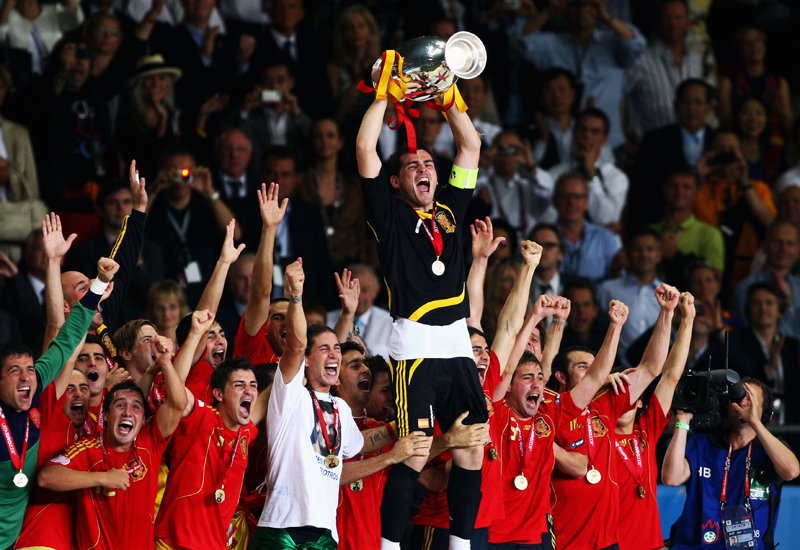
    • If Spain win, they will become the first team to win two consecutive Euros and a World Cup in between.
    • For the first time in the history the European Football Tournament will be held in the Eastern Europe.
    • In total there have been 59 players ruled out of the tournament with an injury. The most in European Championship history.
    • The estimated value of the Cup made from pure silver is worth €20.000. Its height – 60 cm, weight – 8 kg.
    • The biggest of the host-stadiums in Ukraine is the National Sports Complex “Olympic” in Kyiv. It has a capacity of about 60,000 spectators.
    • The smallest arena is in Lviv and it can seat 35,000 spectators.
    • Among Poland’s stadiums, the biggest is the National Stadium in Warsaw that has a capacity of about 50,000 spectators. The smallest arena is situated in Wroclaw and has a capacity of 40,000 spectators.
    • Every team in the tournament will receive 8 million euros. – 1 million euros will be given for a win in the group stage. – 500,000 euros for a draw in the group stage. – 2 million euros for a win in the quarter-finals. – 3 million for a semi-final victory euros.
    • In the final, the winning team will be awarded 7.5 million euros and the runner-up will receive 4.5 million euros.
    • UEFA will also give 1 million euros to the team finishing third in the group.

    Facts are credited to http://www.footandball.net/

  • Laureano Ruiz – the man behind Barca’s playing philosophy

    Laureano Ruiz – the man behind Barca’s playing philosophy

    Hugo Benitez/El Flaco wrote an excellent piece on the Swedish football site SvenskaFans describing the story of how our Club came to play in its characteristic way. From the very start, the style was thanks to a man named Laureano Ruiz. With the author’s permission, totalBarça has translated his great piece, which can be found below. The original article, in Swedish, can be found here.

    Laureano Ruiz – the man behind Barça’s playing philosophy 

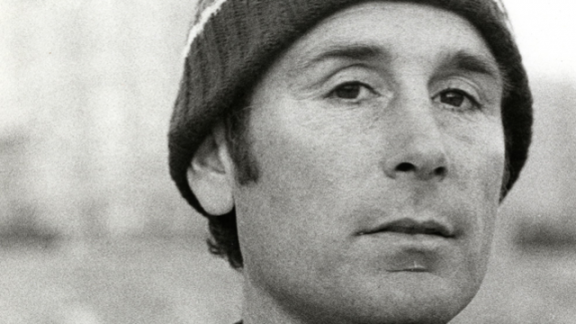
    With all due respect to Johan Cruyff and Oriol Tort, the man who laid the foundation for the philosophy and the ideas about football that symbolize the Club today was Laureano Ruiz, a man from Cantabria who believed the players’ technique was more important than their physical attributes.

    A Juvenil game revolutionized the club 

    The 15th of April 1972. Barcelona’s Juvenil A were playing the final of the Copa Catalunya against CF Damm, a team that had gotten their name from a beer brand. In the stands 15,000 spectators sat down and in the honor stand you could find the Catalan football federation president, the Spanish Juvenil national team coach, and several directors from FC Barcelona, among them president Agusti Montal and first team coach Rinus Michels.

    The Juvenil team was coached by Josep Maria Minguella, who would later become a powerful agent and who, through his contacts, came to hear about a certain Lionel Messi. The expectations were high as Barça’s Juvenil A team hadn’t won a title for years. But they were defeated by Damm 3-2 and the loss was seen as a huge disaster. Right after the final whistle Montal left his seat and went down the stairs, running into a journalist to whom he said, “Something has to be done. This is unacceptable. I can accept a loss against a football team, but not to a beer company!”

    Soon thereafter, during the summer of 1972, the club contacted Laureano Ruiz, who at the time was working as youth team coach at Racing Santander. He was given the job as coach for the Juvenil A team and coordinator for the other three Juvenil teams. During the next five years, the team would be crowned both Catalan and Spanish champions every year. Before that spell, they had only won the Spanish trophy twice in their history, in 1951 and 1959. Ruiz had a clear vision when he took over and from day one he would imprint his training methods and his playing style on the youth teams. Under his leadership, his footballers started to play with a 3-4-3 formation and one year after he had gotten the job, he convinced the Club that every youth team should play in the same way.

    Pic: Oriol Tort

    In 1974 he was named the main coordinator for the whole academy. Thereafter, he quickly became aware of the huge responsibility he now had for all of the youngsters he was in charge of. When he asked his players what they did when they didn’t have practice, they all answered the same way: “Míster, I play football”. Ruiz became horrified knowing that most of them wouldn’t become professionals and he choose to talk to the board about it. Together they made the decision to force all the players to choose between two alternatives: to work or study. Ruiz understood that at their young age it was just as important, or even more so, to develop and raise them as people.

    The founder and visionary 

    To understand the importance and the impact Laureano Ruiz had, you first have to understand the situation the Club was in at that time. Barça supporters weren’t used to success at that time, unlike today. When they won the League title in 1974, it was the first time they had been Spanish champions since 1960. The mentality that prevailed at the Club was very different from today. They were much more interested in big, strong players and devalued short players, no matter how good they were with the ball. At the Club’s main office there were a sign on the wall that said “turn around if you are here to offer a Juvenil player that is shorter than 1.80m”. One of the first things Ruiz did when he got hired was to take that sign down. The ‘Rondo’, the now legendary exercise that you can see the first team players do at training sessions every day, was first practiced thanks to Ruiz, a man who was convinced that touch, technique, and playing intelligence were a player’s most important skills.

     Ruiz may have won titles with Juvenil A, but the real battle was to come internally inside the Club. There was an idea from many years back that you had to go for the tall and strong players. So when Ruiz started to sign short but talented players, he had to fight to have his will and vision accepted. In an interview with journalist Martí Perarnau in the beginning of his time at the club, Ruiz said: “The first thing I did was to organise games so that I could see them play, and I got a file with their strengths and which players the Club was counting on and which ones they weren’t. Some of them I directly saw weren’t good enough to make it, but when I looked in the file it said they were good and were going to continue at the Club. And it was the reverse with the ones I liked. Among them were Fortes and Corominas, but they were short. During the coming three weeks I fought a personal war with myself because I liked the two players, but they had been in the Club since they were 8 years old and I said to myself: ‘Laureano, they have known them since they were kids and maybe they are right’. But the more I saw them play, the more I liked them and in two years they were both in the first team. None of the other players that were a lot more physically strong, but whom I didn’t believe in, made it to a professional level. Those were the ideas at the Club then.”

    There were many who had been at the Club for years who were skeptical of Ruiz’s ideas. One day a group of youth coaches came to him and said: “Your players never run, what are they doing? They have to run to get resilient and strong!” Ruiz answered: “When are we then going to teach them to play football if we use all the time teaching them to run?”. During the 70s coaches were convinced that you first should build up the player’s physiques and then, when they were about 17 years old, you would teach them to play football. Ruiz turned everything upside-down with his idea that  it was more important to teach the youngsters how to treat the ball.

    In a conversation with Albert Puiga, an ex-youth coach at Barcelona and today Guillermo Amor’s right hand as manager of La Masia, Ruiz explained his football philosophy: “Let us say that you and I coach two teams with kids that are 10, 11, and 12 years old and all are about equally good. You try to teach them to play good football, a passing game and with tactical basics while I tell mine to only play long balls and try to shoot. I can assure you that [at first] I will always win against you, by using your mistakes. Break a bad pass and goal. If we however continue with the same training methods during a three year period, you will most likely win every game against us. Your players will have learned how to play while mine haven’t. That’s how easy it is.”

    In 1976 Barcelona fired its first team coach Hennes Weisweller and Ruiz took over. During his short time as manager of the first team, he promoted defender ‘Tente’ Sánchez, which wasn’t a popular decision in Can Barça considering that he had been sitting on the bench in the B team and to add to that he was short. Sánchez would years later take his place in the first team and even become captain. Other players Ruiz helped to develop were Lobo Carrasco, Calderé, Rojo, Padraza, Mortalla, and Estella. Every single one earning a place in the first team.

    But it wasn’t only talent that was important for a player’s development according to Ruiz, it was also a lot of will and hard work. Some years later, as the coach for Catalan school Escolapios de Sarrí, he held trials together with some colleagues. After they were done Ruiz drew attention to a boy who stood by himself kicking a ball against the wall. He walked up to him and asked him what he was doing and the boy answered that he was waiting for his dad to come and pick him up. Ruiz turned to the other coaches and wanted to know more about the young kid and they told him that he wasn’t bad, but that he didn’t have any future as a professional. Ruiz told them that he thought they were wrong. He had seen a boy with so much hope and will that he knew he would eventually make it. The boy’s name was Albert Ferrer and he saw his dream come true when he earned a place in Cruyff’s dream team.

    The legacy

    Laureano Ruiz left FC Barcelona in 1978. During his six years in the Catalan capital he had revolutionized the youth academy, making the Club go for small and technically skilled players, and planting the seed for what would come to be the Barça style on the pitch. But despite his influence, it would take many more years before the Club could reap the rewards from his hard and invaluable work. After he had left, the club fell into a long identity crisis in which the first team changed playing styles as often as they changed coaches. Tito Vilanova remembers this time clearly. According to the current assistant coach, there was a clear playing model when he and Pep arrived at La Masia as kids with coaches like Charly Rexach, Quique, Costas, Olmo, De la Cruz, and Artola. Under Rexach’s leadership, Vilanova and the others learned to play exactly in the same way as the first team does today. The problem was, according to Tito Vilanova, that this playing style was only used in the academy and not in the first team, where under the leadership of Englishman Terry Venables at that time, they used a more direct game, and it made it harder for the B team players to adapt when they were promoted.

    The teams lacked continuity and to top it off, the players themselves started to believe that without strong physiques, it would be impossible to have a future as a football player. There is an anecdote about Josep Guardiola when he was 15 years old. The doctors were going to do tests on him to estimate how tall he would be when he got older. Pep was told that he would be taller than 1.80m and he had an outburst of joy, convinced that that was all it took to become a professional football player. Today Guardiola has shown that he no longer attaches any significance at all to such a test.

    Talking about Pep, during his time at La Masia he got to go up against Ruiz. It was in 1984 and Ruiz was coaching Escolapios. To celebrate a special occasion at the school, FC Barcelona was invited to play a game. The Infantil team went there and defeated the home side. Afterwards, Laureano Ruiz went to talk to the Barça Infantil coach Roca. They had earlier worked together at Barcelona and during the conversation Ruiz mentioned that Roca’s team had scored two goals on corner kicks with a corner variant that Ruiz had taught. Roca answered that his kids had only trained together for four days and that it was impossible that they had learned that variation in such a short time. Ruiz didn’t believe him and turned to the Barça players. He asked who had taken the corners and two boys raised their hands. Ruiz asked where they had learned it, and they answered that they had seen the older kids do the same exercises. One of the young boys was Josep Guardiola.

    It would take until 1988 and the arrival of Johan Cruyff as first team coach before all the teams in the academy started to play in the same way, with the same model and philosophy. The circle was closed and even if Cruyff’s role was fundamental, one should not forget the importance of Laureano Ruiz, who was the person who first started to believe in a 3-4-3 formation with talented small players and the importance of playing beautiful football.

    The problem was that Ruiz didn’t have the Dutch charisma and personality to be able to convince people inside the Club from the start, something that Ruiz himself acknowledges. In 1991 when Ruiz was coaching Racing de Santander’s youth teams, he received a visit from Oriol Tort, one of the most symbolic people in Barça’s history (the new La Masia even carries his name). Tort had come to take a look on De la Peña and when Ruiz asked him what he thought about the youngster, Tort answered that he looked very promising. Ruiz also asked what he thought about Munitis and Ivan Helguera and Tort answered that they all were very good, but that they weren’t the Club’s priorities at the moment. “So sad that they are short, right?” said Ruiz with a smile. Tort jumped and replied: “Laureano, talent is the only thing that matters!”. Ruiz then started to laugh. “Don’t you remember that that was what I said during all my years at Barcelona and you all just discouraged me?”. “Yes, yes I remember, but el Flaco (Cruyff) has changed the way we see football.”

    The eternal wisdom 

    Laureano Ruiz was the grandfather who planted the seed, Cruyff was the father who nurtured the idea and helped it grow, and Guardiola is the heir who is reaping the rewards. That was what Martí Perarnau wrote in his book about the origins of Barcelona’s playing style and how the Club is working to continue delivering future cracks from La Masia. And everything started with that loss against CF Damm in the Copa Catalunya that made the Club hire Ruiz as coach for Juvenil A. He laid the foundation for what we are seeing and experiencing today. A football romantic who believed that it isn’t about choosing between winning or playing beautifully, but that by playing well the chances of winning increase.

    Laureano Ruiz is today

    working as the director for a communal football school in Santander. Every year he becomes responsible for 700 kids. To make them understand what is expected of them, Ruiz will repeat this phrase: “The better you play, the more you will enjoy it. If you succeed in playing well or score a great goal you will achieve happiness. That should be your main goal, not to win the game!”

    Some years ago the school played a game against Racing, the region’s biggest team and a superior opponent. They kept their positions, showed a great attitude, but lost in the final minutes. Ruiz had as a habit never entered the dressing room, but he did it this time to congratulate his players. He found them in tears and with sunken heads and he said: “You haven’t lost. When you play with such a will and give your all, then you never lose.”

    Sources
    La fuerza de un sueño – los caminos del exito (2010) – Albert Puig
    Senda de campeones – de La Masia al Camp Nou (2011) – Martí Perarnau

    Written by Hugo Benitez/El Flaco (SvenskaFans); Translated by Alexandra

    Read more: http://www.totalbarca.com/2012/history/laureano-ruiz-the-man-behind-barcas-playing-philosophy/#ixzz1vIxpe0eN

  • Eduardo Valcarcel, con el pie derecho

    Eduardo Valcarcel, con el pie derecho

    Eduardo Valcarcel is a true inspiration, he is a fantastic coach who inspires everyone around him. I met Eduardo last year in Poland and as well as being an amazing person, he is also a very funny and charismatic man.

    Pic: Eduardo at the Football Conference in Poland 2011

    [media id=27]

    Eduardo Valcárcel impresses the cracks

    The boys are amazed by the skills of Eduardo on Football Cracks. He shows his elegance with the ball and even challenges Zidane.

    [media id=28]


  • Inside Soccer – Coach like a pro!

    Inside Soccer – Coach like a pro!

    We have teamed up with Inside Soccer your only resource for soccer coaching. As a coach who has bought numerous books and DVD’s on coaching drills etc. I came across INSIDESOCCER 4 years ago and have never looked back since. I have to say this resource is all a coach/manager needs, you won’t find a better soccer coaching website anywhere in the world today.

    InsideSoccer.com is the most comprehensive soccer website for coach education and player development in the world. Since its inception in 2008, InsideSoccer has constantly sought to expose to a global soccer community the philosophies and methodologies of the best clubs on the planet.

    Now for the first time ever InsideSoccer is able to bring to life an unbeatable on-field & online global soccer experience. The Coach diary has managed to get all subscribers of our site a MASSIVE 20% of the  BOOTROOM annual plan.

    WHAT IS IN THE BOOT ROOM?

    Well just about everything a Coach needs to COACH and MANAGE a team. Just add the players!

    What they said?

    • OVER 1.2 MILLION USERS
    • 96% USER SATISFACTION
    A random survey of users indicated that users love the website, the quality of the content, the diversity of the drills and practices, advice from the experts.

    Inside Soccer is Unique

    • The only site with over 750 drills from the top professional club academies around the world.
    • These are actual drills and sessions used by the academies
    Academy coaches
    • Comprehensive tips from Star Players – Messi, Maldini, Chastain and more to come – EXCLUSIVELY for INSIDE SOCCER
    A random survey of users indicated that the users love the website, the quality of the content, the diversity of the drills and practices, advice from the experts.
    Coach
    • Drills and Practices
    • Training Programs
    • Pro Clubs
    • Star players
    Manage
    • My Team
    • My Animation
    • My Library
    • Learn it – Love It

    Drills and Practices

    • WATCH over 500 drills for all ages and abilities
    • EXPERIENCE the Guide to Coaching
    • ADDRESS every aspect of the game
    • ENJOY new content regularly published

    Training Programs

    • DEVELOP for all ages
    • PROGRESSIVE and COMPREHENSIVE
    • DESIGNED by Academy coaches
    • TECHNICAL, TACTICAL, PHYSICAL and PSYCHOLOGICAL

    Check out INSIDE SOCCER Introduction Video http://www.insidesoccer.com/is-web/help?id=21013

    BOOK NOW: https://www.insidesoccer.com/is-web/subscription

    Use Promo Code: TCD20 – Limited offer

    Please refer any queries to info@thecoachdiary.com

  • Coca-Cola Irish Cup with Ajax & Ireland

    Coca-Cola Irish Cup with Ajax & Ireland

    One of Europe’s leading youth club football teams will play in Dublin this summer as part of the inaugural Coca-Cola Irish Cup competition.

    Scheduled for Dublin July 13th – 15th 2012 your team can also get an opportunity to become part of it.  Accredited by the Football Association of Ireland (FAI), DBSportsTours are hosting a three day football tournament for boys (12’s – 15’s Club Section) and girls (1996/97).

    So far they are pleased to confirm the NIFA champions, league rep sides, teams from Derry, Cork and an Elite 1997 boys section consisting of  Ajax, Reading FC, West Bromwich Albion and Ireland international team. 

    The Ajax 1997’s, made up of Ajax Under-15 players from their Greek, Cypriot and Dutch academies will play in the AUL Complex on Sunday July 15th in exhibition matches against International opposition. The tournaments will be played in a round robin and knock-out format.

    Speaking with David Berber of DB Sports Tours during the week he said, “All age groups are now over subscribed but applications can still be made  until May 1st 2012, we are absolutely delighted with the response so far and especially to have such great teams participating in the very first year of the competition”. 

    Coca-cola

    Also speaking at the recent announcement, John Coffey, Sponsorships Manager with Coca-Cola HBC Ireland said:
    “We’re delighted to be title sponsor of the inaugural Coca-Cola Irish Cup competition, and are looking forward to an exciting summer ahead. 2012 is an important year for Coca-Cola and football, and this high profile grassroots tournament in Dublin will feature the best of domestic and International football talent of the future”.

    Accommodation 

    They have now filled all there accommodation packages but are still helping teams source hotel accommodation from as little as €20 per night.  With team entry fee as little as €13 per player for 3 days of fantastic football, referees and top quality pitches its fantastic value not to be missed.

    If you are interested in applying for this tournament you can submit your application form direct to info@dbsportstours.ie


  • I don’t get it!!

    I don’t get it!!

    Went to see an u11s DDSL premier game today.

    We play 9v9 in Ireland and on the basis of that game this morning, which was a so called top team versus a mid table team, we definitely should not be playing 9V9 at u11s. 7V7 or even 8v8 is a more appropriate game for these kids.

    One team had most of the possession and at times tried to play ball, but due to the numbers and size of the pitch it was almost impossible to string more then 4 passes together before it broke down. The other team, never once played from the back and the centre half took all the goal kicks, which were hit route one.

    If these kids were playing on a smaller pitch with less players then they would have not choice but to play from the back and they would get plenty more touches of the ball. (Also we could adopt the rules so that they had to play out for the back)

    The Argument

    This argument has being going on way to long now and its about time the SFAI got the finger out and started restructering the game so that it is age appropriate. The FAI really should be demanding change to coincide with Europe.

    I think its time we set-up a group not a committee for adopting changes to the game. Youth Soccer Ireland or something like that.

    Let me know your thoughts?