Without doubt, one of the greatest concerns among today’s athletes and coaches in all sports is how to improve Speed and Power. The workshop will focus on developing Speed and Acceleration for multi-directional sports, covering the theory, coaching methodology and practical demonstrations. This 1 day workshop is for both coaches and athletes who want to learn how to develop and coach Speed.
No matter what your starting point you can always get faster!
Speed and quickness are skills that can be taught and not just something you were born with. By using a number of specialised acceleration training techniques and football specific conditioning protocols, which stimulate both the muscular and the nervous system, athletes can improve their speed, agility, acceleration and power. These techniques have been used with academy and professional football teams in the UK and Europe with great success in injury prevention and multidirectional speed development.
Did you know?
65% of footballers over the age of 13 are slower turning on one side than the other, by up to 0.65 of a second.
Many footballers can improve their speed and quickness just by correcting their running biomechanics.
Reactive Speed can be improved by up to 30% with the correct training in just four weeks.
If youngsters don’t acquire the basic movement skills by the age of 12 then they will very rarely make professional footballers
Speed Workshop Agenda
1 Day course
1. Theory Presentation
Biomechanics of multidirectional sport
How to develop Speed & Acceleration
Long term athlete development
When & How to train?
The Importance of functional movement
Case Studies
Question & Answer session
2. Practical session –
Running Bionechancis
Dynamic Movement Skills
Quickness
Turning Ability
Acceleration & Deceleration
3. Q&A
4. BREAK
5. Practical session
Explosiveness
Speed Development
Strength & Power
6. Question & Answer Session – Finish at 5.30pm
Details:
When: Saturday 7th December
Time: Start 12.30 – Finish 5.30pm
Cost: €25
Location: NDSL Academy – Oscar Traynor Coaching & Development Centre
I was at the Tosh Farrell seminar the other night, which was very good. What was disappointing was the practical part of the workshop. Tosh arrives out on the pitch and has to ask attendees to step in and be players.
Like most people, I was not dressed for playing football as I came straight from work. I’ve been to many FAI Coaches Association courses before and every time the coaches attending, have to step in to be the players. The courses for the Football Festival were all held at the AUL, so organising players should not have been a problem. I can name at least 5 clubs who are within a ten minute drive and would be only be delighted to provide players, so why does this have to happen every-time! We want our kids getting more time on the training pitch and yet when a vastly experienced coach comes to Ireland, we offer him 30+ year old men for him to work with. Surely we can do better then this.
A quick look at the attendee list some days prior to the workshop and ask the relevant clubs. Most FAI, RDO’s work closely with teams, no excuse really. The session Tosh was trying to put on was adapted for youth players not 30+ year old men with no balance and limited coordination, in work attire. (No disrespect to the men who stepped in and fair play for doing so). His time coaching would have been much more enjoyable with young players progressing through the session. It was ‘Father Ted’ stuff! Note to oneself, if you’re ever bringing over an established coach, make sure he has players to work with.
Apart from that, the session progressed well and Tosh is clearly passionate about developing the technical aspect of the player. I will have a full interview with Tosh, to post in the coming weeks.
Tosh’s Coach Development
Tosh’s Program is based on trying to improve your coaching knowledge and technique through in-person and virtual modes of learning. Whether you are a novice coach looking to learn how to prepare for a practice session, or if you are an experienced coach looking for additional accreditation, you can now take advantage of the Tosh Farrell Soccer Methodology
Well-done to the Coaches Association on putting on the Coaching Festival, for anyone interested in coaches there was certainly a lot on offer. The more workshops will see like these the better for everyone.
FUNiño is the introductory module of Futbol a la medida del niño, the world famous “Youth Football Development Model” by Horst Wein which has been the official textbook of the Spanish Football Federation since 1993, and represents a significant breakthrough in youth football coaching.
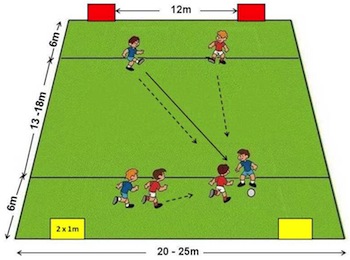
The magic formula of playing 3v3 on 4 goals introduces width, options, perception and decision-making – laying a solid foundation for Game Intelligence.
FUNiño is the fastest growing development game for kids in the world today. It has been used extensively all over Europe and South America, currently in use at 6 Bundesliga clubs and recommended by Arrigo Sacchi, Technical Director of the Italian Football Federation.
2 Day Coach Training Clinic – With Dermot Dalton of The Beautiful Game in partnership with the NDSL
Sunday 21 and Sunday 28 April 2013
Time: 10.00am – 5.30pm
Location: Oscar Traynor Centre (NDSL)
Cost: €100 p.p. (includes 100 page manual, value €30)
A complete development programme for 7-9 year olds :
Learn to use games rather than drills for greater development
Learn the Game Intelligence Approach to Coaching
Learn Guided Discovery for greater understanding and retention
24 Preparatory/corrective games
32 Official FUNiño games
ITINERARY
Sunday 21st April
DAY 1 PRACTICAL CLINIC:
10.00 am – the official rules
Preparatory and corrective exercises/game 1
12.30 pm – Lunch
13.30 pm – Preparatory and corrective exercises/games 2
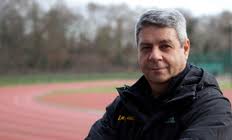
Mike is the Performance and Rehabilitation Director of Sport Dimensions, a company he set-up, specialising in Speed, Power and Rehabilitation techniques and training.
He is a qualified UEFA Coach, Strength & Conditioning Coach, Speed Coach and Rehabilitation Specialist. Mike works with a number professional football clubs in the UK, Europe and the USA, developing Speed and Conditioning programmes –
Clients include among others, athletes from, Chelsea FC, Chelsea Academy, Bolton Wanderers Stoke City, Crystal Palace, Ipswich Town, Saracens, Bath, Harlequins, Celtic, Blackburn, QPR, Italian Football Federation, GB Athletics, GB Bobsleigh, as well as Winter and Summer Olympians.
Mike runs coaching workshops and seminars on Soccer Speed and The Long Term Development of Young Footballers, in the UK, Europe and the USA and he also lectures at various universities on Biomechanics and injury prevention. He has developed a number of protocols for Performance and Rehabilitation which are being used successfully in professional teams and private practices.
Mike has been working with Chelsea Football club for many years and has developed Speed and Conditioning programs for the Academy – youngsters aged from 9 to 21 years old.
RUNNING
Are you running properly?
Poor running technique can lead to unnecessary injury risks if they are not picked up early.
“Being able to run fast in straight lines only, or having the capacity to Lift very heavy weights in the gym, will not necessarily transfer onto the football pitch”
Many recreational runners are placing undue strain on their bodies, as well as compromising their speed, by using the wrong technique. Conditioning coach Mike Antoniades has developed a unique methodology for teaching the correct and most efficient running technique to athletes and recreational users of all levels.
Are you running efficiently?
Some of the most obvious weaknesses I see in runners and joggers are:
Bouncing up and down too much
Over striding
Not using their hamstrings enough
Landing on feet too heavily
Breaking action on landing
Not using arms
Twist midriff side to side while running
The head and upper body are bent forward
Jogging slower than you could walk!
Most joggers and runners are biomechanically inefficient because their running technique is poor.
They don’t use the necessary body parts efficiently so when they are supposed to be enjoying themselves they are instead suffering pain.
Mike explains a few of the basics.
What is football speed?
Many coaches and trainers believe that speed is something you are born with rather than a skill you can develop. Genetics is a very important factor and does make a difference to the make up and shape of athletes and their capacity to become stronger and more powerful. But strength and power are only two components of speed. They will assist in how fast you can run in a straight line, but in a multi-directional sport like football, being able to tun fast in straight lines only, or having the capacity to lift very heavy weights in the gym, will not neoessarily transfer an to the football bitch in terms of speed.
Football speed is a skill and just like any other skill it can be taught, it can be developed, and it can be improved through a systematic and progressive training approach.
Coaches and parents of young footballers, although they have the best interests of their children at heart, are usually just copying training drills or methodologies that they hear about or see the professional teams doing and in many situations these are detrimentel to the football and physical development of the youngsters.
Many professional football clubs have used specialist sprint coaches, whose background is track and field, to improve the speed of the players, but the biomechanics of straight line sprinting is different to the multi-directionar speed required in football. Practicing straight line sprinting continuously will improve a players conditioning, but it has very little functional benefit for a multi-directional sport like football.
Why?
Because full-out sprinting in a football game only makes up about one per cent of the total movement in a 90 minute game! You may ask, is the ability to run fast over 50 metres not important? Of course it is, but let’s put it into perspective.
“Football is a multi-directional, explosive Sport where there is a change of movement every four seconds”.
As I’ve said a couple of times already, Football is a multi-directional, explosive sport where there is a change of movement every four seconds. There is little benefit in football players spending too much time on drills which develop maximum straight line velocity when they would benefit more from shorter multi¬directional explosive training using the ball.
So, focusing an football specific moverments and individual technical skills is far more beneficial to the development of the young footballer.
FOOTBALL SPEED
How do you develop football speed?
In most football clubs whether at youth, amateur or professional level, there is no effective teaching of speed. There are many different ways of approaching the structure of speed training, but even today with all the modern coaching methodologies and available knowledge and research, speed training is coached as part of fitness and in many cases it is counterproductive to the development of football speed.
No consideration is given to the relationship between functional movement, the neuromuscular system, the energy systems, the type of speed required for the sport, the effect of the training on young athletes, recovery periods and other influencing factors.
Age is one of the most important factors. Coaches must remember that children are not mini adults and cannot train in the same way.
Scientifically it has been proven that strength is determined by developing the muscular system. Endurance is deterrnined by the carcliovascular system.
Speed, meanwhile, is determined by the nervous system and coordination.
There are THREE KEY POINTS to remember when developing football speed:
The optimal training period for developing speed
Training the neuromuseular system, when and how can this be done?
Training football-specific speed
RUNNING FASTER
So how can you run faster, more efficiently and avoid injury?
The nervous, muscular, skeletal and cardiovascular systems of our body are all involved when we run. They all combine to create the neuromuscular and neuromechanical systems. We can improve the biomechanical movements for runners by teaching the body and the mind the correct motor patterns.
When you want to change a movement in your body it needs to be stored in your muscle memory so you can repeat without thinking, particularly when you are tired. When you perform a motion the body sends messages to the brain in a certain sequence.
To create a permanent map in your brain and nervous system you need to repeat this motion many times until it is ingrained in your muscles and your brain.
The primary objective of motor learning is to train the Movement rather than the Muscle.
Once we have taught the movement then improving the athletic performance of a runner is imperative in the pursuit of excellence and in injury prevention.
The neuromuscular system then has to be stimulated to recruit and contract motor units simultaneously and to increase the strength of the contraction.
Did you know?
65% of footballers over the age of 12 are slower turning on one side than the on the other, by up to o,85 of a second.
Many young footballers can improve their speed and quickness just by correcting their running biomechanics.
Reactive speed can be improved by up to 3o% with the correct training in just four weeks.
If youngsters acquire the basic movement skills by the age of 13 then they will very rarely make professional footballers.
I always like to hear your opinions. Please comment below or email me info@thecoachdiary.com If, you don’t have anything to add then please forward this on to a friend. Thanks for reading. I’m also on twitter @Coachdiary
Coerver Coaching Ireland are starting 2 day workshop for coaches of all levels.
The NDSL Academy will host the first one in May on Saturday 18th and Sunday 19th.
Along with Austin Speight from Coerver coaching, Gareth Hayden will be looking after the SAQ session and Tom Bates doing the Sports Psychology and Elite Performance part. Personally I think this is great value at €75.00.
NDSL COERVER COACHING – Weekend May 18/19 2013
2 Day Event
NDSL Coolock – 10-4 PM Each Day.
Coerver Coaching sessions – Austin Speight
SAQ / Strength and Conditioning sessions – Gareth Hayden
Sports Psychology – Tom Bates- WBA
Elite performance coach- Tom Bates – WBA
Cost for 2 days just €75.00
Note: Places are limited so early booking is advised. All coaches attending must be pre booked, no walk ons on the day.
For more information call: Coerver Office – 042 936 6910 – NDSL – 087 951 3624
Portuguese football coach and Youth Academy Director of Sporting Club Braga, Hugo Vicente is in Ireland this week doing coaching clinics, he was brought to Ireland by David Berber of DB Sports Tours. I’ll be helping Hugo out tomorrow night at our Club, where he will be taking the u12’s for what will be a memorable session.
Sarah O’Donovan spoke to him about player development and his philosophies on the game, which can be transferred to any sport..
IN every sport, developing solid foundations for future success is a key aim. Funding and a long-term commitment are crucial elements of this, but SC Braga coach Hugo Vicente believes a programme for development is the cornerstone of any good plan. Vicente was recruited from Portuguese club Benfica and installed at SC Braga for that specific purpose.
“Qualifying for the Europa League final against FC Porto in Dublin was a sign of the progress being made within the club, but the youth structures weren’t showing the same level of improvement as the senior structures.“The first part of the puzzle was looking at the demands placed on the players at each age group.“In Portugal every age group from U10 upwards plays in an official competition and because we were the best club in the region, despite the lack of organisation, we had the best players.“We were easily beating other teams but nothing was happening to improve the level of the players. There was no need to work more efficiently or challenge themselves. It was too easy for them.“We re-organised it by having them compete in the higher age groups to redress the balance”.
His Vision
Vicente admits that coming in to an organisation and presenting your vision can meet hostility. “There was a programme in place prior to my arrival with simple guidelines and targets for each group but that wasn’t being followed. “The coaching was random and according to the coach that was assigned, so my job spec was to put in place a full-use programme that would look at the player as a whole entity from U8 up to U14.
From U15 we hold official national competitions, so all preparation is geared towards presenting players at that competition.
“As is the norm in France, Spain and Portugal the players who come through the ranks to U15 level are then part of the professional programme. “There was naturally resistance, people don’t sit well with change. ”
I had presented the project to the academy director and he was happy to move forward with it, and most importantly agreed with it, but there were others in the club who felt their ideas were more important than the club ideas. “You ask any coach if they want to coach Chelsea or Barcelona and they will say yes, but what they don’t realise is that 60% of the work is done much earlier in the career of the players.
“What coaches can add instead is quality when providing the session in terms of correct feedback and watching things properly. It’s not about coming up with an amazing drill”, You, as a coach, can never be more important than the programme of the club, especially at youth level.”
“I mean everyone in the club knew that change was required and I suppose the resistance was more related to the ideology of the change rather than actual change. “You end up having to say ‘Look this is the direction we will take’. Obviously this will not suit everyone and the intention is not to hurt egos.”
Vicente pinpoints identifying a style of play for the club as one of the main aspects of the implementation structure. “To best explain the importance of implementing such a rigid system, say I’m the coach of a particular age group and I like technical players, fast players, but the next coach might prefer working with big, strong, physical players. “He could decide to replace the players that I was developing with players that have a more physical dimension — resulting in my work and those technically good players disappearing into the mist.”
The challenge
“Implementing a core philosophy was the first challenge. And the second challenge was improving the scouting facility available to us in the region to gather the players that we felt would benefit from our preferred style of coaching.” “Another challenge was facilities; believe it or not when I came here first we had the use of one sand pitch, one time per week because it is common in Portugal still to have half of the amateur teams in the country playing on a sand pitch.
“I go to the UK and they say other countries are so much more developed, but in truth in Portugal astro-turf pitches and grass pitches aren’t the norm!”
Vicente admits that while the theory is well documented, he feels the most important job after implementation is control. “You can buy books. You can read all the literature if you wish. “You will always find people willing to agree, but when you see them working, when it was put in to practice, it was just talking, it was never done.
“For example I find sessions in Ireland are very drill-orientated or focused on shadow plays, because they want their players to know how to play the game. “I want my players to know how to play the game but I want them to learn and live in situations in order to be able to understand them, which I have found translates in to progress in competitive situations much faster.
“We say openly that we want to focus on winning and people pretend to be shocked, but they misconstrue what we mean by winning. It’s not winning at all costs. “We want to win as a consequence of the way we work. We want our players to try to solve the problem. If they solve the problem better than the others they will win. It’s as simple as that. “Winning here in the youth projects should be about putting players in a position to reach the top.”
The Irish System
Vicente is concerned with a number of aspects of the Irish system currently. “I feel there is a lack of contact time with the ball, especially in terms of the youth. The quality of that contact time is also questionable. I think people still work without questioning the goal of the exercise.
“They say ‘but we have always done it this way’ and what they fail to understand is that we are coaching or preparing our kids for what will come in 10 years.” “Nobody understands, nobody can say accurately what the game can be in 10 years, but we can look at history and see how the game has evolved and predict where it might go with a programme to facilitate that expectation. “I think people still work the same way as when they were coached as players and this is one of the great mistakes.
In Ireland it may also be considered a problem to be near to one of the biggest football competitions in the world in the Premier League, but that can be a good thing.
“Some of the best players might be poached early but you must remember they will be playing and working with the best, so that will improve them as players and benefit the national team in the long term. “The key issue is the lack of professional organisation that the clubs have in Ireland and what I mean by that is under your amateur reality, that you should be working in a professional way.”
“You say you want to develop your players technically but you go to the game and because you want to win you always ask your goalkeeper to kick the ball long, far away from your goal. “You don’t allow the players a chance to take on an opponent. This is a common mistake from coaches and they totally go against what they said was a top priority without even noticing. “You must think about your daily actions and the result that has on the youth development of a player.”
CLINIC DETAILS HUGO VICENTE has been running a series of clinics in Ireland all this week and over the weekend.
The clinic will involve a three-hour workshop broken down into two sections: theoretical and practical. Irish coaches will first be presented with a lecture detailing the make-up of the Portuguese club’s youth structure, goals, methods and specific details in the day-to-day running.
The beautiful game (Horst Wein) has devised an optimal programme to develop the creative potential of 7-9 year old players.
On Monday the 4th February 6.30pm-9.30pm.
This evening session will consist of theory and practical introduction to the rapidly growing FUNINO game that is taking the world by storm. FUNINO represents the first module in Horst Wein’s Optimal Youth Football Development Model or “Futbol a la medida del Nino.
“The Official Textbook of the Royal Spanish Football Federation since 1993!”
The game which inspired 3 Mexican under 17 players to World Cup success in 2011 and currently in use in four Bundesliga academies has recently been rolled out in such diverse places as India, Germany, Panama and Costa Rica…
This website uses cookies to improve your experience. We'll assume you're ok with this, but you can opt-out if you wish. Cookie settingsACCEPT
Privacy & Cookies Policy
Privacy Overview
This website uses cookies to improve your experience while you navigate through the website. Out of these cookies, the cookies that are categorized as necessary are stored on your browser as they are essential for the working of basic functionalities of the website. We also use third-party cookies that help us analyze and understand how you use this website. These cookies will be stored in your browser only with your consent. You also have the option to opt-out of these cookies. But opting out of some of these cookies may have an effect on your browsing experience.
Necessary cookies are absolutely essential for the website to function properly. This category only includes cookies that ensures basic functionalities and security features of the website. These cookies do not store any personal information.
Any cookies that may not be particularly necessary for the website to function and is used specifically to collect user personal data via analytics, ads, other embedded contents are termed as non-necessary cookies. It is mandatory to procure user consent prior to running these cookies on your website.