Category: Irish Grassroots Football

  • Take a Break – your child probably needs one too!

    Take a Break – your child probably needs one too!

    When your 7 or 8 years old season ends, give your child a break from the game. Kids might be playing an entire year. Even if you child doesn’t want one, I suggest he/she takes one.

    Muscles need to relax

    Let his or her muscles relax. This could be the time to try something else and use different muscles groups. To often kids are asked to continue training all year around, not even the pro’s train all year, so why ask 7 or 8 year olds to do so. After all these little guys and girls are still growing and constantly running & doing the same techniques in a certain sport (which only concentrates on some types of movement) cannot always be good for the child. Generally a child will be using the left or right side, depending on what foot they kick with (Football is a very uncoordinated sport).

    Sometimes taking a break from a certain sport like soccer and trying something new for a month or so, will help with a players coordination and balance. They might just want to take a break altogether and run around after friends, climb walls and play chasing. They may start swimming  or cycling with all this lovely weather we are getting.

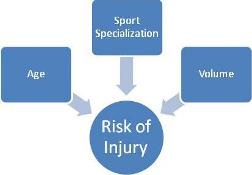
    Using other parts of the body and moving in different directions or even just relaxing can be good for your child. Lots of young players are experiencing injuries that pro’s usually get and this has a lot to do with to much too soon and never ending seasons with training all year around.

    186,000 soccer related injuries with 80% of those under the age of 24

    According to the US Consumer Product Safety Commission in 2006 there were more than 186,000 soccer related injuries with 80% of those under the age of 24.

    Texas Health Resources Fort Worth physical therapist Kiley Cohen said she sees a lot of soccer related injuries–some incredibly young. “I’ve seen them in the past as young as 12 and 13 years old that have torn ACL’S.”
    Texas Health Resources Dr. Damond Blueitt said soccer can take a toll on feet ankles and knees–not to mention the occasional concussion–but most injuries are the product of simply playing too much soccer.

    “Most of the soccer injuries are the overuse injuries because a lot of these young athletes play soccer all year around and never really take a break so they get some overuse injuries,” Dr. Blueitt said. A girl called Dennise is lucky–she’s never been hurt before even tough she played without a break for six years. “A season was over on Friday and the next Friday another season will begin,” Dennise said.

    For now Dennise will have to get her kicks by watching the soccer on TV–after all it’s the sport she’s loved since she was six years old. “It’s amazing seeing all those players. I kind of get teary eyed myself,” Denise said. “I’m going to be back in January.”

    -End

    I always like to hear your opinions and views. If you feel you have something to say, please comment below or email me info@thecoachdiary.com If, you don’t have anything to add then please forward this on to a friend. As always, thanks for reading.

    I’m also on twitter @Coachdiary

  • Cup Finals

    Cup Finals

    This weekend Saturday and Sunday, kids, parents and coaches can see some of the greatest talent on show in Dublin. The DDSL cup finals will take place at the AUL and the NDSL will take place at the Oscra Traynor Centre.

    Showtime

    Anyone interested in watching some Irish grassroots football of the highest calibre should get down to either venue from 10am until 3pm.

    Good luck to all teams involved and lets hope that coaches and parents can refrain from marching the sideline instructing theirs players with every single move they take.

    Be fair to your players

    To the coaches, be fair to all your team and give every single player some game time, after all they all contributed in some way to get the team to this great occasion and possibly a once in a life time experience for some player and their families..

    I know alot of time and effort goes into organising this event and although I firmly believe some ages should not be in cup competition playing 11v11s until much later in life, it’s still a great occasion for all concerned and organisers etc

    Bets of luck from the coach diary

    “Let the kids play”

    If you have a cup final coming up, be sure to let me know, Leagues, Clubs or Players!

  • The Benefits for the kids in organised football/sports

    The Benefits for the kids in organised football/sports

    Being In Sports

    While many parents considering placing their children in organised sports and know the inherent dangers of competitive play, they may not be as aware of the benefits. Sports participation offers health and fitness advantages as well as teaches children the skill of cooperation and life lessons about winning and losing.

    Fitness

    Organised sports get children off the sofa and on the pitches. By participating in an organised sport help builds a childs stamina and making him more physically fit and healthier. The exercise from organised sports can help a young child to reach his activity goal for the day and decrease the likelihood of developing chronic medical conditions resulting from inactivity.

    Cooperation

    There is no “I” in team, and few team can rely on a single player for the team’s success. Every player on a soccer, team plays an important part in the game, and without the full cooperation of all team players, the team cannot be successful. By being a part of a team, a child learns to play his own part to help his whole team be successful.

    Learning About Winning and Losing

    Sports has winners and losers. Losing a game can build character as the members of the team must learn from their mistakes and strive to make a difference at the next game. Team sports also teach children to become gracious winners, as many teams encourage congratulations for both teams on a good game played, no matter the outcome (important this is always encouraged). While losing hurts, and winning feels good, learning how to not overreact to either situation can make a child a better person.

    “Sports can provide excellent educational opportunities for social development because many of the social and moral requirements for participation in sports are parallels to how individuals must function in a law-abiding society,”

    If you child is not involved with a team, then get them involved in a team sport or in a past time that will keep them off the streets and hanging around with the wrong people and into something positive. To many children are gallivanting these days with no respect for society or the law. Organised sports, gives kids an opportunity to become community guardian as apposed to community nightmare!

    Sport is good!

  • FAI – UEFA Grassroots Club Competition

    FAI – UEFA Grassroots Club Competition

    Dublin City Council / FAI Road to Europa League Finals 2011

    Tonight I witnessed some very pleasant football by both boys and girls from u10s club teams. The FAI ran a competition for u10s to take part in the Europa League final on the 18th May at the Dublin Arena or Aviva Stadium as we know it. Jobstown Celtic all weather pitch was the location for one of the 4 heats contesting in Dublin today.

    The Kids Rules

    The rules were simple, no parents allowed to coach or shout, just encouragement and coaches were asked to supervise. Squads of 6 players participating in a 4v4 games with

    • No goalkeepers,
    • No slide tackles,
    • Shaking of hand before and after the games
    • No foul language aloud
    • No set positions
    • Points deduction for abusive parents or coaches.
    • Bonus points for sportsmanship (not sure if any team got them)
    • Tip off (2 players stood back to back with the ball in between them and turned on the sound of the whistle, when the ball dropped the game was off)

    3 Goals to score in

    The small pitches had an extra 2 goals either side of the main goal and if you could dribble the ball through either of those goals after 3 consecutive passes were made from different players you got 2 points. 1 point for scoring in the big goal. The aim of the exercise was too get kids passing the ball, get them thinking for themselves.

    It also got kids getting the ball wide, moving the ball from left to right and thinking and communicating with each other. The games started slowly, but then the kids seemed to get the hang of what they were doing; their was some great 3 and 4 touch passes which lead to goals in the main goal and some tricky play which lead to some great little dribbles through the cones in the corners.

    “Let the kids play”

    I was a little disappointed with some coaches who seemed to be taking the games a little to seriously counting their teams passes (1…2…3..etc) and then telling them to score where they taught best. After all, the exercise was for the kids to make those decisions by themselves, not have adults telling them what to do.

    A lot of good things came of this exercise, It proved that playing 4v4s or 5v5s is so much better for these young players. Players enjoyed it and they got…

    1. Plenty touches of the ball
    2. Rules made by adults for kids and with the interests of the kids at heart NOT THE ADULTS
    3. There was lots of goals scored
    4. The play was quick
    5. The kids had to think quickly
    6. All players got plenty of football and all played
    7. Players keeping the ball
    8. Players doing tricks (No one telling them not to)
    9. No parents yelling
    10. No coaches barking orders or shadowing the players (some still a little competitive)
    11. And all the kids wanted to do, was play and score goals.

    Back to Basics

    Now fast forward  to this weekend, some of the same kids will be out playing 9v9s football or even 11v11s on huge pitches and you can take all those 11 positive points and throw them in the bin. Why? well, because we are putting kids onto adults football pitches and asking them to play an adults game, with adults rules and with more adults running the lines, abusing refs and making decisions for the kids at play. Adults running the administrations, so far removed from what a 9 or 10 year old wants and needs its scary!!

    This was an opportunity for the leagues to witness something positive, something that the kids enjoyed, finally a game organised by adults that the kids could make decisions for themselves and not have the added pressure of 3 to 4 adults all screaming 3 to 4 different instruction at them. The kids football was back for ……2 hours…..!

    Positive Exercise

    So too, Gerry Reardon and all the FAI staff who helped organise this very worthwhile exercise, even if my team didn’t win; who cares the kids all won in my eyes.

    P.s Don’t give up on this, it was a brilliant night of football and with a little fine tuning definitely something that can be rolled out in the future.!!

    Looking forward to the finals on Tuesday the 17th May and of course the main event on the 18th May Benfica V Porto, I think so!

  • Whats wrong with kids football is the Adults

    Whats wrong with kids football is the Adults

    – well not all, because we know that their are some amazing coaches, mentors and administrators working in the game but their are also some who should not be involved and working with kids.

    This weekend I dropped by some of the Easter tournaments  going on around the city and I couldn’t get over how competitive most of the coaches were. I assumed this mini tournaments were for fun and an opportunity for coaches to watch their players and give players who don’t usually play some game time. How wrong was I!

    Commentators

    One coach of an u9’s team spent the entire tournament telling his players what to do. He coached every single player through every single game. At one stage he even decide to give his views on how every single player was doing and even tho they were winning by a good score, he felt he had to give a running commentary on how each player was doing;  7 of the 9 players were given negative comments by this coach. To my pleasure the losing coach, sat back and gave minimal instruction to his player and in fact the losing team was playing much better football.

    Rules that have the kids interest at heart

    The problem with these tournaments is that clubs who run them, don’t really think about kids; for instance they kids were playing 20 minutes half’s all the way to the final which for me is way to much time for u9’s to be playing on a hot day. Like the previous post there should be a rule where teams have to play all players for a minimum amount of time; this would stop teams from trying to win over player development and fun.

    While I congratulate clubs for organising these tournaments, they should try and keep the teams local so that parents and kids don’t have to travel across the city to play. We need to get back to community football and inviting local teams helps build and encourage kids to play within their community.

    Fun is key

    My concern is that these so called tournaments should be primarily about fun and a lot of what i saw yesterday was not fun for the kids participating. I witnessed kids breaking down and being then told to stay on, I saw other kids hobbling through games, other coming of crying and you could clearly see some were struggling. Some of the comments from the coaches on the line were a disgrace and made me wonder how parents could leave their children with these people. Of the majority of the teams participating the coaches were running the lines as if these players were professionals and this was the Champions Leagues.

    Strict Rules – With the kids in mind

    All tournaments should have strict rules and designed for the kids by the kids. Clubs organising these tournaments and referees should have power to step at any stage if they feel kids are being unfairly treated, sideline should be silent and tournament ethos should be about letting the kids play.

    “This is all so a great opportunity for child development offices of certain leagues to attend and witness how some of these coaches are treating their players”.

    “My main thrust is to try to get adult egos out of children’s games.” and some of these tournaments this weekend had so much of what I despise.  “can you get adults in a child’s endeavor to think more like children? The biggest problem with sports today has been that 9-year-olds are being coached and  by people who haven’t seen the age of 9 for more than 30 years. They bring a 40-year-old mind to the pitch to organise and coach a game that theoretically is supposed to be serving the children.”

    Bob Bigelow

    Bob Bigelow, former Boston Celtics forward – For the past 16 years, Bigelow, a Winchester native, has been discussing the idea that adults involved in the organisation of youth sports who are living out their own sports fantasy through their children are sending the wrong message to kids. His presentations to parent groups have taken him around the globe several times.

    Bigelow states “The first battleground is to get adults to understand what being a kid is about — what is that child within the context of sports as an activity? The younger these children are,” he said, “they have fare more incapabilities (sic) than capabilities. It is hard for adults to understand when their core mentality and understanding of sports is gained from watching TV or what they learned in high school sports.”

    “People who have no physical education or child development background have no business coaching children, especially those younger than 14,” he said. “Too many coaches who get involved in the youth sports program use the one-size-fits-all approach.” Not all those involved in organised youth sports have the wrong approach, according to Bigelow.

    “The delicious irony in all of this is that so many of the adults in youth sports, the lion’s share being age 28 to 45, grew up differently than I did,” he said. “Those in the 35- to 45-year-old group were involved in organized youth sports. At my age, 98 percent of what I did as a athlete was done with other kids, no adult involvement until I was about 14. As kids, we modified, adapted and figured it out on our own. We didn’t have adults interfering.

    I’m off to another one tomorrow let’s see what happens…

    What I don’t understand about this tournaments is why aren’t they a round-robin; why ask kids 9 and 10 year olds to play 20 minutes a half against 2-3 teams when they could play 20 minutes, just one half and play everyone in the so called tournament and why have medals for 1st and 2nd only, when all the kids played their part in making the tournament a success. Tournaments or blitz’s whatever you want to call them at certain ages should not be about a winner but more about all the teams competing and making sure every player gets enough game time. Whatever about remembering you won the league at age 10, who the hell is gonna remember who won a u9s or 10s etc Easter tournament. I just don’t get it!!!

  • World Class Tournament on this Easter weekend at St. Kevins

    World Class Tournament on this Easter weekend at St. Kevins

    Details

    Put your feet this up… Friday April 22nd KO 11am SKB VS BRONDBY (Denmark) 12-30 WBA VS ST PAULI (Germany). 5PM BRONDBY VS SUNDERLAND and 6.30 ST PAULI VS ARSENAL. It is an under 12 tourament full day Friday and Saturday with the placed games and final on Sunday

    Go along to see some top class European football in action this weekend, if its the last two Tournaments were anything to go by then this promises to be even belter!

    Entrance fee only €2

    Any other big tournaments out there, let me know

  • Effective tips for talking to your coach

    Effective tips for talking to your coach

    Last week I received an email about a parent who wasn’t happy with his coach and asked about how to approach an issue. Well I’m delighted he did because it was a great question to ask and we all encounter a problem with a parent or coach at some stage.

    Talk to the coach

    If your child plays organised sports, there’s a good chance you will need to discuss an issue or problem with a coach. Regardless of the issue, your goal should be to work with the coach to reach a resolution that is best for everyone – your child, the team, the coach and you. Most importantly everyone should be in for the kids benefits.

    How to get your message across

    How you deliver your message will have a significant affect on whether you will be heard and whether your concerns will be addressed. If the issue is serious, don’t be afraid to talk with the coach. After all, you are your child’s only advocate and if you remain silent or let a problem fester too long, the situation may only get worse so finding an amicable resolution quickly, is very important.

    Here are a few tips to help ensure communication with your child’s coach is positive and productive:

    Approach your conversation in a cooperative, respectful and pleasant manner.

    As a parent, you are heavily invested in your child’s well-being, as well as being emotionally invested. But if you let your emotions take control of the discussion, you risk angering the very person – the coach – who can help your child succeed in the sport. So stay level-headed (calm). Understand that the coach must balance the needs of individual players with the collective needs of the team. Coaches have the challenge of hearing and accommodating all their players, not just one (A good coach will treat all the kids the same).

    Avoid talking to the coach right after a game or competition.

    Emotions often run high after games, especially when a team loses. This is not a good time to approach a coach with complaints about playing time or suggestions about game strategy. Unless it’s an emergency, wait a day or two to bring your concerns to the coach. Gather your thoughts, let things settle back to normal. Check your emotions and you just might discover that what was so important at the time is not worth pursuing at the moment.

    If, after a cool-down period, you still feel the need to approach the coach, contact him or her and schedule a time to meet. Make sure the meeting provides enough privacy so everyone can talk freely and enough time so no one feels rushed.

    Remain calm and use an appropriate tone of voice.

    The old adage “It’s not what you say but how you say it” comes into play here. If you approach a coach in an angry or accusatory (suggesting that one has done wrong) fashion, he or she is more inclined to dismiss your concern, and your message will get lost in the delivery. The right tone is a calm, even, conversational tone that fosters a feeling of cooperation and openness.

    State your concerns, listen and keep an open mind.

    State your concern in a straightforward and nonjudgmental manner, sticking to the facts. For example, blurting out, “Jack doesn’t get much playing time, and he thinks you don’t like him,” will only put the coach on the defensive.

    Instead, take a non-accusatory stance: “It seems like Jack is playing less. Is there a problem I should be aware of, how can he get more playing time?” Here, you are inviting dialogue and requesting help, not making accusations. Listen to the coach’s response so you can fully understand the situation and mutually work toward a positive solution. A compromise may be in order, it might also be an opportunity for the child to set some personal goals.

    A lesson in Life

    Sometimes, however, the coach’s decision won’t be what you want. This is a perfect opportunity to teach your child that you sometimes have to accept an authority figure’s final word, even if you disagree with it. (You have the right to take your concerns to another authority figure like the clubs development coach, DOF or committee. But remember that he or she will most likely defer to a coach’s decisions).

    As a parent, it’s up to you to set an example for your child on how to handle confrontation and disagreement with maturity and composure and there could be a life lesson here, that sometimes you just need to work that little bit harder.

    I hope this helps!

    -End

    I always like to hear your opinions. Please comment below or email me info@thecoachdiary.com, if you don’t have anything to add then please forward this on to a friend.

    Thanks for reading. I’m also on twitter @Coachdiary