Blog

  • Interview with Sergi Angulo Lerin FM Sport Etudes Marseille By Mark O’Sullivan

    Interview with Sergi Angulo Lerin FM Sport Etudes Marseille By Mark O’Sullivan

    I met Sergi Angulo Lerin at the Espanyol Academy in October 2012. We spent a lot of time discussing football and coaching methods over a series of  lunches and of course Barcelona / Espanyol academy games. Sergi is hired by  the prestigious FN Sport Etudes French Academy as coordinator and coach of the football section in Sainte Tulle (Marseille). This academy has 5 schools in France, one in England and one in USA. Sergi  monitors players in the south of Fance for Barcelona and RCD Esoanyol and has been involved with the International Division of the In-School Youth Football  club , a program that brings the advanced concepts of Spanish football  around the world.

    Before Christmas I managed to catch up with Sergi for a quick Q and A. The Interview is printed in both English and Spanish.

    A big  thank you  to Sergi for taking the time to answer my questions

    What is FM? 

    SERGI : FM Sport Études is a training school for football players from all over the world. In all our education centers players study, live and train every day to improve not only their  football skills, but also their general education and values of life.
    We have five schools in France (our head office is located in Paris), one in England and one in the United States.

    The players who study in our schools also take part in competitions with their own teams on weekends; it is important not to forget that competition is crucial for their evolution. Besides football, at our schools there are students who train in other sports such as Tennis, Basketball, Golf or horse riding.

    ¿Qué es el FM?

    1- FM Sport études, es una escuela de formación de jugadores, donde tenemos jugadores de todo el mundo internados en nuestros centros. Ahí los jugadores estudian, comen y entrenan cada día, para perfeccionar su nivel futbolístico, sin olvidar los estudios y los valores fundamentales de la vida.

    Tenemos 5 escuelas en todo Francia, 1 en Inglaterra y 1 en Estados unidos, donde la central es la que se encuentra en Paris. Estos jugadores los fines de semana juegan con sus equipos correspondientes para no olvidar la competición que es fundamental.

    A parte de futbol en la escuela hay alumnos que realizan los mismo contenidos con diferentes deportes; Tenis, Básquet, Equitación y Golf

    Can you describe your work at FM?

    SERGI: In FM Sport Études I am responsible for the school football in Marseille. At the same time I also coach football players who are resident there. That is to say, every day I train them for three hours, I have to organize friendly matches, I have to implement a unique methodology for all players and coordinate with their  clubs, etc.

    ¿Puede describir su trabajo en FM?

    2- En FM Sport études, yo soy el responsable del fútbol en la escuela de Marseille. A la vez también soy el entrenador de los jugadores residentes aquí. Es decir, cada día realizamos 3 horas de entrenamiento con los jugadores, se deben encontrar partidos amistosos, realizar una metodología para el centro, coordinar con los clubs en los que juegan, etc.

    Is there a difference in coaching philosophy between Spain and France?

    SERGI: I think there are a lot of differences between the French and the Spanish coaches.The philosophy of the game is totally different between the two countries. In Spain, game philosophy is based in a collective concept, playing with two touches max., build the attack through the best pass, thinking about making the best decisions for the group, beginning the attack from the back, etc.. On the other side, French philosophy is based in an individual game, where much of the game is the dribble. It is a much more direct game. They often do not build the attack from the back, they rely on the wingers to dribble past their opponent and cross the ball into  to the penalty area. Hence, the training of a French or Spanish coach is totally different. The French coach concentrates  more on physical strength, speed, skill and dribbling, while the Spanish coach works harder on  the pass control, real-game situations, decision-making exercises, and so on. That’s why there’s a big difference between Spanish and French players: the French are all skill and speed, whereas the Spanish are good at teamwork and very good  at “reading” the game.

    ¿Hay alguna diferencia en la filosofía como entrenador entre España y Francia?

    3- Si creo que hay muchas diferencias entre el entrenador Francés y el entrenador Español.

    La filosofía de juego es totalmente diferente entre ambos países.

    Es el futbol español, la filosofía es de un juego colectivo, jugar a dos contactos de balón, de progresar mediante el pase, de pensar en tomar la mejor decisión para el colectivo, salir con el balón controlado desde atrás, etc.

    En cambio la filosofía francesas, es más un juego individual, donde la gran parte de juego es el dribling, es un juego mucho más directo, no suelen salir con el balón controlado desde atrás y donde basan todo su potencial en los extremos y su habilidad para regatear-se al defensor y centrar.

    De ahí que el entrenamiento de un entrenador francés o un español es totalmente diferente, el francés trabaja mucho el físico, la velocidad, la habilidad y el dribling, mientras que el entrenador español trabaja mucho más el pase control, situaciones de juego real, ejercicios donde se deban tomar decisiones, etc.

    Es por eso que hay una gran diferencia entre los jugadores españoles y franceses, los franceses son todo habilidad, desequilibrio y velocidad, en cuanto a los españoles, son más de leer el juego, de jugar con los compañeros.

    You are a scout in the south of France for a team in Barcelona. What type of player are you looking for?

    SERGI: Obviously, first of all we want to check out as many players as we can from all over the world , so  we can have a wide range of options. We look in France for players who are skilled enough to play in Spain. That is to say, we would never recommend a good fullback who is not skilled enough to play the ball and dominate the short pass, if these characteristics are what our team needs… As said before, the main skills of most of the French players are their speed, their physical strength and their ability to unbalance an opponent. This type of player may not be found in Spain or be better than those of Spain.

    Usted es un ojeador en el sur de Francia para un equipo de Barcelona. ¿Qué tipo de jugador estás buscando?

    4- Primeramente y como es lógico queremos tener controlados todos el máximo de jugadores que hay en el mundo, para en el momento de realizar un fichaje tener un amplio abanico de opciones.

    En Francia se buscan jugadores validos para jugar en España, es decir, no recomendaremos un central que defensivamente es muy bueno pero después no es capaz de sacarte el balón desde atrás, si tu equipo necesita eso…

    Mayoritariamente y como he dicho anteriormente sus mejores características son el desequilibrio, la velocidad, el físico, etc. En consecuencia puede hacer falta un jugador así en el equipo y que en España no este, o sean mejores aquí….de ahí que como mayor número de jugadores tengas controlados, después más opciones tienes para elegir.

    What is your opinion on isolated technique training? Do you think that technique training must be more like the game so that it also develops player intelligence?

    SERGI : Obviously I am in favor of making all exercises holistically. That is to say, to train all skills in the same exercise, but of course, always focusing on that skill which you really want to improve. If you want to improve everything at once you may end not improving anything. But in my opinion, all exercises should serve to train all football skills. However, in the game there is no analytical technique situation because there are factors such as emotional, psychological, tactical, opponents, etc. The player has to get used to all these factors, otherwise, despite his good skills and technique, he does not know how to read the game and choose the best option, it is useless. So my advice is to train always taking into account all situations of a real game, but focusing on the goal of what to improve . I think the analytical exercises can be accommodated at an early age of the player, to have a good technique gesture and gain confidence.

    ¿Cuál es su opinión sobre el entrenamiento analítico? ¿Cree que la mejora de la técnica debe ser entrenada mejor como una situación de juego donde también desarrolla la inteligencia jugador?

    Obviamente soy partidario de realizar todos los ejercicio de forma holística, es decir, entrenar todos los aspectos en un mismo ejercicio, eso sí, siempre poniendo el acento en uno, que es el que realmente quieres mejorar. Si quieres mejorarlo todo a la vez acabas por no mejorar nada, pero si es cierto, que los ejercicios deben tener todos los factores del futbol.

    Después en el partido no hay ninguna situación técnica analítica, ya que hay factores socios afectivos, psicológicos, tácticos, rivales etc. Y el jugador debe estar acostumbrado a todos estos aspectos, sino, por muy buena técnica que tenga, si después no sabe interpretar el juego y no escoger la mejor opción…no sirve para nada.

    Así que mi consejo es realizar siempre ejercicios donde intervengan todos los factores reales de un partido, pero centrarse en un objetivo a mejorar e incidir sobre él.

    Creo que los ejercicios analíticos pueden tener cabida en edades tempranas del jugador, para tener una buena técnica gestual y coger confianza.

    Content by Mark O’Sullivan, UEFA B (In training for A) Qualified coach in Sweden and founder of footblogball

    =============================================================

    You can follow Mark on twitter @markstkhlm

    I always like to hear your opinions. Please comment below or drop me an email at info@thecoachdiary.com. If, you don’t have anything to add then please forward this on to a friend, a fellow coach.  Thanks for reading, as always.

    Please follow me on twitter @Coachdiary
  • Parents should be seen and not heard…!

    Parents should be seen and not heard…!

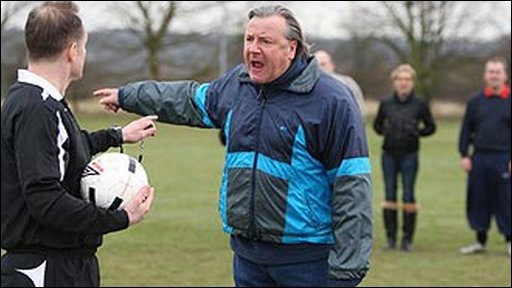
    We all have them and we all hate them (joke). Some of us have left teams because of them and others have even had them banned from the club. Yes, PARENTS, that’s who I’m taking about, the ones that rant and rage all game long (not all). The worst offenders are ego-driven parents who take personally any slights to their children on the pitch. All that a side, their are some absolutely brilliant parents out there who give up so much time to bring their kids to and from training etc and never interfere in their kids football, but these are mostly few in these times.

    Maybe we should pre-warn parents and tell them, “you might get angry on the side lines and attached are some tips to deal with it’. Below are some excerpts from a study about parent behaviour on the sidelines, mostly from the US.

    A recent study showed – by Jay D. Goldstein

    Overall, about half of the parents in the study reported getting angry during games, and nearly 40 percent of the angry parents made their emotions known. These sideline expressions ranged from muttering or yelling comments to walking onto or near the pitch.

    “Their own sense of their personal worth gets wrapped up in how their children are doing in these ball games,” said Edward Deci, a psychologist at the University of Rochester in New York. ” And so the parents feel intense, internal pressure to see their kids performing because the kids are like extensions of themselves.”

    Coach: ” so what is your favorite position? “
    Player: ” center midfield”
    Coach: ” Interesting. Is that because you see yourself as a good playmaker? “
    Player: ” No its because my dad is one side and my coach is on the other and sometimes if i’m in midfield, I can’t hear either of them. “

    340 parents of 8- to 15-year-old soccer players were evaluated on personality and ego characteristics, feelings of anger and pressure, and aggressive behaviour.

    The Results

    • 47% of parents reported no anger-causing events while watching their kids play.
    • 53% did get angry.

    Of those who did feel anger, what made them flare up?

    • 19% blamed the referee.
    • 15% said they got angry at how their kid’s team played.
    • 7% said the opponents behaved badly.
    • 5% reported hostile remarks set them off.
    • 5% blamed coaches.

    Researchers concluded that the effect of ego defensiveness and taking things personally was strongly linked to feelings of anger and aggressive actions. Those who were more “control-oriented” were more ego defensive. They viewed actions in the soccer game as attacks against them or their children.

    “In general, control-oriented people are the kind who try to ‘keep up with the Joneses,’” Goldstein said in a news release.”They have a harder time controlling their reactions. They more quickly become one of ‘those’ parents than the parents who are able to separate their ego from their kids and events on the field.”

    Goldstein calls parents who are more even-keeled and able to regulate their emotions “autonomy-oriented parents.” They get angry too, he says, and when they do it’s because their ego gets in the way.

    “While they’re more able to control it, once they react to the psychological trigger, the train has already left the station.”

    To ease anger on the playing field, Goldstein suggests these tips:

    • Take deep breaths (inhale for 4 seconds and exhale for 8 seconds).
    • Suck on a lollipop. (Occupies your mouth and reminds you that you’re there for your child.)
    • Visualize a relaxing experience like floating on water.
    • Repeat a calm word or phrase.
    • Do yoga-like muscle stretches.
    • Replace angry thoughts with rational ones, such as “This is my child’s game, not mine,” or “Mistakes are opportunities to learn.”
    • Don’t say the first thing that comes into your head. Count to 10 and think about possible responses.
    • If you did not see the game, first ask your child “How did you play?” rather than “Did you win?”
    • Praise your child’s effort, and then, maybe, comment on the results.
    • Use humor, but avoid harsh or sarcastic humor.


    Conclusion

    More needs to be done in the area of parenting in sport. Parents don’t shout over the teacher in school, so why do they feel they have the right to shout over the coach. How many times, have you seen a team where the coach has decided to have their defence drop when they lose the ball, so that the midfield can recover but then the parents on the sideline are screaming “press”, “press”? Johnny has no idea whether he’s coming or going and this distraction could be critical in the teams play.

    Ask any child, ‘what they think about their parents shouting on the sideline’? and you will get some very interesting answers. Some that come to mind, “it’s so embarrassing”, “I hate it”, “he doesn’t know what he’s talking about”, “I wish they wouldn’t come to my games”

    “By constantly coaching and correcting our kids in the game we are unconsciously, but almost certainly, guaranteeing poor and deteriorating performance. We are taking them away from that unconscious, focused mental state where they need to be to excel”. – Inside Soccer

    Parents need to educate themselves with the help of the clubs and leagues on how to behave pitch side. I don’t understand how parents think it’s ok to verbally abuse children on a playing field yet they wouldn’t dream of telling a kid off in a playground. Well, just in case you didn’t notice or weren’t told ‘the football pitch’ is also a play ground, guys!

    Just because things happened certain way when they were younger, it doesn’t mean it has to happen that way now. I think it’s about time some parents kept quiet and let the kids play….

    PS. Was at a tournament on Saturday and some of the parents in the stands were a disgrace. In all my time coaching that was the worst I’ve heard. (One lady in particular, now names given)

    Research: Inside soccer, University of Maryland,

    Pic and Video: shows top actor Ray Winstone playing a shouting parent for the English FA Video.

    -End

    I always like to hear your opinions and views. If you feel you have something to say, please comment below or email me info@thecoachdiary.com and if you don’t have anything to add then please forward this on to a friend.

    As always, thanks for reading. I’m also on twitter  @Coachdiary

  • New Year and fresh ideas, you never stop learning.

    New Year and fresh ideas, you never stop learning.

    I look back on this time last year and I have to say I am definitely a much better coach. I would say I’m more focused on possession and defending as a team. I’m even more relaxed on the line and always look for ways to inspire. Like me, many this time of year take time to reflect on the past year and it is also a time to set new goals, take action, change your ways and look at the year ahead. This is also a good time to come up with new ideas, practices and policies. By simply tweaking methods and policies you can change a lot. For others the changes may be a little more drastic, and it might be time to give up coaching altogether, you may not have the patience you use to have or you simply can’t adopt to the new ways of coaching kids. Times are a changing my friends….

    TOP 5 coaching resolutions for 2013. 

    The coach Diary’s New Year Resolutions

    1. Fail to prepare, prepare to fail. One thing I’ve learned as a coach is that if you prepare you sessions you are doomed. The kids will out smart you with answers and questions you don’t have the answers for. No point in doing a game related exercise, if you yourself don’t know why you’re doing it. Develop a detailed season (half season) long plan with very clear goals for the team, address the key areas for development and ensure that the sessions are structured and aligned with the season plan. I know this is an area us ‘volunteer’ coaches sometimes fail on, due to the lack of time we have to prepare. Most coaches are getting under 3 hours per week with their teams, so don’t over complicate. Keep it simple!

    “It’s not the hours you put in, it’s what you put in the hours”.

    2. Mix it up a bit. Change your sessions around, bring in new games and keep it interesting. Keys areas Technical (95%), Fitness (can be introduced in the Technical drills  and Tactics (5% of your session based on the age group your working with). Never stop learning as a coach. Every coaching seminar you go to, try and pick up something new every-time. Their are plenty of great books and websites out there. Two I recommend are Inside Soccer and Coerver Coaching. Finally, move players around in different positions, get them to understand what each postion on the pitch requires of a player to do. Keep it game related.

    “Practice does not make perfect. Only perfect practice makes perfect”.

    4. Develop every player: It’s funny how kids change; six months is a long time in a child’s development. Don’t leave any kid out, if you have decided to bring them into the squad then you must continue to work with them but they must also continue to attend training and want to learn.  Talk to your weaker players, let them know how they need to improve and what you expect from them. A good idea it to let their parents know, how they are doing in some cases.  Something I didn’t do last year was to get players working on their own. You can develop an individual training program for players to train in their own time, this might be a simple as working on running technique, passing and receiving etc. Arrange a time to sit with each player and design a programme for them, based on their own goals and ideas.

    “Confidence is contagious. So is lack of confidence”.

    5. Mental and personal training: You are much more then a coach, you inspire kids and they believe in you. Teach about good behaviour, set a positive example on and off the field. Be calm, respectful and keep your discipline.Teach them the same. Maintaing their discipline and respecting your team mates and the opposition is key to success of any team, it is alos part of player development. Using psychological training in developing the overall performance of the team and players. Look at ways to get the best from your team and players. A simple quote or pre game talk; a one to one talk can be diference you make in your teams or players performance. Lead by example, motivate and inspire.

    Others things:

    • Advice on Nutrition.
    • Always be in club gear and wear the uniform with pride.
    • Are you inspiring players?

    Every year for me as been a better year and I hope the same for you. The price of success is hard work, dedication to the job at hand, and the determination that whether we win or lose, we have applied the best of ourselves to the task at hand. We are what we repeatedly do. Excellence then, is not an act, but a habit.

    “Practice as if you are the worst, perform as if you are the best.”

    Let me know, your New Year Resolutions and have a Happy one!

  • DB Sports Tours Champions Cup 2012

    DB Sports Tours Champions Cup 2012

    Really looking forward to the DB Sports Tours Champions Cup this Saturday. I was at it last year when two teams contested a final at u15s age group. This year they have increased it to 5 age groups. I don’t believe there has ever been a competition pitting the best of the South with the best of the North; this will be a truly great day for Irish Youth Soccer.

    The Article below is courtesy of the Irish Daily Star.

    DB SPORTS TOURS CHAMPIONS CUP 2012: BIGGER AND BETTER

    IRELAND’S top schoolboy teams will kick-off the New Year in style when they take on their northern counterparts in an expanded DB Sports Tours Champions Cup schedule next month.

    Five SFAI national cup winners, ranging from Under-12 to U16s, will each face the Northern Ireland Boys Football Association’s Champions in their respective age groups on an action-packed day on January 5.

    Dundalk’s Oriel Park will host the newly-expanded competition, which was began with a two-legged single contest last last year.

    Following an exciting clash at Tolka Park in December 2011, NIBFA top dogs St Oliver Plunketts saw off Shelbourne at Seaview in January to take the innaugeral title at U-15 level.

    As tournament organizers DB Sports Tours decided to expand the competition across the age groups for the second year and fans are set to benefit with five fantastic games in a row on the first Saturday in January.

    “We recently signed a three-year sponsorship deal with the NIBFA, so cross-border clashes between the south and north’s best look like becoming a regular occurrence”.

    Reigning U-11 (left) and U-13 SFAI champions St Kevin’s Boys are committed to a club trip across the water to English Premier League side West Bromwich Albion so Crumlin United and Cherry Orchard take their places respectively.

    Crumlin’s excellent U-12s fill in for Kevin’s against Glentoran FC in the day’s opening encounter, before St Francis face Plunketts in the U-13 clash.

    Francis won last year’s DB Sports Tours Manchester Easter Cup – beating hosts Manchester City in the final.

    The Orchard’s U-14s narrowly missed out on U-13 DDSL Premier Division success last season and will hope to make up for it against Plunketts.

    The U-15 contest is a highly-anticipated one, with Templeogue United’s league and national champions facing Crusaders FC, before Plunketts have a third team involved on the day against Malahide United in the U-16 final.

    CHAMPIONS CUP SCHEDULE – JANUARY 5, ORIEL PARK

    U12′s (2001′s) Crumlin United v Glentoran FC, 11:00AM KO – 20 mins e/w

    U13′s (2000′s) ST.Francis FC v ST.Oliver Plunketts 12:00 – 25 mins e/w

    U14′s (1999′s) Cherry Orchard v ST.Oliver Plunketts 1:00 – 25 mins e/w

    U15′s (1998′s) Templeogue Utd v Crusaders FC – 2:00 – 30 mins e/w

    U16′s (1997′s) Malahide Utd v ST.Oliver Plunketts 3:00 – 30 mins e/w

    *Text courtesy of the Irish Daily Star’s Target supplement*

  • Happy New Year Everyone

    Happy New Year Everyone

    Just wanted to wish everyone a very Happy New Year.

    This last one has convinced me even more, that change is a good thing and that their is nothing wrong with it, once it’s in the right direction. To all the great people out there, educating kids and providing them with knowledge and inspiring them to be better players and better people, I salute you all! Most of us our volunteers, we do this for the love of the game and because we are good teachers and we enjoying seeing what we do on a training ground transferred to the pitch. Remember we teach more by what we are, then by what we say and sometimes questions are more important then answers.

    “Don’t change because a New Year is coming up, but change for your own personal growth no matter what the resolution you make, they start with you.”

    Some of my favourite quotes of the year: 

    “Consider how hard it is to change yourself and you’ll understand what little chance you have in trying to change others.”

    “The first step toward change is awareness. The second step is acceptance.”

    “Nothing is more annoying than a low man raised to a high position”.

    “Change is inevitable in a progressive country, Change is constant.”

    “If there is anything we wish to change in the child, we should first examine it and see whether it is not something that could better be changed in ourselves.”

    “The world hates change, yet it is the only thing that has brought progress.”

    “It’s the most unhappy people who most fear change.”

    “If we don’t change, we don’t grow. If we don’t grow, we aren’t really living.”

    “The mediocre teacher tells. The good teacher explains. The superior teacher demonstrates. The great teacher inspires.”

    “Example isn’t another way to teach, it is the only way to teach.”

    “Instruction does not prevent waste of time or mistakes; and mistakes themselves are often the best teachers of all.”

    “To teach is to learn twice.”

    Happy New Year Everyone 

    ‘Let the kids Play’

  • Barcelona’s Seven Secrets to Success – By Simon Kuper

    Barcelona’s Seven Secrets to Success – By Simon Kuper

    I love Barca’s philosophy and having spent a few days at the Academy, witnessing with my own eyes the beautiful way they teach kids, I’m always delighted to come across more insight into the way they play and coach.

    Simon Kuper  is a British author. He writes about sports “from an anthropologic perspective. He is the author of several superb books, including “Soccer Men: Profiles of the Rogues, Geniuses, and Neurotics Who Dominate the World’s Most Popular Sports,” and “Soccernomics.”

    He is also a journalist for the Financial Times

    This what he wrote.. Starts Here>

    We all see that Barcelona are brilliant. The only problem is understanding just how they do it. That’s where my friend Albert Capellas comes in. Whenever he and I run into each other somewhere in Europe, we talk about Barça. Not many people know the subject better. Capellas is now assistant manager at Vitesse Arnhem in Holland, but before that he was coordinator of Barcelona’s great youth academy, the Masia. He helped bring a boy named Sergio Busquets from a rough local neighbourhood to Barça. He trained Andres Iniesta and Victor Valdes in their youth teams. In all, Capellas worked nine years for his hometown club. During our last conversation, over espressos in an Arnhem hotel, I had several “Aha” moments. I have watched Pep Guardiola’s Barcelona umpteen times, but only now am I finally beginningto see. Guardiola’s Barcelona are great not merely because they have great players. They also have great tactics – different not just from any other team today, but also different from Barcelona teams pre-Guardiola. Barça are now so drilled on the field that in some ways they are more like an American gridiron football team than a soccer one. Before getting into the detail of their game, it’s crucial to understand just how much of it comes from Guardiola.

    When a Barcelona vice president mused to me four years ago that she’d like to see the then 37-year-old Pep be made head coach, I never imagined it would happen. Guardiola was practically a novice. The only side he had ever coached was Barça’s second team. However, people in the club who had worked with him – men like the club’s then president Joan Laporta, and the then director of football Txiki Beguiristain – had already clocked him as special. Not only did Guardiola know Barcelona’s house style inside out. He also knew how it could be improved. Guardiola once compared Barcelona’s style to a cathedral.

    Johan Cruijff, he said, as Barça’s supreme player in the 1970s and later as coach, had built the cathedral. The task of those who came afterwards was to renovate and update it. Guardiola is always looking for updates. If a random person in the street says something interesting about the game, Guardiola listens. He thinks about football all the time. He took ideas from another Dutch Barcelona manager, Louis van Gaal, but also from his years playing for Brescia and Roma in Italy, the home of defence. Yet because Guardiola has little desire to explain his ideas to the media, you end up watching Barça without a codebook. Cruijff was perhaps the most original thinker in football’s history, but most of his thinking was about attack. He liked to say that he didn’t mind conceding three goals, as long as Barça scored five. Well, Guardiola also wanted to score five, but he minded conceding even one. If Barcelona is a cathedral, Guardiola has added the buttresses. In Barça’s first 28 league games this season, they have let in only 22 goals. Here are some of “Pep”’s innovations, or the secrets of FC Barcelona:

    1. Pressure on the ball

    Before Barcelona played Manchester United in the Champions League final at Wembley last May, Alex Ferguson said that the way Barça pressured their opponents to win the ball back was “breathtaking”. That, he said, was Guardiola’s innovation. Ferguson admitted that United hadn’t known how to cope with it in the Champions League final in Rome in 2009. He thought it would be different at Wembley. It wasn’t. Barcelona start pressing (hunting for the ball) the instant they lose possession. That is the perfect time to press because the opposing player who has just won the ball is vulnerable. He has had to take his eyes off the game to make his tackle or interception, and he has expended energy. That means he is unsighted, and probably tired. He usually needs two or three seconds to regain his vision of the field. So Barcelona try to dispossess him before he can give the ball to a better-placed teammate. Furthermore, if the guy won the ball back in his own defence, and Barcelona can instantly win it back again, then the way to goal is often clear. This is where Lionel Messi’s genius for tackling comes in. The little man has such quick reflexes that he sometimes wins a tackle a split-second after losing one. The Barcelona player who lost the ball leads the hunt to regain it. But he never hunts alone. His teammates near the ball join him. If only one or two Barça players are pressing, it’s too easy for the opponent to pass around them.

    2. The “five-second rule”

    If Barça haven’t won the ball back within five seconds of losing it, they then retreat and build a compact ten-man wall. The distance between the front man in the wall (typically Messi) and their last defender (say, Carles Puyol) is only 25 to 30 metres. It’s hard for any opponent to pass their way through such a small space. The Rome final was a perfect demonstration of Barcelona’s wall: whenever United won the ball and kept it, they faced eleven precisely positioned opponents, who stood there and said, in effect: “Try and get through this.” It’s easy for Barcelona to be compact, both when pressing and when drawing up their wall, because their players spend most of the game very near each other. Xavi and Iniesta in particular seldom stray far from the ball. Cruijff recently told the former England manager Steve McClaren, now with FC Twente in Holland: “Do you know how Barcelona win the ball back so quickly? It’s because they don’t have to run back more than 10 metres as they never pass the ball more than 10 metres.”

    3. More rules of pressing

    Once Barcelona have built their compact wall, they wait for the right moment to start pressing again. They don’t choose the moment on instinct. Rather, there are very precise prompts that tell them when to press. One is if an opponent controls the ball badly. If the ball bounces off his foot, he will need to look downwards to locate it, and at that moment he loses his overview of the pitch. That’s when the nearest Barcelona players start hounding him. There’s another set prompt for Barça to press: when the opposing player on the ball turns back towards his own goal. When he does that, he narrows his options: he can no longer pass forward, unless Barcelona give him time to turn around again. Barcelona don’t give him time. Their players instantly hound the man, forcing him to pass back, and so they gain territory.

    4. The “3-1 rule”

    If an opposing player gets the ball anywhere near Barcelona’s penalty area, then Barça go Italian. They apply what they call the “3-1 rule”: one of Barcelona’s four defenders will advance to tackle the man with the ball, and the other three defenders will assemble in a ring about two or three metres behind the tackler. That provides a double layer of protection. Guardiola picked this rule up in Italy. It’s such a simple yet effective idea that you wonder why all top teams don’t use it.

    5. No surprise

    When Barcelona win the ball, they do something unusual. Most leading teams treat the moment the ball changes hands – “turnover”, as it’s called in basketball – as decisive. At that moment, the opponents are usually out of position, and so if you can counterattack quickly, you have an excellent chance of scoring. Teams like Manchester United and Arsenal often try to score in the first three seconds after winning possession. So their player who wins the ball often tries to hit an instant splitting pass. Holland – Barcelona’s historic role models – do this too. But when a Barcelona player wins the ball, he doesn’t try for a splitting pass. The club’s attitude is: he has won the ball, that’s a wonderful achievement, and he doesn’t need to do anything else special. All he should do is slot the ball simply to the nearest teammate. Barcelona’s logic is that in winning the ball, the guy has typically forfeited his vision of the field. So he is the worst-placed player to hit a telling ball. This means that Barcelona don’t rely on the element of surprise. They take a few moments to get into formation, and then pretty much tell their opponents, “OK, here we come.” The opposition knows exactly what Barça are going to do. The difficulty is stopping it. The only exception to this rule is if the Barça player wins the ball near the opposition’s penalty area. Then he goes straight for goal.

    6. Possession is nine-tenths of the game

    Keeping the ball has been Barcelona’s key tactic since Cruijff’s day. Most teams don’t worry about possession. They know you can have oodles of possession and lose. But Barcelona aim to have 65 or 70 per cent of possession in a game. Last season in Spain, they averaged more than 72 per cent; so far this year, they are at about 70 per cent. The logic of possession is twofold. Firstly, while you have the ball, the other team can’t score. A team like Barcelona, short on good tacklers, needs to defend by keeping possession. As Guardiola has remarked, they are a “horrible” team without the ball. Secondly, if Barça have the ball, the other team has to chase it, and that is exhausting. When the opponents win it back, they are often so tired that they surrender it again immediately. Possession gets Barcelona into a virtuous cycle. Barça are so fanatical about possession that a defender like Gerald Pique will weave the most intricate passes inside his own penalty area rather than boot the ball away. In almost all other teams, the keeper at least is free to boot. In the England side, for instance, it’s typically Joe Hart who gives the ball away with a blind punt. This is a weakness of England’s game, but the English attitude seems to be that there is nothing to be done about it: keepers can’t pass. Barcelona think differently. Jose Mourinho, Real Madrid’s coach and Barcelona’s nemesis, has tried to exploit their devotion to passing. In the Bernabeu in December, Madrid’s forwards chased down Valdes from the game’s first kickoff, knowing he wouldn’t boot clear. The keeper miscued a pass, and Karim Benzema scored after 23 seconds. Yet Valdes kept passing, and Barcelona won 1-3. The trademark of Barcelona-raised goalkeepers – one shared only by Ajax-raised goalkeepers, like Edwin van der Sar – is that they can all play football like outfield players.

    7. The “one-second rule”

    No other football team plays the Barcelona way. That’s a strength, but it’s also a weakness. It makes it very hard for Barça to integrate outsiders into the team, because the outsiders struggle to learn the system. Barcelona had a policy of buying only “Top Ten” players – men who arguably rank among the ten best footballers on earth – yet many of them have failed in the Nou Camp. Thierry Henry and Zlatan Ibrahimovic did, while even David Villa, who knew Barcelona’s game from playing it with Spain, ended up on the bench before breaking his leg. Joan Oliver, Barcelona’s previous chief executive, explained the risk of transfers by what he called the “one-second rule”. The success of a move on the pitch is decided in less than a second. If a player needs a few extra fractions of a second to work out where his teammate is going, because he doesn’t know the other guy’s game well, the move will usually break down. A new player can therefore lose you a match in under a second. Pedro isn’t a great footballer, but because he was raised in the Masia he can play Barcelona’s game better than stars from outside. The boys in the Masia spend much of their childhood playing passing games, especially Cruijff’s favorite, six against three. Football, Cruijff once said, is choreography. Nobody else thinks like that. That’s why most of the Barcelona side is homegrown. It’s more a necessity than a choice. Still, most of the time it works pretty well.  

    You can follow Simon on twitter @KuperSimon

    -End

    I always like to hear your opinions and views. If you feel you have something to say, please comment below or email me info@thecoachdiary.com If, you don’t have anything to add then please forward this on to a friend. As always, thanks for reading.

    I’m also on twitter @Coachdiary

  • Possession is Nine-tenths of the Game – By Inside Soccer

    Possession is Nine-tenths of the Game – By Inside Soccer

    Why us possession games in training? 

    The most basic reason for using possession games in training is because they are CLOSELY RELATED TO REAL GAME SITUATIONS.

    While there may be a compelling argument to hone technique with “choreographed” drills, it is in opposed situations where players have to problem-solve, analyze, decide and execute under pressure. Isn’t that exactly what happens in the game?

    Look at Spain

    This is the type of method many clubs in Spain are using with their young players, because opposition and pressure is exactly what they will encounter during regular competitive games. And rather than small-sided games, its the multi-player game that is practiced, played on a bigger field, again because it replicates the real thing.

    The rationale is that the real game is played by 22 players, so if as near that number is incorporated in the training sessions, then real game situations will be created.

    In most games, no matter which teams are involved, the possession of the ball changes fairly continually. A team that attacks and loses the ball also loses the initiative and must adjust to regain possession as quickly as possible to re-establish control of the game. These changes are crucial for the development of the players’ soccer skills. The more players that are on the field means that players have to make quicker decisions and execute skills and techniques more rapidly. Isn’t that exactly what happens in games?

     Decisions, Decisions, Decisions

    Indeed, players who operate in multi-player games must be capable of making instant decisions. The capacity to choose the correct option in any given situation is a crucial factor in the development of players. Those who need to get the ball to their feet before deciding what to do with it will not be very successful. On the contrary those who know what they will do with the ball before it even arrives, will stand out as having the necessary technical abilities to get to the higher levels of the game.

    This is one aspect that truly defines the great players. The ones who can anticipate their opponents movements, are aware of their teammates positions and can execute skills with quality and precision. Consequently, young players must become accustomed to thinking before they receive the ball, and should, therefore, be continually put in situations where that is necessary.

    We are all learning

    One of the main features in training young players is that they must take responsibility for their own learning. As Horst Wein writes “ In modern and effective football training the developer/teacher replaces the coach/instructor, allowing the players to construct their own learning”

    Coaches shouldnt try to dictate every movement of the players. Instead let them experiment and discover solutions for themselves. This method will reap rewards in the long run even if mistakes are made in the short term, which itself is something many coaches today must learn to handle effectively. Its the developer/teacher who will subtly control the level of difficulty, introducing variations to rules or dimensions at the right time, allowing players sufficient time to familiarize themselves with all situations.

    Offense & Defence, go hand-in-hand

    Alberto Giraldez, for many years the Academy Director at Real Madrid points out “When constructing possession games its important for coaches to understand that the attacking team is often at its most vulnerable when they lose the ball. Thus emphasis on attacking play should be matched with a desire to get into a balanced shape once possession is lost”.

    Accordingly, practice games should include such situations, allowing players to enjoy keeping possession, but changing the mentality and instilling a desire to win the ball back when possession is lost. Training games like these played at high intensity make it possible to work on attacking and defending principles simultaneously.

    However, particularly at Real Madrid, Giraldez does go on to say,

    “We do not encourage players to play just on instinct, physicality and energy…….what we want is the thinking player”

    Keep it Fun

    Most youngsters play soccer because they want to have fun. Some of the more “supervising” coach/instructors feel the need to impart their knowledge on the players, and so constantly stop drills and practices to tell the players what they know. What they fail to understand is that it is possible to play and learn at the same time. How many times have you witnessed players involved in drills far removed from the game itself, often standing in lines waiting to follow the coaches orders? In Spain, for many years, and obviously paying dividends now, the emphasis is on self-learning, motivation and hard work but having fun at the same time. Playing multi-player games stimulates all these aspects.

    The Competitive Element

    Most coaches agree that winning games is not the first priority for teaching young players. Particularly at the younger ages, the search for learning by playing well is far more valuable than the simple sum of three points for winning a game.

    Therefore, the focus should always be on the satisfaction of playing well and working hard on development of the tactics practiced during the weeks.

    Extracts taken from “Possession: Play Football The Spanish Way”– A coaching guide and collection of possession games for youth teams: by Jesus Enrique Gutierrez Mayor. – former Real Madrid coach, now with Madrid Football 
 Federation. (I highly recommend this book)

    ** copies of the book, published in different languages, can be obtained by contacting:
 jesus Gutierrez <susen_31@yahoo.es> mention my website for a discount.

    TCD: This post was taken from Inside Soccer’s blog. I highly recommend this website, it has everything you need to know about coaching soccer. 

    Follow Jesus on twitter @Susen_31

    =====

    I always like to hear your opinions. Please comment below or email me info@thecoachdiary.com If, you don’t have anything to add then please forward this on to a friend. Thanks for reading. I’m also on twitter @Coachdiary