Blog

  • Make It Personal – Effective Management

    Make It Personal – Effective Management

    The challenge in obtaining coaching qualifications is one of excitement and great learning. Session plans. Tactical analysis. Endless ideas. All intriguing and all important. But in a continuous quest for advanced training ground knowledge and team development, how much time do managers/coaches set aside for progressing their man-management and people skills?

    For those with authority at any level in football, the position of manager must be seen as one of honour and positive responsibility. There’s a coat of privilege in holding a role that can potentially shape the character and persona of every young player who wears the jersey.

    Standards Are Not Good Enough

    It would be irrational to generalise and slam all that is happening across the levels in football as fact remains that thousands of volunteers from grassroots to senior are excellent in their contributions and truly inspiring. Many however, are not. We can swallow the talks and tweets that all is rosy and the future of the game is in good hands every weekend, but the gulping reality is that the nations culture of event craving, cheap fix glory will forever be the catalyst for the repetitively moronic and baseless behaviour of unhinged coaches and managers. Many of whom have a good understanding of the game, but fail in all comprehension of sincerity and compassion in their dealings with people who play football. They’re people, not players.

    The question is: Does a coaching certificate qualify one to truly fathom the intricacies in handling and man managing the social conditioning and changing emotions of these young people?

    I have the privilege of managing at Under-18 level each year. In putting together a new squad every summer, it’s wonderful to monitor the personal development of each individual as a result of the positive environs in which only enthusiastic and committed people can bring. In a squad of 20 players, each will find their comfort zone amongst team mates at different stages of the season. Whether they’re quiet, talkative or otherwise, 16/17 year olds will inevitably open up and express their true personality once it’s a setting that they can relate to and one they feel apart of.

    Those initial stages of trust and progression will blossom through the interaction and bond of the dressing room dynamic, most likely in the absence of a senior figure. And this can be complimented very easily by the manager showing a genuine interest in the young peoples lives. Where are they from? Have they brothers and sisters? What do they want to study?

    “In relating to sport, the message to them was to take every opportunity that allows them to express their talent and ability.”

    In expressing that attentiveness and pursuing fact on their hobbies and activities away from football will not only enhance an open discussion outside the norm of tactics and technique, but will further nurture your own pride and belief in the individuals who represent your ethos and principles. The discovery of outside talent and ambition may also assist in producing an extraordinary platform for bringing the team closer together.

    An Artist

    To give an example; a few seasons back, I had the pleasure of dealing with a very talented individual. A striker with a real taste for goals. He had been having a wonderful season due to his outstanding commitment and self-sacrifice to the teams cause. After the winter break however, he began to struggle. His fitness levels dropped, his touch was off, his finishing terrible. He became distant, neglecting the connection with the rest of the team and became frustrated very easily. An easy decision would have been to unleash a warning and a counterproductive ‘get your act together’ all with the token pointing of the index finger in his direction. Not good.

    Evidently, he showed all signs of a man completely drained and fatigued. Fully aware of his commitments in college and the pressure of balancing academic excellence with his desire to succeed in elite football, I prompted a chat regarding his apparent toil and queried the true extent of the workload he carried at the time.

    As it transpired, it was neither football nor the continuous assessment at third level that proved the burden, but rather extracurricular activities which only further enhanced his reputation as being driven and ambitious. A determination to showcase his talents as an artist brought him to sealing an agreement with the hierarchy to host an exhibition at a highly respected museum. Thus his only free time away from college and from football was time spent preparing his work for this upcoming spectacle. He was exhausted.

    What a pleasure it was to hear such a positive tale and despite the obvious inexperience in handling workload, his ability at such a young age to capture the attention of those in importance in the art industry was something to be championed. The resolution was simple; two weeks off allowing time to complete his portfolio and allow time for recovery and relaxation.

    In eyeing an opportunity to provoke thought and further rapport within the squad, everyone visited the exhibition together following its launch. With many of the team very much new to the subject, a challenge was put upon them to revel in open mindedness and embrace the joy and wonder of diverse methods of innovation. In relating to sport, the message to them was to take every opportunity that allows them to express their talent and ability. It was a team outing like no other.

    Of course not every query on a players form and fitness will lead to the entire troop taking a tour but in connecting with the players on a level podium, even by means of informal conversation, there are rewards for further understanding the ups and downs, the likes and the dislikes and of utmost importance the person behind the football player.

    Post by Daithi

    ==

    I always like to hear your opinions. Please comment below or email me info@thecoachdiary.com. If, you don’t have anything to add then please forward this on to a friend. Thanks for reading. I’m also on twitter @Coachdiary

  • Physical Literacy

    Physical Literacy

    It seems obvious to me but today children don’t play like they did in previous generations.

    The development of fundamental movement skills and fundamental sports skills that permit a child to move confidently and with control in a wide range of physical activity – The Canadian Sport Centre(Higgs, Balyi, Way, Cardinal. Norris and Bluechardt 2008)

    In October 2013 I had an interesting conversation while working with with RCD Espanyol academy coach Enrique Mattheo. He had recently noticed that their youngest academy groups needed more coordination and balance training compared to when he began at the academy. His explanation was simple. Due to technology, environmental and safety restrictions children are no longer out doing what children used to do ie free play, climbing trees. Before, children would start at the academy already possessing a certain amount of physical literacy. This is not the case anymore.

    Movement is a fundamental part to being human. It is essential for good health. Ability to move was at one time a daily part of any child’s life. A child with good physical literacy will have the competence and ability to use a variety of fundamental movement skills and confidence to apply these skills in different situations. In modern society it seems that this is unlikely to occur naturally. There was time when most children progressed into adult life with sufficient levels of physical literacy. Freeplay and self organised learning environments such as street football took care of this. Organised sport seems to be the only time we can guarantee our children the chance to learn, practice and develop their movement skills. Seemingly this is proving to not be enough.

    The ability to carry out fundamental movement skills has many benefits. The obvious one is physical, such as fitness and motorskills. Cognitive skills in the area of understanding and problem solving along with social, emotional and motivational development also benefit. If children begin playing football with the ability to execute fundamental movement skills, it will be easier for the coach to contextualise these skills and help the child apply them to the sport. This in turn will give the child confidence to be creative when applying a skill. By being creative we mean that the child will invent new solutions to problems, thus working with the physical (motorskills) and the cognitive (decision making) all within a social context.

    ‘A child with good physical literacy will have the competence and ability to use a variety of fundamental movement skills and confidence to apply these skills in different situations.’

    Who is responsible for developing physical literacy?

    We are social learners, we learn from what our environment offers us. Many think that learning happens only in adult constructed environments (school, organised sport) and what is worse, our children are starting to believe it. Physical education and organised sport play a vital part in the process but they should not be seen as the only opportunities to learn and practice. Parents and adults should encourage a more spontaneous attitude to sport and free play.

    Can it be argued that we are overprotecting our children?

    Many a sporting childhood is driven by adult supervision with adult competition rules. This can mean that the only time a child plays a sport is when it is organised. One solution to this problem and to encourage development of fundamental movement skills is that children should be encouraged to engage in a variety of sports. Many parents feel more secure with early specialisation but why place the burden of athletic development on one sport at such a young age? Taking in to account the problems Enrique experiences at the RCD Espanyol academy, can we say that this is becoming a standard situation that we all must deal with? Therefore in anticipation of future problems perhaps a fitting and relevant model for today’s children could be “Early exposure with delayed specialisation”. Early selection of talent runs the risk of making the player pool smaller. What if we delay high volumes of training at an early age and encourage a more spontaneous attitude to sport, indeed a variety of sports and delay specialisation. Could it be that the longer you delay your selection of talent the more efficient your system?

    Two Studies

    A study at Essex University led by child fitness expert Dr Gavin Sandercock was very revealing. A study group of 215 10 year olds in 2008 were compares with 309 children of the same age in 1998. It was found that in the 2008 group

    1. Arm strength fell by 26%
    2. Number of sit ups performed fell by 27.1%
    3. One in 10 children could not hold their weight when hanging from bars compared to one in 20 in 1998.

    What was interesting with this study is that both test groups had the same body mass index (BMI). So giving their declining strength, the 2008 group were likely to have more fat and less muscle than the 1998 group.

    A study from GIH Stockholm found that the average 16 year old had lost 10% of the Vo2 Max compared with 10 years ago which indicates lack of movement and sport participation.

    Post by Swedish Educated UEFA A Coach & Sports Director at EspanyolFootball.com Mark O’Sullivan. You can follow Mark @markstkhlm

    ==

    I always like to hear your opinions. Please comment below or email me info@thecoachdiary.com. If, you don’t have anything to add then please forward this on to a friend. Thanks for reading. I’m also on twitter @Coachdiary
  • It’s Our Turn To Talk

    It’s Our Turn To Talk

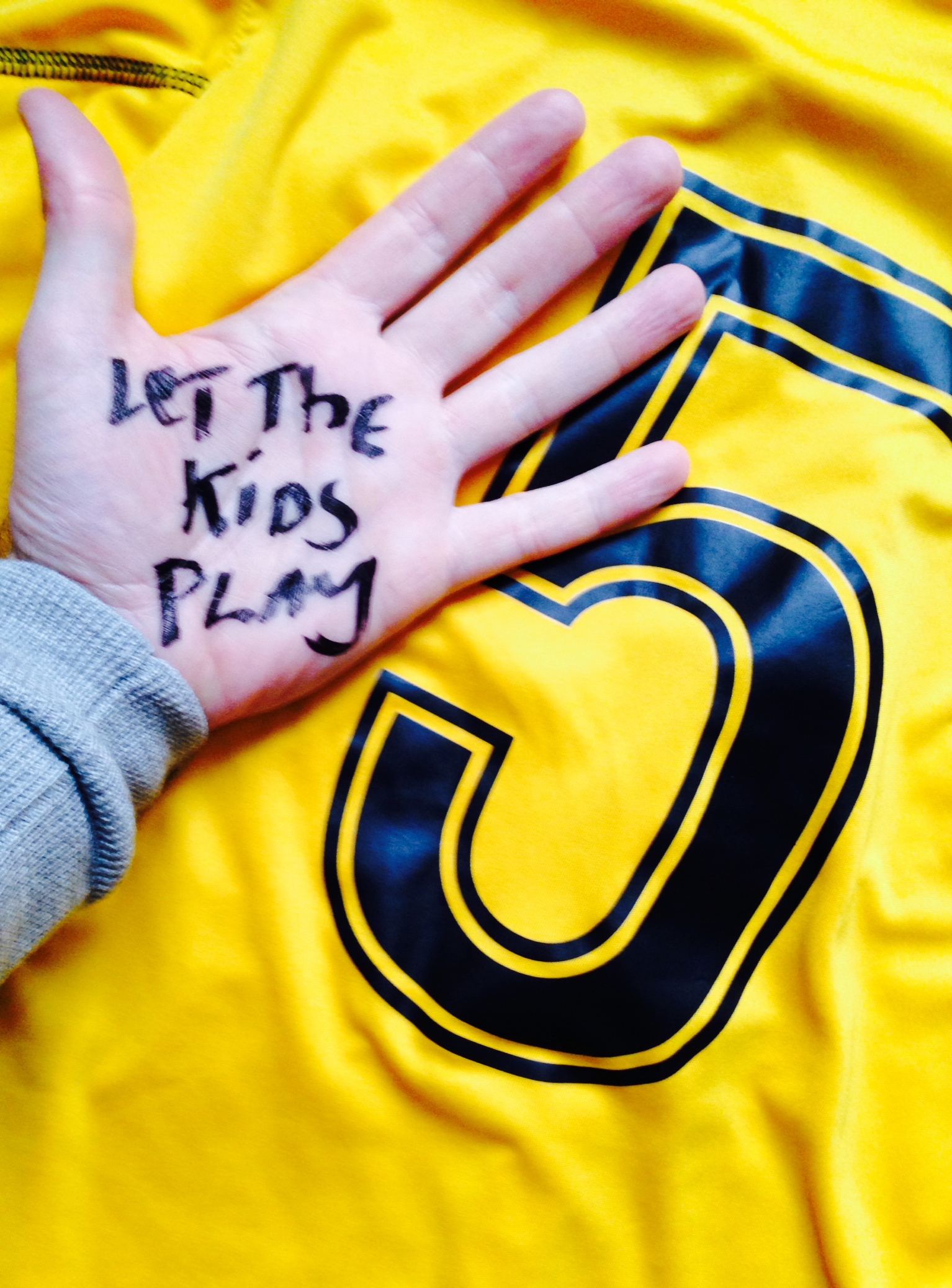
    Our hands say many things about us,  Remember, when as a child we would write things that we didn’t want to forget on our hands, – these messages were important to us as they had significant meaning. Science shows that your brain works differently when literally writing something, and recent studies, show that kids learn more effectively when actually forming words with a pen or pencil. Thats way we feel it just as important to write your feelings down.

    ‘It’s our turn to talk’ 

    We are always asking our players to communicate with each other on the pitch, however I have noticed over the last few years in coaching that it is virtually impossible for a child to communicate if 5/6 adults are screaming instructions at him or her. Support the Silent Sideline Weekend

    We are looking for kids who play sport to start communicating how they really feel about participating. How they really feel about all the instruction they get from adults each and every weekend. We want to hear their voices and this will be a time when they are allowed to talk.

    So what is this really about?

    Well, we are re-creating these messages; meaningful messages coming from the kids and written by kids. Only, they will be using their hands & arms to communicate how they feel about sport (See attached pic). These messages will make us adults realise that at the end of the day, it’s just a game –  a game played by children for children at their playground.

    ‘If you think in your mind, that you are coaching bunch of learners, then the process changes. The kids will have to leave training having learnt something from you’ – Mike O’Toole (Photographer & Coach)

    What do we need?

    We are looking for children age 6 to 19 both boys and girls across all sports codes to partake in this exercise. This is there opportunity for them to be listened too, it’s time for them to have their say.

    ‘Many think that learning happens only in adult constructed environments (school, organised sport) and what is worse, our children are starting to believe it.’ – Mark O’Sullivan

    These messages will come from the kids and written by the kids. The images and video content will then be collated send around the world via social media, we hope to create a ripple effect and inspire other nations to do the same. If you want to get involved, simply follow the process below and we will be in touch.

    Ideally I’m looking for teams in the Fingal Area, however it’s really about the messages from the kids, if you want to get involved just enter your details below.

    Any questions, just ask!

    Photography by Mike O’Toole

    Simply complete the application form below and we will be back in touch.

    Fill out my online form.

    ==

    I always like to hear your opinions. Please comment below or email me info@thecoachdiary.comIf, you don’t have anything to add then please forward this on to a friend. Thanks for reading. I’m also on twitter @Coachdiary

  • Coerver Coaching Munster & Cork SL

    Coerver Coaching Munster & Cork SL

    Release: 

    Coerver Coaching Munster started a trial programme last year looking at the SSG structure. Together with clubs from Cork Schoolboys League we took 7v7 & 5v5 games and we introduced some basic rules and tried various interventions with the aim to give the kids the best possible experience whilst offering a structure to aid the players development.

    How it worked: 

    We take 8 squads of 10 players and they play a number of matches between each other for approx. 90 mins. The results and feedback has been very positive and as coaches we have at times had to go against our better judgement and take the feedback from the players.

    Results so far, what the kids said’

    In essence they want the game to be a similar to what they see on TV, so they wanted the larger 16 x 7 goals and 7v7. So we took away the smaller goals and 5v5 pitch’s and developed rules to encourage teams to play soccer.

    • Strictly no coaching, but encouragement for both teams is allowed
    • All parents, coaches & players are brought together at the start and told this and the reasons why.
    • The vast majority of the kids stated that they liked it when no one was shouting at them, and to be fair to the coaches once they understood the format they used the breaks very well to make clear concise communication rather than commentating for the whole game.
    • The ref (coerver’s own coaches) may at times offer advice during the game, this will tend to be initially at the breakdown when the goalkeeper is trying to play the ball out.

    The rules and interventions provide structure as expected in a full size game but will ensure that the scoreline remains respectable and all players have full inclusion and a fun time. After this weekend over 60 teams will have played and we have not had one flash point and have seen an improvement in how the kids perform in the games.

    To date with has been worked with Under 9 & Under 10 with Under 8’s this week, will be interested to see how they work with the structure…

    Keep up the good work coaches & let the kids play !!

    @CoerverMunster

    Cork Schoolboy League

    ====

    I really positive and combined forward thinking initiative by Coaching Coaching Munster and Cork Schoolboy League. Fantastic work and great to see School Leagues working with other organisations and sharing ideas.

    I always like to hear your opinions. Please comment below or email me info@thecoachdiary.com If, you don’t have anything to add then please forward this on to a friend. Thanks for reading. I’m also on twitter @Coachdiary

  • SHHhhhh ‘just, let them play’ Silent Sideline

    SHHhhhh ‘just, let them play’ Silent Sideline

    I first heard about this idea some years back even before I set up this blog. I believe it started in the US. It’s something I have been meaning to try and push with all the leagues across the country for some time now and I had originally posted something back in 2011 I think. This year I’m going to make this happen, one way of another but I will need your help.

    Too often in kids sports; adults, parents and coaches become overly vocal in their approach to working with young athletes. However well-intentioned some of them may be, the results are not always positive. With a Silent Sideline Weekend, the coaches and parents are asked to keep talking to a bare minimum on the sidelines. One coach from each team will be given the task to instruct (not during the game), whilst everyone else stays silent.

    ‘If you don’t like something, change it. If you can’t change it, change your attitude.’ – Maya Angelou

    Supporters are allowed to clap to show their enthusiasm but adults/Coaches are restricted from coaching their kids from the sideline. This is a weekend when kids can make decisions for themselves, without having adults shout 5/6 different instructions at them. When adults scream from the sidelines they’re not just invading the children’s playtime, they’re preventing children from learning the game in a natural manner. Sideline screaming is just ignorance, we need to educate adults on stages of development. We expect far to much from children at a very young age. We must not forget, we are talking about children not adults.

    How does it work? 

    • No Shouting Instructions.
    • No Shouting at the ref.
    • No Shouting at the opposition.
    • Absolutely No shouting when a player is about to receive to ball or pass it.
    • Silent at all times.
    • Kids voices heard everywhere.

    With the sidelines quiet, players have the chance to make their own split-second decisions on the pitch and learn by them. Instead of being distracted by the stream of noise that usually exists, the kids on the pitch get the opportunity to communicate with one another, deciding who will take the throw ins, the goal-kicks, free-kicks or the corner kicks etc. This also gives them time to think and focus on what they are about to do.

    Why? 

    The focus of the weekend is not to take the atmosphere out of the kids’ game but instead try and encourage less coaching from the line. I want every team in Ireland in organised leagues in ever sport to conform to the ‘Silent sideline’ weekend. Not everyone is going to agree with this idea, but one thing is for sure the kids will!

    ‘You should hear children’s voices, not hear parents SHOUTING, ‘Come on ref, what was that?’ ” he said. ”We want to have a positive environment for the kids to play in.’

    I’m aware that many teams have some great coaches & parents who may already give minimal instruction and focus on the positives in a game more than others. This exercise is to highlight the over coaching from adults on the sideline across kids sports in Ireland and mainly soccer. I think a lot of kids will benefit from this even if they are use to hearing encouraging words every weekend.

    You can be sure that one population that favours the silence is the referees. They will love this, and I’m sure they would love to have it every weekend.

    What’s Expected from Participants?

    • To get all clubs and leagues to sign up across the whole of Ireland and other countries.
    • Clubs to manage this initiative internally with our support and the support of their members.
    • Clubs should select 2 sideline supervisors to keep people calm and explain the process.
    • Each club should have a silent sideline ambassador.
    • Absolutely NO shouting or directing from the sidelines
    • Coaching staff to speak to players at halftime and when making changes ONLY.
    • Clapping allowed for goals scored and effort for both sides.
    • No directing or advice from adults at anytime.
    • Absolutely no questioning of referee in charge of game at anytime.
    • Rope the pitches and provide a designated area for parents.
    • Kids voices are all we want to hear.
    • Lollipops could be a fun way of helping people stay silent!
    • PDF flyer available on request.

    Can you imagine a weekend when kids voices were heard everywhere……..I can!!

    ‘just, let the kids play’

    Lets make this happen; let’s start talking about it….!! If any leagues and/or club administrators are reading this, please get in touch. I have just emailed you all.

    If this doesn’t make you think about the damage we are doing to kids every weekend, then maybe A Players Message To Parents will!

    Please LIKE this post or COMMENT below if you’re in!

    Weekend of 29th & 30th March 2014

    Listen to the first interview about the SSLW by clicking on this link> ‘GAME ON’ 2FM 

    Fill out my online form.

    ====                                                                                                                                  

    I always like to hear your opinions. Please comment below or email me info@thecoachdiary.com If, you don’t have anything to add then please forward this on to a friend. Thanks for reading. I’m also on twitter @Coachdiary

  • Multidirectional Workshop Video

    Multidirectional Workshop Video

    Here is a small piece of video from the Multidirectional Workshop with Mike Antoniades back in December at the NDSL Development Centre.

    ===

    I always like to hear your opinions. Please comment below or email me info@thecoachdiary.com If, you don’t have anything to add then please forward this on to a friend. Thanks for reading. I’m also on twitter @Coachdiary

  • Rules of Engagement

    Rules of Engagement

    This is an article by Greg Hurvitz, Director of Sport at King David High School Linksfield, South Africa and it was originally published some time ago. Greg also writes a weekly column in the Star Metro ZA.

    No matter where we are in the world, we face the same issues when it comes to development in youth sport. His contribution starts here> 

    Very often, when speaking to groups of coaches, I speak about the rules of engagement. Now this is certainly not warfare but it is education, which as our own Former President Nelson Mandela has made so very important through his public emphasis on its importance – I would say that it is more important than warfare.

    Pride, Passion, People and Participation – It’s what we do!

    Sport is far more about life skills than it is about the sport itself. It is far more about learning who you are as an individual or within a team environment. Because of these 2 vital factors, we as coaches have to know how important positive and appropriate engagement is for the kids under our watch. It is not about how you were coached at school, it is not about what you think works for the individual. It is about what the individual needs to be the best he/she can be. For this to be remotely realised as coaches we need skills that extend beyond the mere technical. We must know how to positively engage our players almost perfectly. This takes hours and hours of thought, planning and implementation. This is a massive part of a coaching philosophy.

    ‘Know the individual, it will absolutely change how you manage that personality and character.’

    For the first time ever, since I have had the privilege of writing this column, I want to extend my thoughts into the academic sphere. Schools are changing, the way our kids need to be educated has to adapt with this. The conventional desk and chair model is fast becoming redundant. The very quick tendency (my opinion) to diagnose ADD, ADHD or other ‘behavioural’ obstacels could, I believe, be alleviated and worked through with the correct approach to how we engage that individual in the learning environment. Notice I defined it as a learning environment not a teaching environment. Teachers and coaches, so similar in their tasks, must take every ounce of time possible to learn more about the individual so as to ensure the best activation model for this child – to make that child the best child he/she can be. School excos, driven by a Headmaster or Headmistress must critically assess their school learning environment to do the best possible for the spectrum of children in that school. I am proud to acknowledge my own school as a place moving positively in this critical analysis of our own model and I know many Heads of schools are asking these questions, Good for you!

    Know the individual, it will absolutely change how you manage that personality and character. It does take time and it does take major self investment, but at the end of the day as educators in the classroom or on the sports field – we do this because we have chosen this and this is our calling – so go ahead and make your calling the best job in the world and changes thousands of lives in the process.

    We would like to thank Greg for his contribution to thecoachdiary.com. You can follow Greg on twitter @GregHurvitz

    ====

    I always like to hear your opinions. Please comment below or email me info@thecoachdiary.com If, you don’t have anything to add then please forward this on to a friend. Thanks for reading. I’m also on twitter @Coachdiary