Author: The Coach Diary

  • FCB – Youth Team Fair Play

    FCB – Youth Team Fair Play

    To often we see a lack of fairplay in games these days and with the pro’s very rarely doing the right thing and a lot cheating at any opportunity its great to hear of stories of great sportsmanship. Kids at all levels should be taught fairplay and proper sportsmanship, it is something that is lacking in the game today. In Barcelona this week, an example of fairplay was shown by an FCB Youth Team.

    Youth team fair play gesture

    Fair play is one of the key elements which the Barcelona tries to teach its young footballers coming up through the academy system and the Youth B team again showed how the youngsters understand those values in their game against Castelldefels.

    In an incident that echoed the gesture the Alevi B team made in 2007, this time it was the Youth B team trained by Sergi Barjuan, who demonstrated that the values of fair play and good sportsmanship are above any sporting success at the Club, as the academy system continues to train and educate not just good footballers, but also good people.

    Two points lost, but a valuable lesson learnt

    Sergi’s young players came into the 28th week eight points ahead of Espanyol at the top of their league and were looking for a win on Saturday at Castelldefels to take them a little closer to the title. With the game coming to an end and still goalless, Barça’s , Carlos Julio Martínez fired home without realising that the hosts’ keeper was lying injured on the ground. The goal was given as valid, but under instructions from their coach the Youth B team allowed Castelldefels through to score a goal themselves to make up for it.

    That was a gesture that lost the team two points and with Espanyol winning allowed their rivals to close in on them, but the bigger lesson learned by the youngsters was once again that fair play is more important that just winning for its own sake.

    Echoes of 2007 incident

    The gesture was widely covered in the Spanish media since it is unfortunately not often that good sportsmanship outdoes the desire to win in Spain’s number one sport, but this is not the first time a Barça team have shown such an attitude in recent years. In 2007 the Aleví B team, then trained by the current Coordinator of youth football Albert Puig, caught the media’s attention with a similar action. During the game against Espanyol, Barça’s opponents kicked the ball out so that a player could receive treatment, but they didn’t give possession back from the resulting free kick and indeed went on to score. Puig then insisted that his charges allow Espanyol through to score in reply.

    That was just one more lesson for the youngsters, and a typical example of how the youth system aims to create not just great players like Messi, Iniesta or Xavi, but also players with the same fair minded attitude.

    Research: FCB Site
  • Andre Villa Boas

    Andre Villa Boas

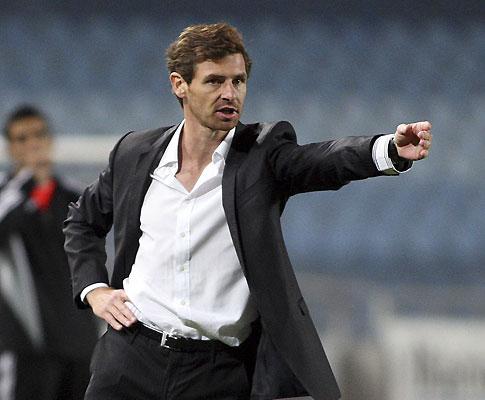
    I’m a die hard Sporting Fan but congrats Andre Villas Boas in the same weekend Jose Mourinho losses his first home game since 2002, Andre with pretty much no football experience at the age of 33 wins the Portuguese league with FC Porto, the youngest coach ever to do so! They are calling him the new Jose Mourinho (actually worked along side him at Porto) who completed his Youth Cert or UEFA C Licence at age 17 in Scotland. Would love to see Porto in the Aviva in May. What a coach!

    Porto are in the Europa League Quarter finals & Portuguese Cup Semi Final. He must be the youngest coach ever to win a league from one of the top nations in Europe , let me know of any others?

  • The Impact of Video Games

    The Impact of Video Games

    As someone who played video games as a kid, but have since grown out of them; I am always checking with my own team to see how late they were up the night before a match playing vgames. I know my own nephew (14) sometimes plays well into the wee hours the night before a game. I have been doing some research on the impacts it has on the kids and we all know that violent games can lead to negative thoughts which are sometimes acted out in real life.

    But then sports games can certainly help kids understand the game better, I’v noticed kids playing FIFA’10 etc always seem to play 1or2 touch football and will try all types of tricks, which can be brought on the the training ground and they are fun; kids love nothing more then to show their parents how it’s done in the gaming world!

    Video Games

    have been available to consumers for the last 30 years. They are a unique form of entertainment, because they encourage players to become a part of the game’s script. Today’s sophisticated video games require players to pay constant attention to the game, rather than passively watching a movie. This has both positive and negative impacts on players. Several studies have been published that explore these impacts on today’s children.

    The most widely used “positive” impact video games are said to have on children is that they may improve a player’s manual dexterity and computer literacy. Ever-improving technology also provides players with better graphics that give a more “realistic” virtual playing experience.

    Recent Studies

    However, numerous studies show that video games, especially ones with violent content, make teens more aggressive. Part of the increase in aggressive behavior is linked to the amount of time children are allowed to play video games. In one study by Walsh (2000), a majority of teens admitted that their parents do not impose a time limit on the number of hours they are allowed to play video games. The study also showed that most parents are unaware of the content or the Entertainment Software Rating Board (ESRB) rating (see below) of the video games their children play.

    The authors also stated that teens who play violent video games for extended periods of time:

    • Tend to be more aggressive
    • Are more prone to confrontation with their teachers
    • May engage in fights with their peers
    • See a decline in school achievements.

    Gentile & Anderson (2003)

    state that playing video games may increase aggressive behavior because violent acts are continually repeated throughout the video game. This method of repetition has long been considered an effective teaching method in reinforcing learning patterns.

    Video games also encourage players to identify with and role play their favorite characters. This is referred to as a “first-person” video game (Anderson & Dill, 2000, p. 788) because players are able to make decisions affecting the actions of the character they are imitating. After a limited amount of time playing a violent video game, a player can “automatically prime aggressive thoughts” (Bushman & Anderson, 2002, p. 1680). The researchers concluded that players who had prior experience playing violent video games responded with anincreased level of aggression when they encountered confrontation (Bushman & Anderson, 2002).

    American Academy of Child & Adolescent Psychiatry

    Caution parents about violence in the media and its negative effect on children. Their report states that exposure to violent media can elevate aggressive feelings and thoughts, especially in children. These effects on aggressive behavior can be long-term. Although fewer studies have been conducted on interactive video games, evidence suggests that playing violent video games may have a more dramatic influence on the behavior of children and adolescents (Joint Statement, 2000).

    Tips on managing your child’s media consumption

    Because of the popularity of video games, completely eliminating them from your child’s life might be difficult. But you can decrease the negative impact that they have on your child. Here are a few tips:

    • Know the rating of the video games your child plays (see below).
    • Do not install video game equipment in your child’s bedroom.
    • Set limits on how often and how long your child is allowed to play video games.
    • Monitor all of your child’s media consumption — video games, television, movies and Internet.
    • Supervise your child’s Internet use — there are now many “video games” available for playing online.
    • Take the time to discuss with your children the games they are playing or other media they are watching. Ask your children how they feel about what they observe in these video games, television programs or movies. This is an opportunity to share your feelings and grow closer with your child.
    • Share with other parents information about certain games or ideas for helping each other in parenting

    The Entertainment Software Rating Board (ESRB)

    Similar to the movie industry’s rating system, all major game companies now submit their new products for rating to specially trained raters at the ESRB. The ESRB rates over 1,000 games per year.

    The ESRB looks at a number of factors when rating games. In particular, it considers the amount of violence, sex, controversial language and substance abuse found in a game. Based on its developed guidelines, the ESRB then gives an age recommendation and content descriptor to each game submitted. The following are the rating symbols currently in use, according to the ESRB Web site.

    • Early Childhood (EC): Content should be suitable for children 3 years and older and contain no objectionable material.
    • Everyone (E): Content suitable for persons ages 6 and older. The game may contain minimal violence and some “comic mischief.”
    • Teen (T): Content suitable for persons ages 13 and older. Content is more violent than (E) rating and contains mild or strong language, and/or suggestive themes.
    • Mature (M): Content suitable for persons ages 17 and older. Content definitely has more mature sexual themes, intense violence and stronger language.
    • Adults Only (AO): Content suitable only for adults and may contain graphic sex and/or violence. Adult Only products are not intended for persons under the age of 18.
      Rating Pending (RP): Game has been submitted to the ESRB and is awaiting a final rating.

    Research: WEB, http://www.esrb.org/index-js.jsp,

    References

    Bushman, B. & Anderson, C. (2002). Violent Video Games and Hostile Expectations: A Test of the General Aggression Model. Personality and Social Psychology Bulletin, 28, 1679-1686.

    Gentile, D. A. & Anderson, C. A. (2003). Violent video games: The newest media violence hazard. In D. A. Gentile (Ed.), Media violence and children. Westport, CT: Praeger Publishing.

    Gentile, D. A., Lynch, P., Linder, J. & Walsh, D. (2004). The effects of violent video game habits on adolescent hostility, aggressive behaviors, and school performance. Journal of Adolescence, 27, 5-22.

    Joint Statement on the Impact of Entertainment Violence on Children: Congressional Public Health Summit. (July 26, 2000.) Available: http://www.aap.org/advocacy/ releases/jstmtevc.htm.

    Walsh, D. (2000). Interactive violence and children: Testimony submitted to the Committee on Commerce, Science, and Transportation, United States Senate. (March 21, 2000.)

  • Irish Players Abroad

    Irish Players Abroad

    Below is a list of players playing outside Ireland and the UK. Do you know of any others?

    The numbers beside the league’s name indicate the tier of local football the player plays in.

    BELGIUM

    Cercle Brugge – Jupiler Pro League (1)
    Dominic Foley (F)

    BULGARIA

    CSKA Sofia – TBI A Football Group (1)
    Cillian Sheridan (F)

    CYPRUS

    AEL Limassol –  Cypriot 1st Division (1)
    Matthew Cassidy (M)

    APEP Pitsilia – Second Division (2)
    Michael Collins (M) ?

    MS Anagennisi Deryneias – Second Division (2)
    Michael Roddy (M) ?

    DENMARK

    Odense Kammeraternes Sportsklub (OKS) – Danish Series: Group 2 (3)
    Shane O’Doherty (F) ?

    FRANCE

    Stade Rennais – Ligue 1 (1) Reserves
    Niall Burdon (GK)

    GERMANY

    Union Berlin – 2nd Bundesliga (2)
    Patrick Kohlmann (D)

    Ungmennafélagið Afturelding – 2. deild karla (3)
    John Andrews (D) ?

    LUXEMBOURG

    CS Pétange – BGL Ligue (1)
    Dylan Nissan (M) (Is Dylan of mixed nationality?)

    NETHERLANDS

    FC Utrecht – Eredivisie (1)
    Barry Maguire (M)

    NORWAY

    Steinkjer FK – Fair Play-ligaen (3)
    Gary Hogan (G)

    PORTUGAL

    Paços de Ferreira – Liga ZON Sagres (1)
    21. Padraig Amond (F)

    RUSSIA

    Spartak Moscow – Russian Premier League (1)
    64. Aiden McGeady (M)

    SPAIN

    Cádiz CF – Segunda División B: Group 4 (3)
    12. Ian Daly (F)

    Jerez Industrial – Tercera División: Group 10 (4) Glen Hoddle Academy
    James Cronesberry (M) – Lee Lynch (M) David Hutton (M)

    SWEDEN

    Örebro SK – Allsvenskan (1)
    Anthony Flood (F)

    TURKEY

    Samsunspor – Süper Lig (1)
    Billy Mehmet (F)

    Let me know if you know of any Irish Players playing aboard?

  • Sportsmanship – Compete with Character and Win In Every Game!

    Sportsmanship – Compete with Character and Win In Every Game!

    I would love to see Football adopting the same sportsmanship polices Rugby has !!

    Rugby

    Rugby as I know well from playing it in my youth is a mans game and many of my friends still play it today. In fact as a nation we have all turned to love Rugby over the last years with the success of Munster, Leinster and the National team. What I truly admire about this game is the way the players conduct themselves on the pitch, there is no back chat or verbal abuse of any kind to any official and if it does occur the players get his 10minutes in the sin bin. More often then not players are respectful of each another.

    What I admire most about the game as well as they way the official control and limit verbal abuse from the players is the clapping off at the end and the Sportsmanship of every single player, win, lose or Draw.

    We Can Change!

    So I continually ask myself, Why are the governing bodies of Football not clamping down on the outrageous scenes we see week and week out on the Televisions and  football pitches throughout the world. The cash rich nature of the world’s most popular game now means that being on the winning side is everything.

    Cheating

    Soccer has become a sport of cheats, with Diving, faking injury, time wasting, getting booked deliberately to miss games, faking getting hit by an opposition player to get him or her sent off, doing anything to win at all costs, the tapping of players, no loyalty. Is this what this beautiful game has become is soccer losing its honour?

    Pic: I entered Soccer Cheat in Google and this is what came up!

    “Character is formed by doing the thing we are supposed to do, when it should be done, whether we feel like doing it or not.”

    What can we do to change some of the things in our game!

    The best football atmosphere for young people is one that focuses on their needs and wants and not those of their coaches and parents.  The ideal setting in any sport is one in which:

    • Good character is a priority.
    • Practices and games are fun.
    • Good sportsmanship and positive behaviours are the norm for players, coaches and spectators.
    • Shake hands before and after each game
    • Players and Athletes learn valuable life skills.
    • Coaches and parents are not frustrated.
    • A cooperative and positive relationship exists between coaches and parents.
    • There is good communication between players, coaches and parents.

    Kids come First

    Coaches and parents need to remember to put kids first.  No matter what level kids are playing at – International, Elite, recreational, club or School – teaching good sportsmanship and forming good character should lead off your lineup.

    Adults teach sportsmanship and help build good character by modeling it themselves.  Kids watch how adults act, not just listen to what they say. Unfortunately, children are increasingly exposed to poor behaviour on the pitch in professional and other televised sports, teams against whom they compete, overzealous coaches on the sidelines, unruly parents … even on the playground at school.

    Parents and Coaches

    are ideally placed to counteract these poor examples of sportsmanship. Consider the following list:

    A list of To-Do things for better Sportsmanship

    • Model appropriate behaviour.
    • Discuss examples of poor sportsmanship when they occur on TV etc
    • Discuss ways to exhibit good sportsmanship (e.g., helping opponents up after they
    • have fallen or get hurt from a tackle).
    • Reinforce that winning is not the sole goal of sports (e.g., ask kids if they had fun or performed something well before asking if they won).
    • Offer examples of how players can be good winners and losers. (TV or even watching a friend etc)
    • Encourage kids to discuss sportsmanship as a team; make it a key objective of the team’s success.
    • Talk to the coach to make sure he or she stresses sportsmanship over winning, too

    One Day

    While it is a good thing that we are slowly trying to remove such things, (But still have a long way to go) we must not lose sight of the competitiveness that makes soccer such a great game. We must not be blinded by the notion of cleaning up the game that we make it an entirely goody two shoes affair.

    However we can learn a thing or two from our Rugby friends. But one thing is clear, and that is I do not condone cheating, diving, influencing the officials or any other despicable act in the game.

    But I feel that an intelligent and professional player will do all he can to use the rules to help his team win. And this win at all costs, no holds barred competitiveness, is what makes professional sport so exciting. Professional sports I said!

    So be a good sportsman and show your child the right way!

    Research Web

  • COACK TALK: Jobs-In-Football.com

    COACK TALK: Jobs-In-Football.com

    Coach Profile: Richard Sutherland – www.Jobs-In-Football.com

    Location: Madrid

    TCD: Did you play football as a kid?

    RS: I played football for many years in Glasgow and ended up playing at a Division 1 youth team.

    TCD: How did you get into coaching?

    RS: I started coaching initially my local school team while still playing and then moved to college (knew I wasn’t going to make it as a pro player) to complete a degree in Sports Coaching. Whilst at college I gained some valuable experience working in many different football environments; grassroots, elite and 1st teams. I then moved to the USA when I completed college and worked full time in New York & Connecticut. I returned back to Scotland where I worked with Glasgow Rangers (Youth Academy) and the SFA for 3 years.

    USA & Sligo

    In 2003 I was persuaded to go back to the US to work with my old boss in a new club where I was 1st Team Assistant & Academy Director. Then in 2006 I moved to Sligo Rovers to take the U21’s, assist with the 1st team and create the start of a youth entity in the club – camps, weekly clinics, relationship with local clubs etc.

    Bohemians

    I moved to Bohs in 2007 to become Head of Youth Development and U21 Manager where I stayed for 2 years before moving onto Manchester United and then finally Atletico Madrid.

    TCD: What badges have you got now?

    RS: I am UEFA A qualified and have qualifications from Scotland, Ireland, England and the USA.

    TCD: Tell me a little about the Jobs-In-Football.com and who is behind it?

    RS: I am the main figure behind Jobs-In-Football.com and developed the site to provide coaches (new and experienced) a platform where they can ‘showcase’ their talents by uploading their CV’s into our database for employers to search.

    TCD: What does Jobs-In-Football.com do and who is it aimed at?

    RS: Its a One Stop Shop for football vacancies! It allows employers the chance to advertise and recruit staff with the required experience, qualifications and desire to succeed in the game. The site advertises all jobs associated with football and has had openings for – Marketing Managers, Commercial Managers, Facility Managers, Administrators, Security / Stewards, Journalists, Reporters, Commentators, Physiotherapists and of course a host of coaching roles such as Technical Directors, Coaching Directors, Head & Assistant Coaches etc

    TCD: Where are most of the jobs?

    RS: Jobs can come from anywhere in the world and are posted 24/7. We have advertised in the last 6 months for openings in America, Australia, Canada, England, Ghana, Ireland, India, Indonesia, Malaysia, New Zealand, Scotland, Singapore, Spain and Wales.

    The jobs vary from post to post however the majority of positions available are within coaching, medical and journalism.

    TCD: Where are you working now?

    RS: I am still working with Atletico Madrid and the main feeder club to Real Madrid (ACD Canillas) as well as running the website.

    TCD: What are you thoughts on the small sided games, should we 7v7 football for longer?

    RS: My thoughts on underage football are the same as they were 4 years ago when I was in Ireland – there needs to be a move away from competitive football at U7 – U11 and a bigger emphasis on player development. There is nothing wrong with having the better players all training together but no-one benefits from winning 10 or 15-0.

    TCD: In Barcelona they play 7v7 for much later, is this the case in Madrid?

    RS: Don’t be misled by the shouts that all other countries play small sided games for longer – in Madrid they play 11v11 at 10 years old as well – and it’s competitive! They do have the option however of playing Futsal as well! The kids start at 6 years old and play either 5v5 or 7v7 before moving into full size games at 10 years old.

    TCD: What do you suggest we could do here?

    RS: I believe there should be at around U12 or U13 a national league where teams can play against other Pro Youth Teams – the problem outside of Dublin is that there is not enough quality / depth of player and so these clubs struggle to challenge their best players on a week to week basis. Why not play e.g. U12, U13, U14 all away against the same club and then U15, U16 & U17 all at home against the same club! This would cut down on expenses and would create less logistical problems – buses, pitches, referees …. etc etc.

    TCD: Who is doing this at present?

    RS: This is a tried and tested model in Scotland, England, USA, Holland ….
    Obviously Dublin has a lot more stronger teams and so therefore they could indeed have a bigger influx of teams (without diluting the product) – this can only help develop the players and prepare them for the potential life of a footballer! I think there is room for 9v9 between the 7v7 and 11v11. The only downside would be the cost of implementing.

    The Coach Diary would like to thank Richard for contributing to the site and I know where I’ll be going if things get any worse!!

    To find out more click on the link https://www.jobs-in-football.com/

  • “Quotes”

    “Quotes”

    “To me what’s important is making the best use of the time you have with your players, not the time when the coaches are by themselves coming up with schemes and watching other teams play. It’s what you can teach your players to do that counts. That’s the most important part of coaching!”

    “A quick way for any player to make himself better is to think about what he himself doesn’t like to play against”.

    “I don’t expect you to be the best player on the pitch, I just expect you to do YOUR best”.

    T ogether
    E veryone
    A ccomplishes
    M ore

    T.I.P.S. – Technique, Imagination, Person, Speed.