Author: The Coach Diary

  • The Benefits of keeping active

    The Benefits of keeping active

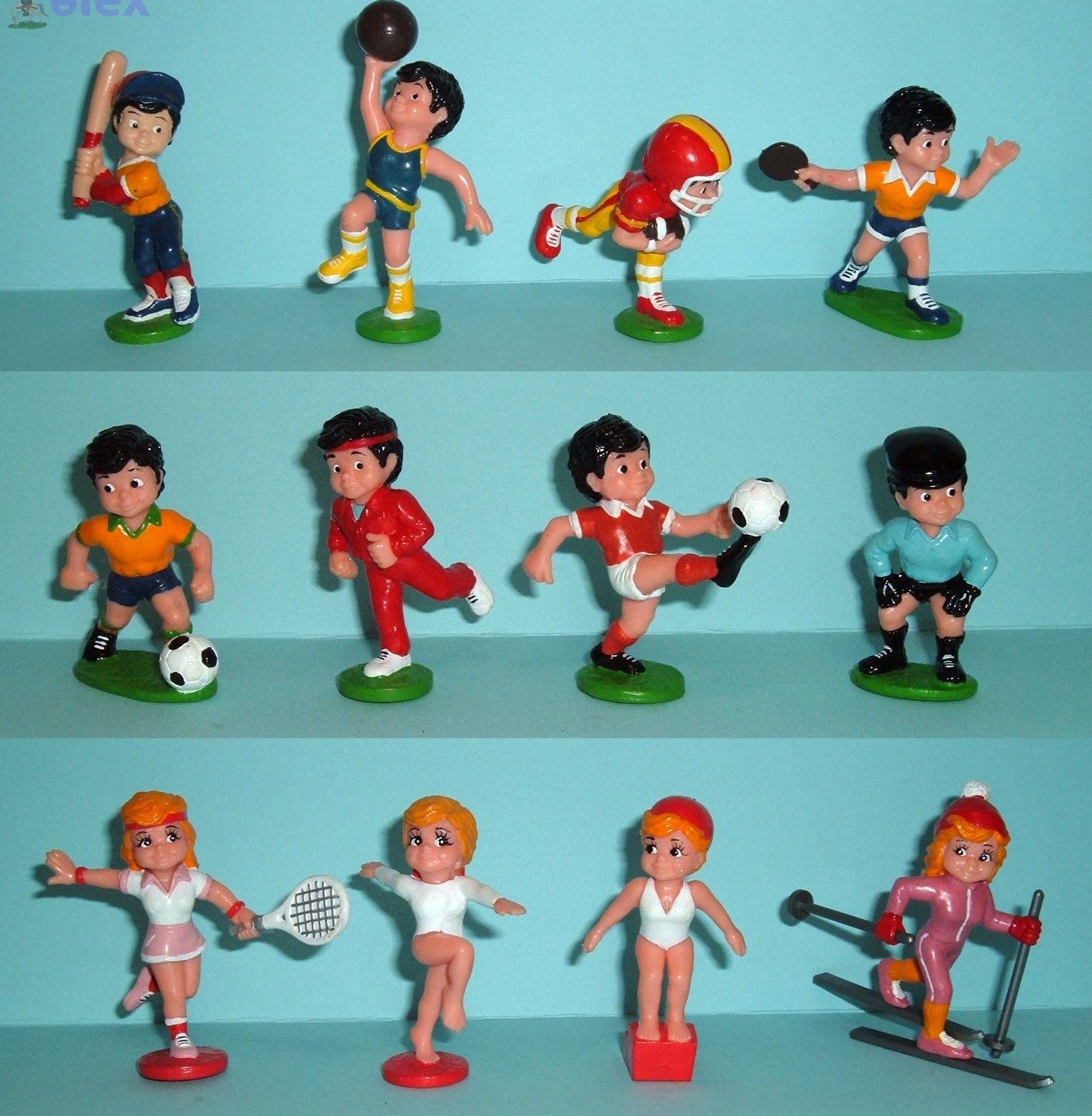
    Playing sports offers children more than just physical benefits. Sports typically help kids academically and socially as well. The benefits are the same whether or not your child actually excels at the sport. Although if they are really good they will probably want to continue playing when they are older. If your child isn’t good enough to play competitively on a school team, then you can always sign them with a local club team or encourage them to just to get out with their friends and play.

    Ten ways playing sports and can benefit your child.

    1. Playing sports is fun. It gives your child something to do and a group to belong to. They have a group of friends that has the same goals and interests.

    2. Research has found that kids that play sports, especially girls, are more likely to have a positive body image and higher self-esteem. They also are less likely to be overweight.

    3. Kids involved in sports are less likely to take drugs or smoke because they realize the impact that these destructive activities can have upon their performance. Girls who play sports are also less likely to become pregnant.

    4. Physical activities are a good way to relieve stress and reduce depression, sweating the brain is essential.

    5. Sports help kids develop discipline. They learn to set goals and then work to achieve those goals. They learn that by working hard they can accomplish the things that they want to in their lives.

    6. Kids who play sports quickly learn that sometimes you win and sometimes you lose. They learn to be a good sport in both situations. It also helps them learn to deal with disappointment and go on.

    7. Statistics show that kids who are involved in sports while in secondary school are more likely to experience academic success and better results.

    8. Sports help develop teamwork and leadership skills. Kids quickly learn that they have to work together as a team to win the game.

    9. Motor skills, strategic thinking, and even math skills are learned by playing sports. Students develop strategic thinking as they figure out plays and the best way to get around a player or score a goal. Math skills are used as they calculate scores and stats.

    10. Regular exercise increases quality of life. Children who exercise are more likely to continue the practice into adulthood

  • “More than just winning”

    “More than just winning”

    Guardiola carries heavy weight of expectation, but hunger remains

    Barcelona have again been dominant on both domestic and European fronts this season, but sporting director Andoni Zubizarreta knows that the Catalan giants cannot settle for just winning games – they must do so in style.

    In an exclusive interview with Revista

    The former goalkeeper – who made 301 appearances for Barca – praised the manner in which manager Pep Guardiola goes about his job, and believes that despite the pressure his appetite and passion for the game is as strong as ever.

    “The biggest challenge is our own success and meeting the extraordinarily high standards we’ve set ourselves over the past few years,” said the 49-year-old. “It’s not just about winning but the style in which we do it. I remember Johan Cruyff used to say, many years ago that a footballer is like a high jumper who keeps raising the bar. Every time he clears it, the fans demand he raises it another centimetre.

    “At the end of the day, the only thing that can keep Guardiola going is his passion for the job, keeping the hope alive and the passionate feeling that bubbles up inside when you walk through the gates of the training ground every day. And of course, it’s a heavy pack that he’s carrying on his back. How long can he keep that up for?

    “He’s maintained it ever since the day he joined La Masia when he was 12 years old. He’s still got the energy for it so if we can help him maintain that, it would be a great achievement.”

    Concept

    But while Guardiola deserves praise for developing such an attractive brand of football, has he now become as important as Barcelona’s philosophy? Zubizarreta doesn’t think so.

    He explained: “I think the concept has always been important; that ‘idea’ has already been there, people followed it in the 80s, throughout the ‘Dream Team’ years and well before that, the Barcelona of the ‘five cups’ in the 50s, the era when central European players were key, and the Hungarians who focussed on playing the ball.

    “It was once said that the football model that places emphasis on the spectacle couldn’t deliver success, but much of that idea is behind what you see now. But at the end of the day, you’ve got to actually do it; you’ve got to be competitive. You have to go onto the pitch and apply those ideas, continually for 90 minutes, for the whole season, in every competition; that’s always been important.

    “With Guardiola, we have both elements covered. The ‘idea’, he knows well because he joined here when he was very young. But on the other hand, he also knows how much hard work it takes to put this idea into practice. And, above all, he’s aware that our rivals will be working very hard to beat us.

    “You’ve got to put the work in, because you’re coming up against other teams that will. But this also drives us on, this rivalry, not animosity; I don’t like the term enemy. In football, it is those rivalries, against teams who know all about you, that push you to your best level. This is what sustains our appetite for the game and makes us competitive.”

    Research: Sky speaks to Andoni Zubizaretta

  • Specialisation now or later?

    Specialisation now or later?

    Just let them play, but not too much!

    Lately I have listened to so many different arguments about kids playing soccer as well as other sports. Too often I hear coaches complaining because one of their players is off playing Rugby or Gaelic etc. Not long ago I myself was annoyed at one of my players playing GAA one weekend as well as soccer; I wanted him to be fresh for our game and to be honest it didn’t make any difference in the end, because that choice was his not mine. Now, I have come full circle to realise that winning is not what playing sports is about and I certainly will never prevent anyone from playing any sport. After all is great that kids get out to play, whatever sport it may be. The fact of the matter is, the more sports they play more likely they are to stay in sports.

    “Playing multiple sports allows for more opportunity in the future and it likely to keep your child playing”

    Is more, more, more…better, better, better?

    With some youngsters playing the same sport from one season to the next and eventually all year round, they soon are specialised in the sport. A lot of people say that if you want to be truly great, you need to focus, then do more, more, more and you’ll be better, better, better. A lot of parents have have adopted this attitude for their young kids and it never got them anywhere, so its not just about doing more of the same thing over and over again. That’s not to say that some people are not born to play a certain sports but we all know that they are the exception and talent isn’t made its nurtured. 

    “It’s about spreading future opportunity not risk”

    Early Age

    Specialisation in sports at an early age is becoming more common, the result of increased competition for playing time and maybe a scholarships or pro contract. Parents and coaches often encourage this practice thinking it will lead to future success; however, experts say this is not true and may actually be detrimental to performance at a later age.

    “Participating in a variety of sports will help a child develop other athletic skills that they would not develop if they specialised in one sport too early,”

    Professor of sport management at Indiana says,

    “Athletic skills such as speed, balance, mental focus, jumping and reacting are all stressed differently in different sports. These athletic skills will later transfer to the child’s primary activity, so everything a child does to become a better all-around athlete will make the child a better soccer player, for instance.”

    Who’s the problem?

    Parents and coaches contribute to the problem when they pressure children to specialise and encourage year-round training, Professor Sickle says, “A number of problems can occur with early sports specialisation, including physical and psychological burnout and the loss of the diverse social contacts that come with participation in different sports, she says. Early specialisation also can lead to a loss of transferable athletic skills, a greater risk of overuse and repetitive stress injuries, higher levels of pre-competitive anxiety that can lead to emotional trauma and difficulty coping with athletic failure later in life due to a great deal of success at an early age”.

    While studies have shown that elite performers often require more than 10 years of practice to acquire the skills needed to compete at top levels, studies also have shown that early sport specialisation is not necessarily the answer.

    “Two studies of Soviet children in the 1990s reported that early sport specialisation did not lead to the performance advantages that were expected,” Sickle notes. “Rather, children who specialised at a later age performed better than those who specialised earlier.”

    So the questions is when should children begin to focus on only one sport? Prof Sickle advocates waiting until adolescence. She notes that researchers have termed the period from ages six to 13 as “sampling years,” a time when children should participate in a variety of sports just for fun.

    “Waiting to specialise until age 12 or 13, when the child is more physically and emotionally mature, helps ensure that he or she is participating in that sport because he or she wants to, rather than trying to fulfil a parent or coach’s dream,” Sickle explains. She notes that during this time period, parents should maintain a supportive role and be careful not to pressure their child to specialise in only one sport.

    If a child is adamant about pursuing one sport, the professor offers these tips for reducing the chances of injury or burnout:

    • Focus on improving overall performance and skills – not on winning.
    • Make sure children use proper training techniques.
    • Avoid over training and make sure they rest. 
    • Watch for overuse injuries. This can be accomplished through regular doctor appointments.
    • Never tell children to “play/work through the pain.”
    • Let the child choose the sports and level of participation. 
    • Make sure the child has an off season to avoid burnout.
    The American Academy of Pediatrics which represents 55,000 pediatricians and pediatric specialists in the US had issued a policy statement warning against specialisation in a sport at an early age, year round training and competition on an elite level for young athletes.

    Harm or Damage??!!

    If you look at the individual sports like Golf, Snooker, Tennis, Athletics, Gymnastics, Swimming and even cycling, these sports in particular demand so much effort at a very young age and many stars have been pushed to the limits, they gave up their childhoods, they sacrificed so much and not until adult life have we seen some of the consequences and damage that sports stars have suffered through many, many years of being pushed to reach the top.

    Maybe they haven’t done enough research in this area, but their certainly is reason to be cautious and the warning signs are there. Whats the harm in kids playing various sports, after all it will help them with fitness, balance, coordination, health and mental health. Soccer is actually a very uncoordinated sport, where most kids can only use one side of their body.

    So kids, keep playing whatever sports you like, take up cricket, BMX, do the high jump, take violin lessons, add some variety to your life and try something new instead of playing soccer all the time and when you’re ready to specialise in in the beautiful game, what an all around talent you will be!!

    Also this article Is it wise to specialise

    ================================================================================

    I always like to hear your opinions. Please comment below or email me info@thecoachdiary.com. If, you don’t have anything to add then please forward this on to a friend. Thanks for reading.

    I’m also on twitter @Coachdiary

    Research: Web & University of Indianapolis

  • Coach Talk

    Coach Talk

    Name: Stephen Maxwell

    Club: Swords Celtic

    Coaching Job: Head Coach Bray Institute of Further Education and Course Co-Coordinator Soccer Studies

    Playing Career: Started Playing with Swords Celtic as a child at u/10 playing with them up to u/14 then moved to Swords Manor and finally returning to Swords Celtic to play Youths. Played with Colaiste Ide Association Football team 2002/03, then 3 years playing with Dundalk IT and a season with GlenMuir in Dundalk LSL

    How did you get into Coaching?

    Coaching Career: Started Coaching Gaelic Football with my local club as a favour when I was 14, got hooked on coaching and then decided to do the Association Football Course in Colaiste Ide in Finglas and done my first 2 coaching badges there. From there I spent 3 months on a J1 visa working with Master Coach Tim Bradbury and Top Coach Dave Flower in the United States where I learned what I believe to be the best way to coach grass roots soccer. I then went to DKIT where I studied a BA in Community Sports Leadership, a course of which has been of great value to me personally as I got to do badges in Volleyball, Basketball, Swimming, Badminton, Rugby and GAA and learned the values of sports development in this country and the problems within this country. From finishing my degree I spent time in the USA working as a GK coach with West Hill high School, Head Coach of Wilton girl’s team and as a Regional Director of Soccer in Connecticut.

    Having returned to Ireland I took up the post of Head Coach of Bray Institute, where I now Lecture in Soccer Studies and Sports and Recreation Studies and am currently doing my UEFA B Badge. We run a 2 year course in which student’s do their KS1, KS2, Youth Cert, GK 0 and Referees Badge in which students are prepared for life as a semi/professional player/coach.

    What do you think of the coaching badges in Ireland and how do they compare to the US?

    Personally, I feel that the badges I learned when younger were not good enough for me to develop players at grass root levels in Ireland. It was not until I traveled to the USA on a j1 visa and met Master Coach Tim Bradbury and learned the NOGA way of coaching which originates from the Ajax way of coaching. The basis on being, 1:1 player to ball ratio so players have as many touches on the ball as possible.

    What do you think is the problem in Ireland?

    Grassroots in Ireland: Irish grassroots soccer signed its death warrant a long time ago in my opinion, competitive soccer at u/12 football and below is of a negative effect to developing young players. At young ages in this country players are given fixed positions at too young of an age which is detrimental to players.

    Countries like USA and Germany have structured there associations so that they have total control over grassroots soccer. Rules such as silent sidelines, rolling substitutions, players being played in numerous positions over the season so they develop their whole game have been highly successful and it’s the way forward for Irish grass roots. Germany has 3000 full time coaches at grass roots level, how many have we, there is the difference and it’s not going to change overnight.

    How do you coach?

    As I currently work in college  football I have players of a high ability to work with, but some are so scared of making mistakes its crippling them, it’s obvious from the start of every year who has had the shouter of a coach and who has had a coach with a brain. I encourage my players at all times during training to have the confidence to try beat a player before passing and if the make mistakes it doesn’t matter as long as they have the confidence to try. During sessions and matches I don’t shout orders or bark as some do, everything offered to the players is in a question format, Can we step up?, Can we get wide?, So the players feel relaxed, there are no orders it’s just a request and the players play with more freedom and become more successful.

    The Coach Diary would like to Thank Stephen Maxwell for this interview.

    If you would like to tell me a little bit about how you got into coaching and how you feel about grassroots coaching in Ireland or anywhere, get in touch! info@thecoachdiary.com

  • Give It Up For Your Child’s Coach!

    Give It Up For Your Child’s Coach!

    Volunteer coaches are adults who love sports and enjoy working with and being around young people. They understand kids will make mistakes and even throw tantrums from time to time. What we don’t understand is why parents have to throw tantrums too. All around the world, reports show of parents (adults) fighting, shouting and criticising referees, players and coaches and even the kids.

    As a parent, you need to model sportsmanship to your child, and you can start by practicing three simple strategies at your child’s next game:

    • Avoid negative talk about the coach (and others). If you haven’t anything positive to say than say nothing.
    • Ask what you can do to help.
    • Thank the Coach for his time and get your child to do the safe.

    “Parents, coaches and players should realise that they are all on the same team. Enjoyment and success can be assured if this is a harmonious 3-way partnership. When all three are working together for the benefit of the player and his development, there is a much greater chance that this young talent will reach his full potential”

    Most coaches want to give their players a positive experience. That’s why it’s so important that you focus on what’s best about your child’s coach instead looking for negatives. Sometimes, this can be difficult when you’re surrounded by other parents who just want to be negative, complain and constantly question or challenge a coach’s decisions. But this a perfect opportunity for you to be a positive role model, for your child, other players and other parents. Don’t be afraid t shout down the negative talkers.

    Be a Positive Parent

    One complaining onlooker can quickly infect everyone around him with feelings of anger, jealousy and ingratitude. After a few games, that kind of negative talk can become the norm at every game. You can help squelch the negativity by committing yourself to staying positive and modeling supportive, encouraging behaviours. All you child wants is for you to be supportive of them and their team.

    When others around you start complaining or disrespecting a coach, don’t fuel the fire by joining in. Stay quiet. If it continues, sit somewhere else – by other parents who are more positive or by yourself, if necessary. That might be enough to get noisy complainers to change their tone. If you feel the need to speak to a complainer personally, do it calmly and with respect. let them know the negative affect they are having on everyone.

    You might say:

    ‘We’re supposed to be role models for the kids. Let’s avoid any negative talk about the coaches and compete with character. Let’s be positive and encouraging, let’s praise a little more and instruct less.

    You can model sportsmanship by making only positive and supportive comments or statements about the coach in front of players and other parents. Also, ask the coach what you can do to help create a positive experience for the team. You may be able to help out in some way, you never know.

    Most importantly, don’t forget to say “Thank you!” And say it often. Make it a point to show your appreciation after every training and at matches. Encourage your child to do the same. By practicing these three strategies – avoiding negative talk, helping out and saying thanks – you can teach your child a lifelong lesson about sportsmanship and competing with character, also in life saying THANKS goes along way!!!

    -End

    I always like to hear your opinions. Please comment below or email me info@thecoachdiary.com If, you don’t have anything to add then please forward this on to a friend. Thanks for reading. I’m also on twitter @Coachdiary

  • Not Every kid is gonna make it!

    Not Every kid is gonna make it!

    As much I hate talking stats from the US and other countries with vast populations, it’s very hard to get stats from Ireland, however when it comes to sports, kids are the same all over the world. Has anyone every asked what the kids want, have you asked your child why he plays sports? Have  the leagues even asked the kids want they want from playing sports and how the leagues should be set-up for the benefits of the kids? This Articles is from the US

    Not Everyone Can Be a Sports Superstar

    If you attend a kids’ sporting event, whether it’s school-sponsored or otherwise, you’re likely to notice that some parents and coaches are far more competitive than the kids. Many adults have a win-at-all-costs mentality when it comes to sports, and this attitude can lead to hyper-competition among children.

    When parents are tempted to overemphasize the importance of sports and winning, they should stop and ask themselves, “Why are my kids playing sports in the first place?” If the answers don’t include “for fun,” “for exercise,” “to spend time with friends,” or “to learn important values that sports and competition can teach,” then there could be a problem.

    When Playing Sports Isn’t Fun

    Most kids don’t participate in a sport to win games or trophies or to become a pro athlete. They just want to have fun playing with their friends.

    But the pressure parents can put on kids in sports often results in kids retreating to the sidelines. The National Council of Youth Sports (US )reported that more than 41 million girls and boys currently participate in some kind of organized youth sport each year. Experts estimate, however, that more that 70 percent quit organized youth sports by age 13, or before they enter secondary school. Often, the pressure from adults to win or excel strips the fun out of playing sports, and that turns kids away.

    But My Kid Could Go Pro!

    Even if your child is one of the 30 percent who continue to play sports in secondary school, it’s highly unlikely that he or she will play college sports, let alone earn an athletic scholarship. It takes a “perfect storm” — the right combination of talent, hard work and luck — for a youth to go on to play at the college or professional level.

    Consider these facts:

    • Of the nearly 7 million boys and girls who currently play sports in secondary school, only about 126,000 student-athletes will receive either a partial or full athletic scholarship to play sports in college. That’s less than 2 percent.
    • The chances of going pro are even slimmer:
      • 1 in 1,250 for football
      • 1 in 3,300 for men’s basketball
      • 1in 5,000 for women’s basketball

    So, Why Should My Kid Play Sports?

    The best reason is that young people can have fun and come away with something that helps them grow and mature — if the activity they participate in is carried out in a positive manner. Kids can learn skills and lessons they will use in other parts of their lives, for their entire lives.

    To Summarise – It’s okay to want your kids to improve and become better athletes. But in the end, it’s more important that they walk away from their sports experience as better people. Sports give kids the opportunity to learn good character and sportsmanship, and those qualities — combined with fun, friendship and fitness — are the greatest benefits of any game.

    Source: Competing With Character by Kevin Kush, M.A., With Michael Sterba, M.H.D

  • FCBarcelona Summer Soccer Camps

    FCBarcelona Summer Soccer Camps

    “More Than just a Camp”

    This summer discover the FCBarcelona methodology and train like the best players in the World!! This is a fantastic opportunity for you to train under the guidance of the greatest academy coaches in the world.

    DBSportstours is bringing them back and this time it’s for the kids. This summer Kids in Ireland can discover the FCBarcelona methodology and train like the best players in the World. DB Sports Tours is teaming up once again with FCBarcelona to run Kids Football Camps for the first time ever in Ireland.

    These camps are the best way to feel like an FCBarcelona player because, at least for 3 days, participants will be trained under the same successful methodologies learned by Messi, Xavi, Iniesta, Puyol, Cesc, Valdes, Pique, Bojan, Busquets, Pedro… even the FCBarcelona coach Guardiola, who led this team to win 8 titles in the last two years!!

    The training program delivered at the FCBarcelona Football camps aims to let all participants express their full technical, tactical and physical potential no matter what their skill level is. Each day they will be stimulated to understand their own weaknesses and how to work to overcome them.

    The training sessions at the FC Barcelona football camps have a four word motto: Play, Try, Grow and Improve whilst enjoying and playing with a Smile.

    The FCBarcelona Camps Targets ages between 6 to 14 years old both boys & girls. All kinds of skill level.

    Online bookings available soon!!! To sign up for a camp email fcbcamps@dbsportstours.ie and they will notify you as soon as FCBarcelona bookings are open.

    To be the first to hear about the upcoming training camps, log on to www.dbsportstours.ie for more info