Category: Coach Talk

  • Footblogball 3 of 5 Essential Interviews, you may have missed.

    Footblogball 3 of 5 Essential Interviews, you may have missed.

    I recently posted two fantastic interview by Footblogball. In recent weeks Mark has added 3 more, which you may have missed. In his words:

    Janne Mian

    The 3rd in the series of Footblogball essential interviews we have Janne Mian who is working as a coach and fitness trainer at top Swedish club Elfsborg.

    I have known Janne for a few years and not only does he possess a brilliant football mind , he also has a great social consciousness and awareness that is seldom seem in football these days. See the Interview here JANNE MIAN.

    Mark Upton

    The 4th was with Mark Upton is an experienced coaching scientist based in Adelaide Australia. Mark works with coaches/teams/organisations seeking to enhance their coaching effectiveness through understanding and implementation of skill acquisition principles, learning environments, performance analysis processes and coaching technologies.

    Tom Turner

    Tom Turner steps up to the plate for the 5th in the FOOTBLOGBALL essential interviews series. Tom Turner PHD is director of coaching and player development at Ohio Youth Soccer Association North . He is also a USA National Instructor and is on the US Soccer national Coaching Committee . Tom kindly took time out from a very busy schedule to share his vast knowledge and experience in answering some essential questions.

    Read them all here FOOTBLOGBALL

    =======================================================

    You can follow Mark on twitter @markstkhlm

    I always like to hear your opinions. Please comment below or drop me an email at info@thecoachdiary.com. If, you don’t have anything to add then please forward this on to a friend, a fellow coach.  Thanks for reading, as always.

    Please follow me on twitter @Coachdiary

  • COACHTALK: Mark Rodricks

    COACHTALK: Mark Rodricks

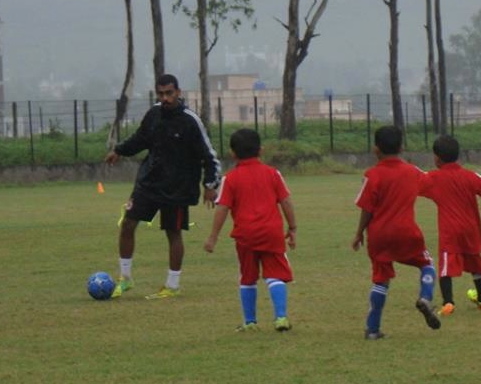
    We head to India this week and speak to u10’s Pune FC Coach Mark Rodricks.

    TCD: Did you play football before you started coaching?

    MR: I have been playing since the age of 9 and still continue do so. So that’s been almost 15 years now of playing football.

    TCD: How did you get into coaching?

    MR: Since a young age, I’ve been close to the professional clubs in India and have followed the I-League clubs. Somehow running 5 rounds of a ground and then kick the ball around didn’t seem to appeal to me as how a person became a good footballer. Football coaching methods in India are archaic and I never got taught the right way or had the chances to grow like the kids these days have. Coaching was a natural progression to the change I wanted to see.

    TCD: What is your current role at Pune FC?

    I am the head coach of the U-10’s at Pune FC. That is formulating and implementing the program in accordance with the club’s footballing policies. I work closely with the Academy Director on this program.

    TCD: What changes would you make to the grassroots game?

    MR: Since this is India centric, I have a fair few things I would like to change:

    • Indulge the kids to use a football and be comfortable with it rather than have them run around the pitch. Having a football at their feet is the most important part of their learning.
    • Take corporal punishment completely out of the game.
    • Focusing more on helping the kids love the game and cultivate that passion. This means making the sessions fun.
    • Not stifling a kid’s progress to a certain playing position on the field. A player has to play across the field and can then decide for him/herself what they like.
    • Tournaments should have rules where there’s either no substitutes bench or rules where all children get up and play the game. No kid in the age group 6 to 14 would want to be sitting on the bench and watching a game.
    • Coaches need to remember that the game is the biggest teacher of all, and what a child can learn by playing, a coach cannot explain that in words.
    • Bring other sports as part of their education. Coaching only football is dangerous. And all round development is vital.

    TCD: What age to kids move to the 11v11 game in India?

    MR: As far as my knowledge goes, school level would be as early as 10 but academies are 12+ years and above.

    TCD: What is your coaching Philosophy?

    MR: With the right amount of information at the right time, I love for players to experiment and learn things on their own. I encourage the boys to use their head and their brains! Learning something new every day is a vital part of their learning. Since I coach kids mostly who are under U-10, I do not impose a playing style on the kids other than ensuring the kids are comfortable with the ball at their feet. I encourage 1v1’s and try and cultivate fair play and a will to succeed.

    TCD: Have you any mentors?

    MR: I have a lot of people who have helped me through the years but I try and take the most out of players, coaches and anyone involved in the sport. It helps me with my learning and to be a better coach.

    kids_slumTCD: What kind of player do you like working with?

    MR: Each player brings something unique and different to the table, especially at a young age. At this age, your coaching learning sometimes gets thrown out of the window. The kids coerce you into improvising. I try and learn from each and every kid I coach.

    A love for the sport and the willingness to learn in a tiny tot is an added bonus since that’s half your work done.

    TCD: What is the future of football in India?

    As much as I’d like to sugarcoat this and paint a rosy picture, since the apex body in India doesn’t seem to be doing much for the sport in the country, even with a large talent pool being the 2nd largest population in the world, we lack far behind Asian countries, let alone European/African/South American countries.

    We need more coach educators, licensed coaches and an impetus on an all-round learning along with infrastructure easily available. These all are ingredients for shaping a positive future.

    A little nudge and football can be sent on its way in India.

    ==========================================================

    TCD would like to Thank Mark for this interview. You can follow Mark on twitter @markrodricks

    I always like to hear your opinions. Please comment below or drop me an email at info@thecoachdiary.com. If, you don’t have anything to add then please forward this on to a friend, a fellow coach.  Thanks for reading, as always.

    Please follow me on twitter @Coachdiary


  • COACHTALK: Lisa Fallon

    COACHTALK: Lisa Fallon

    I met with Lisa for the very first time some weeks back and I was very interested in everything she had to say. I can certainly see her going places in the future. Remember this name Lisa Fallon.

    Lisa is an ex footballer, a mother, a Sports Reporter, Senior Men’s First Team Manager at Lakelands FC (Leinster Senior League), Opposition Analyst Bohemians FC and also works with International teams and the Irish University Squad. Lisa is also the first female to manage a club within the LSL.

    TCD: Did you play football before you started coaching?

    LF: Yes, Played since I was 10 and finished up in 2010 when I turned 34. 24 great years of playing! Lisa played  with Southampton FC, Gillingham FC, Sittingbourne; St Patrick’s Athletic, Leixlip United, Riverstown.

    TCD: How did you get into coaching?

    LF: Seemed like a natural progression and probably stemmed from a frustration at some coaching I had seen children getting.

    TCD: What is your role at your current club?

    LF: At Lakelands FC, I’m the manager of the senior men’s first team. At Bohemian FC, I’m the Opposition Analyst for the first team.

    TCD: What changes would you make to the grassroots game?

    LF: Loads! Get kids playing 3v3 at 6/7 years old and keep them in SSG’s until U13. No results up to and including U13 to create a development friendly model. Make it compulsory for every child in a squad to play at least one half of their weekly game(s).

    TCD: What is your coaching Philosophy?

    LF: To facilitate my players to reach their own potential through guided discovery promoting game intelligence. To get my players to play with their brains as well as their feet! To learn something new every day which will enhance the type of coach I am tomorrow.

    In terms of style play:

    • To play out from the back reaching the attacking third as economically as possible.
    • To encourage 1v1’s and combination play in the attacking third.
    • To be innovative in attempts to build play to goal-scoring opportunities but with a committed and disciplined approach to defending as a team.
    • To play with endeavour, a will to win and in the spirit of Fair Play.

    TCD: Have you any mentors?

    LF: Yes, every person I meet in football is a mentor the moment they talk about and share their football experiences.

    TCD: What kind of player do you like working with?

    Every player I have ever coached has presented me with a different challenge and helps me grow as a coach. I welcome that and believe every player has a the right to be an individual.

    =============================================

    TCD would like to Thank Lisa for this interview. You can follow Lisa on twitter at @lisafallonsport

    ===

    I always like to hear your opinions. Please comment below or email me info@thecoachdiary.com If, you don’t have anything to add then please forward this on to a friend. Thanks for reading.

    I’m also on twitter @Coachdiary

  • EXPERT TALK: Dan Abrahams by FOOTBLOGBALL

    EXPERT TALK: Dan Abrahams by FOOTBLOGBALL

    This is one of the best interview and insights into football psychology I have had the pleasure to read. Certainly some very unique and smart questioning by Mark O’Sullivan.

    HERE IT IS….

    Dan Abrahams is a global sports psychologist helping people to high perform. His ability to de-mystify sport psychology is very evident in his brilliant book Soccer Tough where he introduces some simple but effective techniques that achieve quick results.

    His new book Soccer Brain is directed at coaches. In this book Dan gives us some tools and philosophies to help create a more effective player mindset and in turn help establish a better coaching culture.

    “Well that’s just football” and you think “Hmmm, that’s not football, that’s the way you’re approaching football.”

    FOOTBLOGBALL :You and Horst Wein have something in common. Neither of you come from football backgrounds but you both have managed to change how many of us think about and experience the game. Has the fact that you came into football from another direction been an advantage to you? Ie you are coming from a different angle?

    DAN ABRAHAMS : I think having formerly been a ‘non football man’ was, and has been, both an advantage and disadvantage. One of the drawbacks of sport psychology is the notion that you bring a pre-determined set of techniques into a sport without much prior knowledge of that sport, without understanding the language of the sport and without knowing the specific challenges the sportsmen and women in that particular sport face. Being a former pro golfer (both player and coach), golf is pretty easy for me to work in. When I started in football a decade ago I was pretty conscious of my lack of knowledge of football so I cut my cloth in non league and immersed myself in the football environment and its different communities – elite professional, journeyman professional, non league, grassroots, women’s football etc.

    So look, sure, if you’ve never played the game to any level and if you don’t coach it, you’ll possibly never have the same feel for the game like those who have. But at the same time I can only speak for myself and over the past decade I’ve spent thousands of hours at training sessions, talking with leading coaches, at matches and at conferences and workshops delivering and listening. I’ve spent thousands of hours researching the game. I spent dozens of hours in the Prozone suite at West Ham working with a number of clients – so I’m comfortable that I have a good grasp of football.

    In terms of advantages – coming in fresh can help you see things with a clarity that perhaps those who have been in the game since 8 years old don’t necessarily have. The number of times I’ve heard a client say to me “Well that’s just football” and you think “Hmmm, that’s not football, that’s the way you’re approaching football.” It’s easy for those who are embedded in the culture of football to just accept the game for what it is rather than cast a critical eye on trends, thoughts and practices. I am able to do that. I am able to look from the outside in and say “Really? I’m not sure about that. This can be changed and this can be seen differently.”

    FOOTBLOGBALL: For me your book Soccer Tough had many ” I knew that but never thought about using it that way” moments. It is a terrific resource for any player , coach or parent . Your new book Soccer Brain , how does it differ from Soccer Tough ? Is it aimed more at coaches ?

    DAN ABRAHAMS :Soccer Tough was aimed at players but naturally many coaches have picked it up and ‘run with it.’ Which is great! But I knew my next literary offering for the football community would be specific to coaches and centre on the coaching process. I hold a strong belief that the environment a coach creates is a prime mediator of development and performance. So I have written a book about creating a culture of success (development and performance.) It’s split into 4 sections: creating a culture of creativity, confidence, commitment and cohesion. It has loads of ideas for a coach at any level and at any age group.

    “The Toughest Profession of All” 

    FOOTBLOGBALL : ( Curve ball question 😉 ) I am developing an age related training strategy for my club. Not just age by date of birth but physical age as there can be gaps of up to 3 years physically between say two 14 year olds . Could we say the same in psychological terms about mental age and can you give advice on how we should begin to develop a more age related ( date of birth/mental / physical age ) strategy in mentoring players from a football psychology perspective ?

    DAN ABRAHAMS : From a practical perspective this would be enormously difficult to undertake and I think you’d be looking at some fairly questionable methodologies should anyone go about trying to do this. Of course this is in my opinion. But there are certainly things you can do to help players develop a high performance mindset approach. It starts with your own understanding of the mental side of the game. What many coaches don’t appreciate is that mindset is both a talent and a skill. This is something I write a lot about in Soccer brain. Just as there is physical talent, so there is mental talent. Take a cross section of 20 13 year old footballers and some will have greater mindset talent than others – they are naturally better at concentrating, are naturally more confident etc. Of course this correlates with physical talent – but there will always be players who have less physical talent but over come this with a natural propensity to want to develop and to want to win.

    So there is such a thing as mindset talent. Mindset is also a skill. Focus can be improved, as can confidence, determination, emotional management etc. This to me is where coaches need to improve in their ability to help players develop. Firstly just by recognising that mindset is a skill is a great start. Then you need the tools and techniques and the communication dexterity to help players in this area.

    To come back to your question – I would say the most appropriate thing for coaches to try to achieve at every age group is to examine the behaviours of those who have good mindset and look to develop those who have poor, maladaptive behaviours. This is key – what a lot of coaches don’t appreciate is that mindset can be seen behaviourally. For example a lack of confidence might manifest itself in ‘hiding’ on the pitch or a lack of vocals. Young footballers may be fidgety when you speak to them. This is because of their brain. If this is the case ask them to stay still and look at you while you speak. Ask them to practice paying attention.

    So in summary I’m not sure it’s about saying “This under 14 has a mental age of 11”. I don’t think ethically and scientifically you can do that. I think it’s about saying “This under 14 is demonstrating behaviours that are suggesting a lack of mindset talent. I need to help this player develop his/her mindset”.

    FOOTBLOGBALL : My personal view of the game in England is that it has for decades been slow to embrace anything that threatens its “traditional game and values”. Now the FA have put in to operation a new “Player Path” plan to help improve the poor state of the game at grassroots level with the aim of developing a better standard of player at senior level. how do you think that your area of expertise can help the English FA achieve their aims.

    DAN ABRAHAMS : I’d really just like to see psychology resources that hold more real world value for coaches and players. It’s easy to criticise football when it comes to sport science, and it’s fair to say football needs to be better (in England) at embracing new methodologies that arrive outside of it’s own environment/culture. But sport psychology needs to be better at developing strategies, formulas, philosophies, techniques and tools that are developed within football, are specific to the challenges faced in that environment, and are delivered in the language of football. I think I’ve had a little success in football because I’ve done just that. I don’t throw theory in front of a coach or player – I scaffold the theory and make it football specific and teach them in their language. That is so important and something we need to be better at.

    If I was a coach I’d constantly be saying “Next” and “Think”

    FOOTBLOGBALL : Children have a vast appetite for learning but in my opinion it dissipates dramatically when they enter our out of date education system. The same can be said for football where I think that the greatest conceit of coaching is that – young kids learn anyway, what is most important is the environment created by the coach and the coaches ability to not look at how he coaches but more how his young players learn . Would you agree ? And what tools would you suggest for that coach to use with his young group ( 6-9 year olds)

    DAN ABRAHAMS : If think for any age group environment is everything. But historically FA courses have been about technique and tactics. Again this is something i have tried to address in Soccer Brain. As I say in the book “ In coaching it is the brush strokes that mediate success not the palette itself.” Coaching never has been or never will be just about technique and tactics. That is instruction and of course it forms a part of what you’re trying to teach. Coaching is environment and culture driven. At any age there needs to be fun, freedom and focus. There needs to be caring, discipline and determination. These qualities are set by the coach. They are the soft skills that make the hard skills possible. I’m convinced that if all coaches in Britain fell in love with getting the soft skills right, the environment and culture right, then we’ll start producing more players at the elite level.

    I agree with your thesis – a part of the process of coaching is understanding how people learn – how the brain learns. It’s appreciating individual differences and striving to help every player irrespective of those differences. The intro title to Soccer Brain is called “The Toughest Profession of All” – because quite simply it is. Coaching is tough but some coaches stride around making it easy by just thinking that coaching is about drilling. Rubbish – coaching is player centred and driven by your coaching culture.

    FOOTBLOGBALL : At the heart of football coaching is a teacher and a learner. Where both need to be

    (a) Adaptable : The coach must show adaptability in response to changes in the players environment ( School , home , growth phase ) , The player must show adaptability to changes in his environment and be able to respond to changes that are happening live within a game.Often it is a woods from trees scenario for the young player. How can the coach bring greater clarity toward helping the player understand the changes in his environment both on and off the field.

    DAN ABRAHAMS : Let me answer this simply. On the pitch I believe a coach should be constantly communicating the notion of ‘Think’. I remember Steve Gallen at QPR Academy always saying “What next?” The nature of the brain of young players means that they tend to switch off. They do something and then switch off. They watch the game rather than think the game. If I was a coach I’d constantly be saying “Next” and “Think”. Help them build a habit of prediction. That is what football is – prediction. It’s not really a game of ‘moment’ it’s a game of ‘prediction’. What is Messi and Xavi? They are ‘The now and the next 10 seconds’. That is the foundation of game intelligence. Ask players to do this, to be like this. You can’t reinforce this notion enough.

    FOOTBLOGBALL : (b) Creative : How can the coach encourage creative thinking ?

    Certainly doing the above can help. The coach also needs to promote an culture of freedom. You can’t be creative if you play anxious. Allow mistakes to happen – in fact have an environment where players love mistakes. Freedom comes before focus – focus will be built over the years as long as you have a base philosophy of freedom.

    DAN ABRAHAMS : Creativity is also built from knowledge and mindset. Players should be students of the game. If there’s a clip of Gary Neville talking about how Raheem Sterling plays with his head up on YouTube how come there are young players out there who haven’t seen that clip? Resources are everywhere – you can’t create if you don’t know! In terms of mindset – promote the idea of imagery. Players should be rehearsing passages of play in their mind everyday. These should go from the mundane through to the complex. Create in your mind first – over and over. The it makes it more possible!

    FOOTBLOGBALL: Our brains by nature look to save energy by automising a process which can create a conflict between our comfort zone and our development. Discuss

    DAN ABRAHAMS : When we learn to drive we control the processes that operate/move the car. Over time these processes become less controlled and more automated. We pass our test and we drive in the most part unconsciously (with some attentional resources placed on the road ahead of us.) We drive for the rest of our lives at a certain standard ad within our comfort zone. But if someone was to come to us and say “I’m going to teach you to drive like Lewis Hamilton” then we’d have to come out of our comfort zone and start focusing on superior driving skills. We’d have to start thinking about our driving performance again – when to shift gear, at what point on the bend – what speed to go at around a hair pin etc. This will feel uncomfortable. It will feel reckless. It requires focus and effort.

    One of the most difficult skills for any sports person is to hold that juxtaposition – to go out and play freely and confidently, but to spend time during the week critically analysing performance and looking at what needs to go better. Footballers don’t spend enough time looking at areas to improve because it feels uncomfortable – it can diminish confidence. We are all subject to habits and patterns as we play – breaking them requires self awareness, focus, patience, hard work and discipline.

    I do believe this is one of the reasons why many young footballers don’t progress. They get into a certain maladaptive habits and patterns and either remain blissfully unaware that there is a problem or will avoid working on this area because it takes effort to change.

    A prime example is ball watching in younger players. If a player tends to focus on the ball too much without getting a picture of what’s going on around him it takes energy and effort and enormous willpower to change this. It takes a move out of his comfort zone to start checking his shoulders 10 times a minute.

    I could, if I wanted to name several very high profile midfielders who stopped working with me after about a month because I wanted them to THINK about their game and develop what I call a training script. I wanted them to start changing their dominant motor patterns that were leading in inefficient play. They were British and both have failed to progress – why? Because the feeling of change takes up so much resource from the brain that is was easier for them to not bother.

    This is where certain Barcelona players are so good. I’m unconvinced about the notion of “Just do it” on the pitch. To be the very best in the world you have to have some thought, some controlled processes on the pitch. It’s a fluid game that is constantly throwing problems at players – they need clarity of thought in the moment, but there must be some thought. As Xavi says “Think, think, think”.

    Many thanks to Dan for taking the time and effort to answer my questions.

    You can buy Soccer Brain by Dan Abrahams HERE

    =========================================================

    I hope you liked this interview, I certainly did and thanks to FOOTBLOGBALL for allowing me to share this interview.

    Follow Mark on Twitter @markstkhlm and Dan @DanAbrahams77 

    See also Helping the Brain to Win Games By Blueprint for Football

    Worth a read The Way Forward and The footballers who are all pay, no play.

    I always like to hear your opinions. Please comment below or email me info@thecoachdiary.com If, you don’t have anything to add then please forward this on to a friend. Thanks for reading.

    I’m also on twitter @Coachdiary
  • COACHTALK: Alf Galustian, Coerver Coaching

    COACHTALK: Alf Galustian, Coerver Coaching

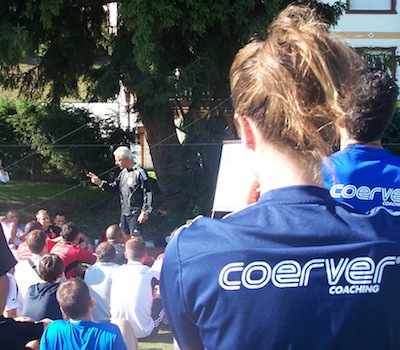
    I got to speak with the legend that is Alf Galustian before he headed off across the world to conduct another Coerver Coaching Workshop. Alf will be back in Dublin in a couple of weeks to head up the Coerver Youth Diploma at Tolka Park.

    When did you start coaching?

    I started coaching at 25,after a serious knee injury,and obtained my FA and USSF badges soon after

    What is Coerver Coaching?

    Coerver Coaching is two things:

    a) A Soccer Skills Teaching system,devised by Charlie Cooke and myself,inspired by the philosophy of Wiel Coerver,the great dutch coach.The System has continued to evolve since 1984.

    b) A Global Soccer Education business,that Charlie and I startled in the USA in 1984,with one camp. Today we have Coerver Coaching activities in 35 countries.

    At what age should a player start mastering their balls skills?

    In Coerver Coaching we have 4 “Golden Ages” for developing good skills:

    1) 4 – 6:This is an age where coordination and balance is being mastered,and in Coerver we use the ball to improve these,however,through fun games rather than drills

    2) 7-11 : This age group we focus on ball mastery and moves ( 1 v 1). Players learning thru repetition,again disguised by fun games or competition rather than drills

    3) 12 – 16: Here we focus on players using the skills effectively in games: The “When and where”. We have devised drills and games that allow the players many decision making options.

    4) 17-21: Here we focus on Position Specific Technical training and the use of technical practices to improve conditioning.

    Does Coerver Develop Game Intelligence?

    The Coerver Method is deliberate,planned practice of increasing difficulty. Every core Skill : 1v1/Running with the ball/Passing/First touch has 3 parts:

    1) Perfecting the skill through repetition

    2) Graduated Pressure Defending

    3: Full game pressure : this is the part that game intelligence develops. Each Coerver session devotes 30% of the total session time to this part of development.

    You’re working with kids all over the world, how do we compare to other nations on technical ability?

    I think we need to divide into Grassroots and “Elite ” Player. In Grassroots I think British and Irish kids, 8 to 16, are probably the same as in most European countries. I think Japan , USA and Australia of the countries I worked in ,are probably ahead of us.

    Regarding Elite player development,I have worked for 17 National Federations and many of the worlds top pro clubs. For example I would say between 7 and 11 kids at EPL clubs can be compared to any in the World. I think between 12 and 16 the gap widens; Spain. Italy,France,Germany especially are better. Not necessarily the best kids but producing more ( Its the depth that seems to be different)

    At what age should we coach to win?Alf G1

    I don’t think there is anything wrong with wanting to win. I believe in all sports competition is important. However, I think we should value performance more than winning up to 16 years old.

    Do you have any other thought on winning over development?

    I think its helpful if coaches can explain to parents why they value performance more than winning in the development phase. Once it is explained then you are more likely to get parents/kids support.

    What age should we move to 11v11 football?

    Most countries it’s 12 and up. I would agree with that

    If there was one thing you could change about kids football, what would it be?

    Again depends on the country,but for UK and Ireland,I would say correct coaches education for those working with 6 to 16 year olds.

    You’re a mentor to many many coaches, but do you have any mentors?

    Wiel Coerver . After him I have been lucky to have worked closely Gerad Houliier and Aime Jaquet France, Carlos Parriera Brazil, Juergen Klnismann Geramny; I have learnt from all of them

    What does the future hold for youth development in Ireland and the UK?

    Again I think in grassroots football we are on the right road; more debate,more funding,more opportunity. In the elite game,in my opinion, we are still behind; what we teach and how we teach. This is not a criticism on the very many good youth coaches at pro clubs; in fact I think they should be supported more ; more education and better salaries.

    The next Coerver Coaching Youth Diploma Course will be held at Tolka Park on 17th and 18th August.

    Venue: Shelbourne FC Tolka Park Dublin

    Date: 17/18 Aug 2103

    Cost: €229.00 incs new 5 set coerver dvd and all course books and certificate of attendance

    To book or for more information on coerver coaching contact Austin.speight@coerver.ie

    @coerveralf, @CoerverCoaching

    Next Up: Interviews with Lisa Fallon @lisafallonsport and Hugo Vicente @hrsvicente

  • Be A Man: Joe Ehrmann at TEDxBaltimore 2013

    I found this talk absolutely fascinating and had to share it with you guys. I had already posted it on Facebook but know lost of people don’t use it, so here it is.

    JOE EHRMANN has been an educator, author, activist, pastor and coach for more than 25 years. He was a college All-American athlete who played professional football for 13 years. Among numerous awards, Joe has been named “The Most Important Coach in America” for his work to transform the culture of sports.

    I hope you enjoy it!

    Something else to read this week, check out the Parent Trap article by Blueprint For Football

  • COACH TALK: Paul Swenson

    COACH TALK: Paul Swenson

    I have recently been exposed to Horst Wien through some other books, one specifically is “Our Competition Is The World, by Stan Baker. Though it was written with the idea of helping U.S coaches implement the U.S Soccer Youth Curriculum, it really transcends cultural barriers. A coach friend of mine also turned me on to Horst and gave me a copy of his Game Intelligence DVD.

    About me: I am 51 and have played soccer since I was 8 or 9 years old. I played what we call “recreational” soccer as a youth, which means non elite or non select. Perhaps the terms are the same in Ireland? I had the opportunity to play college soccer as a young man. I have kept playing since, and have only recently begun to slow down because of injury.

    When did you start coaching soccer?

    I have been coaching for around 12 years? Not sure exactly. 3 years ago my local youth club opened up a part time position for Recreational Coaching Director. I was the only one to apply for the job. I am a photographer by trade, but soccer is my passion. My inspiration is the belief I have that I can make a difference in kids lives through my efforts in educating coaches, and maybe influencing a very needed change in the youth soccer culture.

    Who do you get your inspiration from?

    My inspiration is the people who thank me for my efforts, and the gratitude I get from the children. I also have a very good friend John with whom I share the passion for change, and without his support and mentorship I would not be where I am today. When I read your blog, it sounds Exactly like what we go through here. Cultural Adult ideas of competition and the desire to Win at all costs are strong.

    Does the US encounter the same problems we do, are adults more competitive then the kids?

    Change shifting toward player development, player centered coaching is starting to happen, but slowly. There is still this strong idea that the only way for kids to be truly successful at the sport is to identify elite players at young ages, and try to put together travel teams to go and Win games. Parents and coaches are resistant to new ideas. To be honest, those that are resistant, I feel, are a Vocal Minority, and that most parents understand the value and reasoning behind player development, and I mean developing the whole player, not just technically, but as a person, those true values of humility and sportsmanship, BUT most organizations are held hostage and intimidated by this vocal minority.

    What is your coaching Philosophy?

    My general philosophy is that player development is a long term educational process, that every child has unlimited potential, and that the game of soccer cannot be taught in a dictatorial fashion, but only as guided training. This, as you are fully aware, is the science of coaching the game. This link is a paper I wrote last year for my coaches, but my ideas are ever evolving thanks to people like my friend John, and experts in the field like Horst.

    What age do you move to 11v11 and what changes would you make to grassroots soccer?

    Currently our kids move to 11 v 11 at U-12. Our U-10s play 8 v 8. Our U-8s play 4v4 with no goalkeepers. Our U6s used to play organized competitive 3v3 or 4v4 games (can’t remember which). I was able to move that program away from that into a Kids Club hour, where every child has a ball playing fun one player per ball dribbling games, with some low pressure 2 minute 2 v2 games to finish the hour.

     What is happening in the US in relation to change, do people want change?

    If I could wave a magic wand I would like to see the recommendations Horst outlines per age and numbers per side. I would like to see Funino played at the U8 and U10 level. This year, since our Fall season is already in the planning phase, my intention is to expose my coaches to Horst’s work in the hopes that they can implement his ideas in their training sessions. Then perhaps “sell” my organization on making Funino the format, for at least U8 next season. On a grander scale, I world like to see this division we have in my community and America in general between competitive elite teams and recreation (Grassroots for you?) go away.

    In the U.S., there are pockets of change. The science is there every where you look, you would have to be blind not to see it, but the urge for Glory as a means to an end from well meaning adults is strong in our culture. So it is not uncommon for organizations to say they are for player development, then go and form Elite teams for the sake of winning tournaments at ages as young as 8 and 9.

    As you can see, I could go on and on about this…so you did not know what you were getting into by asking me a few questions.

    *******************************************************

    TCD would like to Thank Paul Swenson for this interview.

    MRYSL Director of Coaching, REC

    www.mrysl.com