Category: Coach Talk

  • COACH TALK: Mike Geoghegan

    COACH TALK: Mike Geoghegan

    Mike Geoghegan is a friend and a very good coach, I talk to him about his views on coaching and future of youth soccer in Ireland.

    How did you get into coaching? 

    I had played Leinster Senior League with Newbridge Town and was approached in 1998 to go back there as player manager. Back then the manager also looked after the coaching role and I enjoyed that aspect. We built a good young side and won the Senior Division Title in 2000 and I was voted joint LSL Manager of the Year. Pressure of my day job then took me away from coaching for a couple of years until one day I went to watch my eleven year old son play with Naas AFC and to be honest the coaching was so poor I had to get involved. I enjoyed a few years with the boys. They were not a great team but were committed and honest with two or three good players and worked their way up to major in the DDSL.

    I wanted to do my coaching badges but the FAI would not exempt me from Kickstart 1 or 2 despite my LSL record so stubbornly I held off until 2007 and then gave in and started with Kick Start1 and am now doing my A Licence. I have also recently qualified as a Business and Life Coach.

    What is your current role at your club?

    I have two roles one is Director of the Academy for the Kildare Underage League which looks after approx. forty clubs. My focus is on the age groups from six to fourteen.  This role is enjoyable as it combines on the field coaching with planning a Coaching Strategy for the Academy and the League. I am also the Head Coach at Naas AFC where we field twenty five teams in the Kildare League. So I coach six days a week at present.

    What changes would you make to the grassroots game in Ireland?

    I would put the Kennedy Cup back by a year to under 15 and the emerging talent programme back to under 16. This would allow the Leagues more breathing space to develop players and allow the players a vital extra year to grow up in life and football terms. I would abolish nine a side football. I am a big advocate of small numbers on small areas but not big numbers on small areas which favours physicality.  I would like to see no competitive league football until under 13. I would introduce five aside for under 8s, then seven a side until the Christmas of the under 12 season. I would bring in offside from under 11 at seven a side.  The second half of the under 12 season, I would start non-competitive eleven a side with matches interspersed with coaching clinics for coaches and players. Competitive league eleven a side would commence at under13. I would gradually introduce the kids to competition at the end of the under11 season with tournaments and cups.

    I believe the DDSL should be split into three Leagues as it is too big relative to the size of the country. A lot of good players playing for the smaller clubs in the DDSL have no chance of recognition.

    I would invest more in coaching standards around the country and develop a new coaching pathway for coaches who want to advance only as underage coaches. I would replace Kickstart 1 and 2 and the Youths badge new courses on How to Coach and Develop Young People as Module 1 and Football Instruction as Module 2.   I would then bring both together for a Coaching Young Players Diploma.

    Image 1What is your coaching Philosophy?

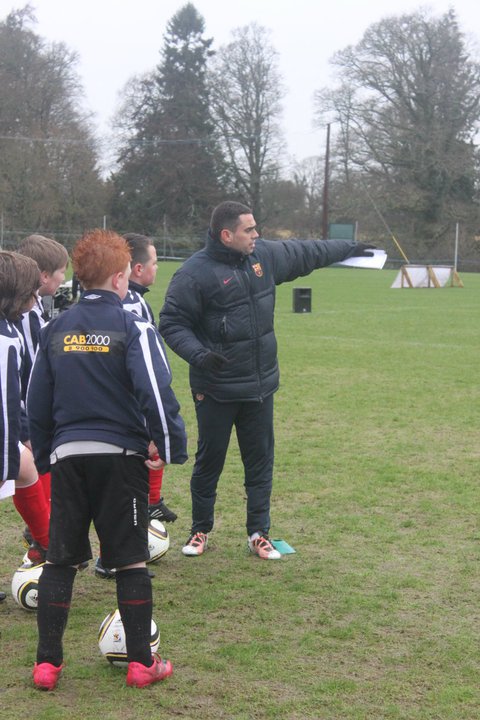
    My Coaching philosophy is Guided Discovery. The Game is the Teacher, The Player is the Student and the Coach is the Guide. The normal style is Coach tells player does.  At the other end of the spectrum there is now a lot of talk at the moment about street football and free play football all of which has merits. But I believe young players need a guide to help them develop. You can learn from your mistakes more easily with someone to give you a steer by asking the right question at the right time. We need to produce more thinking players who can solve the problems on the pitch. I combine the Guided Discover Coaching style with Small sided games using 1v1 2v2 3v3 4v4 and 5v5 in most training sessions at all ages. We will regularly use four small goals on small pitches and sometimes use two bigger goals with Keepers. Variety is key.  I also concentrate a lot on technical skills and players being two footed.  I read a lot of coaching material and cherry pick what I like.

    So to sum up my Philosophy it is Small sided games coached with Guided Discovery. See PURESOCCER which Aaron Callaghan and I developed.

    What is the future of Youth football in Ireland?

    Youth football in Ireland needs leadership to try and keep pace with a rapidly changing game. There are a lot of good people in their own way trying to do good things but it needs to be brought together into a cohesive master plan for developing young people and young players. Most coaches in Ireland are Dads or ex-players who are instructors not coaches. We need to firstly train people in the art of coaching and teaching and then add in the football instruction. We need to concentrate more on developing the young person and their self-esteem.

    I am concerned about the future. The recent row between the DDSL and SFAI shows that the kids have become secondary to the politics. This row is about adults not kids. This is not the backdrop for healthy change. I think some positive changes will be introduced but will it be enough as we are starting a few years behind. We are small enough to make radical changes to the game but only if all of us who love the game pull together.

    The Coachdiary would like to thank Mike for a very honest and open interview.

  • COACH TALK: 45 minutes with Pat Malone

    COACH TALK: 45 minutes with Pat Malone

    I feel that it is very important to get the opinions of coaches who have been around the game in Ireland for some time. This week I chat to Pat Malone from Premier Skills Ireland.

    TCD: How did you get into coaching?

    PM: I started coaching with my Dad – Christy Malone at Dingle United in Cabra. I was around 17, I think. I just gave him a hand initially and then as time went by I began to do more and have more input. He always had pretty good teams during his time at Dingle. The first team I helped coach had some really good players in it including the current Head of Coaching at St Kevin’s Boys– Alan Caffrey. Caffo was a special player who never got the breaks he deserved. He was a player with great ability who always had a trick or two up his sleeve, something that was always encouraged in him by my Dad but in today’s modern “must win” world of schoolboy football is so sadly lacking.

    I completed my Level 1 & UEFA B Licence whilst at Dingle and from there I progressed to work under Pat Cleary. Pat was then manager of Ards FC and initially I played for him. I had just recovered from my 2nd ACL rupture and played that one season for Pat. We won the league & Cup double that year so I decided I’d put my body through too much and decided to give up playing and concentrate on coaching. It was also a good time to go out on a high. I began to assist Pat in the following season and learned so much from him. In my mind he was a “Guru” and still is. After working with Pat, I decided to concentrate on completing my UEFA “A” Coaching Licence which I did with the Scottish FA. Pat had recommended that I do it with the SFA. It was a fantastic experience, very tough with no real margin for error – you only have to look at the coaches who have completed the Licence with the SFA – Jose Mourinho, Andre Vilas Boas to name but 2 to see how high the standards that are required.

    I then began to stand on my own and have worked with a number of clubs, leagues & associations. (Kinvara Ards FC/DDSL Kennedy Cup Squad/Republic of Ireland U15/U16 & U17 squads/Shelbourne FC/Bohemians FC/Drumcondra FC & Home Farm FC).

    In July of 2012 I began work with Premier Skills in Ireland and have not looked back since.

    TCD: What is your current role at your club?

    PM: I am co-Licence Holder for Premier Skills in Ireland along with Colm Barron. Our company provides Innovative Coach Education & Player Development Programs. This work is based primarily on the “Street Football” concept utilising the “Practice Play” Methodology.

    I believe that there are real deficiencies in today’s game and a huge shortage of skilful individuals such as Johnny Giles/Liam Brady from the past. These players learned their game on the street. Times have changed and children cannot for safety reasons play on the streets anymore but the principles remain the same in my mind.  I believe Premier Skills can help counter theses deficiencies with its methodology and believe it can make a big difference in not only helping produce excellent players but also by helping produce excellent coaches.

    The opportunity arouse when I along with Colm were approached by Roger Wilkinson, co-founder of Premier Skills to take up the franchise and licenceship for Premier Skills in Ireland. It was a fantastic opportunity, one which both Colm & I could not turn down. It is great working with someone who is so like minded in terms of how the game should be played. Its working well and I would be confident that Premier Skills will grow further in the future.

    The Premier Skills Practice Play Methodology is used at a number of Academies in England currently which include West Bromwich Albion, Birmingham City and Coventry City to name but a few.

    It is also used as part of the Coaching Development Program at a number of clubs in Ireland. To date we have completed courses in St Kevins Boys, Trim Celtic, Malahide United, Mountview Boys & Girls FC and Shamrock Rovers here in Ireland. We also held a Level 1 Course with the NDSL which was very well received.

    TCD: What changes would you make to the grassroots game?

    PM: Where do I begin!! First of all I would do away with all league tables’ right up to U 12. Kids don’t need league tables – they naturally want to win. They are competitive, it’s in their DNA.  By taking away the league tables I think this could have a greater effect on the parents. There would be less pressure being put on the kids and therefore they will enjoy the game more. I would have small sided games programs right up to U12 based as follows. The transition year would take place at U13.

    U8s U9s  – 5 v 5. (Indoor from Nov – Feb. Futsal ?)

    U10s U11s – 7 v 7. (Indoor from Nov – Feb. Futsal ?)

    U12s – 9 v 9.

    U13s – 9 v 9  Aug – Dec. 11 v 11 – Jan – Jun.

    From U 14s and above it is the 11 v 11 game. You could have perhaps rules at U 13 (jan – Jun) that the opposition cannot prevent the Goalkeeper playing the ball out at a goal-kick to his team in their defensive third. This would allow players the time to develop key skills with limited pressure where currently we don’t see enough of this aspect of play.

    I would have clubs hold “In service training days” – say 3 per season where all coaches from the club come together and learn & develop their skills as coaches. Clubs could utilise the services of Coach Education providers such as Premier Skills or similar to help with ongoing Professional Development of coaches.

    “I think that the FAI need to first come up with a playing style that suits Ireland. They need to take into consideration all factors that influence the game in this country, from climate right through to having to deal with all the other sports played by youngsters in this country. They must then find a way of developing a program that allows this playing style to be put in place”.

    PSI Trim CelticTCD: What is your coaching Philosophy?

    PM: My philosophy is simple. I want to see the game played in a manner that encourages skill, teamwork and sportsmanship. I have always encouraged development over “winning at all costs”. I believe that if players are given an environment where they can develop their skills without fear of failure they will improve and then the natural course that will follow will be results. All young players and adults for that matter want to win. They don’t go onto the pitch thinking I want to lose. It’s a natural instinct to want to succeed.

    I was at Home Farm for 4 years, in that time my ethos of all that I tried to bring to the club was primarily about “Developing the Player”. The results were secondary and for the most part results took care of themselves. It was the Player Development work which brought about the results. Coaches and managers have to remember that they are there to facilitate these players in their development as footballers. Some managers think its all about themselves – this is wrong. You have to put the players 1st – its that simple.

    Regard a playing style – I want my teams to play out from the back, through the thirds creating overloads in wide areas and making sure there is quality in our passing. The real work takes place off the ball, the players without the ball are the influential ones. The positions they pick up and the use of the spaces are so important. This is what gives the players on the ball the “picture” of what comes next. We can’t say it’s all about passing because its not – it’s about the decisions that players take either with or without the ball.  Players need to decide what is needed to progress, “Do I pass” or “Do I run with the ball”, if I have no forward option then “Do I start again”. This is all the basis of Street Football. In the street football environment players learn how to control the ball, how to and when to pass, when to run with the ball. This is why I chose to take up Roger Wilkinson’s offer to take the franchise for Premier Skills in Ireland along with Colm Barron. I believe totally in this philosophy.

    TCD: What type of player do you like working with?

    PM: I like to work with players who have a good attitude and want to improve. They can have all the skill in the world but without the right attitude they will never succeed. I am very aware that not all players will have the same ability, some will have the ability to go very far in the game, some will play purely for enjoyment and some unfortunately will discover other things in life that will take away from the game.

    I have worked with elite players in the past and for the most part I enjoyed working at this level. It does however have its drawbacks – some parents think their child is a top player who is going to be the next “Messi”. I think most parents need to take a step back and try to look objectively at football. I have my own children and my son Craig does nothing else but talk about “being a pro”. Maybe because I have been involved in the game so long that I am able to be objective. Don’t get me wrong there is nothing I would like to see more that my son achieving his dream, but I am realistic with him and I have always been honest with him from day 1 in regard to being a Pro.

    Overall, if a player that I am working with wants to improve, I will help them improve. I can guarantee he will improve if he wants to learn and is willing to put in the time. So players of all abilities at whatever age, once they have a willingness to learn I enjoy working with.

    “Good teaching is more a giving of right questions than a giving of right answers.” — Josef Albers

    TCD: What is the future of Youth football?

    PM: I think that the future of Youth Football looks like it’s not going to change any time soon. There are too many people pulling in opposite directions so there is no Master plan. Until such time as our Association comes up with a playing style then we are all going to be on different pages.

    If we look at the top associations in Europe currently – namely Spain & Germany, the same game is played right throughout their respective countries. It’s also very apparent that the Playing Style is utilised right throughout their game from Grassroots to the Professional Game.

    I am not saying that Ireland can produce an exact copy of one of these styles but even Jack Charlton had a playing style – it wasn’t a very pretty one but at least he had one.

    I think that the FAI need to first come up with a playing style that suits Ireland. They need to take into consideration all factors that influence the game in this country, from climate right through to having to deal with all the other sports played by youngsters in this country. They must then find a way of developing a program that allows this playing style to be put in place.

    I look at the current Grassroots courses on offer from the FAI -Kickstart 1+2. Both of these programs in my opinion are severely deficient in helping develop footballers for tomorrow. The game is evolving at a rate and we are not keeping pace with. We are “light years” behind and dropping further behind. Things have to change and it needs to be sooner rather than later.

    Pat Malone runs Premier Skills Ireland -PREMIER SKILLS is a football company dedicated to developing top
    quality coaches and great players. They aim to do this by delivering innovative coach education and player development courses at all levels.

    We would like to thank Pat Malone for contributing to Coach Talk.


    -End

    I always like to hear your opinions. Please comment below or email me info@thecoachdiary.com If, you don’t have anything to add then please forward this on to a friend. Thanks for reading.

    I’m also on twitter @Coachdiary

  • The future of Irish Football

    The future of Irish Football

    Brian Kerr was on Newstalk talking about St. Kevins Boys FC and how they are developing kids at each and every age group year after year. Click on the link here Future of irish Football.

    Kevins Academy Director Ken Donoghue speaks how the club has evolved over the last 13 years and how the clubs in Ireland are the ones trying to develop the kids at the youngest ages, before the FAI get a hold of them with their Emerging Talent Programme at age 13/14. He goes on to say that there is a complete lack of involvement from the FAI before this age.

    On the Monday 25th March I’ll be organising a talk about the ‘Future of Irish Football’, I hope to have the venue and speakers confirmed in the following days.

    If you want to find out more, keep an eye on the website and Facebook page.


  • Exporting the Barca method by Paul Grech (Blue print Football)

    Exporting the Barca method by Paul Grech (Blue print Football)

    This Article was originally published on blue print football, check out the site here Blue Print Football for more interesting articles.

    Throughout the history of the game of football, there have always been teams that have helped shape the way that the game was perceived and played; from Herbert Champan’s Arsenal to Arrigo Sacchi’s Milan going through the mighty Hungarian national team, Helenio Herrera’s catenaccio driven Inter and Ajax’s total football.  Yet the influence that every one of those great teams could exert was limited for the simple reason that very few could get to watch them with the frequency needed to be influenced by them.

    It is in this that the current Barcelona team is truly unique because they are perhaps the first team to have come up with a different philosophy for playing the game and who have been watched regularly by a global audience.  Barcelona’s football hasn’t simply shaped how their national rivals play but is shaping how the whole world plays the game; everyone is looking to reproduce to some extent what Barcelona have done.

    How it all began…

    Wanting to copy Barcelona and actually doing that, however, are two very different things.  Because the road that led to Barcelona’s current way of playing didn’t start three years ago with the appointment of Pep Guardiola and much less six years ago when Frank Rijkaard was put in charge.  Instead, the seed of this team was planted twenty five years ago when Johann Cruyff began reshaping how football was played at all levels of the club.

    That the seed planted by Cruyff was allowed to grow in an industry as obsessed with short term results as football is astounding.  Because the real secret of Barcelona’s success is that: TIME.

    It isn’t about putting in place a way of doing things but all about giving the system time to mature so that the whole club thinks, breathes and moves in the same way.

    Barca 1That certainly is one of the man messages to come out of an interview with Enrique Duran Diaz.  Having spent almost a decade absorbing the Barcelona philosophy at their FCB Escola, last year Duran was asked whether he was willing to take on the challenge of trying to do what Crujff did at Barca by planting the seed of a distinctive playing style at the South African club Mamelodi Sundown.

    He is therefore one of the few individuals who can talk with authority about what it takes to replicate Barcelona’s way of doing things and what he says provides real insight as to whether that philosophy can be transplanted elsewhere.

    Enrique was one of the two coaches who came to Ireland with Albert Benaiges in 2011, the first ever Barcelona 2 day coaching clinic in Europe.

    How did you start at Barcelona?

    Ever since I was very young I’ve had a great passion for football and seeing that I wasn’t exceptionally good at it I decided to start coaching when I was 14.  After a number of years coaching neighborhood teams I got the opportunity to collaborate in an FC Summer Camp in Barcelona in 2003.  At the end of that activity the person responsible for it offered me a contract to become coach at FC Barcelona.

    What was your role there?

    My duties were always related to FCB Escola, Barcelona’s football school for children between 6 and 12 years. There I stayed for seven years, occupying different positions. For the first three seasons I worked as a coach before being offered the chance of heading the school that FC Barcelona wanted to open in Saudi Arabia – Rhiad – and was there for two seasons as head coach of the project.

    On my return I went back to being the co-ordinator FCBEscola for young players (11 to 12), and took part in various international campuses in countries like South Korea, England, China, Bangladesh and Singapore among others. Ireland also!

    Why have Barcelona been so successful in developing players?

    The key to success lies in that FC Barcelona is committed to a policy of getting young players through, where the players get to create that dream of one day getting to play at the Camp Nou. This philosophy was implanted in the club for over 25 years and in recent seasons we have seen that great players have emerged from the grassroots to the first team.

    “It is a complicated process that requires patience, besides having great professionals to help identify, train and educate the young players who come to the facilities of FC Barcelona.”

    barca2Can the Barça method be copied?

    Barca’s style is unique and to be successful you must believe in it. All youth football teams play one system and from when the players are very young concepts are introduced to help bring them closer to someday becoming first team players. To create this structure takes time and many seasons without success. Clubs seeking to copy the Barca method look for short-term results and it is very difficult to reach them. A good set-up, a good program to identify talented players and good coaches can help create a good structure but it is hardly possible to achieve the same results as FC Barcelona in recent years.

    How did you get the job at Mamelodi Sundowns?

    During 2009/10 I was able to do a Master in the Johan Cruyff Institute, and at the end I was offered the opportunity of working with them on this sports project that had emerged in South Africa.

    What is your role there?

    My role is Technical Director of Football at Mamelodi Sundowns’ youth system. My main task is to assist the development of coaches and players at the club. The coaches receive the programme of coaching that is to be followed, as well as courses that help them to form and understand the philosophy I want to introduce. On the other hand, players must learn to be professional both on and off the pitch because we believe that training should be complete so that they can achieve their dream of being footballers.

    What is the difference you’ve found to work with Europe?

    The lack of structure at clubs to develop players is what struck me when I arrived. Players do not begin to be introduced to the technical and tactical concepts until they are 16 or 17, something that children in Europe have mastered by the time they are 8 or 9. For the future of South African football it is key to create programs for youth players that will help them grow athletically because with the current system much talent is wasted.

    How are the players compared to players from Barca?

    Barca 3

    I have met players who are as skilled with the ball and possess excellent physical conditions for this sport but with large gaps in their knowledge of tactics.

    The South African player spends many hours playing in the streets on pitches that are in very poor condition. This helps them improve their technique but can sometimes be harmful as they tend to pick up skills that will not be beneficial in the professional game.

    At a physical level there is no need for specific work for players with very good inborn qualities. However at a tactical level the scope for improvement is large because as I said, players don’t receive any training in this area and sign with a club when they get to 17.

    Finally, an aspect that needs to improve a lot is mental because due to lifestyle full of difficulties we encounter players with disciplinary problems.

    “Sometimes they are not aware that they must make a huge effort to achieve the goal of become professional footballers.”

    At Barcelona a lot of attention is devoted to the technique of players. Is it the same in South Africa or is physical strength given more importance?

    I’ve been in the country for a year and half now and have observed how teams always try to prevail due to their physical strength.  I’ve seen crazy games where long balls and counterattacks were constant. Players just do what they have confidence in and in South Africa that trust is in their physical qualities. Once we analysed this we got to work to introduce a philosophy where you can try to win a game without having to run all the time with the ball. Therefore, we focus our work so that technically and tactically players get better thanks to exercises where everything revolves around the ball. At first it was not easy for the players as they had to adapt to new training.  However, with the passing of the weeks they have become aware of the importance of these exercises to improve their qualities.

    At Barcelona there is a clear philosophy of how to do things. How important is this?

    At grassroots level it makes sense to trust and believe in young players who train with the sole aim of becoming professional team players someday. Patience is key here, where the players have to be aware that there are easier ways to get short term results but the longer, harder way may make you the best resource for the team.

    Was it difficult to work in a club where there is this philosophy? And how to go about this?

    It’s complicated, having to introduce a philosophy is never easy. Every day you come across many problems you did not expect to find you and hinder your work. Also people are not accustomed to a situation where results are not immediate so it adds significant pressure on you with which you should be able to coexist. Nevertheless, there comes a time when despite all the difficulties you have to find the ability to change your mind for the benefit of the young players that you train.

    “I’ve learned to focus on those things that I can have direct responsibility and forget about everything that does not help me improve or keep me from doing my job 100%.”

    How long does it take to establish a system and philosophy that provides the talent regularly?

    It would be wrong to set a specific number of years since I’d probably be mistaken. In my opinion to create a grassroots structure can be relatively simple but getting results isn’t. There are many elements that are important for the youth structure to makes sense. One of the most important for me is to know the policy of the first team, because if the club decides to sign new players each season without taking a look at the youngest we have a problem because the project probably never be consolidated, while if each year the Club seeks younger talent among those coming to join the professional team and we will be giving them more opportunities to consolidate the structure’s reputation. Clearly, time will be a necessary, but if the team does not believe and there isn’t commitment to the project it will not reach the objectives established at the outset.

    What you want to do at Mamelodi for you to consider your time there a success?

    The most important thing would be that the work can continue until the end of my contract (June 2014).

    “I would feel that my time in South Africa has served some purpose if coaches continue to be good professionals, club scouts continue to seek talent and especially following the guidelines that players will continue to receive excellent training both on and off the field.”

    Now there are months of hard work to try to consolidate the concepts introduced and those I consider to be key to the club so that it can be a leader in the African continent in the development of young talent.

    Enrique Duran Diaz is currently technical director of football of Mamelodi Sundown’s Youth System and can be followed on Twitter

    Article by Blueprint for Football’s, see their Twitter feed or else like the Facebook page.  Even better, you can subscribe to the free bi-weekly e-zine for exclusive articles straight to your in-box. By 

    Thanks Enrique for notifying me about this article and for allowing me to post it.  TCD

  • Interview with Sergi Angulo Lerin FM Sport Etudes Marseille By Mark O’Sullivan

    Interview with Sergi Angulo Lerin FM Sport Etudes Marseille By Mark O’Sullivan

    I met Sergi Angulo Lerin at the Espanyol Academy in October 2012. We spent a lot of time discussing football and coaching methods over a series of  lunches and of course Barcelona / Espanyol academy games. Sergi is hired by  the prestigious FN Sport Etudes French Academy as coordinator and coach of the football section in Sainte Tulle (Marseille). This academy has 5 schools in France, one in England and one in USA. Sergi  monitors players in the south of Fance for Barcelona and RCD Esoanyol and has been involved with the International Division of the In-School Youth Football  club , a program that brings the advanced concepts of Spanish football  around the world.

    Before Christmas I managed to catch up with Sergi for a quick Q and A. The Interview is printed in both English and Spanish.

    A big  thank you  to Sergi for taking the time to answer my questions

    What is FM? 

    SERGI : FM Sport Études is a training school for football players from all over the world. In all our education centers players study, live and train every day to improve not only their  football skills, but also their general education and values of life.
    We have five schools in France (our head office is located in Paris), one in England and one in the United States.

    The players who study in our schools also take part in competitions with their own teams on weekends; it is important not to forget that competition is crucial for their evolution. Besides football, at our schools there are students who train in other sports such as Tennis, Basketball, Golf or horse riding.

    ¿Qué es el FM?

    1- FM Sport études, es una escuela de formación de jugadores, donde tenemos jugadores de todo el mundo internados en nuestros centros. Ahí los jugadores estudian, comen y entrenan cada día, para perfeccionar su nivel futbolístico, sin olvidar los estudios y los valores fundamentales de la vida.

    Tenemos 5 escuelas en todo Francia, 1 en Inglaterra y 1 en Estados unidos, donde la central es la que se encuentra en Paris. Estos jugadores los fines de semana juegan con sus equipos correspondientes para no olvidar la competición que es fundamental.

    A parte de futbol en la escuela hay alumnos que realizan los mismo contenidos con diferentes deportes; Tenis, Básquet, Equitación y Golf

    Can you describe your work at FM?

    SERGI: In FM Sport Études I am responsible for the school football in Marseille. At the same time I also coach football players who are resident there. That is to say, every day I train them for three hours, I have to organize friendly matches, I have to implement a unique methodology for all players and coordinate with their  clubs, etc.

    ¿Puede describir su trabajo en FM?

    2- En FM Sport études, yo soy el responsable del fútbol en la escuela de Marseille. A la vez también soy el entrenador de los jugadores residentes aquí. Es decir, cada día realizamos 3 horas de entrenamiento con los jugadores, se deben encontrar partidos amistosos, realizar una metodología para el centro, coordinar con los clubs en los que juegan, etc.

    Is there a difference in coaching philosophy between Spain and France?

    SERGI: I think there are a lot of differences between the French and the Spanish coaches.The philosophy of the game is totally different between the two countries. In Spain, game philosophy is based in a collective concept, playing with two touches max., build the attack through the best pass, thinking about making the best decisions for the group, beginning the attack from the back, etc.. On the other side, French philosophy is based in an individual game, where much of the game is the dribble. It is a much more direct game. They often do not build the attack from the back, they rely on the wingers to dribble past their opponent and cross the ball into  to the penalty area. Hence, the training of a French or Spanish coach is totally different. The French coach concentrates  more on physical strength, speed, skill and dribbling, while the Spanish coach works harder on  the pass control, real-game situations, decision-making exercises, and so on. That’s why there’s a big difference between Spanish and French players: the French are all skill and speed, whereas the Spanish are good at teamwork and very good  at “reading” the game.

    ¿Hay alguna diferencia en la filosofía como entrenador entre España y Francia?

    3- Si creo que hay muchas diferencias entre el entrenador Francés y el entrenador Español.

    La filosofía de juego es totalmente diferente entre ambos países.

    Es el futbol español, la filosofía es de un juego colectivo, jugar a dos contactos de balón, de progresar mediante el pase, de pensar en tomar la mejor decisión para el colectivo, salir con el balón controlado desde atrás, etc.

    En cambio la filosofía francesas, es más un juego individual, donde la gran parte de juego es el dribling, es un juego mucho más directo, no suelen salir con el balón controlado desde atrás y donde basan todo su potencial en los extremos y su habilidad para regatear-se al defensor y centrar.

    De ahí que el entrenamiento de un entrenador francés o un español es totalmente diferente, el francés trabaja mucho el físico, la velocidad, la habilidad y el dribling, mientras que el entrenador español trabaja mucho más el pase control, situaciones de juego real, ejercicios donde se deban tomar decisiones, etc.

    Es por eso que hay una gran diferencia entre los jugadores españoles y franceses, los franceses son todo habilidad, desequilibrio y velocidad, en cuanto a los españoles, son más de leer el juego, de jugar con los compañeros.

    You are a scout in the south of France for a team in Barcelona. What type of player are you looking for?

    SERGI: Obviously, first of all we want to check out as many players as we can from all over the world , so  we can have a wide range of options. We look in France for players who are skilled enough to play in Spain. That is to say, we would never recommend a good fullback who is not skilled enough to play the ball and dominate the short pass, if these characteristics are what our team needs… As said before, the main skills of most of the French players are their speed, their physical strength and their ability to unbalance an opponent. This type of player may not be found in Spain or be better than those of Spain.

    Usted es un ojeador en el sur de Francia para un equipo de Barcelona. ¿Qué tipo de jugador estás buscando?

    4- Primeramente y como es lógico queremos tener controlados todos el máximo de jugadores que hay en el mundo, para en el momento de realizar un fichaje tener un amplio abanico de opciones.

    En Francia se buscan jugadores validos para jugar en España, es decir, no recomendaremos un central que defensivamente es muy bueno pero después no es capaz de sacarte el balón desde atrás, si tu equipo necesita eso…

    Mayoritariamente y como he dicho anteriormente sus mejores características son el desequilibrio, la velocidad, el físico, etc. En consecuencia puede hacer falta un jugador así en el equipo y que en España no este, o sean mejores aquí….de ahí que como mayor número de jugadores tengas controlados, después más opciones tienes para elegir.

    What is your opinion on isolated technique training? Do you think that technique training must be more like the game so that it also develops player intelligence?

    SERGI : Obviously I am in favor of making all exercises holistically. That is to say, to train all skills in the same exercise, but of course, always focusing on that skill which you really want to improve. If you want to improve everything at once you may end not improving anything. But in my opinion, all exercises should serve to train all football skills. However, in the game there is no analytical technique situation because there are factors such as emotional, psychological, tactical, opponents, etc. The player has to get used to all these factors, otherwise, despite his good skills and technique, he does not know how to read the game and choose the best option, it is useless. So my advice is to train always taking into account all situations of a real game, but focusing on the goal of what to improve . I think the analytical exercises can be accommodated at an early age of the player, to have a good technique gesture and gain confidence.

    ¿Cuál es su opinión sobre el entrenamiento analítico? ¿Cree que la mejora de la técnica debe ser entrenada mejor como una situación de juego donde también desarrolla la inteligencia jugador?

    Obviamente soy partidario de realizar todos los ejercicio de forma holística, es decir, entrenar todos los aspectos en un mismo ejercicio, eso sí, siempre poniendo el acento en uno, que es el que realmente quieres mejorar. Si quieres mejorarlo todo a la vez acabas por no mejorar nada, pero si es cierto, que los ejercicios deben tener todos los factores del futbol.

    Después en el partido no hay ninguna situación técnica analítica, ya que hay factores socios afectivos, psicológicos, tácticos, rivales etc. Y el jugador debe estar acostumbrado a todos estos aspectos, sino, por muy buena técnica que tenga, si después no sabe interpretar el juego y no escoger la mejor opción…no sirve para nada.

    Así que mi consejo es realizar siempre ejercicios donde intervengan todos los factores reales de un partido, pero centrarse en un objetivo a mejorar e incidir sobre él.

    Creo que los ejercicios analíticos pueden tener cabida en edades tempranas del jugador, para tener una buena técnica gestual y coger confianza.

    Content by Mark O’Sullivan, UEFA B (In training for A) Qualified coach in Sweden and founder of footblogball

    =============================================================

    You can follow Mark on twitter @markstkhlm

    I always like to hear your opinions. Please comment below or drop me an email at info@thecoachdiary.com. If, you don’t have anything to add then please forward this on to a friend, a fellow coach.  Thanks for reading, as always.

    Please follow me on twitter @Coachdiary

  • John Devine talks grassroots

    John Devine talks grassroots

    Arsenal, Liverpool, Manchester United and Manchester City are all in action today and not a single Irish player is to be found in their ranks.

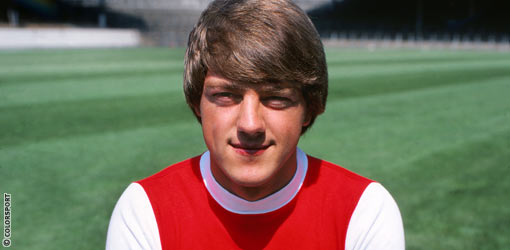
    John Devine, who was part of the Arsenal team in the early 1980s that had seven regulars who were either Republic of Ireland or Northern Ireland internationals, was remembering those days last week.

    “We’d be looking at each other across the pitch and there would be three or four on each side and you would be playing for Ireland with them the following Wednesday night. We’d in the players’ lounge after the game and we would be discussing going home to play for our country.”

    No time for nostalgia..

    Thankfully, Devine doesn’t have too much time for nostalgia and instead is trying to do something about the problem. For a start, while he accepts that the Premier League boom means that clubs have inevitably expanded their horizons beyond these islands and into Europe and beyond, he will not countenance any talk that Ireland is no longer capable of producing players of the calibre of Ronnie Whelan, Liam Brady and Frank Stapleton.

    We cling on to the hope that the Manchester United starlet Robbie Brady can make the grade, but if he does that may only succeed in masking the problem further.

    “The markets have opened up, but that is no excuse for not developing technically good players,” Devine says. “It’s very obvious that having no Irish participation in those major games means there is something radically wrong.

    We are not producing players with the right technical skills to prosper at the higher levels of the game.

    Natural Ability

    “The one thing I would like emphasise, there will always be somebody who will mention Robert Brady or somebody. I remember working with Robert as a 10-year-old, but these guys are the exception to the rule. They have the natural ability. The [Damien] Duffs of this world will come through in spite of, rather than because of the system.”

    As well as tuning into Arsenal’s game against Manchester City this afternoon, Devine has just set up a pilot scheme for the South Dublin Football League with three v three and four v four non-competitive games for seven and eight-year-olds. Non-competitive means scores aren’t kept or points won.

    By having three of these games on a normal-sized seven-a-side pitch, it allows 30 children play football as opposed to the normal 14, with subs not getting games. The emphasis is on passing, control, dribbling and awareness.

    Devine successfully introduced this format when Manchester United”s Academy Director of youth development in Ireland in the 1990s for 10 years, but up till now his methods have been shunned by the powerful Dublin schoolboy leagues.

    “We are screaming and shouting at kids from the sidelines at the age of seven, eight and nine, which is a form of child abuse,” Devine says. “I respect the volunteers, but the powers-that-be have to change the structures. It has to come from the top. We need age-appropriate games for children to produce technically gifted players. If we embraced it for four or five years with the Irish spirit that we have we would compete with anybody and the kids will make a big impact on the British game as well.”

    Changes

    Some other changes are afoot. The North Dublin Schoolboys League, in which about 12,500 children play in every week, is also taking tentative steps towards adopting the models which Germany and Spain have proven works and which the English FA are also now rolling out nationwide. In the NDSL’s case they have introduced non-competitive football up to the age of 12, with five-aside for eight-year-olds graduating to nine-a-side for 12-yearolds, playing on smaller pitches with smaller goals.

    “It is just a pity that maybe the SFAI don’t take that on board up to the age of 12 years of age. It’s still win at all costs,” says the NDSL secretary Tony Gaines.

    DDSL won’t accept change…

    It is the Dublin & District Schoolboys League which has been most resistant to meaningful change and given that they pride themselves on being the largest schoolboy league in Europe, with 20,000 playing members, that represents a serious problem.

    Their under-12s still play 11-a-side on full-size pitches with competitive football kicking in at under-nine level. They play seven-a-side from under eight to under 10 level, with three substitutes who must get game time, but abuses of that rule are reported as widespread by some coaches who prefer to notch up a victory rather than give all the children a chance. The “rule” is only a guideline.

    What’s clear is the lack of any central policy towards the schoolboy league structure in Dublin and around the country. When he tried to tackle this issue Wim Koevermans, the former FAI High Performance Director met a wall of resistance from a league which jealously guards its independence and still has a strong constituency amongst parents and coaches for maintaining its competitive structure.

    Some of those who come from the street football school of hard knocks will also be resistant to change. But the street model was never a bad one; two against two, five against five, you name it, it was played. Clearly though the way forward now that children’s football is more formalised and restricted is towards smaller teams, smaller goals and smaller pitches and if competitive football doesn’t kick in till children are 13 or 14, then that is more than time enough.

    What happened in the summer in Poland clearly showed the need for schoolboys’ football to emerge from its survival of the fittest mentality and if it didn’t, for some sort of national structure to be imposed.

    “It was mindboggling,” says Devine. “It hurt to watch.”

    The show moves on further today and it’s about time to start catching up.

    By Paul Rowan (writer for the Sunday Times)


  • The One that “nearly” got away

    The One that “nearly” got away

    Piece taken from http://footblogball.wordpress.com

    Elias Lindberg is a 16 year old Swedish footballer  from Stockholm who  so far has had a very interesting career that brings to the surface many questions about talent Identification , what is talent ? and how should we as coaches nurture the players development.Elias now plays his football in Malaga.

    Elias ,tell me a little bit about your football career so far.

    I started playing football for a local team at 6.When I was  10 I attended a football school and  It was then I began to realize how much fun  football was. I developed very quickly there mainly  because of how we played during break time it was street football, spontaneous. We took it as serious as our official training sessions .The next step was to find a “better” club or at least what in Stockholm is called an elite club. I began playing with Hammarby 4. After a year in that team I was promoted to the first team in Hammarby for my age group. There we had a coach who was obsessed with physical training and during the season  we had two sessions per week, which consisted of 8 km running, and 1h strength training. Due to the physical training I picked up a lot of injuries and  that meant I missed a lot of football. So because of this training I lost my pace and decided to drop down to the 2nd team where I began to  to regain my confidence and speed. We had a great coach and he helped me with my development. The training was fun and we did everything with the ball even our fitness training .The coach left at the end of the season and  I didn’t want to go back to the first team

    In the middle of all this I got involved in KAFA FOOTBALL  which was on every Friday night.Kafa helped me relax more with my game and try out new things. I began to use my left foot more and look at the game differently.My self confidence really grew during those Friday nights with KAFA. Without KAFA I would never have developed so quickly.

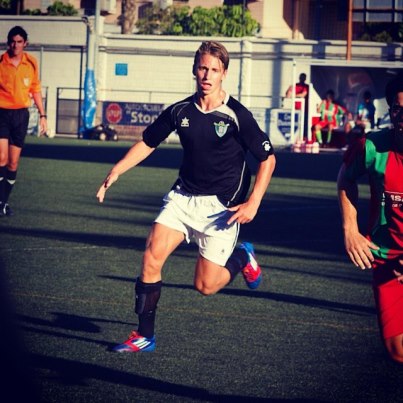
    I went to another local club Bagarmossen where I played in midfield and became team captain. Another club. Soon I took another step up playing for Sköndal U17 team.I was a year younger than everyone else in the team and my whole game really developed. Last summer I attended a footbal summer camp in Spain where coach  Reuf Dervic. approached my father and offered to fix me  trial games for some of the best clubs in the Malaga  area. So I trained with Vazquez Cultural u-19 team in the Spanish junior league which is a feeder club to Malaga, Fiorentina and Genoa. They where very impressed with my game and offered me a contract. Since my dad lives down here and this was a really good opportunity I  to say yes. I am the youngest in the team and I am really enjoying my football.

    You never featured in the elite Stockholm City representation team?

    Its sad but the City team (Stadslaget) only look at the players in in the big clubs  so I never  got a chance to represent Stockholm. Funnily enough now that I am with a big Spanish club the National team coach for the u-16 has been in touch. He will probably come to Malaga and see me play. He could have done that a few months ago in Stockholm . It is quite strange that as soon as you go to a bigger club, you become interesting.

    It seems to me that you have got a more rounded football education than many players from the Stockholms elite teams.

    One advantage of not playing with the elite Stockholm teams is that you really learn how to win back the ball. You really develop your defensive skills. This has really helped my game here in Malaga.

    How do you compare your Training sessions in Malaga with those in Stockholm ?

    In Sweden I feel that there is not enough free play, too may drills with cones etc. Here most of our training relates directly to match situations. In Malaga it doesn’t matter how strong you are, it is all about reading the opponent and knowing when is the right moment  to take the ball off him. All my physical fitness training is aimed at improving my mobility which I think needs to improve a lot.

    TCD Said, This is a great little story, which i had to share. Many footballers never get picked for so called elite squads or national teams until they bloom late into their teens. With so much focus on winning in this country its no wonder we rarely produce technically gifted kids with game intelligence. Year after year schoolboy soccer in Ireland continues along as if nothing needs to change. The amount of morons running the leagues and controlling grassroots football in this country is truly unbelievable. Putting some of these people in control of our game, is one of the main reasons Irish Soccer will always be stuck in the past. The most popular sport has no direction and in time will become the minority sport!

    This piece was taken from Mark O’Sullivan website footblogball.wordpress.com which originates from Sweden. Mark is a UEFA B  (badge gained in Sweden) coach working in Stockholm.