Category: Irish Grassroots Football

  • The leagues Fuel Elitism…

    The leagues Fuel Elitism…

    So this weekend we come up against a team that is a year younger than our boys. Now, this is something I have huge issue with and after my conversation with the league this evening, has turned me to writing about another big concern, in relation to football development in this country.

    When this team suddenly appeared on our fixtures, after most teams had played 6 games and more; I was interested to find out who they were and why they have suddenly been entered into our league??

    Yesterday I was told that they play SSG Sunday A (They top that league) and were moved to our league (11v11) because they were too strong for the league (11v11) they had just come from. Just in case you have lost me, this is a premier team that plays 9v9 Sunday and 11v11 Saturday age above.

    The league are fueling Elitism

    When you take into account the amount of teams playing football every single weekend the majority play the game for fun and see it as time with their friends and an opportunity to get some much needed exercise, whilst improving.  The team I coach, play 3 leagues down from Premier, most of the kids in this league could be late bloomers but are not premier level players just yet and I now most have the desire of playing at a much higher level. However, most play for enjoyment that team sports brings.

    Currently the games every weekend are fairly even and the kids are at least playing against kids of the same age and same ability. Well, that was until an u11s Premier team suddenly appeared in our fixtures.

    ‘This goes against everything I believe in and it make it hard to be a part of it’

    So, what my problem, you might ask? Well, let me tell you:

    • They might be older but most of the kids in our league would not be of the same ability as the u11s Elite team.
    • The Elite team are the best at their age and even by playing a couple leagues lower does not make it’s acceptable.
    • The leagues say they try to make the division as competitive as possible, but yet they allow an Elite teams to play in different age group.
    • We are now in a league that is NOT age related nor is it ability related.
    • An underage team playing 11v11 before their time is not player development, it is club development and another way for the Elite clubs to get ahead of the rest. It is unfair to community clubs like ours and others in the leagues above and/or below us.
    • Another issue I have, is that some 11 year old are almost twice the size of 9 year olds, so not only is there a significant height issue but a huge physical difference also. So who is responsible if a 9 year old gets hurt by an 11 year old??
    • In organised sports age should be playing with age when possible.
    • Not only are the clubs and coaches of this team being completely irresponsible, the parents have to question how is this going to benefit their child.
    • The league say, ‘they can’t do anything about it’, but it undermines nature and it undermines everything that many good coaches and clubs are trying to change. We want kids playing the SSG for longer not moving to 11v11 at age 9.
    • Everyone knows that this has nothing to do with player development and everything to do with adult egos and club success.
    • Why should teams in our league have to be part of this? Kids don’t want to play kids younger then them, they want to play kids who were born in the same year, they wan’t to compete against their own age group not the year younger.

    “So-called “better” or “more talented” players do not deserve to play with similarly “gifted” players. At below u12s, every child deserves the chance to play, the best coaching, and to play on the best pitches.  This is especially true given the fact that it is close to impossible to predict with any degree of accuracy which players at age nine, ten or eleven will be “stars” at age fifteen, sixteen or seventeen”

    Summary

    Once again the league rules allow for elite teams to take advantage of flaws in the system at the expense of the smaller clubs. The lower leagues have now become feeder leagues for Elite clubs push to success.

    If these clubs want to get ahead of each other, then why not train for an extra day or play each other in a 11v11 game once a week. Why should ‘none’ elite teams have to play a part in the success of these under age Elite teams – they can have elitism just don’t bring the lower placed teams into it.

    I’m a coach who knows about program development and I think we should put stop to segregating kids, and allow all kids the opportunity to develop equally. Let’s face the true reality, the kids you see on Elite Teams now will most likely NOT be starring or playing in the future. In so many cases Elite Teams build false hope among entitled parents at the expense of destroying many other kids hopes to play with their friends and develop athletically.

    There is no proof that forcing “better” players to play with those who appear at an early age to be less skilled somehow keeps them from developing their “talent.” Developing your talent is control by you, the player. You have control over your effort and how much you get better.

    As Michigan State’s Daniel Gould observes in a 2004 article, 

    “all children need coaches who are trained to be positive and encouraging,” and that “young athletes who play for such positive and encouraging coaches have higher motivation, enhanced self-esteem, lower anxiety and lower dropout rates than children who play for coaches without these qualities.”

    Conclusion

    This has to stop, it doesn’t benefit the kids and all it’s doing is building up certain parents and coaches egos. The leagues say they want change, they want to encourage player development and age specific games. I just hope the community clubs around Dublin and Ireland will stop this from happening next year. Leave the kids to play in their own age group and keep them in SSG for longer, what’s all the rush!!!

    -End

    If you want to promote a tournament, please get in touch or comment below or just email me info@thecoachdiary.com If, you don’t have anything to add then please forward this on to a friend. Thanks for reading.

    I’m also on twitter @Coachdiary


  • Dion Fanning: Ireland’s lost generations

    Dion Fanning: Ireland’s lost generations

    In the days following Ireland’s exit from the European Championships, Pádraig Nicholson got used to being asked where it all went wrong.

    Plenty of people knew Nicholson. They might have been aware of him from his years with Athlone Town but many more knew of his years as a regional development officer, as a coach and as a coach of coaches in Irish football. People took their rage to him. Nicholson knew something too. He knew that soon the anger would dissipate and the public would move on to something else.

    ‘we need change’

    Nicholson didn’t mind the comments, in fact he thought they could be helpful. If any good was to come from Ireland’s dismal European Championship performance then it would have to be a determination to change everything about the schooling of Irish footballers. There were valid distractions — Giovanni Trapattoni‘s refusal to change; John Delaney‘s populist approach — but something more radical was needed and the European Championships should have been the starting point for self-examination. Irish football, it will surprise nobody, doesn’t do radical.

    On Friday weekIreland play Germany, a country that embarked on a massive overhaul of their system at the turn of the century following a quarter-final exit to Croatia in the World Cup finals. In 2000, Germany finished bottom of their European Championship group but already they were planning to change.

    Across the country, 121 national centres were built for players from 10 to 17. Clubs in the Bundesliga would have to build youth academies.

    The golden generation

    Other countries were doing something similar. Nicholson spent a lot of time in Belgium 10 years ago and he noticed a change. They were asking more of their young players as they simultaneously asked more of themselves. The necessity for practice was repeated to young players. Today they have one of the most exciting squads in Europe with Eden Hazard, Axel Widsel, Marouane Fellaini and Vincent Kompany among their players.

    In the academy at Standard Liege, the director Michel Bruyninckx uses “brain-centred” learning to coach his young players. Bruyninckx explained his philosophy of conscious learning in an interview with The Blizzard.

    “We always thought that sporting activities were mechanical activities, but we know that there are interventions from the brain,” he said, before describing himself as an outsider in the football world and comparing himself to Darwin who was also considered “crazy”.

    Irish football needn’t worry about being considered crazy. Trapattoni announced last week that the coaches of Europe were still talking about the Irish supporters at their conference in Warsaw, but anything Ireland did on the field can’t have detained them long.

    Last week, Trapattoni named his squad for the games against Germany and the FaroeIslands. Robbie Brady is on stand-by and James McClean will probably start on the bench.

    Brady was a player at St Kevin’s, a schoolboy club that has invested in an academy. “They are an oasis in the desert,” Nicholson says.

    If Ireland can’t compete with Germany, Ireland could always have ambitions to match Belgium, yet things stay the same.

    “We’ve fallen a generation behind the rest of Europe,” Nicholson says, “there needs to be a radical reassessment. The people who are concerned should come together and find a way to stop us falling further behind. Right now, if a young player comes through, it’s despite the system.”

    Like many, he suggests that the schoolboy clubs have too much power, which makes it hard to implement a vision on player development.

    Emerging Talent not enough

    The FAI will point to their Emerging Talent Programme but that is barely enough. The idea is good but the focus is too narrow.

    Instead of players attending from the ages of nine or 10, as happened in Germany, they begin when they are 14 or 15, far too late to make an impact on their technique. “The golden years for a footballer are between nine and 12,” Nicholson says, “after that it can be too late.”

    Irish players fall further behind. Nicholson talks about going to the Kennedy Cup this year and during the week of matches not seeing one player who could “dribble with the ball, who could shimmy and beat a man”.

    UEFA B in Ireland

    Mark O’Sullivan still remembers the planes flying overhead that felt so close he thought he could reach one with one of the footballs.

    O’Sullivan is from Cork but emigrated to Sweden in 1994. He was always passionate about football and last year decided that he would take his UEFA ‘B’ coaching course in Ireland. “Even though I speak Swedish, I was more comfortable doing it in English.”

    So O’Sullivan returned to Ireland, booked a hotel and paid €1,000 to do the course at the AUL. At the end, all he felt was disillusionment.

    “I guess when you’re trying to run drills and you’re using a 50-year-old cab driver who is also taking the course as a full-back, then you can get frustrated. He wasn’t great on the overlap.”

    O’Sullivan never completed the course — losing his patience when they were asked to get from Dublin in Friday evening rush-hour to a game in Wexford that night.

    Instead he returned to Sweden, getting his ‘B’ licence there, an experience he describes as completely different to all he had endured in his homeland.

    O’Sullivan now works as an academy coach at a club in Sweden and coaches another, Nacka FF, in the Swedish second division.

    He had noted other differences with Sweden. This year, the Swedish FA asked their coaches to tell the FA where they felt they had made mistakes. They demanded to be criticised. It is not a model that seems likely to be adopted by the FAI.

    Nicholson was one of the coaches on that course which had frustrated O’Sullivan. He says the FAI were struggling as they tried to introduce a new coaching model based around match analysis as UEFA wished.

    Things have changed since then but if the coaches have become more familiar with the courses, other things have altered too.

    Wim Koevermans,

    the former FAI high performance director, was central to the introduction of those courses. In June, Koevermans left the association to become manager of India. The FAI are cutting costs. Last week, they advertised for Koevermans successor. No time-frame has been given on when the job will be filled.

    In a recession, and with their debt mountain, the FAI will always be stretched, which is why they might have done more to keep Damien O’Brien interested.

    Damien O’Brien

    O’Brien has fallen out with the FAI, frustrated this year by their refusal to sanction a four-team tournament in Limerick (he eventually got Manchester City to play at Thomond Park) and, more importantly, the mismanagement, as he sees it, of the Emerging Talent Programme which he sponsored.

    “The FAI will say anything to get your money,” he says, “but it won’t go where it’s supposed to go.”

    O’Brien says he was prepared to contribute €100,000 a year to the programme but became frustrated.

    “As long as the FAI is in its current state, there’s no way I’m helping out.”

    Yet he also sees a greater cultural problem. Irish people are interested in the big events.

    “The public,” he claims, “are more interested in slapping Delaney’s back and having a pint with him.”

    O’Sullivan agrees that there is a cultural problem which draws Irish people towards the big event without being too interested in anything that might be needed to create them in the first place. There is also the drinking culture which results in the loss of many players.

    O’Sullivan points to other cultural advantages which he feels could be used in football.

    “The mentality of the GAA, that sense of community, creates a great unity in Irish footballers. Swedish players are disciplined, they will do everything you ask of them, but Irish players have this unique gift,” he says.

    More about development

    He would like to see coaching young players in Ireland become more about development and less about winning matches. “They will all become adults, they won’t all become footballers. The result is not winning, it’s development as people as well as players.”

    Too much is lost, he says, by doing things as they’ve always been done. Irish football needs to find ways of being smarter than the rest, not just limping along, trying to keep up.

    There were two other notable landmarks last week. It was the fourth anniversary of the death of Noel O’Reilly, Brian Kerr‘s long-time assistant but also a visionary in terms of youth development. O’Reilly has been desperately missed in Irish football.

    “He was the best coach I ever worked with,” Nicholson says. O’Reilly’s personality mattered as much as his ability when it came to exciting coaches and players. “Noel was a huge, huge loss,” Nicholson says.

    FAI to spend 1million on Abbotstown

    Last week, the FAI also announced they have received a $500,000 grant from FIFA which will be matched by €500,000 from the Government to go towards the development of the National Campus in Abbotstown. Underage national sides will train there and, eventually, maybe the senior team as well.

    More importantly, in time, the intention is that a centre of excellence could be developed. In time, young players, maybe even as young as nine or 10, might be coached and educated there and Ireland could feel they had embarked on radical change. In the meantime, while the young players wait, Ireland will just fall further behind.

    TCD

    I think you could go deeper into the root of the problem. The Leagues controlling the game in this country, who’s only concern is registration fees. Most don’t give a  SHITE about development, some are starting to see the light and welcoming change. The combined age of the SFAI is over 1700 years, what would they know about the needs of a 7 or 8 year old. As for the FAI, well their main focus is bumps on seats and over the coming months that is going to be a huge challenge for Delaney and co.

    On a positive note the FAI have teamed with The Welsh Football Trust who runs extensive programmes to help develop football at a grassroots level. These include mini football and football for different groups, including different ages, genders, disability groups and ethnic minorities. Having an affiliation with these guys is a step towards change, let’s hope they mirror what the Welsh are doing and start to focus at the root of football in Ireland. The Irish Football Trust would be a huge benefit for grassroots development in Ireland, I just hope the people who run kids football in Ireland can open their minds to change.

  • John Devine talks grassroots

    John Devine talks grassroots

    Arsenal, Liverpool, Manchester United and Manchester City are all in action today and not a single Irish player is to be found in their ranks.

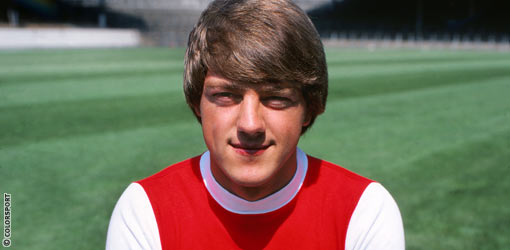
    John Devine, who was part of the Arsenal team in the early 1980s that had seven regulars who were either Republic of Ireland or Northern Ireland internationals, was remembering those days last week.

    “We’d be looking at each other across the pitch and there would be three or four on each side and you would be playing for Ireland with them the following Wednesday night. We’d in the players’ lounge after the game and we would be discussing going home to play for our country.”

    No time for nostalgia..

    Thankfully, Devine doesn’t have too much time for nostalgia and instead is trying to do something about the problem. For a start, while he accepts that the Premier League boom means that clubs have inevitably expanded their horizons beyond these islands and into Europe and beyond, he will not countenance any talk that Ireland is no longer capable of producing players of the calibre of Ronnie Whelan, Liam Brady and Frank Stapleton.

    We cling on to the hope that the Manchester United starlet Robbie Brady can make the grade, but if he does that may only succeed in masking the problem further.

    “The markets have opened up, but that is no excuse for not developing technically good players,” Devine says. “It’s very obvious that having no Irish participation in those major games means there is something radically wrong.

    We are not producing players with the right technical skills to prosper at the higher levels of the game.

    Natural Ability

    “The one thing I would like emphasise, there will always be somebody who will mention Robert Brady or somebody. I remember working with Robert as a 10-year-old, but these guys are the exception to the rule. They have the natural ability. The [Damien] Duffs of this world will come through in spite of, rather than because of the system.”

    As well as tuning into Arsenal’s game against Manchester City this afternoon, Devine has just set up a pilot scheme for the South Dublin Football League with three v three and four v four non-competitive games for seven and eight-year-olds. Non-competitive means scores aren’t kept or points won.

    By having three of these games on a normal-sized seven-a-side pitch, it allows 30 children play football as opposed to the normal 14, with subs not getting games. The emphasis is on passing, control, dribbling and awareness.

    Devine successfully introduced this format when Manchester United”s Academy Director of youth development in Ireland in the 1990s for 10 years, but up till now his methods have been shunned by the powerful Dublin schoolboy leagues.

    “We are screaming and shouting at kids from the sidelines at the age of seven, eight and nine, which is a form of child abuse,” Devine says. “I respect the volunteers, but the powers-that-be have to change the structures. It has to come from the top. We need age-appropriate games for children to produce technically gifted players. If we embraced it for four or five years with the Irish spirit that we have we would compete with anybody and the kids will make a big impact on the British game as well.”

    Changes

    Some other changes are afoot. The North Dublin Schoolboys League, in which about 12,500 children play in every week, is also taking tentative steps towards adopting the models which Germany and Spain have proven works and which the English FA are also now rolling out nationwide. In the NDSL’s case they have introduced non-competitive football up to the age of 12, with five-aside for eight-year-olds graduating to nine-a-side for 12-yearolds, playing on smaller pitches with smaller goals.

    “It is just a pity that maybe the SFAI don’t take that on board up to the age of 12 years of age. It’s still win at all costs,” says the NDSL secretary Tony Gaines.

    DDSL won’t accept change…

    It is the Dublin & District Schoolboys League which has been most resistant to meaningful change and given that they pride themselves on being the largest schoolboy league in Europe, with 20,000 playing members, that represents a serious problem.

    Their under-12s still play 11-a-side on full-size pitches with competitive football kicking in at under-nine level. They play seven-a-side from under eight to under 10 level, with three substitutes who must get game time, but abuses of that rule are reported as widespread by some coaches who prefer to notch up a victory rather than give all the children a chance. The “rule” is only a guideline.

    What’s clear is the lack of any central policy towards the schoolboy league structure in Dublin and around the country. When he tried to tackle this issue Wim Koevermans, the former FAI High Performance Director met a wall of resistance from a league which jealously guards its independence and still has a strong constituency amongst parents and coaches for maintaining its competitive structure.

    Some of those who come from the street football school of hard knocks will also be resistant to change. But the street model was never a bad one; two against two, five against five, you name it, it was played. Clearly though the way forward now that children’s football is more formalised and restricted is towards smaller teams, smaller goals and smaller pitches and if competitive football doesn’t kick in till children are 13 or 14, then that is more than time enough.

    What happened in the summer in Poland clearly showed the need for schoolboys’ football to emerge from its survival of the fittest mentality and if it didn’t, for some sort of national structure to be imposed.

    “It was mindboggling,” says Devine. “It hurt to watch.”

    The show moves on further today and it’s about time to start catching up.

    By Paul Rowan (writer for the Sunday Times)


  • Inaugural Football For All National Club Festival

    Inaugural Football For All National Club Festival

    Will be showcasing the talents of children with disabilities, representing over 20 FFA Clubs across Ireland. This is going to be truly an amazing day for all concerned.

    Press Realise

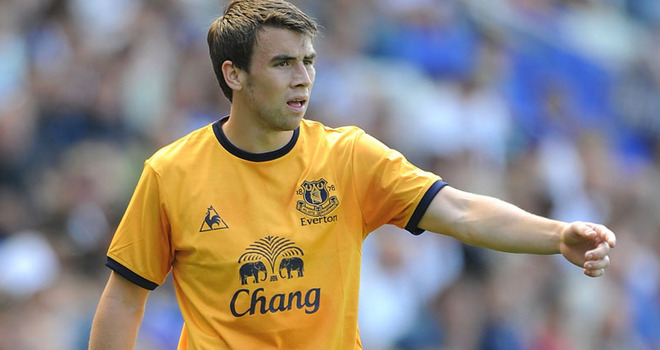
    The event proudly supported by the National Dairy Council and Republic of Ireland’s own Seamus Coleman.
    As ambassador for the FFA Club programme, Seamus Coleman expressed his pride to be involved in the programme and his delight in the FAI’s work on making Irish football inclusive giving every child the opportunity to play the beautiful game.
    Stating “This event will give those involved that very opportunity and will give families of children with disabilities the chance to see what it is all about and how they can get involved while enjoying an afternoon of fun and entertainment in the home of Shamrock Rovers.”
    The festival will take place in Tallaght Stadium home of Shamrock Rovers FC on Sunday
    23rd September 2012 from 1-4pm.
    Event Sponsors National Dairy Council Chairman Jackie Cahill expressed his delight stating that,
    “The NDC is delighted to be involved in such a worthwhile programme which promotes inclusion and provides all players with the opportunity to become part of a team. The NDC hopes that by lending support to this worthy event, more individuals will become involved, furthering the potential for the programme to reach out to those who may benefit, not only from physical exercise but regular social interaction.”
    Everybody regardless of their ability should have the opportunity to access football in their local club ensuring the FAI promotes an ethos of inclusion within the football community. Players will receive their training at local clubs providing regular football,
    a feeling of belonging to a club, competition, and a safe environment in which to express themselves. Most of all, players will have a pathway into mainstream teams if they improve to a level capable of competing in mainstream competition and, if not, they will continue to enjoy the game they love with their club.

    Support a great festival..

    Over 20 clubs from all over Ireland, Wales and Northern Ireland will be represented on the day and will compete in a fun and non-competitive event showcasing the talents of its players on the hallowed soil of Shamrock Rovers in Tallaght Stadium.
    The day will also give families of these children and other families of children with disabilities a chance to come along and enjoy the football but also get information on the programme and enjoy the variety of family entertainment, inflatables, street skills events, face painting, music , BBQ and maybe even a few special guests.
    Contact Person: Oisin Jordan Mobile: 086 607 9223 Email: oisin.jordan@fai.ie 
    Pic: Seamus Coleman (Sky sports)
  • Season Planner

    Season Planner

    Communication is the key to having a positive working environment as is your values, beliefs and philosophy. By gathering information received from the players and parents on the previous years work, you should then devise the following years plan based on those suggestions but ultimately it’s your ideas that the team will abide to. Put it all in writing and hand it to each parent at your Pre-season meeting. Time spent with the parents will be a worthwhile exercise, it allows you to share the ground rules and it also inform them of your plan.

    Write your pledge about the playing time each player will get and those parents who want only the best to play can see in advance what your about. This will let everyone know where they stand. Remember breaks are important, so always schedule a break in the season, particular when the season finishes. Everyone needs to recharge. Playing sport is just one part of a family life and above sport is education and belong sport is a social life. 

    Plan for season

    • Explain how the try-outs will work. (Most clubs will have a team for all levels)
    • Explain how the teams will be chosen to the players and parents. (Be open and honest, kids will know if they aren’t at a certain level)
    • Don’t take on to many players, although it might seem like the best thing to do at the time. It usually always leads to the same players not getting enough game time. For 7 aside football I suggest 9  committed players; for 9 aside i suggest 11 committed players and for 11 aside football 14 to 15 committed players is ideal depending on the age and length of each game. Some leagues have role on role off and others don’t, so you will need to take this into account.
    • The kids should all be playing at their best level, so don’t hold kids back. If they are good enough then they should move up. The same goes for players who can’t compete at a certain level they should be playing at a level where they are enjoying their sport.
    • New season should be a clean slate for all players.
    • Players will be evaluated based on their overall season performance and their ability, effort, attitude at the time of the try-out not based on previous clubs, or what they won or who their parents are.
    • Explain how playing time will be determined – Be specific – don’t just say everyone will play. Commit to giving each child at least half of every game and if a player doesn’t start a game then make sure he starts the next for example.
    • If you don’t train, you don’t play.
    • If you don’t pay, you don’t play.
    • Defend how you play and develop versus long ball tactics and winning. If you like playing from the back but lose goals over it, explain to the parents why you are doing it but make sure you are improving the team. You won’t be able to get them on your side if you continue to leak goals and do nothing about it.
    • Move players around in positions, this will help them develop an understanding for the other positions on the pitch.

    ‘When the adults want to win more than the kids, therein lies a lot of whats wrong with kids sports’

    Poll your Players

    • Ask the players what they want and need?
    • What is their favourite thing about playing football?
    • What is the least favourite thing?
    • I suggest doing a player evaluation session and get them to evaluate themselves. This way you will be able to understand their goals and areas they want to improve in.
    • How important is winning? 5 being extremely and 1 being not important
    • How important is it for you to play equal time versus minimum meaningful time?
    • Ask players for 5 ideas that will make training and games more fun?
    • Ask players to define what would be a successful season for him/her?
    • Do you know if your players other sports?
    • Are they thinking of taking up any other sports?
    • Get to know them outside of sport. Education, family and social life etc

    Poll the Yourself

    • Why did you sign up to coach a team?
    • How does it feel to be coached by me?
    • What is your favourite thing about coaching?
    • What is your least favourite?
    • How will you organise the team?
    • How do you define a successful season?
    • How can I improve?

    Poll your Parents

    • How many training sessions per week do you think is sufficient?
    • How many games per week?
    • Is there anything we should know or understand about your child?
    • Many kids come from single parent families, what are the issues, if any the child has?
    • How do you define a successful season?
    • What are the parents concerns?
    • How is the player doing in school?
    • Any further comments or issues?

    “The single most important question you can ask your child is, why do you play sport? Before you ask that question, ask you yourself the same question. If their reason is not the same as yours, – then you have one choice, forget about yours and accept theirs” – TCD

    The Plan

    You may be surprised at some of the ‘Answers’ you get, including your own.

    Gather the information received from players and parents and daft a plan for your team for the season ahead.

    • Put your plans, commitments, in writing – your pledge.
    • Make a copy for everyone and set up a pre season meeting.
    • Time spent with the parents will be a worthwhile and it is essential.
    • Write a pledge that states clearly how playing time will be divided. (Your most committed and loyal players will be the ones with the most attendance.)
    • Write that everyone will get a minimum amount of minutes (once they train like everyone else), it will keep things honest.
    • The parents that want to play the “best” can see in advance what you’re about and how you like to do things.
    • The parents that want everyone to play “everyone the same” can see where you stand on team playing time.
    • Explain how places will be defined, I know this can be difficult, the better you plan in advance and commit on paper, the better off you will be during the season. This helps to take personalities and politics out of the picture.
    • If you are improving everyone and the players are all committed you will create a competitive and healthy team environment.
    • Devise some team rules.

    Gather All The Data & Devise Plan

    • How many training sessions per week, how long each practice will be?
    • How many weeks the season will last.
    • Plans for post season tournaments, trips etc?
    • Players and parents to get days off during the season. Breaks, rest , family time is just as important.  Lets players and parents know that organised football is a small part of a balanced family life. Parents may have other kids to keep happy.
    • It’s as important for parents to take time away from the weekend game as it is for players to play without always having parents watching from the line every week.
    • Be clear about what you expect from the parents and players. Commitment has to work both ways. Without involvement there is no commitment.
    • State rules for missing training or games, what the procedure is to notify the coach (the need to know in advance) and what the consequences are for missing training and games.
    • Come up with some team rules and involve the players. When you have defined 2/3 team rules and the players contribute to them they are more likely to buy into them.  This way parents & players, know the consequences when team rules are broken.
    • Commit to the rules and always be in control of team dynamics.
    • The one thing players want the most, is to play. Taking this away is one way of preventing them from breaking rules.
    • Being good in school can bring rewards. Education is the most important factor, without it they have very little.
    • Define your overall ethos and coaching methods.
    • Define coaches role and managers role.
    • Communication is key, but you don’t need to get personal with parents. Getting over personal makes it harder if you ever have to release a player.
    • Be in control of the sideline. Don’t allow the parents to control the line.
    • Create a culture of encouragement and praise and don’t let the parents talk over you.
    • Devise your values and make everyone aware of them. Values define who you are.
    • If you value respect then expect you players too.
    • Organise a pre-season team building exercise and make sure it doesn’t involve the sport.

    “Without involvement there is no commitment. No involvement, no commitment”

    Meeting The Parents

    Invites players and all parents along to the meeting, don’t complicate things and keep is short and simple. Parents are about to place their child in your hands, they want to know what your about. At least one parent of every child should attend the meeting, make it compulsory to attend.

    1. You’re number one aim should be to let parents know that primarily kids will be in safe hands.
    2. They will be having fun (as you will) and they will be learning (improving).
    3. It’s also a good ice breaker
    4. It also reminds parents how much they know and don’t know about the game.
    5. It should stop all that screaming and shouting at kids on the sidelines, when you let them know what their role is.
    6. Allow about 30 minutes for your talk.
    7. Then take questions until there are no more.

    Good Luck! 

    If you want a player evaluation form, drop me an email.

    -End

    I always like to hear your opinions and views. If you feel you have something to say, please comment below or email me info@thecoachdiary.com If, you don’t have anything to add then please forward this on to a friend. As always, thanks for reading.

    I’m also on twitter @Coachdiary

  • NDSL keep U12s at 9v9.

    NDSL keep U12s at 9v9.

    Great to hear that the NDSL are keeping with the 9v9 game for 2001’s, u12s for the coming season 2012-2013. This is a welcome step and probably the best bit of news I have heard all summer. NDSL I salute you for this forward thinking change.

    “How absurd it is for adults to demand players as young as nine or 10 to play in an 11 v. 11 environment on a regulation pitch. While soccer for adults is played in an 11 v. 11 environment, the same setting is not the best for younger soccer players. That is why small-sided soccer is being used more frequently at the younger ages, and continues to play a vital role in soccer training for all ages. We must continue with the SSG games for the purpose of development. Soccer must be FUN for kids!”

    So what does these mean and what are the benefits of small sided games?

    1. The players get to touch the  ball more often which will help improve their technique.
    2. The game is less complicated therefore the players make moreless-complicated decisions. 
    3. The players can adapt more to a pitch that is for their size they become more physically efficient on the pitch they’re playing on.
    4. Gives the coaches more individual teaching time. Less players on the field and less players on the team will guarantee this! More technical training as oppose to tactical in the 11v11.
    5. The SSG is less complicated giving players more involved playing time in the game! Much more opportunities to solve problems.
    6. Simpler decisions to make.
    7. Better game-related fitness, short duration of high-intensity.
    8. More opportunities for the full range of skills.
    9. Encourages faster play, more opportunity to attack and defend (more exposure to attacking and defending situations)
    10. More opportunities to score goals! (fun)
    11. More opportunities for keepers to safe them!
    12. Developmentally appropriate environment with less emphasis on winning.
    13. Players can’t ‘hide’ on the pitch.
    14. More playing time and participation.
    15. Easier for young players to have success – which means fun and retention for these players in the game.
    16. Passing distances are reduced.

    Using small-sided games, players get more touches on the ball and more decisions are being made, with less players on the field. Everyone is always involved or at least they are much more involved then in a 11v11 game at the young ages.

    Best of all, the game is simple, can be played without adult involvement and it’s still FUN! When used properly, small-sided soccer can give developing players the tools they need to become a better player and reach their potential.

    “Small sided games are important because they allow opportunities (many repetitions) for technical development under competitive pressure, such that players are able to turn ‘technique’ into ‘skill.’  They also allow a player to experience tactical decision-making and implement the principles of attacking and defending in relatively clear situations and that learning will translate well to larger number situations in the 11 v. 11 game as players grow and develop.”

    Smaller numbers is always better and going forward even keeping u11s at 7v7 would be something.

    Note: Paul C thanks for updating me on this change. Declan thanks for clearing it up. 9V9 for another season, the kids will be delighted!


  • 3 : 1

    3 : 1

    A good goalkeeper can mean the difference between success and failure for a team.

    Since I started coaching I have witnessed very few goalkeepers that can play with their feet. We have a tendency to produce great keepers in Ireland but very few are actually technically good on the floor.

    If games stats tell us that a keeper touches the ball 3 times with his feet versus 1 with his hands, then why do we focus so much on shot stopping?

    Could it be, that managers are more concerned with winning then developing? Is this the reason why the big lad takes all the goal kicks? I believe this mentality is preventing the goalie from being the creator of most attacks. It is also putting your team at a disadvantage, having a player drop back to take the goal kicks.

    Move those feet…

    The success or failure of any goalkeeper revolves around their ability or inability to move their feet, get set or deal with a situation.  It simply does not matter that you have the softest hands in the world if your feet do not get those “soft” hands to the ball.  But, once you can get there and get set, these hands are the next critical step in having success.  I’m not forgetting that there are a lot of other very important aspects of the game that the goalkeeper needs to possess (reading the game, communication, distribution, etc.), but having good feet and not just hands is what will make you stand our from the rest.

    If you watch the very best goalkeepers, they always seem to be in the right position, make easy saves and dive very little.  Well, it is not just a coincidence that this happens.  They have great feet that are quick, agile and strong.  Oh yeah, and they have great hands that typically catch everything within their grasp with little rebounds or dropped balls.  This is the true mark of a quality goalkeeper. Most goalkeepers can only make 2-3 saves per game, yet they distribute the ball with their feet well over ten times per game.

    One to One coaching

    Its is now common for keepers to be instructed by a teams goalkeeping coach and some even pay for extra tuition. Yes, I see an improvement with their shot stopping but I rarely see any difference from one season to the next with their ball distribution (FEET).

    It amazes me how many goalkeepers and the coaches want to spend most of their goalkeeper training diving after balls…why do this, if you don’t need to?  Why not work on your feet, after all you use them more in a game then you would your hands and diving around that much could cause injury, especially when most kids train on hard astro pitches.

    The goalkeeper is one of the most important players on the field – they are the last line of defense and the first line of attack. To play the position well, requires special skills and training.

    Good footwork is the foundation of solid goalkeeping. If a keeper has quick feet, they can easily get themselves into position to make the easy catch, rather than having to dive at balls just at the edge of their reach all the time. Good goalkeepers make every save look easy, and the key to that is good footwork.

    Work those feet..

    1. Start with some speed and agility training
    2. Don’t separatethe keeper from the rest of the training, involve them in all ball work.
    3. When working the keeper, work the feet and then hands. Use ladders and cones for quick feet. For example, moving your feet quickly through a few cones to get set, deal with a shot and handle it clean.  Keep everything below your waist quick and above the waist very RELAXED…the reason?  Keepers need their feet to get places quickly and get set, but their upper body is what they catch the ball with and it needs to be soft and relaxed.
    4. Get your keepers to do extra work outside of training and if you or they are paying for coaching, ask your coach to work the feet more.
    5. Distributing the ball: work on receivingthe ball, control and distribution. This can be done with phases of play allowing the goalkeepers to have free play and the freedom to distribute without being tackled during practice.
    6. Get your keeper to make up his/her own exercises.
    7. Always be moving during the game, keep those feet busy!

    You can find hundreds of videos on the net relating to this topic.

    Often the difference between a save and a goal is just half a step. Use the feet to get the body behind the ball.

    Research: Todd Hoffard – Goalkeeper