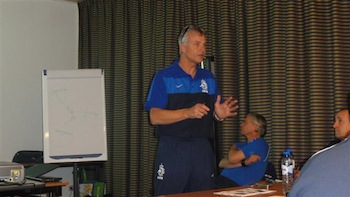
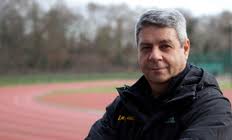
It seems like the FAI have finally got someone who might take an interest in the grassroots structure, I suppose the 4v4 game ties into this man’s appointment. Let’s see what changes come August 1st, certainly looks positive.
Following the exit of Wim Koevermans last year, the FAI has announced another Dutchman in the role of High Performance Director. Highly-respected Dutch coach, Ruud Dokter, has been appointed FAI High Performance Director, it was announced on Friday.
Dokter has a vast amount of international experience and, after what the Football Association of Ireland described as an “extensive worldwide recruitment process”, the 57-year-old will take up his position on August 1.
Who is he?
After a playing career with SC Makkinga, GRC Groningen and VV Helpman, Dokter became part-time coach of Groningen’s youth teams before becoming part of the KNVB’s coaching set-up where he has filled a variety of senior positions at men’s under-21, U18, U17, U16 and U15 levels as well as the senior women’s team.
Dokter will oversee the Irish non-senior international men’s programme, the women’s senior and underage international programme, coach education and player development. This will include the Emerging Talent Programme as well as the Academy in Abbotstown where the first phase is currently being developed.
Speaking about his appointment, Dokter said:
“My first priority will be to cultivate relationships with those people who invest so much time in nurturing young Irish talent, provide a good sense of direction and influencing everyone to work together. “Ireland has a fine footballing tradition and I want to build on that, using my experience to optimise the development of the coming generation of elite players.”
John Delaney, FAI chief executive, said: “Ruud will be working closely with all of the affiliates involved in Irish football with an emphasis on coaching and the development of our elite player pathway.”
This week I’m all about injury prevention and warm-up exercises including developing speed.
An excellent website by FIFA, showing the best warm-up exercise for kids over the age of 14.
This is the official web source for everything related to the FIFA 11+ Injury prevention programme. The “11+” is specially designed for amateur and recreational players. The programme is for men and women of all levels of play and all ages (from around 14 years and up).
Read the background and the scientific papers of the
FIFA 11+ ,
watch the FIFA 11+ Exercises,
scroll through the FIFA 11+ Manual,
download the FIFA 11+ Material and much more.
The programme was developed by an international group of experts, and its effectiveness has been proven in a scientific study. Teams that performed the “FIFA 11+ ” at least twice a week had 30-50% fewer injured players.
The programme should be performed, as a standard warm-up, at the start of each training session at least twice a week, and it takes around 20 minutes to complete. Prior to matches, only the running exercises (parts 1 and 3) should be performed. For all exercises, correct performance is of great importance. Therefore, the coach should supervise the programme and correct the players if necessary.
Click on FIFA 11+ to take you too the Official FIFA 11+ website
Mike is the Performance and Rehabilitation Director of Sport Dimensions, a company he set-up, specialising in Speed, Power and Rehabilitation techniques and training.
He is a qualified UEFA Coach, Strength & Conditioning Coach, Speed Coach and Rehabilitation Specialist. Mike works with a number professional football clubs in the UK, Europe and the USA, developing Speed and Conditioning programmes –
Clients include among others, athletes from, Chelsea FC, Chelsea Academy, Bolton Wanderers Stoke City, Crystal Palace, Ipswich Town, Saracens, Bath, Harlequins, Celtic, Blackburn, QPR, Italian Football Federation, GB Athletics, GB Bobsleigh, as well as Winter and Summer Olympians.
Mike runs coaching workshops and seminars on Soccer Speed and The Long Term Development of Young Footballers, in the UK, Europe and the USA and he also lectures at various universities on Biomechanics and injury prevention. He has developed a number of protocols for Performance and Rehabilitation which are being used successfully in professional teams and private practices.
Mike has been working with Chelsea Football club for many years and has developed Speed and Conditioning programs for the Academy – youngsters aged from 9 to 21 years old.
RUNNING
Are you running properly?
Poor running technique can lead to unnecessary injury risks if they are not picked up early.
“Being able to run fast in straight lines only, or having the capacity to Lift very heavy weights in the gym, will not necessarily transfer onto the football pitch”
Many recreational runners are placing undue strain on their bodies, as well as compromising their speed, by using the wrong technique. Conditioning coach Mike Antoniades has developed a unique methodology for teaching the correct and most efficient running technique to athletes and recreational users of all levels.
Are you running efficiently?
Some of the most obvious weaknesses I see in runners and joggers are:
Bouncing up and down too much
Over striding
Not using their hamstrings enough
Landing on feet too heavily
Breaking action on landing
Not using arms
Twist midriff side to side while running
The head and upper body are bent forward
Jogging slower than you could walk!
Most joggers and runners are biomechanically inefficient because their running technique is poor.
They don’t use the necessary body parts efficiently so when they are supposed to be enjoying themselves they are instead suffering pain.
Mike explains a few of the basics.
What is football speed?
Many coaches and trainers believe that speed is something you are born with rather than a skill you can develop. Genetics is a very important factor and does make a difference to the make up and shape of athletes and their capacity to become stronger and more powerful. But strength and power are only two components of speed. They will assist in how fast you can run in a straight line, but in a multi-directional sport like football, being able to tun fast in straight lines only, or having the capacity to lift very heavy weights in the gym, will not neoessarily transfer an to the football bitch in terms of speed.
Football speed is a skill and just like any other skill it can be taught, it can be developed, and it can be improved through a systematic and progressive training approach.
Coaches and parents of young footballers, although they have the best interests of their children at heart, are usually just copying training drills or methodologies that they hear about or see the professional teams doing and in many situations these are detrimentel to the football and physical development of the youngsters.
Many professional football clubs have used specialist sprint coaches, whose background is track and field, to improve the speed of the players, but the biomechanics of straight line sprinting is different to the multi-directionar speed required in football. Practicing straight line sprinting continuously will improve a players conditioning, but it has very little functional benefit for a multi-directional sport like football.
Why?
Because full-out sprinting in a football game only makes up about one per cent of the total movement in a 90 minute game! You may ask, is the ability to run fast over 50 metres not important? Of course it is, but let’s put it into perspective.
“Football is a multi-directional, explosive Sport where there is a change of movement every four seconds”.
As I’ve said a couple of times already, Football is a multi-directional, explosive sport where there is a change of movement every four seconds. There is little benefit in football players spending too much time on drills which develop maximum straight line velocity when they would benefit more from shorter multi¬directional explosive training using the ball.
So, focusing an football specific moverments and individual technical skills is far more beneficial to the development of the young footballer.
FOOTBALL SPEED
How do you develop football speed?
In most football clubs whether at youth, amateur or professional level, there is no effective teaching of speed. There are many different ways of approaching the structure of speed training, but even today with all the modern coaching methodologies and available knowledge and research, speed training is coached as part of fitness and in many cases it is counterproductive to the development of football speed.
No consideration is given to the relationship between functional movement, the neuromuscular system, the energy systems, the type of speed required for the sport, the effect of the training on young athletes, recovery periods and other influencing factors.
Age is one of the most important factors. Coaches must remember that children are not mini adults and cannot train in the same way.
Scientifically it has been proven that strength is determined by developing the muscular system. Endurance is deterrnined by the carcliovascular system.
Speed, meanwhile, is determined by the nervous system and coordination.
There are THREE KEY POINTS to remember when developing football speed:
The optimal training period for developing speed
Training the neuromuseular system, when and how can this be done?
Training football-specific speed
RUNNING FASTER
So how can you run faster, more efficiently and avoid injury?
The nervous, muscular, skeletal and cardiovascular systems of our body are all involved when we run. They all combine to create the neuromuscular and neuromechanical systems. We can improve the biomechanical movements for runners by teaching the body and the mind the correct motor patterns.
When you want to change a movement in your body it needs to be stored in your muscle memory so you can repeat without thinking, particularly when you are tired. When you perform a motion the body sends messages to the brain in a certain sequence.
To create a permanent map in your brain and nervous system you need to repeat this motion many times until it is ingrained in your muscles and your brain.
The primary objective of motor learning is to train the Movement rather than the Muscle.
Once we have taught the movement then improving the athletic performance of a runner is imperative in the pursuit of excellence and in injury prevention.
The neuromuscular system then has to be stimulated to recruit and contract motor units simultaneously and to increase the strength of the contraction.
Did you know?
65% of footballers over the age of 12 are slower turning on one side than the on the other, by up to o,85 of a second.
Many young footballers can improve their speed and quickness just by correcting their running biomechanics.
Reactive speed can be improved by up to 3o% with the correct training in just four weeks.
If youngsters acquire the basic movement skills by the age of 13 then they will very rarely make professional footballers.
I always like to hear your opinions. Please comment below or email me info@thecoachdiary.com If, you don’t have anything to add then please forward this on to a friend. Thanks for reading. I’m also on twitter @Coachdiary
Thanks to all you attended the talk the other night, in particular the speakers Mitch Whitty: NDSL Playing philosophy and changing the mentality, Austin Speight: Developing level of coaching at Pro clubs UK and France, Michael Lynam: Positive Coaching for Children/Young Players and Dermott Dalton: Horst Wein’s – Optimal Development Model.
The Clubs
We had coaches from Aungier Celtic, Bohemians FC, Cabinteely FC, Castleknock Celtic FC, Crumlin United, Dunboyne AFC, DDLS referees, NDSL Academy, Premier Skills Ireland, Lourdes Celtic FC, Newbridge Town FC, Portlaoise AFC, Shelbourne FC, Trim Celtic AFC, Ratoath Harps, including journalist from the Times, The Herald and The Star.
What was said
Some really good points made:
Summer football.
All year around football.
Non competitive until 12s.
Introduction of ‘Funino’ 3v3 and 5v5 throughout Ireland.
Clubs to put pressure on SFAI and FAI to implement change ASAP.
Regular workshops to implement change.
Child Welfare mandatory courses for all coaches (Like the UK).
Parent education should be mandatory.
Bigger involvement of soccer in both primary and secondary Schools.
Much more involvement from the governing body ‘the FAI’ within Grassroots structure.
Pre-season talk with players and referees.
The converted to spread the word amongst fellow coaches and implement changes within their clubs.
Your Suggestions prior to talk:
More Futsal games for skill development rather competitive 5v5 games for winning.
Change in Coaching Methods with an emphasis on technique and insist on all Coaches/Managers attending coaching courses before being allowed coach kids.
Smaller pitches, smaller goals.
No league tables until aged 14 – play on small pitches until 13/14.
We must concentrate on developing our young players technically from 5/6 years of age.
Non-Competitive football until u14. Bigger focus on Technical needs of the players from u5s to u14s.
Small sided games is the way forward up to u12 level. Should be non competitive at this level.
Start 11 aside football at u14s.
Competition to start at u13s.
Introduction of a proper national technical program.
Remove the SFAI from directing football.
Allow more influence from other coaching groups like Coerver.
7v7 until age u12s, move to 11v11 at u13s introduce competition at u14s.
Roll out changes across the country.
In our league NECSL age 12 should is currently 11 a side, will be pushing again to keep it at 9 a side.
9aside until u13 with size four ball.
Competitive soccer to be introduced from under 14s upwards and a bigger emphasis towards concepts such as ”FUNino” also more F.A.I involvement in the D.D.S.L
No moving clubs before the age of 12
Smaller pitches for younger ages – more touches, so more football
Let me know if I have forgotten any, thanks!
Conclusion
They are just some of the questions and ideas brought up by coaches from the clubs listed above. Although the turn out of just 35 coaches was disappointing the content from the speakers and questions from the floor was not. I hope to run these workshops over the coming months and with the help of you guys, we can continue to educate those who have yet to follow the change we so desperately want.
===================================
The Winners of the prizes are as follows:
Inside Soccer Bootroom+ (I year subscription) – John Farrell – Ratoath Harps
Inside Soccer Bootroom+ (I year subscription) – Fran Tyrell – Dunboyne AFC
Inside Soccer Bootroom+ (I year subscription) – Robbie Connell – Trim Celtic AFC
Inside Soccer Annual Convention 2011 (I year subscription) – Eoin Feely – Unattached
Inside Soccer Annual Convention 2011 (I year subscription) – Keane Murray – Aungier Celtic
“When fans look at their club’s academy, they tend to look at results – both on the pitch and in players developed for their first team – to determine whether it is being successful. And, obviously, those are important metrics. Yet there is a lot more to an academy’s success than that. How they handle the kids placed in their care, for instance. Or whether they are sacrificing long term development at the altar of short term results”
The determination to look at these factors was one of the reasons that drove Chris Green to write the book ‘Every Boy’s Dream’ back in 2010; an analytical look at the academy structure in England and whether this was working.
The full interview with Chris can be found here. Warning: it is a long piece but I’m sure that you will love it.
If you’ve read the book and enjoy that kind of analysis on youth football, then you will enjoy Blueprint for Football’s ownbi-weekly newsletter. Blueprint for Football can also be followed on Facebook and Twitter.
Less then a week after I attended the DDSL’new beginning for a New Era’ and not even a thank on the DDSL website. I was expecting a message from the powers at the DDSL, maybe some feedback from the night, but nothing. They haven’t even added Alistair Grays email from Renaissance, the Company doing the audit on their site or least I can’t see it. They mentioned that 70 people should last week, I think that number is generous and I suppose it reflects how people really think or is it that they just don’t care!!!
Now I’m wondering what they did with all our ideas and will they do as one of the big powers usually does…..bring someone in, take the ideas and run with them, without using the source being involved, I just hope that they listen to the people on the ground, the coaches, managers and the kids themselves.
Grassroots football is not about the amount of trophies you win. It is about the difference you make to young people”. – Nick Levett.
We need to change together…
I still firmly believe that we need to introduce changes across Ireland. SFAI need to do what they were set-up to do and govern the grassroots game. At present all they do is run a few cups competitions. They have absolutely no involvement with how the game is developed in Ireland and it’s about time they started changing with the times. Kids these days have grown up with being able to access things instantly, football is no different; the kids game is changing. They, the SFAI, who supposedly run the kids games are in fact the ones preventing it from growing. You can blame this old farts, for thousand of kids leaving the game every year. The SFAI do not support children playing the game in this country, their sole goal is to provide cup competition, which actually go against the development grain because of how competitive these cups actually are and I’m not talking about the kids. So in essence they are preventing your child from enjoying the game and developing in an age related structure.
The SFAI, don’t even have a mission statement……are you surprised, I’m not! Kids playing football know much more about the game then the people administrating it and by the looks of what I saw at last years AGM, the average age of this committee is well over 50, the game as changed ten fold since they were kids and that is were the disconnect lies. Whatever changes are made they need to be sanctioned right across Ireland. I’ve said it before, there is no point in Dublin doing one thing and Cork doing another. Think about this, a 26 year old international plays on the same size pitch as a 11 year old boy/girl….there is something not right with that.
Have the SFAI and/or FAI ever done any research on child development, have they ever asked kids playing the game, what they need and want?
A guide to the changes in the UK from 2014
From season 2014/2015, the FA will introduce a new pathway for development across the UK.
u7 will be 5v5 – No leagues published, no single eight month long season. Three trophy events allowed per season.
u8 will be 5v5 – No leagues published, no single eight month long season. Three trophy events allowed per season.
Ball size 3, goal size 12×6 and pitch size 40×30
u9 will be 7v7 – No leagues published, no single eight month long season. Three trophy events allowed per season.
Ball size 3, goal size 12×6 and pitch size 60×40
u10 will be 7v7 – No leagues published, no single eight month long season. Three trophy events allowed per season.
Ball Size 4, goal size 12×6 and pitch size 60×40.
u11 will be 9v9 – League table allowed but will change to: No leagues published, no single eight month long season. Three trophy events allowed per season from 2015/16.
Currently in Scotland they play 7v7 until u12s and move to competitive 11v11 football at u13s. In Wales they play 5v5, 6v6 and 8v8 at u10s & u11s. England, NI, Scotland and Wales have sanctioned changes right across the country, we need to do the same and do it now, not in ten years.
“38% of players in premier leagues are available to play for England”
Organised or not
Many great players of the past did not play organised football until u12s, these players were allowed enjoy the game with not having the added pressure to win leagues or cups. We need to introduce change across the Ireland, not just in Dublin. No cups, no elite football, no leagues until 12s and gradually introduce a grading and league system. More emphasis should be put on school football, they have a 5v5 game up to 6th class but not enough is done to get all schools participating. After primary school and only when they get to secondary should they be concentrating on developing in a single sport. Being involved in a variety of sports, this will help with kids coordination and balance. More kids should be encouraged to get involved with the community games and certainly the government should be supporting and funding these more. We need to bring back the FUN in to the game, it’s all but gone from Grassroots football in this country. We need to take the kids out of the adult environment and keep them in child related environments for much longer. When you look at the stats of kids making in the game, we are providing for the 1%, when we should be providing for the 99%.
“700,000 kids playing football in the uk and the chances of making it to the premier league at 21 are 0.015%” – Nick Levett
Conclusion
This year the UK will invest 150million into schools sports, which probably isn’t all that much considering how big the UK is. However, they have recognised how important being in sports is. Sports not only reduces the chances of obesity, a child is also less likely to suffer from any psychological illnesses. Two areas, which are of of huge concern in relation to Irish kids.
I probably need to be more positive about the SFAI and FAI but it’s hard to be at times, I’ll continue to look at ahead with hope that change is just around the corner.
You might be wondring what can prevent change from happening? Well, a concern would be the bigs clubs in Dublin, not having competitive and/or elite leagues and this would certainly rock their boat. We know they relie on the small amounts of transfer funds they receive from the few kids that go to England but really these changes should not impact, as kids cannot sign until they are much older. The time is right, we are all ready for change!
I’ll concluded by thanking the vast number of volunteers who tirelessly give hundreds of hours of their time to keep kids in sports. To those, I salute you and ask you to stay involved.
‘Do not confine your children to your own learning, for they were born in another time’
You may be aware that the DDSL has commissioned a stretegic plan which will be named “New Beginning for a New Era”. It is intended that the strategy will look at all aspects of the League.
In order for this to work, it has been decided that a process for consultation will take place in The Red Cow Inn on Tuesday next (12th March) commencing at 7.00pm. Clubs are requested to attend and bring along a parent, coach and manager from their club so that all aspects of the game can be represented. The more input we get from all areas of the game will help to make the process be successful.
We are asking that as many clubs as possible come along to give their views as it is hoped that what comes from these consultations will eventually form the blueprint of Irish grassroots soccer.
The Red Cow INN, Tuesday 12th March 2013 – 7.00pm – 9.00pm
This should be interesting to see how this is chaired…See you there tomorrow!
This website uses cookies to improve your experience. We'll assume you're ok with this, but you can opt-out if you wish. Cookie settingsACCEPT
Privacy & Cookies Policy
Privacy Overview
This website uses cookies to improve your experience while you navigate through the website. Out of these cookies, the cookies that are categorized as necessary are stored on your browser as they are essential for the working of basic functionalities of the website. We also use third-party cookies that help us analyze and understand how you use this website. These cookies will be stored in your browser only with your consent. You also have the option to opt-out of these cookies. But opting out of some of these cookies may have an effect on your browsing experience.
Necessary cookies are absolutely essential for the website to function properly. This category only includes cookies that ensures basic functionalities and security features of the website. These cookies do not store any personal information.
Any cookies that may not be particularly necessary for the website to function and is used specifically to collect user personal data via analytics, ads, other embedded contents are termed as non-necessary cookies. It is mandatory to procure user consent prior to running these cookies on your website.
Manage Consent
To provide the best experiences, we use technologies like cookies to store and/or access device information. Consenting to these technologies will allow us to process data such as browsing behavior or unique IDs on this site. Not consenting or withdrawing consent, may adversely affect certain features and functions.
Functional
Always active
The technical storage or access is strictly necessary for the legitimate purpose of enabling the use of a specific service explicitly requested by the subscriber or user, or for the sole purpose of carrying out the transmission of a communication over an electronic communications network.
Preferences
The technical storage or access is necessary for the legitimate purpose of storing preferences that are not requested by the subscriber or user.
Statistics
The technical storage or access that is used exclusively for statistical purposes.The technical storage or access that is used exclusively for anonymous statistical purposes. Without a subpoena, voluntary compliance on the part of your Internet Service Provider, or additional records from a third party, information stored or retrieved for this purpose alone cannot usually be used to identify you.
Marketing
The technical storage or access is required to create user profiles to send advertising, or to track the user on a website or across several websites for similar marketing purposes.