Category: Irish Grassroots Football

  • Not one Question was asked at the FAI AGM.

    Not one Question was asked at the FAI AGM.

    There was no fanfare. But neither was there furore. 

    As FAI chief executive John Delaney announced a 10% wage cut to bring his salary down to a still-significant €360,000 at Saturday’s FAI annual general meeting, there was only a muted ripple of applause around the conference room of the Mount Errigal Hotel in Letterkenny.

    That, however, shouldn’t be confused with dissent or disgruntlement among the association’s members. Throughout the entire course of the AGM, there wasn’t a single question asked from the floor and barely a vote against any of the motions.

    A handful of members said afterwards that there wasn’t the opportunity to ask anything but, in his press conference following the event, Delaney explained that they  “invited questions in advance of the meeting”.

    “Obviously, the members are very happy with the way the association is being run,’’ he said. “You asked are the members concerned. The answer to that, in the majority, is no.”

    The AGM itself, however, hardly went to any extremes at all. It generally stayed around the same level: sedate.

    That was in stark contrast to the noise and colour around Donegal in the previous week as the FAI staged its ‘Festival of Football’ there. The event, which began in 2007, remains a hugely clever move given how it builds goodwill around individual counties and also helps deepen connections in a wider football structure that can still be criticised for having too many gaps and no real shape.

    Certainly, there was a very welcoming atmosphere around Donegal. And, when it came to ‘3’ marketing director Elaine Carey having her say at the AGM, she gave one reason for the contrasting absence of vigour at the event itself: a late night in Letterkenny and “a lot of sore heads”.

    With the ‘Festival of Football’ now becoming so all-consuming in the week and the accounts released two weeks beforehand, though, it is possible that the AGM has simply become a mass box-ticking exercise rather than a genuine meeting for discussion.

    Delaney tried to tick the biggest box of all on Saturday: his salary. Whatever about certain obsessions with the minutiae of FAI finances, it remains the only such issue that truly commands immediate public attention. It dominated discussion after the AGM. The general public agitation, however, seems to be at odds with the acceptance of it from the actual members of the association. Delaney’s salary becomes an even more emotive public issue when it is put into the context of comparable positions in other associations, the financial problems in the League of Ireland and ongoing redundancies at the FAI. And, after the AGM, such basic disparities were put to Delaney.

    “I think the president (Paddy McCaul) addressed that today. I think the FAI’s revenues (when Delaney took over in 2005) were about €7m. Today, they are about €45m. I think it’s easy for people to say ‘there’s the prize money’ (for the League of Ireland).

    “The FAI does a lot more work for the League of Ireland at a significant cost, in terms of how it resources it in all aspects. I don’t know what my counterparts (in other associations) earn. I know what I was offered. I know what I signed.”

    Delaney’s key point in the press conference was that he voluntarily took the pay cut in order “to show leadership”. 

    Ultimately, though, much of this should be colour to the main question: is the FAI doing its job correctly? Is it safeguarding and improving the sport in this country? When a series of financial issues, from debt to international attendances, were put to Delaney, he kept coming back to one main point.

    “I think the message today is that we’re managing our debt. The next 18-24 months are going to be difficult but, once we get through that period, we’ll be in decent shape. You heard the treasurer, the finance director, you heard me say… we owe our bankers €50m. That will be cleared by 2020.”

    If Delaney argues strongly when it comes to finances, though, one striking aspect of the AGM was the complete absence of debate or discussion about the point of all this money.

    Glossing over the real issues…

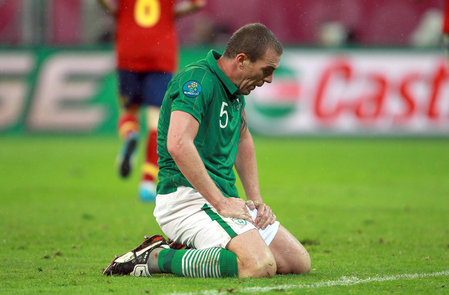
    It was remarkable, for example, how Ireland’s Euro 2012 campaign was glossed over. A video was shown but clips of actual events on the pitch were sparse. At the time of those three defeats, one figure involved in Irish sport at elite levels told the Irish Examiner how, if they happened in most other bodies in most other countries, “the consultants would be called in to do a root-and-branch review of why that happened”. 

    That doesn’t come down to the micro details of Giovanni Trapattoni’s management — which should, of course, be separate to the AGM. But it does involve the macro details of whether Ireland’s football structure is capable of producing players of sufficient technical quality. Other than a few points in speeches about the grassroots, this wasn’t raised despite the fact €377,000 was cut from such funding in 2011. If such issues are not asked about at the AGM, when are they asked about? “You’ll never have enough money,” Delaney said when quizzed afterwards. “I think the message today from the grassroots was that we still need the volunteers to support the association in terms of implementing the strategies that we’ve all agreed together: be it the underage review, the amateur review, the high-performance review.” 

    At the tip of all that, of course, is the beleaguered League of Ireland. Delaney insisted that the competition is going in the right direction even if the road is bumpy, that he is confident Dundalk can be saved and that some of the actions and comments from Monaghan United were simply surprising.

    “I opened this conference by asking whether the clubs are, in general, in a better place than before we took over? Absolutely, yes. Is the league where I’d want it to be today? No… but we’ve all got to work together to try and bring it to a better place.”

    By Miguel Delaney Monday, July 23, 2012

    This appeared in the printed version of the Irish Examiner Monday, July 23, 2012

    Another year gone and not only have the yes men of the leagues done nothing to improve grassroots development, they don’t even ask the questions. How can a team perform so dismally at a major championship and not even a single question be asked????? C’mon!

    How can the most popular sport in the country, grassroots structure not be a topic for discussion at the annual Football Association of Ireland AGM?  This should have been the number one topic. Not one questions from the floor, no comments or topics to discuss. So Irish soccer has no issues, apparently. Clearly the people at the top can’t see the problems at the bottom, just proves how far removed they are from the game……..they really are!

    What now for Irish soccer? 

  • Poaching or just moving clubs

    Poaching or just moving clubs

    Poaching is the illegal taking or tapping up of players contrary to league laws.

    Which leads me to discuss poaching as its known in Irish soccer circles. I always taught poaching was an easy tap in or being in the right place at the right time. i.e. a Lineker or a Keane etc.

    From July 1st its open season again and below will you find some tips, if you’re thinking of moving your child to a new set-up. 

    Under age Poaching

    Poaching at underage age football in Ireland has be going one since I played football.  The carry on is laughable, from managers ringing other managers to warn them off their players, managers ringing parents promising them trials at the best clubs in the world or aggressive managers just ringing none stop and offering parents an ultimatum. And then you have the weekly expenses, ipads, washing machines and boots etc.

    In fact the entire pre-season is somewhat similar to a cattle market, players are talked about, managers are looking for the best stock with the most potential.The only differnece is usually livestock are sent to market because they have reached their slaughter weight and are at the end of their productive life, either for milk production or breeding and are to be sold for further fattening, breeding, milking etc. In our case its the opposite, the player is at the start of his productive life, still learning his trade and hopefully developing into something special, with hope that he/she maybe one day gone on to play in the League of Ireland or for Ireland.

    The Poacher

    The poacher has only a few weeks to do his trade and try and convince the player of a better opportunity, he must also convince the parent/guardian of the child that moving clubs will benefit the boy/girl in the long run. This decision has to be the right one or else it can be catastrophic for the player.

    Of course a lot of parents think they’ve got the next Robbie Keane, and the talent scouts for the big junior clubs are happy to go along with that. They go as far to promise the earth, if little Robbie will go with them. They tell them the fees will be covered and even promise to buy the mother a new washing machine. Some clubs are brilliant at it and some not so good, but all with one intention to get the best players no matter what age, playing and winning league and cup titles for their club.

    Some clubs have the credentials, they have the pulling power, the facilities, the coaching structures and a good reputation of success, others are great at convincing naive parents about the future possibilities for their son or daughter.

    The Big Switch

    The decision you make for your child or in fact the child makes for himself, must have the child best interest at heart.  Your child may be one of the best player at his current team and enjoys having that responsibility – moving to a another team, he may not be the number one player or have as much responsibility as before. He/she may find it hard not to be the center of attention.

    See some things to consider when moving clubs: 

    • Most elite teams have 2-3 players who stand out more then the rest, you child may have been one of these players in his previous club and now finds himself down the pecking order. This sometimes can be hard to deal with.
    • He/she may have to work his way into the starting line up, again this may not have been the case previously. This could have an effect on his/her confidence.
    • A whole set of new players and coaches to get to know and sometimes at the younger ages this can be difficult to adapt too.
    • The coaching will most likely be different and may not be as enjoyable as before or may be even more enjoyable.
    • Are the coaches experienced or just good poachers, If you really want to know whether you’ve made the right choice for your kid, you need to attend training. That is where you will see the coach in action. You’ll see how they are being taught and how the players are being treated. You won’t be dependent on your kid to relay accurate information.
    • Don’t sign straight way, make sure your child is happy before you sign the dotted line.
    • Ask about the ratio of kids to coaches. Eight to ten kids per coach would be ideal. You definitely wouldn’t want it to be higher than 14 kids per coach.
    • Most top clubs now a days have good facilities and structures and require that coaches be trained and garda vetted but no harm in asking and checking to see where they will be training etc
    • Are the training session planned, are they organised, fun, age and skill level appropriate.
    • If you aren’t satisfied, take a look at the with neighboring teams. It may be worth a little extra drive time to get your kids in a better set-up.
    • Speak to other parents and ask them about the club and the coaches. You are putting your child in the hands of these people, you have a right to know.
    • Be as honest as possible with your current club, good coaches want to see their players progress even if it means moving to a better level of football. A coach/club should always leave the door open for any player who wants to see if they can move up a level or try a new club. If players feels they are always welcome back, then it makes things easier for everyone concerned.
    • You must remember to be respectful to your current club and communicating will always make things better. People like to speculate, so best to get in there early and let the manager know. After all, he has been giving up his own time to help you.
    • Make sure he/she is really wanted and its not just a ploy to get his/her best friend to the club and using you as a screen.
    • They must want to move and not be forced or pressurised in any way. Change is good but it must be his/her decision.
    • Check to see what the managers plans are, is he a win at all costs type manager or does he develop the kids properly and try to play football, allowing them to take risks and be expressive.  Make sure he is not just picking the bigger stronger guys over the smaller more technical ones. Proper coaching and encouraging kids to get on the ball, always win out in the long run.
    • If its the case that they have been asked to move from the B team to the A Team again consider all of the above.
    • Ask you child how he/she feels about the situation and then ask the question again after a few weeks with his new club.

    “Sometimes questions are more important than answers.”

    Remember if you child is not having fun or playing with a smile then they won’t be performing at their best and this can lead to him/her not getting on the team. The most important thing for any child playing sport is that they are enjoying themselves and playing regularly. They are not always going to play well, kids have off days too; once they are having FUN, learning and smiling, that’s all that counts.

    Being a sports parents is not easy and driving your child or children to and from training needs to be considered. The worst thing you can do is start missing work because of your childs sport. It has to be the perfect fit, for you and your child……..Remember to consider your life, as well as you child’s.

    “Example isn’t another way to teach, it is the only way to teach.”

    Good luck for the season ahead and remember soccer should be about playing and not winning.

    -End

    I always like to hear your opinions and views. If you feel you have something to say, please comment below or email me info@thecoachdiary.com If, you don’t have anything to add then please forward this on to a friend. As always, thanks for reading.

    I’m also on twitter @Coachdiary

  • Irish Soccer is on its knees…..

    Irish Soccer is on its knees…..

    Was John Delaney on a holidays or was he at work?? Yes, he is entitled to go out with family and Yes he is entitled to have a drink, but why does he think drunkenness is an acceptable behaviour in public… After all, he is the CEO of the Football Association of Ireland and he should act like one or should we  just accept this because he is Irish.

    Was this a personal PR mission to get the fans behind him? Answers on a post card.

    Would you find Ángel María Villar the president of the Royal Spanish Football Federation acting like that? The answer is NO! In fact, I doubt you would get any president and/or CEO of any association or business letting himself down like that. Can you imagine the IRFU chief executive Philip Browne doing this sort of stuff? Exactly. Likewise, with Liam O’Neill, the GAA president. The man should have a little more composer and class.

    ‘Every morning we had a meeting a 9am’ JD

    In today’s Irish Independent article

    by Dion Fanning, John Delaney defends his drunkenness, his unquestionable achievements with grassroots football and the success of the European championships on an administration point of view. See part of the article here http://www.independent.ie/sport/soccer/euro-2012/irish-news/im-entitled-to-the-odd-night-out-too-delaney-3147499.html

    We’ve come out very well out of the Euros because we’ve got to a tournament and organised – when you see the folders there of all the work that had to be done – we’ve organised a tournament that was pretty faultless administratively and that’s the key role and that’s what we’ve achieved’ JD

    In Summary of Article

    What annoys me most, is this article seems to portray that alot is being done for grassroots football and this is clearly not the case. This was JD way to promote all he has done for Irish soccer and if the Euros was a success on an administrative point of view, (like he says) then I guess JD has done his job.

    Big money

    Did someone forget that there were certain financial incentives that UEFA offered to every team:

    • million for a win
    • half a million for a draw
    • a million if we finished 3rd 
    • 2 million if we got to the quarters.

    Achieving any of those to me would be an administrative success, it could have been a much needed bonus for the FAI coffers and possibly grassroots facilities etc.  To say the teams stay in Poland was a success, just glosses over the real issues in Irish soccer. Although, at least they had proper training facilities this time around.

    Structure

    We are moving into another year of kids football and no changes on the horizon.. Another season and still the same aul bullshit. FAI for all they stand for have achieved something, after all we have a fantastic new stadium, we have emerging talents centers all over the country that no longer discriminate against kids playing outside of Dublin and there are some excellent coaches involved with the international junior squads, for both men and women. However, they claim they have been working very closely with schoolboy football and this is a statement I have to question. For all that has been achieved, there are still some MAJOR concerns within the grassroots structure.

    More Indo quotes….

    Dion Fanning asks, Are the clubs able to nurture young talent?  

    JD replies, ‘We have an underage age review. We’ve done an underage review, I’m working closely  with schoolboy’s football on that………When asked, about his comments on the first day of his job, about bringing the FAI “back to basics” back the development of  the game around Ireland, he says, ‘my weekends are packed with meeting clubs around the country….talking to them about the issues that exist at grassroots level’ . 

    He goes on to talk about the improvement of clubs facilities, Elite structure and development officers, but for me he has missed the real issue, the issue of competitive leagues, unqualified coaches and the fact that we have zero structure and how we are not teaching the kids to play but to win (something most kids already have). He also goes on to say, ‘I’m a believer that there should be less competition and more touches’, yet the entire playing structure for kids in this country is completely the opposite and they have done nothing about it. The leagues still have complete power.

    He also mentions this “underage committee” whom I have never heard of, but would love to know more about and what their mission and goals are. He talks about, ‘working through those principles for change, for further change’, what exactly are these principles, have I missed something?

    Grassroots is top topic!

    On positive front, any mention of grassroots development by JD is always a bonus, because it gives us a chance to question what he is saying and to highlight the real issues that JD and the FAI seem to be forgetting. I can’t really question his role as an administrator or CEO as I don’t know the ins and outs, but I can question the development of young kids playing football in Ireland, which is no better off then it was 20 years ago.

    In fact 20 years ago, kids were still playing on the streets and technically far superior then kids nowadays. Its time a youth football organisation was set up with or without the FAI involvement, an organisation that controls how the game is structured and one that has a huge influence in development of kids in this country. We can’t continue to allow the leagues to decide how kids are developed in Ireland. Ideally you would want the FAI on board, after all they are meant to be the ones governing the game. This Organisation can only work with coaches involved, a selection from across Ireland, with a mixture of league reps, teachers, FAI coaches and psychologist etc.

    League of Ireland

    There needs to be some sort of connection between kids football and the league of Ireland. I don’t believe any team in the league of Ireland has a proper academy that feeds into the senior team. We are currently the only country in Europe that has no proper structure between kids football and the professional game. At present we are feeding clubs in England due to this lack of structure in Ireland. I think the u19s league is a positive, but we should be looking at other age groups (U15s, 16s, 17s, 18s, 19s and 21s) as this will help form proper academies at league of Ireland clubs. Another Idea would be to start a Celtic League using the concept that has been so successful with the rugby.

    In summary

    The fact that the FAI shows no concern for the kids development (6-12s) and seems not to care how the leagues are structuring football in Ireland, really worries me and I have a funny feeling that by the time Brazil 2014 comes around ‘ O jogo bonito’ will not be a chant coming from the Irish supporters…lets hope I’m wrong!

    Euros facts: This was the joint worst performance by a competing team in the history of the euros. 


  • Grassroots football changes 4 v Ireland (FAI) 0

    Grassroots football changes 4 v Ireland (FAI) 0

    Could this be the result that changes grassroots structure in this country forever…..For too long we have been asking for change to the structure of youth development in this country. If ever there was a better time to trash out where the real problems lies, then this is the time. Following repeated failures by the senior team at major championships and the inevitable calls for action must follow. After last night humiliation, the FAI need to act!

    So, what are the serious issues?

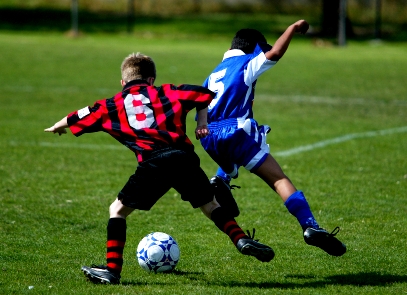
    The main issue is the structure of youth football, we have competitive leagues down to the youngest ages (age 8) in Dublin and other parts of Ireland. Competitive leagues prevent kids from taking risks, being creative, dribbling. They take away what it beautiful about the game at those ages the FUN factor. In Ireland we coaching kids to be competitive to win and not too play.

    Another issue is the over competitive parents and coaches, who are seeing glory through the eyes of their players and/or children. Educating clubs, coaches and parents how to behave on the touch line and teaching what is important and what is not.

    Kids want to win whatever they play and children are naturally competitive but their emphasis isn’t on winning so the emphasis shouldn’t be on winning for the parents and coaches alike. Do away with the adult-driven league tables and trophies. Kids football should be about enjoyment, fun, learning the game, falling in love with it and getting better at it. 

    The leagues

    In many parts of this land, leagues all have different structures and challenges. The main issue here is that many kids don’t get to play with smaller numbers for longer, they are not allowed to grow with the game, a fundamental principle of of player development in many European countries.

    • For instance 7v7 at age 8 (to many players and pitches are to big for this kids to get enough touches).
    • 9v9 at age 10 and age 11 (to many players, pitches to big and kids not getting enough touches).
    • 11v11 at age 11 and age 12 (We are talking about 10 and 11 years old starting on full size ADULT pitches with Adult rules and HUGE ADULT GOALS).
    • Another issues is the goals post, kids start with 7v7 goals and then  move straight to adult size. (Like in Spain and Portugal we need to introduce the intermediate size 17′ x 7′)

    We are going against nature…

    This structure is not child friendly and goes against nature. Are games should be age specific and playing an adults game at age 11 is preventing children from developing and mastering the game. It seems absurd to many in the game that children as young as 10 are expected to play on a full-size pitch and in full-size goals and still we are doing nothing about it.
    I recently put in a call to both the NDSL & DDSL leagues to ask if they are sticking with the 9v9 games for 2001’s age? (u11s moving to u12s). NDSL said, “they were looking at it, but couldn’t confirm yet” and the DDSL said, “No discussion of it at the last AGM and there was no talk of change for this year”. 
    Once again we go into another year of kids football and no changes in sight. I have to stress again, “Some very shortsighted people running the game in Ireland”.

    “Why do I have to defend the same size goal as PetrCech?” – Josh

    “Why is the pitch so much bigger than last year? We’re only a little bit bigger.” – DJ
    “How am I expected to save shots in a goal that’s so big? When the adults come to
    take the nets down they use a step ladder!” Adam

    FAI

    An association with governs should do exactly that; the problem with the FAI is they have no control or no input into how the various leagues around the country are run. Unlike the IRFU and GAA who own and run the entire game at all levels all over this country, the FAI don’t.

    The FAI need to take control of the game in this country and make the changes it so badly needs. We could do no worse then to copy the Spanish or German Youth Structure and/or even look across the water at what Nick Levett, (the FA’s National Development Manager for Youth and Mini-soccer) has just recently passed.

    “Imitation is at least 50 percent of the creative process” and if this is the case then 50% of what Spain have would be 100% better then what we are currently doing.

    English FA

    Last year the FA announced a Young Player Development Review, including 25 recommendations that the FA believe will help improve the English game at all levels for English football that they hope will stop such calls happening ad infinitum. The recommendations – went through a period of consultation before being sign-off some weeks back – which will now have implications for the game from top to bottom, but central to these proposals are changes to youth football at grassroots level.

    The proposed changes aim to give children more touches of the ball in small-sided games with age-appropriate pitch and goal sizes. The aim is for children to fall in love with the game whilst helping develop their technique before they make the step up to the ‘adult’ 11-a-side game.

    The FA’s new youth football structure will see an increased use of small-sided gamesfor all age groups up to under 12s. This will allow children to progress gradually through age-appropriate formats, rather than jumping straight from mini-soccer to the ‘adult’ 11-a-side game before they even finish primary school.

    9V9 Changes

    One of the biggest changes in the FA’s proposals is the introduction of 9-a-side football for under 11s and under 12s. The new format is designed to help bridge the gap between mini-soccer at under 10s and 11-a-side football at under 11s – a jump so big that this age group currently suffers from one of the biggest drop-rates in youth football in England.

    The bare statistics back these views up. “The fastest-growing kid grows 2.5cm in the three or four months between leaving mini-soccer at under 10s and starting 11v11,” says Levett. “In that time, we increase the size of the goal by 265% and the size of the pitch by 435%.

    By introducing an intermediate-sized pitch, Levett hopes to remove the temptation to play a “territorial game” with the biggest kids at the back and the fastest kids up front.

    The smaller pitch, he hopes, will encourage teams to play through the thirds, thus giving kids more touches of the ball and more chance to develop their skills while still moving towards an understanding of the full-size game.

    How was the research done by the English FA

    They spoke to over 300 youth clubs, hundreds of grassroots coaches, over 150 youth leagues and, arguably most importantly of all, 42 different groups of young footballers aged 8-12 from both professional and grassroots clubs.

    All of this research has fed into the proposals, which aim to make football fun and enjoyable for kids, particularly at the youngest ages, to aid the development process and reduce the chances of kids dropping out of the game.

    “It’s a child-centred approach,” said Levett, “because adult values and child values are very different. If four kids had a ball to make up a game, they wouldn’t have subs and they wouldn’t stick themselves in a line and take it in turns; they’d just have a game.”

    The roadshow has been met with largely positive feedback, but Levett accepts that not all of the proposals will be to everyone’s liking. However, he strongly believes in the changes the FA are seeking to make to the game and is confident that, if the changes are implemented and put into place for the 2013/14 season the FA can, with clubs and coaches, help to develop the game to meet the needs of the children.

    The FA’s Director of Football Development Sir Trevor Brooking has been a long-time advocate of such a change.

    “Any skill I might have had as a player was almost there when I was 11 and I don’t see that in sufficient 11 year olds these days,” he said in June 2008. “If your technical skills aren’t there when you start playing 11v11, you’re never going to cope with the game.”

    Raising the age of “competitive” football

    As part of the new proposals for youth football, the FA plans to scrap league tables for any children at primary school age (under 11s). Research that the FA carried out with 42 groups of 8-12 year old kids found consistently that winning league tables and trophies did not even register as a reason for kids wanting to play the game.

    Scotland

    In line with this new flexibility, the FA are also considering a change to a summer season for youth football. In March, the Scottish Youth FA begins its first summer season as part of the National Player Pathway. The pathway has been designed by the Scottish FA and the Scottish Youth FA to improve youth development and means that, for the first time, all children playing club football in Scotland will play a format of the game that focuses on developing the right skills for their stage of development.

    This meant that, from (March), all children aged 6-9 will play Fun Fours (4v4) football, all children aged 9-12 will play Soccer Sevens (7v7) and only children over 12 will play 11-a-side football.

    The launch of the pathway coincides with the introduction of a new summer season for youth and women’s football in Scotland, with leagues now running from March to November to take advantage of the best weather conditions.

    The FA have no immediate plans to impose such a change but Levett recognises that it’s a worthy topic of discussion.

    “We played away at Portsmouth a few weeks back and it was freezing,” said Levett of the team he coaches at Fulham FC. “Kids were coming off the pitch saying ‘I can’t feel my feet’ and ‘I can’t feel the ball’. How’s that going to develop them? So if summer football is in the best interests of kids, then we’ve got to consider it.” 

    The pathway represents a revolutionary

    new approach to youth development in Scotland but, according to Wilson, is one that should stand them in good stead in the long run.

    “We’re looking at long term player development now. We have a programme in place as well which speaks about long term player development and talks about number of hours and the practice that we need to have in the game”.

    “We’ve gone away from the days of kids regularly just going out and practicing with a ball for four or five hours a day. “We need to try and bring that back and this gives us the opportunity to do that. But there’s a structure to it and a natural progression to the type of game because the game does grow with the player.”

    All the talk is about Trap and players not being good enough…but we all know where the real problem is!!!

    Maybe it is time to set-up a YOUTH FOOTBALL ASSOCIATION OF IRELAND?

    Research: English FA, Scottish FA, Welsh Football Trust, the web and general research. Note (I found no information on youth structures or future youth development plans on the FAI’s website)


  • Inside Soccer – Coach like a pro!

    Inside Soccer – Coach like a pro!

    We have teamed up with Inside Soccer your only resource for soccer coaching. As a coach who has bought numerous books and DVD’s on coaching drills etc. I came across INSIDESOCCER 4 years ago and have never looked back since. I have to say this resource is all a coach/manager needs, you won’t find a better soccer coaching website anywhere in the world today.

    InsideSoccer.com is the most comprehensive soccer website for coach education and player development in the world. Since its inception in 2008, InsideSoccer has constantly sought to expose to a global soccer community the philosophies and methodologies of the best clubs on the planet.

    Now for the first time ever InsideSoccer is able to bring to life an unbeatable on-field & online global soccer experience. The Coach diary has managed to get all subscribers of our site a MASSIVE 20% of the  BOOTROOM annual plan.

    WHAT IS IN THE BOOT ROOM?

    Well just about everything a Coach needs to COACH and MANAGE a team. Just add the players!

    What they said?

    • OVER 1.2 MILLION USERS
    • 96% USER SATISFACTION
    A random survey of users indicated that users love the website, the quality of the content, the diversity of the drills and practices, advice from the experts.

    Inside Soccer is Unique

    • The only site with over 750 drills from the top professional club academies around the world.
    • These are actual drills and sessions used by the academies
    Academy coaches
    • Comprehensive tips from Star Players – Messi, Maldini, Chastain and more to come – EXCLUSIVELY for INSIDE SOCCER
    A random survey of users indicated that the users love the website, the quality of the content, the diversity of the drills and practices, advice from the experts.
    Coach
    • Drills and Practices
    • Training Programs
    • Pro Clubs
    • Star players
    Manage
    • My Team
    • My Animation
    • My Library
    • Learn it – Love It

    Drills and Practices

    • WATCH over 500 drills for all ages and abilities
    • EXPERIENCE the Guide to Coaching
    • ADDRESS every aspect of the game
    • ENJOY new content regularly published

    Training Programs

    • DEVELOP for all ages
    • PROGRESSIVE and COMPREHENSIVE
    • DESIGNED by Academy coaches
    • TECHNICAL, TACTICAL, PHYSICAL and PSYCHOLOGICAL

    Check out INSIDE SOCCER Introduction Video http://www.insidesoccer.com/is-web/help?id=21013

    BOOK NOW: https://www.insidesoccer.com/is-web/subscription

    Use Promo Code: TCD20 – Limited offer

    Please refer any queries to info@thecoachdiary.com

  • Coca-Cola Irish Cup with Ajax & Ireland

    Coca-Cola Irish Cup with Ajax & Ireland

    One of Europe’s leading youth club football teams will play in Dublin this summer as part of the inaugural Coca-Cola Irish Cup competition.

    Scheduled for Dublin July 13th – 15th 2012 your team can also get an opportunity to become part of it.  Accredited by the Football Association of Ireland (FAI), DBSportsTours are hosting a three day football tournament for boys (12’s – 15’s Club Section) and girls (1996/97).

    So far they are pleased to confirm the NIFA champions, league rep sides, teams from Derry, Cork and an Elite 1997 boys section consisting of  Ajax, Reading FC, West Bromwich Albion and Ireland international team. 

    The Ajax 1997’s, made up of Ajax Under-15 players from their Greek, Cypriot and Dutch academies will play in the AUL Complex on Sunday July 15th in exhibition matches against International opposition. The tournaments will be played in a round robin and knock-out format.

    Speaking with David Berber of DB Sports Tours during the week he said, “All age groups are now over subscribed but applications can still be made  until May 1st 2012, we are absolutely delighted with the response so far and especially to have such great teams participating in the very first year of the competition”. 

    Coca-cola

    Also speaking at the recent announcement, John Coffey, Sponsorships Manager with Coca-Cola HBC Ireland said:
    “We’re delighted to be title sponsor of the inaugural Coca-Cola Irish Cup competition, and are looking forward to an exciting summer ahead. 2012 is an important year for Coca-Cola and football, and this high profile grassroots tournament in Dublin will feature the best of domestic and International football talent of the future”.

    Accommodation 

    They have now filled all there accommodation packages but are still helping teams source hotel accommodation from as little as €20 per night.  With team entry fee as little as €13 per player for 3 days of fantastic football, referees and top quality pitches its fantastic value not to be missed.

    If you are interested in applying for this tournament you can submit your application form direct to info@dbsportstours.ie


  • I don’t get it!!

    I don’t get it!!

    Went to see an u11s DDSL premier game today.

    We play 9v9 in Ireland and on the basis of that game this morning, which was a so called top team versus a mid table team, we definitely should not be playing 9V9 at u11s. 7V7 or even 8v8 is a more appropriate game for these kids.

    One team had most of the possession and at times tried to play ball, but due to the numbers and size of the pitch it was almost impossible to string more then 4 passes together before it broke down. The other team, never once played from the back and the centre half took all the goal kicks, which were hit route one.

    If these kids were playing on a smaller pitch with less players then they would have not choice but to play from the back and they would get plenty more touches of the ball. (Also we could adopt the rules so that they had to play out for the back)

    The Argument

    This argument has being going on way to long now and its about time the SFAI got the finger out and started restructering the game so that it is age appropriate. The FAI really should be demanding change to coincide with Europe.

    I think its time we set-up a group not a committee for adopting changes to the game. Youth Soccer Ireland or something like that.

    Let me know your thoughts?