Blog

  • Dion Fanning: Ireland’s lost generations

    Dion Fanning: Ireland’s lost generations

    In the days following Ireland’s exit from the European Championships, Pádraig Nicholson got used to being asked where it all went wrong.

    Plenty of people knew Nicholson. They might have been aware of him from his years with Athlone Town but many more knew of his years as a regional development officer, as a coach and as a coach of coaches in Irish football. People took their rage to him. Nicholson knew something too. He knew that soon the anger would dissipate and the public would move on to something else.

    ‘we need change’

    Nicholson didn’t mind the comments, in fact he thought they could be helpful. If any good was to come from Ireland’s dismal European Championship performance then it would have to be a determination to change everything about the schooling of Irish footballers. There were valid distractions — Giovanni Trapattoni‘s refusal to change; John Delaney‘s populist approach — but something more radical was needed and the European Championships should have been the starting point for self-examination. Irish football, it will surprise nobody, doesn’t do radical.

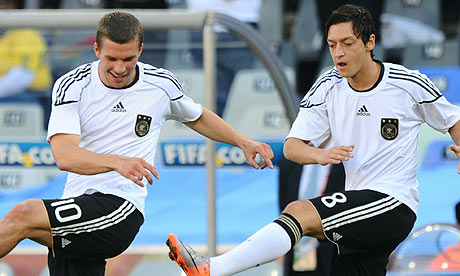
    On Friday weekIreland play Germany, a country that embarked on a massive overhaul of their system at the turn of the century following a quarter-final exit to Croatia in the World Cup finals. In 2000, Germany finished bottom of their European Championship group but already they were planning to change.

    Across the country, 121 national centres were built for players from 10 to 17. Clubs in the Bundesliga would have to build youth academies.

    The golden generation

    Other countries were doing something similar. Nicholson spent a lot of time in Belgium 10 years ago and he noticed a change. They were asking more of their young players as they simultaneously asked more of themselves. The necessity for practice was repeated to young players. Today they have one of the most exciting squads in Europe with Eden Hazard, Axel Widsel, Marouane Fellaini and Vincent Kompany among their players.

    In the academy at Standard Liege, the director Michel Bruyninckx uses “brain-centred” learning to coach his young players. Bruyninckx explained his philosophy of conscious learning in an interview with The Blizzard.

    “We always thought that sporting activities were mechanical activities, but we know that there are interventions from the brain,” he said, before describing himself as an outsider in the football world and comparing himself to Darwin who was also considered “crazy”.

    Irish football needn’t worry about being considered crazy. Trapattoni announced last week that the coaches of Europe were still talking about the Irish supporters at their conference in Warsaw, but anything Ireland did on the field can’t have detained them long.

    Last week, Trapattoni named his squad for the games against Germany and the FaroeIslands. Robbie Brady is on stand-by and James McClean will probably start on the bench.

    Brady was a player at St Kevin’s, a schoolboy club that has invested in an academy. “They are an oasis in the desert,” Nicholson says.

    If Ireland can’t compete with Germany, Ireland could always have ambitions to match Belgium, yet things stay the same.

    “We’ve fallen a generation behind the rest of Europe,” Nicholson says, “there needs to be a radical reassessment. The people who are concerned should come together and find a way to stop us falling further behind. Right now, if a young player comes through, it’s despite the system.”

    Like many, he suggests that the schoolboy clubs have too much power, which makes it hard to implement a vision on player development.

    Emerging Talent not enough

    The FAI will point to their Emerging Talent Programme but that is barely enough. The idea is good but the focus is too narrow.

    Instead of players attending from the ages of nine or 10, as happened in Germany, they begin when they are 14 or 15, far too late to make an impact on their technique. “The golden years for a footballer are between nine and 12,” Nicholson says, “after that it can be too late.”

    Irish players fall further behind. Nicholson talks about going to the Kennedy Cup this year and during the week of matches not seeing one player who could “dribble with the ball, who could shimmy and beat a man”.

    UEFA B in Ireland

    Mark O’Sullivan still remembers the planes flying overhead that felt so close he thought he could reach one with one of the footballs.

    O’Sullivan is from Cork but emigrated to Sweden in 1994. He was always passionate about football and last year decided that he would take his UEFA ‘B’ coaching course in Ireland. “Even though I speak Swedish, I was more comfortable doing it in English.”

    So O’Sullivan returned to Ireland, booked a hotel and paid €1,000 to do the course at the AUL. At the end, all he felt was disillusionment.

    “I guess when you’re trying to run drills and you’re using a 50-year-old cab driver who is also taking the course as a full-back, then you can get frustrated. He wasn’t great on the overlap.”

    O’Sullivan never completed the course — losing his patience when they were asked to get from Dublin in Friday evening rush-hour to a game in Wexford that night.

    Instead he returned to Sweden, getting his ‘B’ licence there, an experience he describes as completely different to all he had endured in his homeland.

    O’Sullivan now works as an academy coach at a club in Sweden and coaches another, Nacka FF, in the Swedish second division.

    He had noted other differences with Sweden. This year, the Swedish FA asked their coaches to tell the FA where they felt they had made mistakes. They demanded to be criticised. It is not a model that seems likely to be adopted by the FAI.

    Nicholson was one of the coaches on that course which had frustrated O’Sullivan. He says the FAI were struggling as they tried to introduce a new coaching model based around match analysis as UEFA wished.

    Things have changed since then but if the coaches have become more familiar with the courses, other things have altered too.

    Wim Koevermans,

    the former FAI high performance director, was central to the introduction of those courses. In June, Koevermans left the association to become manager of India. The FAI are cutting costs. Last week, they advertised for Koevermans successor. No time-frame has been given on when the job will be filled.

    In a recession, and with their debt mountain, the FAI will always be stretched, which is why they might have done more to keep Damien O’Brien interested.

    Damien O’Brien

    O’Brien has fallen out with the FAI, frustrated this year by their refusal to sanction a four-team tournament in Limerick (he eventually got Manchester City to play at Thomond Park) and, more importantly, the mismanagement, as he sees it, of the Emerging Talent Programme which he sponsored.

    “The FAI will say anything to get your money,” he says, “but it won’t go where it’s supposed to go.”

    O’Brien says he was prepared to contribute €100,000 a year to the programme but became frustrated.

    “As long as the FAI is in its current state, there’s no way I’m helping out.”

    Yet he also sees a greater cultural problem. Irish people are interested in the big events.

    “The public,” he claims, “are more interested in slapping Delaney’s back and having a pint with him.”

    O’Sullivan agrees that there is a cultural problem which draws Irish people towards the big event without being too interested in anything that might be needed to create them in the first place. There is also the drinking culture which results in the loss of many players.

    O’Sullivan points to other cultural advantages which he feels could be used in football.

    “The mentality of the GAA, that sense of community, creates a great unity in Irish footballers. Swedish players are disciplined, they will do everything you ask of them, but Irish players have this unique gift,” he says.

    More about development

    He would like to see coaching young players in Ireland become more about development and less about winning matches. “They will all become adults, they won’t all become footballers. The result is not winning, it’s development as people as well as players.”

    Too much is lost, he says, by doing things as they’ve always been done. Irish football needs to find ways of being smarter than the rest, not just limping along, trying to keep up.

    There were two other notable landmarks last week. It was the fourth anniversary of the death of Noel O’Reilly, Brian Kerr‘s long-time assistant but also a visionary in terms of youth development. O’Reilly has been desperately missed in Irish football.

    “He was the best coach I ever worked with,” Nicholson says. O’Reilly’s personality mattered as much as his ability when it came to exciting coaches and players. “Noel was a huge, huge loss,” Nicholson says.

    FAI to spend 1million on Abbotstown

    Last week, the FAI also announced they have received a $500,000 grant from FIFA which will be matched by €500,000 from the Government to go towards the development of the National Campus in Abbotstown. Underage national sides will train there and, eventually, maybe the senior team as well.

    More importantly, in time, the intention is that a centre of excellence could be developed. In time, young players, maybe even as young as nine or 10, might be coached and educated there and Ireland could feel they had embarked on radical change. In the meantime, while the young players wait, Ireland will just fall further behind.

    TCD

    I think you could go deeper into the root of the problem. The Leagues controlling the game in this country, who’s only concern is registration fees. Most don’t give a  SHITE about development, some are starting to see the light and welcoming change. The combined age of the SFAI is over 1700 years, what would they know about the needs of a 7 or 8 year old. As for the FAI, well their main focus is bumps on seats and over the coming months that is going to be a huge challenge for Delaney and co.

    On a positive note the FAI have teamed with The Welsh Football Trust who runs extensive programmes to help develop football at a grassroots level. These include mini football and football for different groups, including different ages, genders, disability groups and ethnic minorities. Having an affiliation with these guys is a step towards change, let’s hope they mirror what the Welsh are doing and start to focus at the root of football in Ireland. The Irish Football Trust would be a huge benefit for grassroots development in Ireland, I just hope the people who run kids football in Ireland can open their minds to change.
  • John Devine talks grassroots

    John Devine talks grassroots

    Arsenal, Liverpool, Manchester United and Manchester City are all in action today and not a single Irish player is to be found in their ranks.

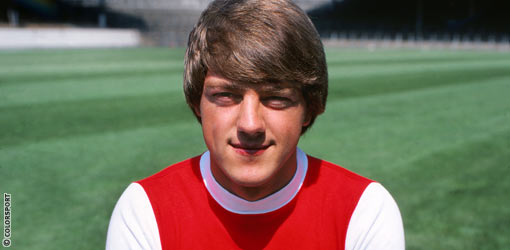
    John Devine, who was part of the Arsenal team in the early 1980s that had seven regulars who were either Republic of Ireland or Northern Ireland internationals, was remembering those days last week.

    “We’d be looking at each other across the pitch and there would be three or four on each side and you would be playing for Ireland with them the following Wednesday night. We’d in the players’ lounge after the game and we would be discussing going home to play for our country.”

    No time for nostalgia..

    Thankfully, Devine doesn’t have too much time for nostalgia and instead is trying to do something about the problem. For a start, while he accepts that the Premier League boom means that clubs have inevitably expanded their horizons beyond these islands and into Europe and beyond, he will not countenance any talk that Ireland is no longer capable of producing players of the calibre of Ronnie Whelan, Liam Brady and Frank Stapleton.

    We cling on to the hope that the Manchester United starlet Robbie Brady can make the grade, but if he does that may only succeed in masking the problem further.

    “The markets have opened up, but that is no excuse for not developing technically good players,” Devine says. “It’s very obvious that having no Irish participation in those major games means there is something radically wrong.

    We are not producing players with the right technical skills to prosper at the higher levels of the game.

    Natural Ability

    “The one thing I would like emphasise, there will always be somebody who will mention Robert Brady or somebody. I remember working with Robert as a 10-year-old, but these guys are the exception to the rule. They have the natural ability. The [Damien] Duffs of this world will come through in spite of, rather than because of the system.”

    As well as tuning into Arsenal’s game against Manchester City this afternoon, Devine has just set up a pilot scheme for the South Dublin Football League with three v three and four v four non-competitive games for seven and eight-year-olds. Non-competitive means scores aren’t kept or points won.

    By having three of these games on a normal-sized seven-a-side pitch, it allows 30 children play football as opposed to the normal 14, with subs not getting games. The emphasis is on passing, control, dribbling and awareness.

    Devine successfully introduced this format when Manchester United”s Academy Director of youth development in Ireland in the 1990s for 10 years, but up till now his methods have been shunned by the powerful Dublin schoolboy leagues.

    “We are screaming and shouting at kids from the sidelines at the age of seven, eight and nine, which is a form of child abuse,” Devine says. “I respect the volunteers, but the powers-that-be have to change the structures. It has to come from the top. We need age-appropriate games for children to produce technically gifted players. If we embraced it for four or five years with the Irish spirit that we have we would compete with anybody and the kids will make a big impact on the British game as well.”

    Changes

    Some other changes are afoot. The North Dublin Schoolboys League, in which about 12,500 children play in every week, is also taking tentative steps towards adopting the models which Germany and Spain have proven works and which the English FA are also now rolling out nationwide. In the NDSL’s case they have introduced non-competitive football up to the age of 12, with five-aside for eight-year-olds graduating to nine-a-side for 12-yearolds, playing on smaller pitches with smaller goals.

    “It is just a pity that maybe the SFAI don’t take that on board up to the age of 12 years of age. It’s still win at all costs,” says the NDSL secretary Tony Gaines.

    DDSL won’t accept change…

    It is the Dublin & District Schoolboys League which has been most resistant to meaningful change and given that they pride themselves on being the largest schoolboy league in Europe, with 20,000 playing members, that represents a serious problem.

    Their under-12s still play 11-a-side on full-size pitches with competitive football kicking in at under-nine level. They play seven-a-side from under eight to under 10 level, with three substitutes who must get game time, but abuses of that rule are reported as widespread by some coaches who prefer to notch up a victory rather than give all the children a chance. The “rule” is only a guideline.

    What’s clear is the lack of any central policy towards the schoolboy league structure in Dublin and around the country. When he tried to tackle this issue Wim Koevermans, the former FAI High Performance Director met a wall of resistance from a league which jealously guards its independence and still has a strong constituency amongst parents and coaches for maintaining its competitive structure.

    Some of those who come from the street football school of hard knocks will also be resistant to change. But the street model was never a bad one; two against two, five against five, you name it, it was played. Clearly though the way forward now that children’s football is more formalised and restricted is towards smaller teams, smaller goals and smaller pitches and if competitive football doesn’t kick in till children are 13 or 14, then that is more than time enough.

    What happened in the summer in Poland clearly showed the need for schoolboys’ football to emerge from its survival of the fittest mentality and if it didn’t, for some sort of national structure to be imposed.

    “It was mindboggling,” says Devine. “It hurt to watch.”

    The show moves on further today and it’s about time to start catching up.

    By Paul Rowan (writer for the Sunday Times)


  • Stretching and it’s benefits..

    Stretching and it’s benefits..

    Currently I coach a u12s team and from memory this is the age group where kids start to get injuries. Already at this early stage we have 2-3 players with groin and hamstring strains. I would never do any static stretching before training and/or a match. I have always done a warm up with the ball followed by dynamic stretching and finishing with static at the end. When FCB’s Albert Benaiges came to Dublin in 2011, he spoke about the benefits of Dynamic Stretching before a game and Static after it.

    Warming Up

    It’s important to warm up your body before any physical activity. Warming up goes a long way toward preparing the body for exercising, both physically and mentally. It also helps prevent injuries. Dynamic stretching is an important part of this process.

    The term “warm-up” describes many light-aerobic and cardiovascular activities, which are separate from stretching. (Stretching works best when performed after warming up.) When you warm up, you are literally warming up the temperature of both your body and your muscles. Never stretch if you haven’t warmed up first.

    Warming up helps with many things:

    • Increases your heart and respiratory rate.
    • Boosts the amount of nutrients and oxygen delivered to your muscles.
    • Prepares the body for a demanding workout.
    • Makes it easier to burn calories.
    • Extends your workout and match fitness.

    Different types of Warm-Ups

    You can use many types of warm-up activities to prepare your body for a match. Often a warm-up activity is simply the activity you are about to do but at a slower pace. For example, if you’re about to go for a brisk run, warm up with a light jog, and if you’re going to go for a swim, do a couple of slow freestyle warm-up laps, if you’re about to play a football game do game related exercises and pre match drills.

    Only after this light warm-up, which should last about 5-10 minutes, should you attempt to stretch and I don’t think static stretching is any use before a game. Stick to Dynamic before and static after.

    Stretching

    Stretching used to be considered the main activity before a workout and you would always see teams do stretching before a game. That has all changed now. Stretching is still a beneficial activity prior to working out, but only after you have sufficiently warmed up and studies have shown that DYNAMIC is better than STATIC before a game. The reason for this is that stretching cold muscles can directly contribute to pulled and torn muscles. It’s also now known that stretching is very important after a workout as well and players/teams should always do at least 5-10 minutes cool down. This is the answer to reducing injuries throughout the team.

    Stretching properly may reduce muscle injuries and provides these benefits:

    • An increase in flexibility and joint range of motion
    • Correct exercise posture
    • Relaxed muscles
    • Better sports coordination

    Stretching has to be done right to have benefits, though.

    Here are some common tips on stretching properly:

    Stop if it hurts. Stretching should never hurt. If you have reached a point in your stretch where it hurts, relax to where it feels comfortable and hold the stretch.

    Maintain each stretch for 1030 seconds. Holding a stretch for any less won’t sufficiently lengthen the muscle. Stretch the muscles gradually and don’t force it. Avoid bouncing. Bouncing while stretching may damage the muscle you are stretching. This damage may even cause scar tissue to form. Scar tissue tightens muscles and can get in the way of flexibility.

    Remember to breathe. Breathing is a necessary part of any workout, including stretching. Relax and breathe slowly.

    To increase flexibility include all muscles groups in your stretching routine: From shoulders, back, thighs, calves and arms.

    Practice equality. Even if you are a righty, it doesn’t mean that you should neglect the left side of your body. Make sure you stretch both sides equally, so all of your muscles are evenly ready for action.

    When playing soccer, the warm up should be game related. Include all the actions of kicking, striking, passing, jumping, shorts bursts, side steps, moving backwards etc. The same is true for stretching. These types of stretches are known as sports-specific stretches, and they focus on the muscles that are used for your particular sport.

    Children under the age of 10 merely need to do light jogging and stretches to get ready to play. However, players above U-10 who don’t prepare to play with warm-up drills before a game risk poor play on the field and even injury.

    Cooling Down After Your Workout

    The same way you have to gradually slow down either your bike or your car, you need to slow down your body after a workout or exercise: 5-10 minutes of slowed-down, easy activities will go a long way in helping your body recover from a workout and will almost certainly prevent you getting a muscle strain.

    Cooling down and stretching at the end of a workout help to:

    • Slow your heart rate to a normal speed.
    • Return your breathing to its regular pace
    • Avoid stiffness and soreness of the muscles.
    • Reduce any risk of dizziness and lightheadedness.
    • Relax the muscles.

    Keep in mind that players should never be tired after warm-up drills. Players should spend at least twice as much time resting as they do working prior to a match.

    Adding a good before-and-after routine to your workout will give you the best chance of avoiding injuries and may even help improve your performance, it will also allow you to play sports for as long as you are injury free and stretching will go along way to helping you stay in Sport. Anyone playing soccer or any sport for that matter should always cool down after any activity.

  • Coerver Coaching Irish Academy player on trial at Atletico Madrid

    Coerver Coaching Irish Academy player on trial at Atletico Madrid

    Press Release:

    Dublin soccer player, Sean Quinn from Tallaght has been invited by Spanish Giants Atletico Madrid to spend a week training at the La Liga club with a view to signing him if he impresses.

    Sean, 14, plays his soccer in Dublin for Lucan United and has been involved with Coerver Coaching, attending our Performance Academy at Wayside South Dublin & coached by Coerver head coach in South Dublin, Andy Rice.

    Coerver Diploma

    Sean was invited by Coerver Coaching to attend the recent Coerver Youth Diploma at the NDSL, Coolock to play in some of the coaching sessions. The course which ran for 2 days was attended by coaches from all over Europe. (A course I attended and saw Sean train)

    The Tutors on the course Chelsea legend and Coerver Coaching co-founder, Charlie Cooke and Ireland Director Coerver Coaching, Austin Speight, were very impressed with the high standard of the Coerver group of players playing in the sessions, particularly Sean.

    They were not the only ones!! Atletico Madrid was represented on the course and their staff immediately spoke with Austin to try and arrange Sean to come to Madrid.

    After meeting Sean`s parents and discussing the prospect of traveling to Madrid, all was agreed and Sean is there in Madrid this week with his Father and Coerver Ireland director Austin Speight.

    Sean will train each day at the club with U14-16 academy squads and play in some games for the club to assess him fully.

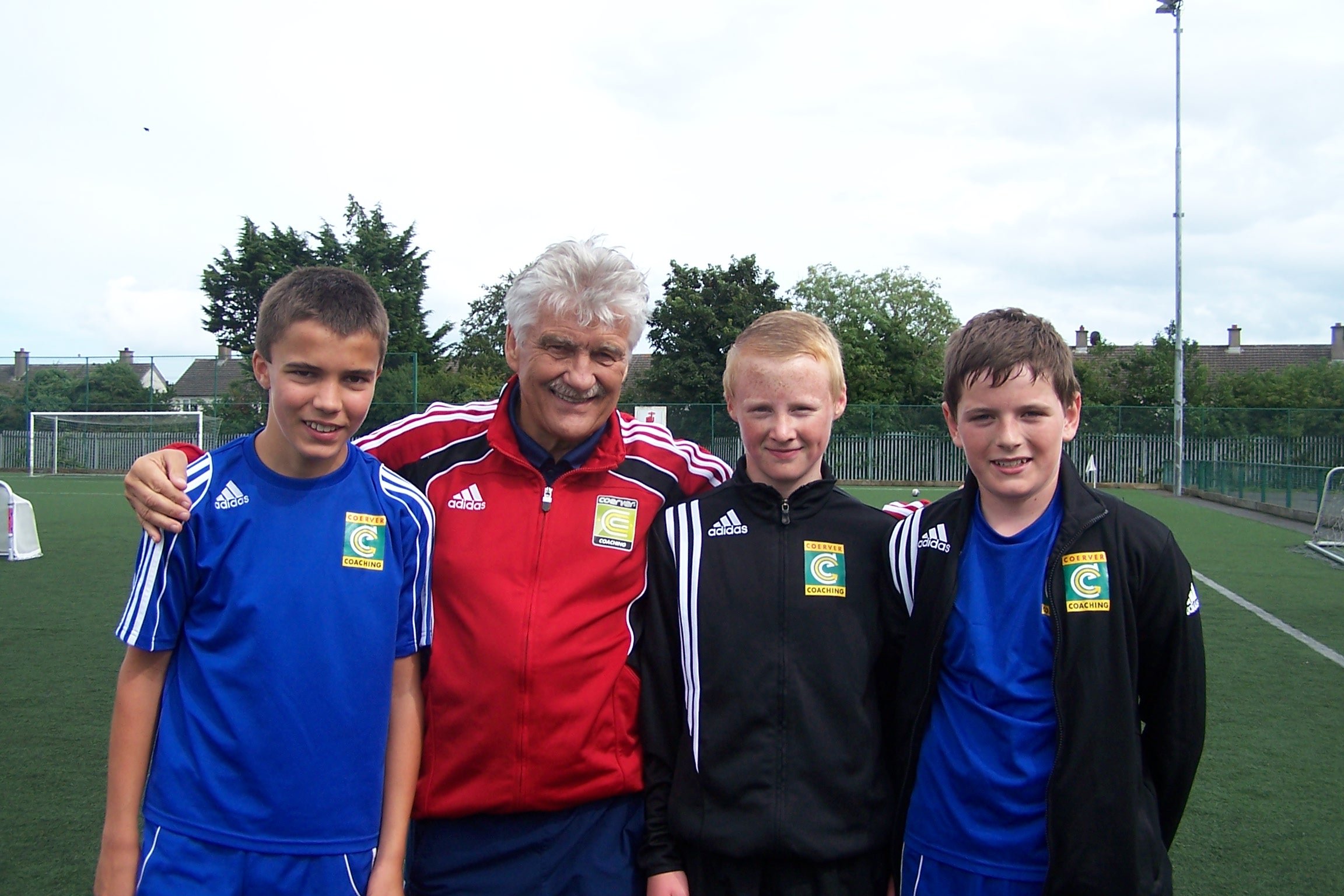
    Picture attached – Sean with Chelsea legend and Coerver Coaching co Founder Charlie Cooke.

    If you require any further information you can call or email Austin Speight

    Tel: 086 796 9974 E:Austin.speight@coerver.ie

    Information on Coerver Coaching- www.coerver.ie/ www.coerver.co.uk

    TCD: It’s great to see Irish boys getting a chance in Spain and long may it continue! Best of Luck Sean from all at thecoachdiary. 

  • The One that “nearly” got away

    The One that “nearly” got away

    Piece taken from http://footblogball.wordpress.com

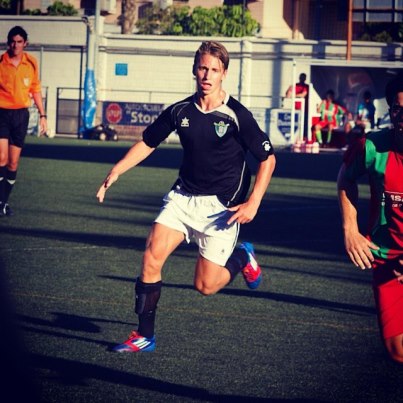
    Elias Lindberg is a 16 year old Swedish footballer  from Stockholm who  so far has had a very interesting career that brings to the surface many questions about talent Identification , what is talent ? and how should we as coaches nurture the players development.Elias now plays his football in Malaga.

    Elias ,tell me a little bit about your football career so far.

    I started playing football for a local team at 6.When I was  10 I attended a football school and  It was then I began to realize how much fun  football was. I developed very quickly there mainly  because of how we played during break time it was street football, spontaneous. We took it as serious as our official training sessions .The next step was to find a “better” club or at least what in Stockholm is called an elite club. I began playing with Hammarby 4. After a year in that team I was promoted to the first team in Hammarby for my age group. There we had a coach who was obsessed with physical training and during the season  we had two sessions per week, which consisted of 8 km running, and 1h strength training. Due to the physical training I picked up a lot of injuries and  that meant I missed a lot of football. So because of this training I lost my pace and decided to drop down to the 2nd team where I began to  to regain my confidence and speed. We had a great coach and he helped me with my development. The training was fun and we did everything with the ball even our fitness training .The coach left at the end of the season and  I didn’t want to go back to the first team

    In the middle of all this I got involved in KAFA FOOTBALL  which was on every Friday night.Kafa helped me relax more with my game and try out new things. I began to use my left foot more and look at the game differently.My self confidence really grew during those Friday nights with KAFA. Without KAFA I would never have developed so quickly.

    I went to another local club Bagarmossen where I played in midfield and became team captain. Another club. Soon I took another step up playing for Sköndal U17 team.I was a year younger than everyone else in the team and my whole game really developed. Last summer I attended a footbal summer camp in Spain where coach  Reuf Dervic. approached my father and offered to fix me  trial games for some of the best clubs in the Malaga  area. So I trained with Vazquez Cultural u-19 team in the Spanish junior league which is a feeder club to Malaga, Fiorentina and Genoa. They where very impressed with my game and offered me a contract. Since my dad lives down here and this was a really good opportunity I  to say yes. I am the youngest in the team and I am really enjoying my football.

    You never featured in the elite Stockholm City representation team?

    Its sad but the City team (Stadslaget) only look at the players in in the big clubs  so I never  got a chance to represent Stockholm. Funnily enough now that I am with a big Spanish club the National team coach for the u-16 has been in touch. He will probably come to Malaga and see me play. He could have done that a few months ago in Stockholm . It is quite strange that as soon as you go to a bigger club, you become interesting.

    It seems to me that you have got a more rounded football education than many players from the Stockholms elite teams.

    One advantage of not playing with the elite Stockholm teams is that you really learn how to win back the ball. You really develop your defensive skills. This has really helped my game here in Malaga.

    How do you compare your Training sessions in Malaga with those in Stockholm ?

    In Sweden I feel that there is not enough free play, too may drills with cones etc. Here most of our training relates directly to match situations. In Malaga it doesn’t matter how strong you are, it is all about reading the opponent and knowing when is the right moment  to take the ball off him. All my physical fitness training is aimed at improving my mobility which I think needs to improve a lot.

    TCD Said, This is a great little story, which i had to share. Many footballers never get picked for so called elite squads or national teams until they bloom late into their teens. With so much focus on winning in this country its no wonder we rarely produce technically gifted kids with game intelligence. Year after year schoolboy soccer in Ireland continues along as if nothing needs to change. The amount of morons running the leagues and controlling grassroots football in this country is truly unbelievable. Putting some of these people in control of our game, is one of the main reasons Irish Soccer will always be stuck in the past. The most popular sport has no direction and in time will become the minority sport!

    This piece was taken from Mark O’Sullivan website footblogball.wordpress.com which originates from Sweden. Mark is a UEFA B  (badge gained in Sweden) coach working in Stockholm.

  • ‘more than just a coach’

    ‘more than just a coach’

    As a coach, it’s easy to lose sight of what is truly important. It’s not about the formations. It’s not about winning. It’s not even about putting the ball in the net.

    The most important thing is to teach players about life. Teach them how to be happy and successful. Teach them how to be a good friend, teammate and a decent person. Teach them how to live with integrity, confidence and humility.

    The Impact we have…

    As coaches we have a tremendous impact and influence on our players (whether they know it or not). Some of these players will remember what you do and what you tell them for the REST OF THEIR LIVES. I can’t say I had the same experience when I was younger (bad memory) coaches now are way more qualified and many like to research the impact they have on children thus using mental strength, game intelligence and visualisation techniques. Many techniques can help a child grow with confidence and belief, your role as a coach is so important.

    You have an amazing opportunity to have a positive influence on the lives of your players. You have an opportunity to improve their lives and their future. It is said of great coaches that not only do they teach you about the game but they teach you about life.

    If a player can remember you for something positive, to me, that’s the true indication of a great coach. This is what all coaches should strive for and what all coaches would hope players say about them.

    So, How Do You Teach Players About Life?

    The place to begin (because it’s the most effective method) is by setting a good example and being a good role model. This is the most important aspect of coaching. There’s no question that the absolute best way to influence players is by setting a good example. I always try to stay positive and never use the word CAN’T, there is nothing you can’t do!

    “Children are like wet cement. Whatever falls on them makes an impression.”

    But what kind of example are you setting each day in your actions and words?

    How do you handle adversity and difficult situations? (Your players are always watching you.) Do you shout at the refs? Do your actions contradict the words that come out of your mouth? How do your players really see you as a coach? 

    I can’t tell you how many coaches (myself included in the past) will say one thing and then contradict themselves with their actions. For example, a coach might say,

    “Teamwork is what this team needs to be successful! Trust your teammates. Pass them the ball, if they are in a better position. Move the ball around, work hard for each other and the team.”

    Then no more than two minutes later, the coach will set-up a drill and correct every thing the player does wrong. What do these actions tell your players? It tells them that you don’t trust your players to figure things out on their own. Let them figure it out, and then ask the questions, don’t dictate.

    “Be slow to correct and quick to commend.”

    This is a profound statement in so many ways. It’s important to give your players an opportunity to learn on their own. Sure there are times when you need to correct. But doing so too often will hurt a player’s confidence and shows them that you don’t trust them to figure it out. Kids need to be allowed to make mistakes, the game is the teacher and you can be sure that a team mate will let him/her know if they are doing it wrong. Try to coach by insisting on confidence, explore the players mind.

    “While we try to teach our children all about life, our children teach us what life is all about.”

    Become an even better coach, become inspired! 

    If your a coach you should take time to think about the example you set and how you can be a better role model. Make a list of your coaching priorities and values. Review those priorities each day and carry them around with you.. This will help you keep on track and get away from winning is everything attitude.

    Try to read inspirational books, book on positive coaching by coaches or inspiring people. These books will tell you what is truly important. They also remind you about the integrity and morals that the greatest coaches in the world employ. These books will help you keep on track. It is good to read inspirational books, they make you become a better person. I suggest you read before a season starts, during the season and maybe towards the end also. Get drunk on books!

    Things change so quickly in the season and you get caught up in the moment. Reading these books will help you stay on track and I can’t tell you how much of a positive impact this will have with you. Take notes, observe your players during training and matches.

    We all need reminders to stay on course and reminders that at the end of the day, it’s just a game and everyone goes home to their families but  never forget that some kids might be inspired by what you say and who knows, it might just stick with them forever!!

    ==========================================================

    I always like to hear your opinions. Please comment below or email me info@thecoachdiary.com If, you don’t have anything to add then please forward this on to a friend. Thanks for reading.

    I’m also on twitter @Coachdiary

  • Inaugural Football For All National Club Festival

    Inaugural Football For All National Club Festival

    Will be showcasing the talents of children with disabilities, representing over 20 FFA Clubs across Ireland. This is going to be truly an amazing day for all concerned.

    Press Realise

    The event proudly supported by the National Dairy Council and Republic of Ireland’s own Seamus Coleman.
    As ambassador for the FFA Club programme, Seamus Coleman expressed his pride to be involved in the programme and his delight in the FAI’s work on making Irish football inclusive giving every child the opportunity to play the beautiful game.
    Stating “This event will give those involved that very opportunity and will give families of children with disabilities the chance to see what it is all about and how they can get involved while enjoying an afternoon of fun and entertainment in the home of Shamrock Rovers.”
    The festival will take place in Tallaght Stadium home of Shamrock Rovers FC on Sunday
    23rd September 2012 from 1-4pm.
    Event Sponsors National Dairy Council Chairman Jackie Cahill expressed his delight stating that,
    “The NDC is delighted to be involved in such a worthwhile programme which promotes inclusion and provides all players with the opportunity to become part of a team. The NDC hopes that by lending support to this worthy event, more individuals will become involved, furthering the potential for the programme to reach out to those who may benefit, not only from physical exercise but regular social interaction.”
    Everybody regardless of their ability should have the opportunity to access football in their local club ensuring the FAI promotes an ethos of inclusion within the football community. Players will receive their training at local clubs providing regular football,
    a feeling of belonging to a club, competition, and a safe environment in which to express themselves. Most of all, players will have a pathway into mainstream teams if they improve to a level capable of competing in mainstream competition and, if not, they will continue to enjoy the game they love with their club.

    Support a great festival..

    Over 20 clubs from all over Ireland, Wales and Northern Ireland will be represented on the day and will compete in a fun and non-competitive event showcasing the talents of its players on the hallowed soil of Shamrock Rovers in Tallaght Stadium.
    The day will also give families of these children and other families of children with disabilities a chance to come along and enjoy the football but also get information on the programme and enjoy the variety of family entertainment, inflatables, street skills events, face painting, music , BBQ and maybe even a few special guests.
    Contact Person: Oisin Jordan Mobile: 086 607 9223 Email: oisin.jordan@fai.ie 
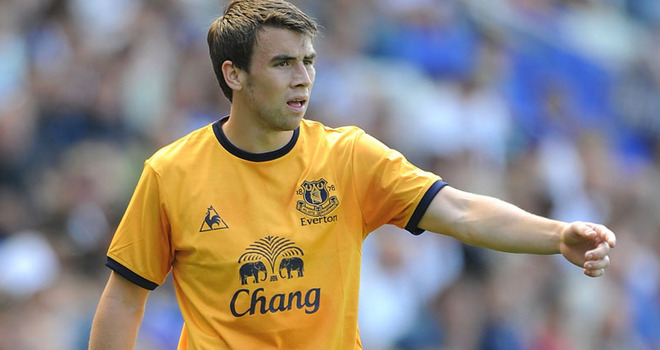
    Pic: Seamus Coleman (Sky sports)