Category: Irish Grassroots Football

  • Our Children Have NO Freedom

    Our Children Have NO Freedom

    Our kids can no longer play with the freedom we played with. In fact, I believe our kids will never have the freedom we had as kids.

    Milk Run

    When I was 6/7, I use to help the milk man. I’d leave my house at 6.45am and head off with a man unknown to my parents, – well they knew him as the milk man, his first name and that was pretty much it. They didn’t have a mobile number for him, he wasn’t Garda vetted and they didn’t even know what time I’d be back. Like me, most of us went out in the morning and didn’t come back until dinner time.

    “Children left to their own devices will gravitate towards the things they love, and they love being outdoors. For every really miserable wet week, there’s been some sort of amazing experience outdoors that we’ve had together,”

    As a child I had so much freedom, I spent most of my boyhood life outdoors. From the greens to the beaches eventually back to the greens. I roamed within 2 square miles of my house. Most kids wander freely only as far as their garden gate and even playing out the back unattended can be unique experience for a lot of kids.

    Let Kids Explore

    Back then we explored our world, we got mucky, we ran after each other with worms, we climbed trees, walls, fences, we jumped far and leapt over hedges. We explored dangerous places and frolicked in austere ones such as cemeteries and building sites. We even had pocket knives, sling shots and sticks. I can say for sure that I didn’t feel like my bedroom defined me as a child. My outdoor space did. Our children will be much more defined in their psyches by their indoor space than my brothers and sisters or I were.

    A mothers view,  “Peer pressure is very strong,” agrees Helen. “You think you can make the world afresh for your children, you think you can make your own rules for your children, but you can’t.”

    “Society’s fears of the risks that lurk outside for children – from ponds to stranger danger – may be overwrought and irrational, but anxiety (the defining characteristic of British families, according to a Unicef report on child wellbeing) about traffic is more logical. The growth in road traffic is probably the decisive factor preventing children playing on the streets as they once did. The Bonds live on a quiet residential road, but the traffic is still relentless, says Bond. “Until they are a lot older, I don’t feel comfortable with them cycling or walking around on the roads outside.”

    You see, we are all the same. Not only is it British parents who feel like this but, us Irish do also in fact the worlds parents do. The stats show that the world is no more dangerous then it was was the 50’s but yet we fear everything. Our kids don’t get enough time outdoors and when they do, it is controlled by adults. Adults control everything their children do, you go to any playground and most adults are shadowing their children, telling them what to do and were not to go. We take them home when we’ve had enough. Today’s child just don’t move enough and when they do we shadow and tell them to slow down. Then we wonder why they lack balance and coordination in sport.

    Where Are All the Mucky Kids?

    Isn’t it amazing, that we tell our kids not to pick up dirt, a slug, a snail. We tell them to ‘get up off the floor’, we stop them from exploring all the time.  From a very young age we teach to be scared of spiders, we pass on our fears to them. If we react to anything our kids will follow without allowing them to decide for themselves. The natural world is fun and we should be allowing our kids to explore it more, a lot more.

    “You know it is summer when everyone starts worrying about children not playing outside unsupervised anymore. A report from the Future Foundation says that the average amount for eight- to 10-year-olds playing unsupervised in the summer holidays has fallen from 55 “occasions” in the 1950s and 1960s to 24 now. Cue parental nostalgia for their own unsupervised summer holidays.”

    I’m sure these figures are wrong, who in their right mind is letting 8-10 years old out 24 times during the summer and when would it be convenient to send the social services around? 🙂

    street footballParents Back off, give the kids time to explore and discover

    What do children need, security, self-expression, discipline etc, yet there’s never mention of one of the most important – privacy. Basically, there’s too much parental ego flying around. Modern parents need to learn that it is not all about them, centre-stage, being great hands-on parents. Sometimes, it is really about parents staying away and allowing the kids some freedom.

    Could you imagine a game at the weekend with no parents on either sidelines. I’m dreaming, so are the refs!!

    “You can’t teach creativity; all you can do is let it blossom, and it blossoms in play.” – Peter Gray

    Read a debate, I just had about this quote here DEBATE

    Could you imagine if one of our parents showed up when we were playing- “This looks fun! Can I play too?” To reproduce anything close to the freedom, we as children used to enjoy, modern parents need to back off. What do kids love more now a days? ‘A play date’, and ‘a sleepover’, these are the things kids dream for and a successful one is when the kids are barely aware you’re there. It’s all about invisible supervision, the passive parental presence. Independent adventure was central to a child’s development when we grew up, now it’s parental/child adventure……which is great, but not every-time kids play.

    Adrian Voce, director of the campaign group Play England, said:

    “While some fears – such as ‘stranger danger’ – may not be based on strong evidence, there is no doubt that the public realm is now very unfriendly to children. “For all of human history the way children have learned about the world has been to explore it. If they get everything they know from television and classrooms, they are missing out on a fundamental part of the learning experience.”

    Margaret Morrissey, from the ParentsOutloud support group, said:

    “I feel terribly sorry for parents and children today as we have allowed a society to develop in which the freedom of childhood has been lost.”

    Sports

    This reflect how we react to kids on playing fields, we want them to do things we can do (and in most cases can’t do) without letting them discover it for themselves. We expect them to understand the game of football, before they can understand it for themselves. As we control so much of their lives, we think it’s ok to control their sport and how they learn and develop. We control their recreational time from start to finish, we bring them to it, we give our opinions during and after it and we don’t allow the kids freedom to think and explore for themselves.

    What the children see on a sports pitch and what you see is completely different. Even the view you have of the game and the view they have, is different. The sports pitch can in some case be the only place a child has the opportunity to experience freedom, make mistakes but even that is taken away by the consistent actions and demands by adults from the sidelines.

    In reference to school, we don’t expect kids to write sentences in junior infants, when they are still learning letters. Teachers allow the kids to develop over time in a structured way, it’s only kids sports were we seem to demand more sooner. We want them to play and think like adults but we forget they’re kids.

    So, my point is to let the kids play with freedom, give them some space alone and allow them explore.

    Psychologist Peter Gray writes, “playing is learning. At play, children learn the most important of life’s lessons, the ones that cannot be taught in school. To learn these lessons well, children need lots of play — lots and lots of it, without interference from adults.”

    He goes on to say “You can’t teach creativity; all you can do is let it blossom. Little children, before they start school, are naturally creative. Our greatest innovators, the ones we call geniuses, are those who somehow retain that childhood capacity, and build on it, right through adulthood. Albert Einstein, who apparently hated school, referred to his achievements in theoretical physics and mathematics as ‘combinatorial play’.”

    “A great deal of research has shown that people are most creative when infused by the spirit of play, when they see themselves as engaged in a task just for fun.”

    “Children today are cossetted and pressured in equal measure. Without the freedom to play they will never grow up.” – Peter Gray

     Read Peter Gray’s BLOG

    -End

    I always like to hear your opinions. Please comment below or email me info@thecoachdiary.com If, you don’t have anything to add then please forward this on to a friend. Thanks for reading.

    I’m also on twitter @Coachdiary
  • Funino is the future!

    Funino is the future!

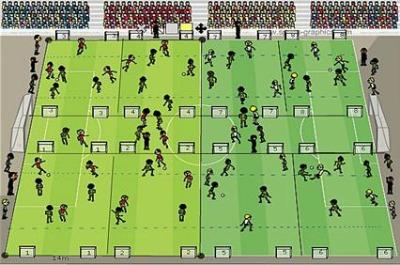
    Ireland is evolving and so are the methods of the many coaches around the country, but of all the small sided games programmes, FUNINO is the most creditable and the best format for developing the game of football.

    If you have heard of Funino you can download the ‘Ultimate Mini Game with Four Goals’ programme at the bottom of this article. Funino is the most excited game in the world and the only one designed to unlock creativity and game intelligence. Developed by the Horst Wein, a University Lecture and former German and Spanish Olympic Hockey Teams Coach. His methods have been used for over 20 years by the Royal Spanish Football Federation, for 7 years by Australian Football Federation and now the Mexican football Federation has published the first volume of “Futbol a la medida del nino”.

    “There was once a time when street football and free play was the norm. Then we become adults wanted to control it , make it organised and forgot the child in all of us” UEFA B Coach Mark O Sullivan

    What makes this even more relevant is an Irish man called Dermot Dalton of thebeautifulgame.ie is helping Wein re-write his methods, which are now being used by the North Dublin School Boy League. The programme which is designed for 7 to 9 year olds is currently being employed by six Professional Clubs in the German Bundesliga. A game that can be used for older players in training and even up-to and including professional level.

    Funino

    This is a game for young players to discover the magic of The Beautiful Game with a programme designed especially for them:

    • Experience the “renaissance of street football” in the 21st century.
    • Be the best coach you can be, creating a player-centred environment where young talent flourishes.
    • Introduce your players to game intelligence while establishing their technique, in a player-centred, game-oriented programme.
    • 32 official  games
    • 24 Preparatory/corrective games
    • 20+ important game variables

    Horst Wein’s training programme for 7-9 year olds is based on his proven game of Mini-Football, now called which is the abbreviation for “ Futbol a la medida del Niño” or “football designed for children.”

    The programme is the result of 27 years of innovation, practice and continuing improvement and is part of the Horst Wein Youth Football Development Model, which is the official textbook of the Spanish Football Federation since 1993 and is used by FC Barcelona, Athletico Bilbao and many top clubs around the world. This breakthrough approach to inducting young children into the game of football obviously has an emphasis on FUN so that children come to fall in love with the game from the earliest ages. It has been called the “Revival of Street Football. “

    NDSL

    Last Monday saw the official Funino programme launch at the NDSL headquarters. 20 mini pitches inside a full 11 aside pitch for a group of boys and girls age 8 and 9. A total of 85 kids turned out to experience the programme first hand. This is another great leap by the NDSL in trying to re-structure the grassroots game, who are the first league in Ireland to introduce this format. The training will continue every Monday from 6 to 7pm for u9s and 7 to 8pm for u10s and spaces are still available.

    The Benefits of the 3v3

    • The two wide goals at each end encourage young players to use the wings in attack and open up the play.
    • Playing with 2 goals stimulates greater reading and understanding of the game, including peripheral vision, perception and decision making skills before executing any actions.
    • Stimulates, more than any other traditional football game, intelligence, perception, imagination and creativity.
    • Sufficient space and time allows children to read the game and play constructive football and to develop basic communication skills.
    • More time and space, better reading of the game and better decision-making and skill execution means less mistakes.
    • Due to the fact that the same basic game situations appear again and again (i.e. the 2v1 situation) the young players learn very quickly.
    • In FUNino, 8 and 9 year olds enjoy more touches on the ball, treating it as their best friend. No long clearances or wild and dangerous kicks can be seen in which players “violate the ball”.
    • Players attack and defend in a triangular formation for better communication and collaboration. Positioning in the field is easy.
    • Allows an all round development of all participants as there are no fixed positions in a team which would avoid too early specialization. Everybody has to attack as well as to defend, using the whole pitch.
    • Usually there are lots of goals and goalmouth action.
    • Each player scores more than one goal per game.
    • All the players get to experience a starring role in this dynamic game.
    • All 3 players, including the weaker ones, play a critical role in this game and are involved mentally and physically throughout the game. Nobody can hide!

    We, at The Beautiful Game, believe that our proven youth development model can achieve a number of important goals at the same time:

    1.  All children get to enjoy the game of football as children (and not as mini-adults) as the game(s) are tailored to their needs.
    2. Children have the opportunity to reach their full potential, whatever that is, through an optimal development model, including a player-centred approach, that is games-oriented (rather than drills) and a guided discovery coaching style (rather than the traditional instruction style).
    3. As the model is more inclusive and fair than the traditional elitist model, there are many social and character/lifestyle benefits emanating from this approach.

    FUNINO 1-DAY COACH TRAINING CLINICS

    There will be a one day Funino course held the NDSL on Saturday 2nd November and Sunday 9th November. T

    Saturday 2nd November 2013

    9am – 4.30pm

    OR

    Sunday 10th November

    9am – 4.30pm

    Oscar Traynor Centre, Coolock

    €90 (including printed Funino manual)

    For further details on Funino contact dermot@thebeautifulgame.ie or call Dermot on 086 8513339.

    Download the FUNINO BROCHURE OCT 2013

    ==========================================================

    I always like to hear your opinions. Please comment below or email me info@thecoachdiary.com If, you don’t have anything to add then please forward this on to a friend. Thanks for reading.

    I’m also on twitter @Coachdiary

  • The Coach

    The Coach

    Coaches have so many different styles and personas, but one thing is for sure they all start out with the right intentions. So what sets the very best apart from the rest?

    About Life

    The very best coaches are life coaches, they teach the player much more than the tactical and technical aspects of a game, they prepare the athlete for life by sharing wisdom and insight based on experience. They will look to build a players confidence and trust in a though provoking and creative process that inspires them to maximise their personal, technical and tactical potential. Coaches help players improve their performances.

    They will always have the best interests of the players at heart, they will never do it for their own benefit and generally the best coaches have only one interest, to develop each player individually and collectively, build a great team. One thing is for sure, if a player reaches the very top it was through his own efforts and desire, with the guidance and help from a coach or two along the way. Coaching alone will not lead him/her to success. Commitment, the will to work hard and always striving to do their best and improve at least 1% every time they train, is where the real success comes from, the 6 inches between a players ears is how you work on it..

    They key to being successful as a coach is always be willing to learn.

    “As a coach you are responsible for the process, the player is responsible for the results, which are a matter of the players intentions, choices and actions supported by the coaches efforts and applications of the coaching process”.

    What makes a good Coach?

    Firstly, a good coach must be willing to learn and to learn you need to be willing to develop. Developing your coaching knowledge comes from being involved, practicing your methods and having the desire to go and attend courses (contact you local governing body), – opening up your mind by reading and studying different methods. You must be willing to evolve, listen and learn from others and the players you coach. A good coach understands that different people have different learning patterns and doesn’t stick to one forceful method to draw out a person’s talent just because that worked before. Players don’t need to feel nervous and put down at the same time, you should have just as much heart as his players. The way you communicate is also so important, players learn by doing not by watching you do. So make sure your message is short and always demonstrate the task, use your players but don’t always pick the same one. Try not to step in too often, let the game be the teacher. You can learn a lot from just observing.

    “It’s not experience that makes a coach great (although it does help); it’s the quality of their coaching,”

    I think it’s important to know the reasons why kids take up a sport. Many studies have asked the questions and the answers never seem to change:

    • To have fun and play;
    • To be with their friends;
    • To learn about the sport & improve their game related skills;
    • To compete;
    • To work on their fitness;
    • To do something I’m good at.

    A good coach supports, rewards, teaches, and makes a sport fun.

    Surprise; “winning” didn’t even make the top ten reasons. Study after study comes up with the same #1 result. Kids play sports for the fun of it. And not having fun is one of the major reasons 70 percent of kids quit playing sports by the time they’re 13. Most often it’s parents and coaches who want to win. Kids hardly care. For them, winning is just icing on the cake. They’re focused on simpler things. Most kids would rather play on a losing team than sit on the bench of a winning one. That doesn’t mean that kids don’t value winning, just that they prefer playing. If you want your players enjoying sports, all you have to do is make sure they are having fun.

    When it comes to looking at the reasons why children stop playing, it’s all of those in reverse.

    “Traditional coaching had been entirely teacher-directed and largely technique-orientated, whilst today emphasis is directed on tactical problem solving through games play”Lynne Spackmann

    I always tell my players to never give up and always do the best you can do, train with 100% commitment, with focus and the conscious mind.

    Build from the roots

    Alex Ferguson was a leader, when he arrived at Manchester United he had a vision, he had values and beliefs. He new how important it was to build from the ground. He put all his efforts on getting the best kids and working to develop the ones he already had. Starting with the foundations was key to his success.

    Sir Alex Ferguson: From the moment I got to Manchester United, I thought of only one thing: building a football club. I wanted to build right from the bottom. That was in order to create fluency and a continuity of supply to the first team. With this approach, the players all grow up together, producing a bond that, in turn, creates a spirit.

    When I arrived, only one player on the first team was under 24. Can you imagine that, for a club like Manchester United? I knew that a focus on youth would fit the club’s history, and my earlier coaching experience told me that winning with young players could be done and that I was good at working with them. So I had the confidence and conviction that if United was going to mean anything again, rebuilding the youth structure was crucial. You could say it was brave, but fortune favours the brave.

    Write down your Values

    Let’s face it. You can’t teach your players all the hundreds of life lessons there are to teach. But if you FOCUS on a small set of core values every day in your training, you can have a tremendous positive effect on your players. Your values will remind you who you are. Share them with your players. It’s important that an organisation also has its own values. Write them down and make sure you stick to them.

    “The goal of the staff at La Masia is to provide young kids with an education that goes far beyond football tactics and technique; it makes them good people, with strong values.” FCB

    When JOHN WOODEN, the great coach at UCLA finished 2nd year, his father gave him a card entitled, 7 Suggestions to follow, they were:

    • Be true to yourself.
    • Help others.
    • Make each day your masterpiece.
    • Drink deeply from good books, especially the Good Book.
    • Make friendship a fine art.
    • Build a shelter for a rainy day.
    • Pray for guidance and count and give thanks for your blessings each day.

    Wooden kept a copy of the card in his pocket the rest of his life and used these philosophies in coaching. I suggest you do the same and keep your values with you all the time. Another important task is to set down your rules early in relation to training and playing. A rule I use is, if you don’t train then you don’t start the game but you will always play. Players will respect you more if you stick to the rules and beliefs you have.

    “A coach shouldn’t be too easy with the ‘it’s just a game, go have fun’ stuff. He should train the team hard — but be able to encourage, motivate and direct without shouting.”

    Don’t leave commitments in your brain. Write them on paper. This does two things. First, it creates clarity by defining in specific terms what your value means. Second, it keeps you committed since it is easy to dismiss a thought, but harder to dismiss a value printed in front of you.

    Develop a style of Play

    When winning is all that matters, the smaller creative kids don’t get much of a look in. Usually the bigger, early developers get more football with suits a more direct style of play. Develop a style that suits every player big, small whatever. A good coach will have 15/16 players (11 aside) no more and each player will be working hard to get a place in the team. Don’t be like so many where these unfortunate 5 substitutes will get very little game time during the year, players learn best by playing not watching.

    Don’t be focused on results, coaches become more concerned with results than the style of football played or the natural expression of creativity and skill by the young players. “Kick and rush” and the “long ball” win out in the end. The constructive possession-based football that we have all come to admire in Spain cannot flourish in such a climate.

    Most importantly be fair to your players focus on development of the player and stick to the plan, they will reap the benefits in later years.

    “A good coach isn’t obsessed with winning but will motivate you and your team to want to win.”

    Prepare your sessions and make them FUN!

    Firstly, be on time (start on time) allows you time to prepare and sends out a message that you like punctuality. It’s important you prepare your sessions and work on at least one game related exercise per session and do it well. If you’re coaching younger the kids, the more variety the better. Make sure you include the ball with everything you do. Kids love being on the ball and they love showing off, so give them an opportunity to show you what they can do and always finish with a game.

    I’m forever complaining about the lack of dribbling skills Irish players have and despite everything we teach them. The biggest factor is that players are not given the freedom to express themselves through dribbling. In our anxiety to rush the adult passing game, we restrict the players’ individual freedom and in later years we end up with players who cannot beat a man or use their skills to devastating effect in attack. In every part of the pitch there are opportunities for players to go 1v1 or 2v1, in these situations players should be confident enough to take risks and dribbling must be encouraged. Always re-visit what you worked on and ask the players questions.

    “When it comes to development programs, what we are really talking about is creating an environment within which gifted players have the best opportunity to flourish.”

    Whats the rush

    Playing in leagues at very young ages means that we don’t actually encourage coaching at all, we create managers, who specialise in winning tactics and not in developing players. we focus on the winning and teaching the kids to play. What’s the rush, let the kids develop in age specific and related exercises. Some progressive organisations have already made great strides by introducing less-competitive structures and small-sided games. This will go a long way towards creating a healthy environment where young talent excels. Coaches who play favourites every week are definitely high on the lists of “what not to do” in coaching. A good coach is “one who does not recruit a load of new players each season just because of their skills but takes the ones he has and works with them to improve.”

    “A good coach understands that respect is to be earned and understands that they do not control the team, they are part of the team,”

    Always be in control

    Horst Wein stated, “Parents and coaches shouting from the sidelines is very unhelpful to young players for so many reasons. Firstly, they often cannot actually hear what is being said, and often it is confusing when there is more than one voice to listen to. Secondly, none of us responds well to orders, and thirdly, it puts the players off their game. This culture of over-coaching and too much “input” from the sidelines actually thwarts the decision-making ability of young players, which is a very important part of their development if they are to make it to the higher levels of the game. Be in control of the sideline and most importantly, let the parents know, that the only one who should be directing is the coaching staff and even at that, we want minimal instruction. This is their time to show you want they have learnt in training.” Don’t let that parent who thinks he knows it all, control your line and/or control the decisions of a referee. If he is so keen bark his orders maybe ask him would he like to take over a team at the club. All too often commanding parents are ruining the game for everyone involved.

    “Good coaches have the ability to tell you what needs improving, without making you feel bad.”

    Observe the game

    A good way to take you voice out of the action is to observe and take some notes. As Paul Swenson rightly put it, “The one thing that best summed up what separated the best coaches from the rest, was their highly developed skill of observation. These coaches had learned to critically observe their teams and players play, and then put their observations through an objective analysis that would help them identify strengths and weaknesses, that would enable them to more efficiently guide their players to become better. During games these coaches do not obsess about whether or not their team will win. They are calm and relaxed, carefully observing what their players and team are doing. To be effective at this it is necessary that they write their observations down. And it is amazing, that through this practice of observing and taking notes, that a soccer coaching intellect begins to develop, and a clear picture of where their team is really at begins to form.

    Through observation, a practiced skill, coaches are able to set targeted training goals, and through more observation, measure “tangible” progress.”

    It was said in a recent interview with Alex Ferguson,  “Early in his career, he delegated managing practices to assistant coaches so he could simply watch and observe what was going on with each individual player. He said, “I don’t think many people fully understand the value of observing.”

    Quite often we, as coaches, hinder the player’s development rather than aid it. The term “over-coaching” has often been used about this effect.

    “If the enjoyment of the game is taken away by adults who rant and rave on the touchline and the grassroots game becomes, in effect, a computer game controlled by dad’s, the opportunity for young players to plant the seeds of a lifelong love affair with the game will be diminished”Les Howie

    To Conclude:

    It’s important as a coach not to do the following:

    • Do not making winning your priority.
    • Never want to win more than the kids themselves.
    • Don’t risk a players safety.
    • Don’t select the best and forget about the rest every week.
    • Don’t be negative towards your players.
    • Never ridicule a players mistakes and don’t allow team mates to ridicule a player either.
    • don’t stop them from taking risks.
    • Don’t lose the head.
    • Never go back on your word or values.

    Negativity from the sideline bookmarks in a player’s brain and could effectively knock his/her confidence for the rest of the game. Be in control of your words and before you open your mouth, think about how your words will affect the player in question and team. Sadly, criticism does not correct mistakes but creates even greater pressure and consequently more mistakes.

    Another important aspect of good coaching is uniform. I don’t understand why clubs tolerate a coach not wearing the club colours. By being presentable sends out a good message to the players and expect the same from them. Practice what you preach.

    Most of what I spoke about above, is all habits – you either have good ones of bad ones, in any case the players will adapt to either. Habits make you, who you are. The key is controlling them and being consistent with everything you do. If you really want a habit to stick, then repeat it everyday for 21 days, this is how long it takes your brain to adapt to change.

    Don’t forget to make your session fun. We have moved away from line drills, give every player a ball and don’t have them waiting around for one. The more touches they get the better they will become!

    Make it a positive one! 

    ==========================================================

    I always like to hear your opinions. Please comment below or email me info@thecoachdiary.com If, you don’t have anything to add then please forward this on to a friend. Thanks for reading.

    I’m also on twitter @Coachdiary

  • Observation

    Observation

    My last post was about Match Analysis and the benefits of using notes during the game. With that I received an email from Paul Swenson a coach in the US. He told me about the clubs newsletter and how he had developed some game day observation sheets.  Most of the coaches are parent coaches.

    Pauls purpose was three fold:

    1. To underscore the importance of observation as a primary coaching tool.
    2. The game day sheets were a way to get coaches to think about appropriate themes they might not otherwise focus on.
    3. Most of my coaches, on some level, feel like they need to be trying to constantly “fix” things by telling players what to to during games, instead of letting the kids play and more objectively thinking about things they could work on in training. It’s my biggest problem. I have always told them they need to observe, so I finally created a tool for them to do that.

    “during games these coaches do not obsess about whether or not their team will win. They are calm and relaxed, carefully observing what their players and team are doing.”

    He went on to say “Your recent blog post inspired me to revisit this theme in my weekly email to coaches.”

    He asked the question: “What separated the best coaches from the rest of the coaches?”, “I wanted their opinion, because through their experiences they had worked with, watched and been mentored by some of the best soccer educators in the land.”

    Was the answer ‘sophisticated technical knowledge of the game?’ No. There are no secrets out there on how the game of soccer should be played. There are countless books and videos, courses and websites on how to coach soccer.” “Having an understanding of how the game of soccer should be played is certainly important, but once the wisdom is attained, how is it then taught to the players? Technical knowledge alone is not enough.”

    “Was the answer “a coach who knows how to dig deep inside their players and motivate them?” No. The best coaches understand that a player’s passion to play must come from within and not be coach dependent. In fact the best coaches understand that they will only have a player for a chapter in their playing life and it will serve their players better if they can empower players to learn to be independent, creative and self reliant whenever, and with whoever they are playing with or against, no matter the coach or the team they happen to be with.”

    Paul went on to talk about observation and the importance of taking notes.

    Obeservation

    The one thing that best summed up what separated the best coaches from the rest, was their highly developed skill of observation.”

    Through practice these coaches had learned to critically observe their teams and players play, and then put their observations through an objective analysis that would help them identify strengths and weaknesses, that would enable them to more efficiently guide their players to become better.

    “Communicate to the parents that you and you alone are the coach and that spectators shouting anything but encouragement from the sidelines is unacceptable.”

    During games these coaches do not obsess about whether or not their team will win. They are calm and relaxed, carefully observing what their players and team are doing. To be effective at this it is necessary that they write their observations down. And it is amazing, that through this practice of observing and taking notes, that a soccer coaching intellect begins to develop, and a Clear picture of where their team is really at begins to form. Through observation, a practiced skill, coaches are able to set targeted training goals, and through more observation, measure “tangible” progress.

    When Saturday Came

    On Saturday I observed a game from the parents side, where one coach in particular was non-stop directing their players and their voice was clearly heard all the way across the field, a constant stream of instruction. I was thinking, if the coach sees so many problems, it would be more effective for that coach to observe and take notes, and try to pick up on some patterns so they can effectively address them in training. The thing about a soccer game is that is DESIGNED to present problems to players, yet our tendency can be to want to solve the problems for the players while they are playing.

    How does that help to create players who are learning to solve their own problems and learning to make their own choices? In addition, on the parents side, there was a constant chorus of parents shouting instructions, often contradictory at the same time. Can you imagine what is like for the players on the field in this confusing hyped up atmosphere? With the coach and the parents shouting a jumble of instructions at players, how does that contribute to a relaxed environment where the players feel free to make their own choices and are not afraid to make mistakes, let alone try and communicate with each other?

    On game day it is so important that we let our players show us what they can do, and that we learn from it by observing and writing down our observations. It is also our responsibility as a team’s coach to protect our classroom, the game environment, and communicate to the parents that you and you alone are the coach and that spectators shouting anything but encouragement from the sidelines is unacceptable. You can’t overemphasise this one. It is interesting, because I see many coaches who do understand this importance of letting the kids play, and observing – some with notebook in hand. And more and more are jumping on board. If you haven’t, it’s not too late to start. Let your journey to be the best coach you can be begin today.

    TCD would like to Thank Paul Swenson for this content.                                                                                                  MRYSL Director of Coaching, REC                                                                                                                    www.mrysl.com

    -End

    This is a great message to all coaches, it says so much about what the role of the coach, mentor and/or parent. In this carefully crafted newsletter, Paul highlights so many great points about the benefits of taking notes and observing from the line. The very best coaches give minimal instruction and are constantly observing. Like he says, “it’s never too late to start”, it’s never too late to change your coaching mindset. Start by observing more and coaching less.

    I always like to hear your opinions. Please comment below or email me info@thecoachdiary.com If, you don’t have anything to add then please forward this on to a friend. Thanks for reading.

    I’m also on twitter @Coachdiary

  • Using Match Analysis

    Using Match Analysis

    Last weekend I started using a Match Analysis sheet for the team. I have used them before, but never really felt right at the time. This current bunch of players i’m working with, are ready. Collecting data in sports originates from the US but is widely used across the world in many sports. Soccer is certainly a late comer to analysis.

    The Concept

    This concept is widely used in the professional game and it is also part of the UEFA B license course. Personally I don’t think this is something you should use in SSG and really should only be used when coaching 11v11 or ages 13 and above. That would be Phase 3, Training to Train Phase as listed on the FAI player pathway. However there are ways of collecting very basic data in the SSG which will certainly benefit the player and coach.

    So to get everyone involved I asked the subs to split the task and share the work. This is a great way to keep them involved in the game. At halftime I allowed them to share the stats with the players, I used the same process at full-time. Even after one game, this was probably the first time ever I have heard the players be so in-tune with each others and themselves.

    As well as this I have asked the players to keep a diary of their training and match days. Noting the things they did well; how they felt before, during and after the game. Go as far as writing what they had for breakfast and how they felt before the game.

    The Benefits

    What are the benefits of Analysing a Game 

    • It’s a great way of keeping everyone involved, even the parents.
    • One thing is for sure, you will definitely see the game differently when using them.
    • It’s widely used to collect data from an opposing team, to highlight areas where they are most effective. Coaches who are aware of opponents strategies and tactics are most likely to be able to counteract the opponents strengths and exploit their weaknesses.
    • We all struggle to recall sequences of events accurately and often fail to recognise where a sequence of positive play originates, or where errors evolve and players’ view of the game can vary greatly.
    • Notational analysis gives the coach a factual record of data – of what does not lie. However, the method of data collection needs to be reliable, objective and relevant to the level of play. Most importantly it must add value to the player and coach.
    • There is no one method to collecting stats, nor is there one method for each level of the game. So use whatever you feel helps, get the best information back to your team.
    • There are two types of Analysis: team and player activity. Most generally focuses on player activity (name, position), what the action was (shot, free-kick), the time it occurred, where the action took place on the pitch (in attack or in defence) and the outcome of the event (was it a success?).
    • I would start with team performance first.
    • If using player, focus on 1-3 players per week, for them it will be more about performance improvement game by game. This could be done by a parent and again it’s another way of keeping them quiet on the line and could allow you do work on team stats also.
    • Capturing data can have a significant effective on leadership, player and team development.
    • It’s important that the data stored and even archived to see how trends and strategies develop over time.
    • Another use is to assess players pre-season over a series of matches.
    • If you can use video to back up your stats, this is best way to show the players exactly what your talking about and highlight the good aspects of a game.
    • If you are thinking of using data at the younger ages, I would suggest recording basic match information like opposition name, venue, date/time but more importantly who played and for how long, maybe even recoding how many times you played out from the back or 1v1s won etc – ensuring that an accurate record of playing time for these youngsters is kept by game, over a season.

    There are lots of data recording tools available, one which is widely used is  Stazpack, so whatever level of team you manage the collection and analysis of data aids both coach and player development. See also Performa Sports. I have attached my Match Analysis sheet, use it if you like or even add your own ideas and don’t forget to share them.

    Download TCD Match Analysis 2013 which I last updated on 29.11.13. 

    =====================================================

    Thanks to @lisafallonsport for inspiring me to devise my own. 

    I always like to hear your opinions. Please comment below or email me info@thecoachdiary.com If, you don’t have anything to add then please forward this on to a friend. Thanks for reading.

    I’m also on twitter @Coachdiary

  • We need your IDEAS!

    We need your IDEAS!

    I’m planning to send out a survey on the ‘Future of Youth Football’ in Ireland and need your help. I want to know any ideas you have and based on these ideas, we will send out a questionnaire to see what people really want. This is what will happen:

    • If you had a blank canvas, what would you do?
    • Tell me about your vision and ideas?
    • We want to narrow down 4/5 ideas and then use these ideas in a questionnaire.
    • A questionnaire will be sent to everyone involved in Grassroots football.

    Here are some I wrote in a previous post.

    1. Abolish the SFAI or at least reform and rename it. Select a committee that is not appointed by the FAI and SFAI or maybe voted in by the leagues. For instance if I wanted to put my name forward, I would be representing my local league.
    2. Create a new name for the organisation call it ‘Youth FAI’, branching from the FAI, under control of the FAI. Each League would have a presentative working with them make sure they are adopting all the proper development procedures. Those who do it well, will get extra financial funding.
    3. Implement a ten year NATIONAL plan, look at what Germany, Belgium and Spain have done.
    4. We need to value the SSG and make it much more flexible. More and better players through child-friendly football.
    5. Introduce non competition football from u9 to u12s. Start with 3v3 for u8s, 4v4 for u9s, 5v5 for u10s, 7v7 for u11 and u12s, 8v8 or 9v9 (transition stage to 11v11) for u13s and 11v11 at u14s. Leave an option open to continue with 8v8 or 9v9v in areas that may not have access to pitches and/or players. This is proven in many parts of Europe, = More TOUCHES of the Ball, More FUN, More Goals.
    6. National guidelines for competition structures for all age groups, making sure everyone is working from the same programme with the same goal. Player first mindset.
    7. Clubs must have academies, must have proper facilities and qualified coaches. Introduce a licensing and rewarding system. Some suggestions to start with leagues first and reward the League Academies if they meet the required standards.
    8. To coach a kids football team their must be at least one adult with the required qualifications specific to his/her age group.
    9. Introduce a club licence with minimum criteria needed to set-up for kids football, i.e Qualified coaches, Facilities, Equipment, Child Welfare officer, Mission statement, Vision, Goals. Again start with leagues first.
    10. Use the best volunteer coaches in ETC (not friends), reward them with free further education. Get RDO’s to work weekends, so they can monitor the game on the ground.
    11. Begin ETC at age 10-21 years. The leagues should start their academies early with the ETP starting after the Kennedy cup, so u14s. After this the league centre should be the regional centre keeping the national philosophy within the leagues. Introduce a progressive and phased player pathway.
    12. Begin a player retention programme and a programme for players returning from the abroad.
    13. Include girls soccer in this plan.
    14. Implement Futsal into all leagues. More teams entered into community games and extend the age range, bring back the coaching curriculum.
    15. Promotion of Futsal in schools programme, promoting the game nationally. How many people are aware of the Emerald League?
    16. Change the course content of the K1 and K2 making them more player focused, with emphasis on ball mastery and how to structure a session. Mindset to change from ‘Winning at all costs, to player centred coaching’. 
    17. Introduce a ‘intro to coaching’ specific course for anyone looking to get involved. Looking at what is expected of you and reasons for getting involved. This course would be the door to further education. Anyone doing their K1 or K2 should start coaching in their academies and if they are good enough only then should they be allowed to the Youth Cert. Everyone should pass the course but introduce a grading system,  grade, A= you are able to go on and do the UEFA B provided you are coaching with a team. B= You need more work, nearly there but you will need to be assessed if you want to do your UEFA B. C= Your will need to come back and do a final assessment in two months in order to receive your cert. Everyone wishing to do the UEFA B should be pre-assessed and again a pass grading system should be applied.
    18. Parent Behaviour course, mandatory for all clubs and all parents.
    19. More access to courses, make them more relevant to the needs of kids today. Look to other European nations and bring in parts of their course into ours. We can’t keep coaching the same content with the same style.
    20. Encourage coaches to develop, introduce incentives to obtain further qualifications. We will need more qualified coaches for a plan to work.
    21. Market the LOI better – More funding for LOI Academies. National broadcaster have a responsibility to promote the national league over the English league.
    22. Focus on keeping kids playing in their communities, no travelling until u13s. If they are good enough then the regional centres will be able to look after them. However we would need to be catering for more numbers then the standard. There is no point in the best regional players going to Dublin to sit on the bench. Year on year regional leagues lose tens of players to Dublin clubs, who go up and never kick a ball.
    23. The transfer window closes 15th October and some players will be in squads of over 18 players and rarely play. If you’re not playing you’re not learning. That is why we need a transfer window in December to January to help these players to play.
    24. Let’s share our ideas, we need to be open with each other.

    I have listed a lot of ideas. I’m more interested in the ones we can control. We can’t really control the ET programme that’s up to the FAI to develop but we can give ideas.

    If anyone has ideas from other country; maybe things that have worked well, please let us know.

    We need your ideas, please share them! 

    ================================================================================

    I always like to hear your opinions. Please comment below or email me info@thecoachdiary.com. If, you don’t have anything to add then please forward this on to a friend. Thanks for reading.

    I’m also on twitter @Coachdiary

  • Is the SFAI Chairman going it alone…..

    Is the SFAI Chairman going it alone…..

    or has he come up with the future blueprint for Irish football? An email has been doing the rounds; now, you probably haven’t received it because it was only sent to press. A press release about ‘vision for future of Irish Football’, apparently even members of the SFAI didn’t receive it, not sure they were meant to… I find this strange and I’ll tell you way in a sec.

    PRESS RELEASE

    INVITATION: Vision for future of Irish football

    Former Ireland international and Manchester United coach John Devine is hosting a media event to launch his “Vision for future of Irish football programme” next Wednesday, October 2nd at 11am.

    The event will be held at the South Dublin Football League headquarters, Balgaddy Road, Lucan, Co Dublin. John will be joined at fellow ex-internationals John Giles and Eamon Dunphy for the launch of a scheme which the trio believe is essential for producing future generations of Irish footballers.

    Several other figureheads in Irish football, including Liam Brady, Niall Quinn and Paul McGrath have endorsed the programme, particularly in the aftermath of Ireland’s poor performance on the international stage over the past 18 months.

    Michael O’Brien, Chairman of the Schoolboys FAI (SFAI), will also be in attendance to support the initiative.

    WHAT: Launch of John Devine’s “Vision for future of Irish football programme.”

    WHEN: Wednesday, October 2 at 11am.

    WHERE: South Dublin FL headquarters, Balgaddy Road, Lucan, Co Dublin. 

    Free car parking is available and refreshments will be served.

    There will be interview opportunities will all guests.

    For any media planning to attend, please confirm by email to John

    by 3pm on Tuesday.

    Although I think having a vision is great and the fact that it’s using Horst Wein 3v3 methods, (see them here, thebeautifulgame.ie) makes this even more attractive.  I’m just surprised this vision is being pushed by the Chairman of the SFAI and he is not even contacting any of his members, nor is there anything visual on their website. Michael O’Brien is also the CEO of the SDFL.

    This would be a great opportunity to get everyone together and start throwing out some IDEAS.

    So, why is the head of the Schoolboy Football Association of Ireland going it alone and why he is only inviting the press? Why haven’t the most important people in kids football ‘the coaches’ not been invited. Surely he should be inviting them?!

    This is a man that has done very little in terms of changing the mindset and structures of schoolboy football, he is in a very powerful position but we have yet to see this used in an constructive way. You only have to look at his own league to see how far behind they are in relation to Player Development. Their pathway goes against everything Horst Wein believes in, certainly everything listed below is way off Horst Wein’s teaching and nowhere near the changes this country so desperately requires.

    Currently the SDFL pathway looks like this:

    • They are introducing 3v3 to u8s
    • 5v5 at u9s
    • Play 9v9 at u10s. (DDSL play 7v7 at u10s)
    • They still have league tables at u10s.
    • Play with size 4 ball at u9s.
    • They move to 11v11 at u12s

    In saying this, I’m sure this pilot is about all the changes they are going to make. It’s just a shame no coaches, no other leagues have been invited and it’s scheduled for 11am on a Wednesday, when most people are at work. Also, The two people who notified me reside outside of this country.

    I’m not so sure I’ll be able to get down, but I will try my best, too.

    What do you think of this and will you be going?

    ================================================================================

    I always like to hear your opinions. Please comment below or email me info@thecoachdiary.com. If, you don’t have anything to add then please forward this on to a friend. Thanks for reading.

    I’m also on twitter @Coachdiary