We head to India this week and speak to u10’s Pune FC Coach Mark Rodricks.
TCD: Did you play football before you started coaching?
MR: I have been playing since the age of 9 and still continue do so. So that’s been almost 15 years now of playing football.
TCD: How did you get into coaching?
MR: Since a young age, I’ve been close to the professional clubs in India and have followed the I-League clubs. Somehow running 5 rounds of a ground and then kick the ball around didn’t seem to appeal to me as how a person became a good footballer. Football coaching methods in India are archaic and I never got taught the right way or had the chances to grow like the kids these days have. Coaching was a natural progression to the change I wanted to see.
TCD: What is your current role at Pune FC?
I am the head coach of the U-10’s at Pune FC. That is formulating and implementing the program in accordance with the club’s footballing policies. I work closely with the Academy Director on this program.
TCD: What changes would you make to the grassroots game?
MR: Since this is India centric, I have a fair few things I would like to change:
Indulge the kids to use a football and be comfortable with it rather than have them run around the pitch. Having a football at their feet is the most important part of their learning.
Take corporal punishment completely out of the game.
Focusing more on helping the kids love the game and cultivate that passion. This means making the sessions fun.
Not stifling a kid’s progress to a certain playing position on the field. A player has to play across the field and can then decide for him/herself what they like.
Tournaments should have rules where there’s either no substitutes bench or rules where all children get up and play the game. No kid in the age group 6 to 14 would want to be sitting on the bench and watching a game.
Coaches need to remember that the game is the biggest teacher of all, and what a child can learn by playing, a coach cannot explain that in words.
Bring other sports as part of their education. Coaching only football is dangerous. And all round development is vital.
TCD:What age to kids move to the 11v11 game in India?
MR: As far as my knowledge goes, school level would be as early as 10 but academies are 12+ years and above.
TCD:What is your coaching Philosophy?
MR: With the right amount of information at the right time, I love for players to experiment and learn things on their own. I encourage the boys to use their head and their brains! Learning something new every day is a vital part of their learning. Since I coach kids mostly who are under U-10, I do not impose a playing style on the kids other than ensuring the kids are comfortable with the ball at their feet. I encourage 1v1’s and try and cultivate fair play and a will to succeed.
TCD: Have you any mentors?
MR: I have a lot of people who have helped me through the years but I try and take the most out of players, coaches and anyone involved in the sport. It helps me with my learning and to be a better coach.
TCD: What kind of player do you like working with?
MR: Each player brings something unique and different to the table, especially at a young age. At this age, your coaching learning sometimes gets thrown out of the window. The kids coerce you into improvising. I try and learn from each and every kid I coach.
A love for the sport and the willingness to learn in a tiny tot is an added bonus since that’s half your work done.
TCD: What is the future of football in India?
As much as I’d like to sugarcoat this and paint a rosy picture, since the apex body in India doesn’t seem to be doing much for the sport in the country, even with a large talent pool being the 2nd largest population in the world, we lack far behind Asian countries, let alone European/African/South American countries.
We need more coach educators, licensed coaches and an impetus on an all-round learning along with infrastructure easily available. These all are ingredients for shaping a positive future.
A little nudge and football can be sent on its way in India.
TCD would like to Thank Mark for this interview. You can follow Mark on twitter @markrodricks
I always like to hear your opinions. Please comment below or drop me an email at info@thecoachdiary.com. If, you don’t have anything to add then please forward this on to a friend, a fellow coach. Thanks for reading, as always.
What a couple of weeks in Irish football. Let’s not fool ourselves it was coming for along time. So, whats next for a game that is so passionately loved in this country, it’s just a pity almost everyone loves the league across the water and turns their back on the one just around the corner.
We are are unique in that we don’t have a professional league, yet we have a international team that competes at the highest stage. We need to start again, implement a ten year plan including growing the LOI, showing it love and attention.. Get rid of the SFAI and all the aul morons that sit on their board and committee, (they are only interested in the blazer) especially the ones that just aren’t interested in change and their are plenty of them – And let’s set up a Youth Association which would branch from the FAI. Those members could then decide if they want to be part of a future plan, a plan for the future of kids football.
At present everyone is in it for themselves, each has their own agendas and anything suggested for benefit of kids football gets voted down, because everyone has their own agendas to get passed first. Why, are we so different and how did we end up with some many different bodies running kids football. In other countries the football governing body, run football from the worms eye view to senior, only in Ireland it is so different and so incomplete. Personally I feel it’s time the FAI took full responsibility for the game. It unbelievable that they let a body like the SFAI control the most important aspect of a players development and not only that, they make a complete balls of it! i know there are decent men and women involved who truly care but they are few.
The Youth FAI Group would consist of experts from various agencies, including teachers, coaches, paediatrics, child psychologists, former pros and other experts.
John Giles
I was little confused when I heard the great John Giles, talk about the youth game on ‘off the ball’ (Irish Sports Radio programme) on Newstalk last Thursday. He was asked about kids football; he made a reference about two games he’d watched last week- a u13 (I believe he meant u14s) and u19 game and on that basis states that Grassroots football is played the way he should be. He started by saying, “Its was brilliant and a joy to watch” Giles went on to say, “if the international team is doing well, coaches are inclined to copy” Ehh, I don’t think any decent coach would ever copy Irelands style of play at the moment (Under Trap) and he continued to talk about the games he saw, he said they were, “Skilful, with plenty of effort” …..he spoke about International football versus Schoolboy…and said, “I think the two things are being mixed up and a lot of people are putting the two together, they are both two different problems” …and there was me thinking it was just one big problem!!
He said, “Obviously the international problem needs to be solved and then look at the schoolboy football problem”.… he goes onto talking about his experience (the four teams he saw) how excellent the football was…… We all know of plenty of teams, who play nice football and if it is the St Francis u14 team he means, he’s correct, they do play excellent football, but let’s not fool the public John Giles, you are talking about FOUR teams, two games of football, 44 players and your grandsons. The rest of the interview is good, listen half way into the podcast for reference to grassroots etc.
Personally, I feel a complete overall of the grassroots games needed. The FAI should be in full control and from the outside looking in you would think this to be the case, but it’s not. So who is in control? Well, a group established in 1934 called the SFAI run youth football in Ireland, they have full control of it. Ridiculous as it seems; the FAI, from what I can see have no say in how the game is run or what the various league should be doing. This needs to change and change fast. FAI need to take back full control of how the game is run in Ireland. They’re one of very few governing bodies of a sport, that don’t govern the sport from bottom to top.
‘The kids aren’t practicing enough and our system is not helping them to succeed, not allowing the required touches of the ball, to be brilliant players’.
Ruud
Now is the time to begin again, a ten year plan like the one Germany, Chile and recently Belgium have implemented. A plan where everyone is singing from the same hymn sheet. The FAI recently appointed RUUD DOKTER as the FAI’s new High Performance Director. The Dutchman, who has coached a number of the Netherlands’ underage teams as well as their senior women’s side, replaced compatriot Wim Koevermans after he departed for the Indian national job last summer.
Ruud has also previously coached the Qatar U20s and spent time working in the US. He began his role on August 1 and look after the men’s programme, with exception of the senior squad, as well as the women’s and underage groups and the Emerging Talent Programme.
So far I have heard good things about the man, with the Emerging Talent Programme high on the agenda for a facelift and some serious tweaking. This man, may also have to step in for the Germany game, which may not be a bad thing.
Europe has four development age categories: the 4-7 year olds, 7-11 year olds, 12-16 year olds and the 17-21 year olds
Emerging Talent Programme
The ETP has 12 centres across Ireland, with an average of 22 players training once a week for 1.5 hours, with a game once a month against another regional centre. Already I’m thinking 22 players, seems a very low number considering the vast amount of kids in Dublin alone that play the game. I also have an issue with the time spent with the players. 1.5 hours a week and in some centres they only get an hour. In this short time, coaches have to get a chat in, try and speak to all the player, do a warm up followed by a session, that’s not enough contact time. Which means we are relying on their clubs to develop them, clubs were in some cases the coach is a parent with a few balls, bibs, cones and no qualifications and in some cases no more interested in developing his/her knowledge of the game.
This can be standard that some of our best kids are left working with.
“the team with the most creative players and players who can dominate the 1vs1 situations all over the field will be the most successful team in the world.”
Another concern is the ET Centres are mostly run by Regional Development Officers and Volunteers who might get an a few bob for helping out. Most RDO’s are stretched beyond belief, which can leave the volunteers to take up some of the sessions. I’m not for a minute doubting the volunteers aren’t capable of running the sessions but there is only so much that people will do for nothing, there is only so much effort you will give without a financial reward. Volunteers themselves are also helping out with more teams. This area of coaching certainly needs to be managed a lot better and with consistency and time.
10,000 hours
I seriously am questioning again our culture and attitude towards development in this country and at the moment the only hope for these players to succeed is Malcolm Gladwells the 10,000 hour rule and their own desire. Which for those you haven’t heard is roughly 20 hours a week, 2.8 hours per day for 10 years, in order to find success, if not perfection in a sport.
‘The three (must have) keys to success in sports are good instruction, practice and repetition, and most importantly – trust in your skills’.
Which leads me to Rene Meulensteen
The ET programme starts at 10-16, so they say. I know for a fact that some centres don’t start until u14s and this is to late. We should be monitoring kids from age 10, taking them in at least once a month for at minimum 2 hours at a time. The focus here should be on ball mastery and 1v1’s, playing under pressure, making quick decisions, change of direction, basically everything Coerver teaches. We should also be using these kids for workshops, FAI coaching courses, so that they have every chance to learn.
I’m also concerned with the fact that it ends so early, age 16. We have 12 centres with an average of 22 players, that’s 264 – if the International set-up takes on 22 of these what happens to rest? How are we monitoring their progress? Where do these players go and how are we dealing with the disappointment of not making the grade? Does this fall on the LOI to take in the ones that haven’t made the grade?
EUROPE
Europe has four development age categories: the 4-7 year olds, 7-11 year olds, 12-16 year olds and the 17-21 year olds. I always find it very strange when I hear scouts from English clubs telling kids that if you haven’t made it by 16 (Premier Ambitions) you won’t make it. Yet in Europe 17-21 is still a development age bracket. We need to be doing more for the 17-21 development age, many players who never ever come through the international set-up have gone on to make it in football. We are definitely losing some of these kids to other sports and possibly sport in general.
Getting back to the LOI, Why don’t we market the LOI, when do you ever hear a LOI player on our national radio or television talking and promoting the game. Every sports bulletin starts with the English result first and the LOI ones last. We can grow our game with a little more marketing, support, love and attention.
Neil Cronin
Former coach Neil Cronin, who has travelled on many occasions with the Cork Schoolboy league said, “Three of our players – Roy Keane, Stephen Ireland, and David Meyler – went on to the premier league and each never received a day’s coaching from the FAI before they captained Cork at the Kennedy Cup”, “There may be a perception that the FAI put all the work into the young players but they only get the white part of the Guinness pint. Clubs and Leagues devote years to preparing players.” Whatever they do or don’t more needs to be done know.
Here is an article about the rift between the SFAI and FAI. ‘FAI votes reveals the level of rift between the SFAI and the FAI” read about it here:Continued infighting within Irish football
“The difficulty lies not in the new ideas but escaping from the old ones” – John Maynard Keynes
Below I have listed some of my ideas and others who have also talked about change.
What I’m thinking (In black) and what others have said (In Blue):
Abolish the SFAI (reform) Select a committee that is not appointed by the FAI but maybe voted in by the leagues. For instance if I wanted to put my name forward, I would be representing my local league.
Create a new organisation called the Youth FAI, branching from the FAI, under control of the FAI. Many are not in favour of the FAI having control, the leagues can still run their academies but they would have to abide by the plan. Each League would have a presentative working with them make sure they are adopting all the proper development procedures. Those who do will get extra financial funding.
Implement a ten year NATIONAL plan, look at what Germany, Belgium and Spain have done. The player pathway was introduced many years ago, but it’s not working and looks like its been shelved.
We need to value the SSG and make it much more flexible. More and better players through child-friendly football. Parents should be kept to one area and away from the kids and we don’t need referees.
Introduce non competition football from u9 to u12s. Start with 3v3 for u8s, 4v4 for u9s, 5v5 for u10s, 7v7 for u11 and u12s, 8v8 or 9v9 for u13s and 11v11 at u14s. Leave an option open to continue with 8v8 or 9v9v in areas that may not have access to pitches and/or players. This is proven in many parts of Europe, = MORE TOUCHES OF THE BALL.
National guidelines for competition structures for all age groups, making sure everyone is working from the same programme with the same goal.
Put the player first Attitude.
Clubs must have academies, must have proper facilities and qualified coaches. Introduce a licensing and rewarding system. Some suggestions to start with leagues first and reward the academies if they meet the required standards.
To coach a kids football team their must be at least on adult with the required qualifications specific to his/her age group.
Introduce a club licence with minimum criteria needed to set-up for kids football, i.e Qualified coaches, Facilities, Equipment, Child Welfare officer, Mission statement, Vision, Goals. Again start with leagues first.
Use the best volunteer coaches in ETC (not friends), reward them with free further education. Get RDO’s to work weekends, so they can monitor the game on the ground.
Begin ETC at age 10-21 years. The leagues should start their academies early with the ETP starting after the Kennedy cup, so u14s. After this the league centre should be the regional centre keeping the national philosophy within the leagues.
Introduce a progressive and phased player pathway.
Begin a player retention programme and a programme for players returning from the abroad.
More emphasis on girls soccer.
Implement Futsal into all leagues, all more team enter into community games and extend the age range, bring back the coaching curriculum.
Introduce a ‘intro to coaching’ specific course for anyone looking to get involved. Looking at what is expected of you and reasons for getting involved. This course would be the door to further education. Anyone doing their K1 or K2 should start coaching in their academies and if they are good enough only then should they be allowed to the Youth Cert. Everyone should pass the course but be given a grade, A= you are able to go on and do the UEFA B provided you are coaching with a team. B= You need more work, nearly there but you will need to be assessed if you want to do your UEFA B. C= Your will need to come back and do a final assessment in two months in order to receive your cert. Everyone wishing to do the UEFA B should be pre-assessed and again a pass grading system should be applied.
Parent Behaviour course, mandatory for all clubs for all parents. 1.5 hour workshop.
More access to courses, make them more relevant to the needs of kids today. Look to other European nations and bring in parts of their course into ours. We can’t keep coaching the same content with the same style. Football has many styles of play and so do coaches.
Encourage coaches to develop, introduce incentives to obtain further qualifications. We will need more qualified coaches for a plan to work.
Market the LOI better – More funding for LOI Academies.
Promotion of Futsal in schools programme, promoting the game nationally. How many people are aware of the Emerald League?
Keep kids playing in their communities, no travelling until u13s. If they are good enough then the regional centres will be able to look after. However we would need to be catering for more numbers then the standard. Allow the players move after the Kennedy Cup i.e u14’s and only Elite Players should be allowed move. There is no point in the best regional players going to Dublin to sit on the bench. Year on year regional leagues lose tens of players to Dublin clubs, so go up and never kick a ball in a game. The transfer window closes 15th October and some of these players will be in squads of over 18 players and rarely play. If you’re not playing you’re not learning. That is why we need a transfer window December to January to help some of these players get back into playing.
Rene Meulensteen
Above are some of the ideas subscribers to this blog and I have come up with. I could go on for ever. I’m sure some of you have even more to add. The final part of the process is the senior international manager and like Adam, one man I believe we should be looking at is Rene Meulensteen.
Adam McGee (@AdamMcGee11) from ‘More than a game’ explains just way in this excellent piece.
Born in the Netherlands, Meulensteen, 49, has spent the bulk of his coaching career with Manchester United. He arrived at Old Trafford in 2001 as a technical skills development coach with a primary focus on the academy and the younger players on the fringe of the first team. The likes of Danny Welbeck, Nani, Tom Cleverley and the Da Silva twins are some of the players from the current United first team set up that were molded by Meulensteen from an early age. No one witnessed more dramatic growth under the Dutchman’s tutelage than Cristiano Ronaldo though. Meulensteen worked one to one with Ronaldo on his attitude, while helping him to fine tune the natural abilities he had, with improved fundamentals. He isn’t a man with radical coaching philosophies, more a coach with a remarkable understanding of the basics of football, the mechanics. Meulensteen recently revealed the secrets of how he helped Ronaldo to reach that next level while in conversation with the Telegraph’s Henry Winter, and it’s striking how simple his message was.
In 2008, he became First Team Coach at United and one of Ferguson’s right hand men. In his time with the first team, he cemented his reputation as one of the world’s best technical coaches. He worked with the likes of Patrice Evra and Antonio Valencia on their positional awareness, helped Ryan Giggs to reinvent himself, as well as working on pre-match tactics in the build up from game to game. Robin Van Persie credited Meulensteen for his strong form last season.
Talking of Meulensteen’s game plans Van Persie remarked, “I have had a lot of good trainers, but it’s the way he prepares our team for games. Every match is different, so every training session in the build-up to games is unique.” This tactical savvy developed as a result of the young Meulensteen studying some of the greatest teams in history, and particularly the Dutch “Total Football” system of the 1970′s. He worked closely with legendary Dutch coach Wiel Coerver, and strictly adheres to his coaching philosophy. Coerver believed that technical abilities could be coached and that the best teams were born of players who were coached to utilise their existing abilities. By studying some of the best players in the world, Coerver developed a coaching system which could teach skills and techniques to less naturally gifted players. The result is an attacking philosophy built upon working on ball control, first touch and passing, 1v1′s, speed, finishing and attacking as a unit.
This, along with his own man-management style is what Meulensteen could provide Ireland. He could improve the fundamentals of the promising young core the Irish team currently has, while away from Senior games helping to construct a system and philosophy to best develop Irish football into the future. In 2008, the FAI appointed Wim Koeverman as International High Performance director. 4 years on, after Koeverman left to manage the Indian National Team, the relationship would largely be deemed a failure. The reason Meulensteen could succeed where his fellow countryman failed is because of his intricate knowledge of coaching in England, in particular the volatile academy system that the majority of Irish players pass through. Who better to establish a philosophy from the ground up, or develop centres of excellence across the country than the man who was tasked with producing players for Manchester United.
Thanks for the above Adam, you can read the rest of his post here‘More than a game’
Below is video worth looking at, clips from one of Rene’s workshops. I think Rene and Ruud, would be an excellent partnership. They are both Dutch, we had already been working on a 4-3-3 system with the younger international teams, so that would make things a little easier. They could both have an input into the structure of the grassroots game in Ireland and Coerver is already well established in Ireland.
You may be reading this an thinking I’m a dreamer,; I think I’m a realist and I believe in making things happen, I believe in the ability of Irish football players but I also understand that this all costs money, you pay for the best. So maybe another business man who has an interest in Irish Soccer could assist with financial support or maybe JD needs to take another salary cut to come in line with his European neighbours (Spain and Italy). One thing is for sure change needs to happen and happen fast, we need the best in the business looking at the game from bottom to top. Nothing is as upsetting to people as change. Yet nothing is as important to the survival of our game as change. History is full of examples of organisations that failed to change and that are now extinct.
How does a Plan work?
For a plan to work it needs to be successfully managed, from the perspective of the volunteers, by definition and understanding their concerns. Resistance to change comes from a fear of the unknown or an expectation of loss and we all need to support each other. And given all the weight of evidence, the public opinion and years of consultation, underpinned by academic research around the world, there is summaries of recommendations that we could support, implement and take forward for the development of youth football in Ireland. The focus is on creating an enjoyable and developmental system for player development across Ireland.
‘Skill is always triggered by attitude’ Rene Meulensteen
Let’s hope change will come soon. Kids football is changing, let’s not get left behind!
============================================
All of the above is based on my own research, please correct me If I have got any of the above wrong.
============================================
I always like to hear your opinions. Please comment below or email me info@thecoachdiary.com If, you don’t have anything to add then please forward this on to a friend. Thanks for reading.
Here I go again, giving out about adults on our side lines, I won’t stop until we change a mindset that is preventing our kids from developing.. I know most adults don’t set out to harm kids and usually have the right intentions but so many let the game become about them and to be honest the leagues have not helped in the way the game is structured. The question, is winning more important to me than the welfare of my players? Win at all costs adults, is what I’m talking about. Those wanting to win more than the kids themselves.
So Imagine you’re undertaking a fairly difficult task: assembling a piece of furniture from you know where or filling out an application for a new job, the night before the interview or standing on the top of a ladder painting the edges of a window sill. Do you think it would help if several people shouted at you during the process?
I’ve heard coaches call players “pure shi@!” in front of other players. I’ve heard adults us a derogatory terms to describe an opposition player and in most cases their own.
The question is, would you shout at your child as he/she tried to work out a question whilst doing their homework. Would you scream at them as they attempted to cycle their bike for the first time. Exactly, then why shout at them as they try to figure what to do next before the receive the ball or when they look up to see what’s on and it is that exact moment that they will decide what to do but it is also the same moment that adults will shout about 4 to 5 different different instructions. Every year kids drop out of sports for good, because they don’t have the right person to nurture their talent. If you want to coach, then become one. You won’t find a great athlete who coached himself to greatness.
“If you’re not making mistakes, then you’re not doing anything. I’m positive that a doer makes mistakes.” John Wooden
Recently I heard a coach’s attempt to motivate his players during halftime team talk, he gathered them around him and told them that they were s-h-i-t-e, he pointed at some and berated them with negative words. All to often this seems to be happening, clipboards flying, bottles thrown, equipment being kicked, insulting players and referees, and singling out several players to the point of tears. What I find more shocking is that most of these kids parents are standing on the line and there is never any intervening from them, we just except it because this is now the norm.
Why are we still allowing this?
We parents may not condone it, but we’ve learned to accept it. We put up with it because parents worry that if they question it, there will be repercussions for their kid. Less playing time, most fear. Why do people feel that the choice is putting up with it or denying the kid a sports experience. Its funny how people start to justify it in their minds.
Really we should know better, and more parents have to be prepared to step in and question the coaches actions. let’s not forget, most of the people involved haven’t a notion on how to coach kids.
Maybe the screaming and shouting worked for pasts generations, even if it was in less numbers. In fact I don’t think it was as bad as it is know; when I played football our parents never game to the game, so we only had two adults either side watching the match, two people screaming at you seems like nothing compared to 30 adults + that now come to most games.
“No-one likes to be criticised. Few people get better with criticism; most respond to encouragement instead. So I tried to give encouragement when I could. For a player – for any human being – there is nothing better than hearing: ‘Well done.’ Those are the two best words ever invented. You don’t need to use superlatives.” – Sir Alex Ferguson
Schools across Ireland have adopted some of the tough anti-bullying rules to which our own children are accountable. Shouldn’t we demand the same from our coaches? – could you ever imagine a schoolteacher behaving in such a manner during class time.
What I’ve noticed over the last few years of coaching — and yes, this is based on casual observation — is that the best teams with the best coaches seem to be have the calmest sidelines or least the ones that are trying to develop the kids in the correct manner. Rather than shouting specific instructions at players — and chastising them for every mistake — these coaches have already taught their players what to do, they have been working on a plan. The game is there time to show the coach what they have learnt at training that week. They trust these kids to take responsibility. Sure, the kids make mistakes, but there is a lot to be said for playing without fear. There is trust amongst the team. They play better, learn to be instinctive, and — gasp — have more fun. FUN is what it’s all about, that’s why kids get involved in the first place.
Will it take someone to be scape coated for people realise that some of the shouting is actually bullying. It’s time we woke up to this and put a stop to all the abuse on sports fields all across the country. We all know that in the heat of the moment we might accidentally drop an F-word and get a little irate, this passion is sometimes hard to control. That isn’t what I mean. It’s the constant verbal abuse, every week at every single game and it generally comes from adults who haven’t a notion about coaching.
Stand for nothing less than Zero tolerance.
When you call a kid a name or belittle him, that’s abuse. Plain and simple. It should be treated as such. If you cannot coach without screaming, don’t coach. I appreciate how much time and effort it takes. I coach kids, too. But if you can’t do it without tantrums, kicking every single ball – find something else to do. This is abuse. Parents may not be aware of the long-term effect coaches like these have on their child, but there are effects. Study after study has shown that verbally aggressive language doesn’t motivate. In fact, it harms.
“Football is all about decisions, players will make the right or wrong ones. Whats important is that a coach is able to distinguish the two. The brain is brilliant at remembering our own errors and talented at pointed out others errors too. It bookmarks failure and highlights the disappointments. It takes some effort to think about and convey what others have done well and what others are strong at. As coach we should be striving to compliment every single one of ours players at least a couple of times in a match. The right amount of both at the right times.”
Most of us love sports. What I remember best was the fun I had with teammates, the joy of sweating, of competing, of having a mutual goal, playing for each other, shaking hands afterward. I still find this enjoyment today when playing 5v5 with my mates. Children will remember fondly those coaches who demonstrated balance in their coaching, who tried to teach the skills, rules and sportsmanship, who instilled confidence in them, who encouraged them when they made mistakes, who never ridiculed to the point of making someone cry or feel demotivated.
When a coach corrects or criticises, it should be done without malice or creating fear. Far to many children are turning their backs on sports due to their coach. Let’s make this a hard, firm policy in all our sports programs at every level. Let’s put these coaches in the spotlight with zero tolerance for any type of ridicule, humiliation or abuse. It’s time people got educated on what development in a sport actually is!!
Failure is not fatal, but failure to change might be.
Stop the Abuse
Don’t sit-back and excuse any short of abuse. Some simply don’t know better because their child doesn’t share or has become immune to the bullying. Worse, many shrug it off because they think that is an acceptable way to coach. It’s no longer the norm, kids of today are completely different to those of yesteryears. We need to shift the mindset of the past to one of player centred coaching, the future.
Could you imagine a game, where a player makes some horrible mistakes which lead to several goals and instead of ridiculing or the custom moans and groans from the sideline, we said nothing but only words of encouragement. No coach pulled the kid off or shouted at him for his/her mistakes. Kids know when they make mistakes, worse you can do is highlight it in front of all his team mates and opposition players, still is the ultimate ridicule. Mistakes are bookmarked in a players brain, criticism from team mates and/or coaches are also bookmarked, in big red writing.
We have become so absorbed in winning that the process is warped. We enter into coaching to help the kids progress, to assist the team because the last guy decided to leave at the last moment. Once we start, we become so involved with winning and not losing that the process of participation, character & player development, player safety become less important. Modern day coaching requires continuous learning, this is what the kids expect and what you should expect of yourself. That is the game, it’s challenging and it expects you to keep up with the modern methods and player development. Learning is imperative – it’s quite simply the entire process.
Psychologist Dr Alan Goldberg writes:
Unfortunately when coaches subscribe to this creed, when they put their needs to win in front of their athletes’ well being and learning, then serious problems develop. Interactions with coaches who believe that the end always justifies the means, that the outcome of winning is far more important than the process of teaching and playing, do significant, long term damage to young players. When winning is more important to the coach than the experience of his/her players’ participation, then EMOTIONAL and sometimes PHYSICAL ABUSE are the end result.
There are a lot of coaches who may vehemently disagree with me and defend their treatment of athletes as good, solid coaching. They explain that they’re just making their athletes mentally tougher and physically stronger. You know, it’s the old “if you baby them, praise them too much or falsely build self-esteem, then you’re really hurting the kids because you’re making them weak” argument. Or, “I may occasionally put my kids down in the process of coaching, but I only do it strategically to get them to tough it out and prove me wrong. Deep down, I really do care about them.” Then there’s my favourite: “This is a very hard, dog-eat-dog, competitive world where bosses yell at their employees and everyone has to learn to deal with getting his self-esteem regularly stomped upon. I’m just teaching these kids how to handle it now!
Here are my thoughts on this kind of “good” coaching: If it looks like a duck, flies like a duck, swims like a duck and quacks like a duck, IT’S A DUCK! ABUSE IS ABUSE, REGARDLESS OF WHAT KIND OF SPIN YOU PUT ON IT! ABUSE IS NOT GOOD COACHING, EVEN WHEN IT RESULTS IN WINNING!
Athletes who play for coaches who are more concerned with their own needs than those of their players, may occasionally experience outward success if they manage to stay in the sport long enough. These athletes may be part of a winning team or championship effort. They may even win gold medals. However, the emotional and psychological price that these athletes end up paying in the long run for their “success” is an extremely high one. The damage that abusive coaches can do to preadolescent and adolescent athletes oftentimes haunts them well into adulthood, negatively shaping their future performance experiences and relationships both in and out of competitive sports. Depression, anxiety, low self-esteem, identity issues and recurring performance problems are often the result of this kind of negative coaching. Abusive coaching is a serious epidemic in our society and it’s time that responsible adults, i.e. other coaches, level-headed parents and competent professionals step up to the plate and drive this garbage out of the ballpark once and for all.
Football is known as “the beautiful game”. If the game leads to stress, then it isn’t really “beautiful” in any way. Fact is – the game does not cause stress in those who play it – it is the expectations of the coach that do!
To conclude: We need to change the mindset of adults all over the country, sport is about participation, learning, teaching, developing and having fun. Winning comes with great teaching, the very best coaches see winning as losing and losing as winning, – we learn from both.
I always like to hear your opinions. Please comment below or email me info@thecoachdiary.com If, you don’t have anything to add then please forward this on to a friend. Thanks for reading.
I had the pleasure to speak to former SC Braga (Academy Assistant Director; U14 Head Coach; Youth Individual Development Coach) and Portuguese Coach Hugo Vicente. Hugo recently left Braga to take up a position in Norway with Bergsoy IL Fotball club.
TCD: Did you play soccer before you started coaching?
HV: Yes I did played soccer until I was 25 but I never reach top level and because of that I started to have other priorities, and then it become a natural choice to stop playing since my job was also not compatible to be regular trainings, so I preferred to stop because I like to be fully committed to what I do, otherwise I don’t see any sense in doing it.
TCD:How did you get into coaching?
HV: Well, it was by chance… when I stopped playing, one of my former coaches asked me to give him a hand as assistant coach on a U16 team. I was doing nothing after work at that time so I decided to give him a hand, but to be honest, I had no clue that this would be my real passion. Suddenly I saw myself in a situation where I had to be in charge of the whole team because the coach had decided to drop out, and event though I had no idea of what I was doing or how to do it, I loved the experience. Since things were going well, the club asked me to continue but I had to start with the youngest, an U9s team.
With that responsibility, I had to educate myself to make a difference on their development as football players and to provide them a good experience. I had just discovered what I “want to be when I get older”… and since then, it has been a great journey full of great experiences.
TCD:What is your current role at your current club?
HV: My current role is Head coach of the First Team and also Academy Director. The main idea is to develop a mid-long term project here, and that was a great challenge for me, since it allows me to implement my ideas in the club and how to develop football players from the bottom to the top and vice-versa, but obviously there are some challenges, but that is also what it makes so nice.
TCD:How does football differ in Norway compared to Portugal?
HV: Well, the differences are a lot, from the organisation of the game and the involvement of the the FA and local FA’s, and also on the game itself, it is all very different. In grassroots I think that is where you can see the bigger differences, with a goal to include everybody which I consider great but at the same time, with a very low level of demand and no chances to select the players with more potential at the younger ages but the differences are too many, some for good, things that I think they would work in Portugal quite well, but also a lot of the differences for bad, and some of them have a huge impact on the level of the game in terms of quality of the children’s football. Which influences the whole development process in a negative way. So you can see many differences in the way the game is organised, in the way of coaching, in the style of playing, in the type of players, etc.
TCD:What changes would you make to the grassroots game?
HV: In Norway one of the golden rules at the grassroots game is that football is for everybody and that is almost untouchable! All kids are involved and treated the same way. Football is for everybody, for as long as possible, and for as good as possible. The idea is that you should play and enjoy football, regardless of your level of ability. It is the parents that are mostly involved and control the game here, not proper educated coaches , but the local FA’s are great in terms of providing help and guidance to the clubs comparing to my country. This way of organising things is great for the game and a perfect promotion for the sport; good for the social relationships and integration of everybody, but at the same time, there is also a huge lack of demands at this level, and compared to the seriousness that we run football in Portugal. Even for kids aged 7 and 8 years, seems like you are living in another world, I don’t say that the way we do it in Portugal is perfect, because sometimes we rush things a little bit and we put too much pressure on kids at a younger age, but at the same time, this reality here is so so relaxed that I really believe that a balance between this two worlds would be amazing.
I do believe that you will be as good as you are stimulated to be and I do think that the environment is essential for a good player development and by that I mean that the game should be taken a bit more serious and not so recreational, we shouldn’t be afraid to understand that players will only improve and have fun if they are challenged by players at the same level as them, not much better or not much worst.
TCD:What age do kids move to 11v11 football?
HV: The 11 a side starts here in my region starts at the age of 13 but due to this idea of everyone included, you can have your team on this age group competing in several competitions according to the number of players. So basically, if you have 20 players you should register a 11 a side team and a 7 a side team, to make sure everybody plays. It’s hard to be against this great idea.
This is where, going back to the previous questions, you can see even more differences between Portugal and Norway.
In my country it is ok to be better than the others, we are educated to try to be better than the others in everything because that might be the only way to survive and in football that is even more enhanced. So the players with highest abilities are at a very tender age differentiated from the others, and all age groups in every club will be based by levels of ability with the coaches controlling the process.
Here in Norway is definitely not like that, but to be honest, I think that in Portugal we are pushing kids too much, not only the clubs but also the parents, and there is only place for the better ones, and the ‘not so good’ ones will have to play recreational football with no official competition or play at very very low level, where any “bad judgment” of the way a kid develops, can mean remove him from an environment that is going improve him and we easily “loose” a potentially talented player with this process.
In Norway it is totally the opposite, we make the environment so, so easy, and so, so undemanding, that the ones with potential ending up by not having regular challenges because the groups are too very unbalanced in terms of the ability etc. So everything is all about fun and even though technical development is preached to be priority, if you are very very good, playing against very very bad players, none of the players will have fun or enjoy the game. At youth football, after 13 things change, and again event though there still needs to be a place for everybody, it is more common to take care of the players with good potential, but in my opinion we have lost a very important period that will have a big impact on the long term development of the better players in Norway.
TCD: What is your coaching Philosophy?
HV: Hard to answer this, just like that, because it depends a lot on the age and the club you are working on. If you only have one philosophy you will probably be very limited in your progression as a coach but some key aspects that you can identify easily on my coaching is that football is always THE priority – the way to play, the behaviours on that play and the technical development to be able to play that way is for me essential things in my training sessions, (if you need something more specific try to make the question more specific).
TCD:Have you any mentors?
HV: I like to think that the books, the regular coaches discussions with and the practical experiences were and still are my mentors because that is where I really feel that I have learned. In terms of personalities, I had some people that were very important and made me think about things the way I do, with many perspectives and not just the obvious ones, and they were all the people I worked with (even the ones that only try to make your life harder and wishing that you succeed), but there is one name that I really think it was inspirational, which was Prof. António Fonte Santa, from SL Benfica, by making things so simple and yet so complex, and it is a person that impresses me by the way he can inspire others.
TCD:What kind of player do you like working with?
HV: I think every player has its charm, every age as its charm, every position has its charm so…I like to teach football, I like to help players develop and enjoy the game, so… I think I like to work with all players except one kind: the lazy ones!!! But even they, can be very challenging.
===========================================
TCD would like to Thank Hugo for this interview. You can follow Hugo on twitter at @hrsvicente
I always like to hear your opinions. Please comment below or email me info@thecoachdiary.com If, you don’t have anything to add then please forward this on to a friend. Thanks for reading.
Footblogball has continued he’s series of excellent interviews with brain centered learningcoaches. I’m delighted to be able to post this on the TCD blog for you.
Footblogball: You have recently been working at AC Milan . Can you give us a brief insight as to what you were doing there and how responsive did you find the players and coaching staff to your methods ?
Michel: We have been working on cognitive readiness, perception and multi tasking. The players’ interaction and communication had to be improved. After 3 days the coaches already saw some changes. Both the coaches and players were reacting in a very enthusiastic way on the new drills. We have been invited back to show more of our concept.
Footblogball: Seeing as genetically influenced doesn’t mean genetically determined we can say that talent is not prepackaged at birth , but takes time to develop .One of the most important discoveries in recent years is that the environment triggers gene expression. Talent develops through the interaction of genes and the environment . How does your method help create the right environment for player development?
Michel: The environment delivers a mental and a physical framework. We work on the organization of both. Regarding the mental part we try to exclude stereotyping and too much competition between the players based on the differences regarding physical maturity. Also the fact we try to match learning in a better way with brain functioning has got an enormous influence on the learning processes.
Footblogball: Our brains grey matter that has been growing through our childhood shrinks dramatically in our teen years while at the same time white matter . made up of axon fiber connections between brain cells increases. This white colour comes from myelin something that you have referred to in previous interviews and is a key factor in regulating the speed in neural circuits so that they combine at the right time. As football is a flexible circuit activity where the player must understand and solve many problems and apply the right skill to these challenges , what advice would you give to a coach who wants to use a more brain centered approach to his coaching of young teenagers who have already been coached in a more traditional way?
Michel: The grow of myelin is based on repetition with variations (a combination of linear and non linear dynamics) but embedded in a structured and very visible football environment. A specific space mapping is indispensable to set up a logical line players will use to build up their knowledge – principle of retrieval structures. For the organization of each drill it is very important to combine the technical performance with the influence of time and space.
Footblogball: If 6-12 years is referred to as the “golden age for player development then could we not describe , with all that is happening in the brain , the teenage years as the – “Golden Age of Brain Development “?
Michel: First of all the “golden age for player development” must focus more on multi sports. A too early specializing is not good for the postural development of a player. So it depends on at what age a player starts to practice ball mastery and game development may not be understood as “competition” – the French federation decided to organize no more competition before the age of 14. Mastering a game means that players can go to more “decision making” themselves. You can’t expect them to do this in adequate way if they don’t have a well designed referential learning framework and through the fact their prefrontal cortex is not full grown they need the help of a coach.
Footblogball: We hear a lot about agility and speed in the modern game but for me and especially at youth level , perception and decision making should be trained at the same time otherwise there is a risk that there will be a break down in the connection between how the young player experiences training and the real game. Perception can improve a players agility while the ability to perceive and react quicker ( make a decision ) can help the speed in which an athlete can move in a new direction.
Can you discuss this statement?
Michel: I agree with your statement: we train too much “single focus”. If we train or coach our players continuously within our physical potential (more based on reacting than acting), we shall never match with the future game. A faster understanding of the brain when an action is developing will speed up decision making. Speed is no longer a pure physical matter but more and more a neuronal issue.
Footblogball: Research suggests that young players only retain 18% of concepts that are learned passively but 68% of that which is learned actively , thus implying the need for a more player centered training rather than coach centered . Can suggest how by using your methods this can be achieved ?
Michel: Once they have the learning framework, we can ask them to train and coach themselves. We regularly make use of double tasking. Here the players take the lead using mathematical tasks and different languages. Concentration level needs to be high as Xavi Hernandez says: “Think, think, think etc….. “
Footblogball: When you work with a club at grassroots level the question of talent Identification always comes up. For me it is more a question of talent observation.
What environment does the club /coach create for the player ? Is it a winning first culture ? something that I associate with talent identification ( based on physical qualities, identify the best player now to win , short term. ) possibly creating extrinsic motivation. Where perhaps a “development culture “ OBSERVES talent and offers a safe , challenging and exciting environment and encourages intrinsic motivation therefore enjoyment and a more long term approach where the player takes more responsibility for his own develop
Michel: Player development is about learning NOT performing. It is a continuous follow up of the development of mental, physical, technical, cognitive and tactical skills.
All over the world most of the time early matured children are selected to be part of the highest competition and to prove they can WIN. I worked with many young players that have been sent away because they could not show immediately how to perform and win. Many of them are today pro players and at the highest level in Europe. There is no uniform learning model or perfect technique to teach a player how he or she has to do it. He has to learn to explore his or her own potential by his or her unique body and brain organization.
======================================
I hope you liked this interview, I certainly did and thanks to FOOTBLOGBALLfor allowing me to share this interview with you.
I always like to hear your opinions. Please comment below or email me info@thecoachdiary.com If, you don’t have anything to add then please forward this on to a friend. Thanks for reading.
The day before kickoff, managers and coaches a like are knocking heads selecting their starting 7, 8, 9 and 11. I plan to get into the action later today. Anyone involved with coaching knows that the game will take over your life, so he you are entering into your first season with a team, be prepared for this.
Can I also commend those leagues who took big steps this year and made the changes we (the kids) so desperately wanted. I hope others will follow and maybe one day we will all be singing from the same hymn sheet. One grip I do have it the fact that kids football those not have roll on roll off all the way to u19s. Many, kids will give up this year because they simply aren’t getting enough time on the pitch.
“Success in youth sports coaching should be measured by the number of kids returning next season. It is about sporting retention over attrition.” Dr Martin Toms
Every season I become a better coach, this summer I am a much better coach than last summer. I drank plenty of good books, I have listened to others opinions on coaching and researched more then ever before. If, at every training session I learnt even a tiny little thing, eventually I will know a lot, however I will never stop. What I love about coaching (and I truly do love coaching) is watching the players activate what they have learned that week and bring it into a game (the end product). Hence I look forward to tomorrow games with great anticipation.
Team Meeting
We held a team meeting last night with the parents and explained our goals along with our expectations. The focus of the meeting was to highlight our goals and what we expect in return.
Our long-term objective is to be playing Premier football u15s. (5 year Plan). This season, our objective (management team) is to gain promotion, along with a few others (Private).
Player’s number 1 commitment must be football. We are aware new schools could mean new sports and we want kids to enjoy all sports but priority must be given to club football.
Parent/Player to sit down together and read the Core Values, maybe come up with some of your own.
We are trying to nurture, good camaraderie amongst the players and create fun and relaxed atmosphere where the players can reach their true potential. (Refer to core values)
Communication is key. Any issues must be addressed at the earliest opportunity. Don’t let things fester.
“Consistency is vital. Focus is vital. Repetition is vital.”
Time Keeping (Coaching and Parents)
Be on time, start on time and finish on time.
For away matches it is essential we depart together and on time, please be respectful and arrive at our rendezvous at the right time.
Training (Kids & Parents)
Club training gear, boots, shin guards. (Players are responsible)
Its imperative that your child is wearing the right size boots, by not wearing them, could cost you in the long run.
Players are responsible for their uniform. (Players)
Tuesday and Thursday and possible one extra day a month.
Always acknowledge our presence with a handshake. (Players)
(Injuries) If a player is injured, let us know. Don’t play with an injury it could have long-term consequences.
“Repeating the same things over and over again until the players themselves are the ones repeating it back to you.”
Parent’s Support
When we send out a text, if you can’t make training, then we expect a text to say so. Our training sessions are carefully prepared, based on the number of players we have in the squad.
If you don’t train, you don’t play, unless there is a valid reason.
Pay the subscription on time. The clubs policy has changed this season and if you don’t pay then your child does not train and/or play.
Parents are always welcome on match days and we enjoy having you there, so please continue to support us and we hope to see some new faces this season.
Please don’t give your child any instructions at any stage, during the game. Let the game, be the teacher.
Always be positive and refer to the things they did well.
Support, Encourage and Praise.
Match Day (Players)
Always, Green socks and Green shorts. (Players are responsible for insuring they have the correct gear on)
Greet management team.
When the teams scores, everyone must congratulate the scorer and the person who assisted.
Respect your parents; at no stage should a player throw their water bottle at your parent. This is highly disrespectful and will not be tolerated.
Match huddle before every game.
Cool down after every game. (Where possible)
“What you are as a person is far more important then what you are as a player.”
Match Day (Parents)
Home Games, nets to be erected by parents.
Team is selected Friday night based on the weeks training.
If you can’t make the match for any reason, Manager must know ASAP.
PLEASE, no sleepovers Friday nights, leave them for Saturday.
Go to bed early, minimum 10 hours sleep.
Eat a good breakfast, high-energy foods. (Nutrition plan provided if required)
Never ever criticise.
Three most important Rules (Players)
No foul Language.
Never criticise a teammate. Leave that to us!! ☺
To be the best you can possible be, always try to improve yourself, you have control over that.
Individual Goals (Players)
Set 3 goals for the season and write them down on a piece of paper, bring them with you on Saturday.
Mindset
Here are 5 mindset tips used by Dan Abrahams from his book Soccer Tough
Visualise your best performances real or imagination. (Science says your mind cannot tell the difference between real and imagination).
Mindset: When you train, train with intensity, with great body language, with confidence, show confidence, and pass the ball confidently. Receive the ball with focus and train with focus. Insist on mindset at every single training session. You create Blueprint in your mind for match day.
Set some goals before the game, know what you want to do before you go into a game and make sure they are controllable. Winning, scoring or keeping a clean sheet is not controllable. Being vocal, dominating the box, being on the balls of my feet, making great passes, being 100% focused, great body shape, perfecting throw ins.
Keep Great body language: Go a goal down – great body language, go a goal up – great body language, ten mins to go – great body language, go 2 goals down – great body language, ref makes a bad decision – great body language. From warm up to the final whistle, keep great body language. Keeping great body language drives our brain, our risk taking, keeps us switched on, it releases great performance hor
This is one of the best interview and insights into football psychology I have had the pleasure to read. Certainly some very unique and smart questioning by Mark O’Sullivan.
HERE IT IS….
Dan Abrahams is a global sports psychologist helping people to high perform. His ability to de-mystify sport psychology is very evident in his brilliant book Soccer Tough where he introduces some simple but effective techniques that achieve quick results.
His new book Soccer Brainis directed at coaches. In this book Dan gives us some tools and philosophies to help create a more effective player mindset and in turn help establish a better coaching culture.
“Well that’s just football” and you think “Hmmm, that’s not football, that’s the way you’re approaching football.”
FOOTBLOGBALL :You and Horst Wein have something in common. Neither of you come from football backgrounds but you both have managed to change how many of us think about and experience the game. Has the fact that you came into football from another direction been an advantage to you? Ie you are coming from a different angle?
DAN ABRAHAMS : I think having formerly been a ‘non football man’ was, and has been, both an advantage and disadvantage. One of the drawbacks of sport psychology is the notion that you bring a pre-determined set of techniques into a sport without much prior knowledge of that sport, without understanding the language of the sport and without knowing the specific challenges the sportsmen and women in that particular sport face. Being a former pro golfer (both player and coach), golf is pretty easy for me to work in. When I started in football a decade ago I was pretty conscious of my lack of knowledge of football so I cut my cloth in non league and immersed myself in the football environment and its different communities – elite professional, journeyman professional, non league, grassroots, women’s football etc.
So look, sure, if you’ve never played the game to any level and if you don’t coach it, you’ll possibly never have the same feel for the game like those who have. But at the same time I can only speak for myself and over the past decade I’ve spent thousands of hours at training sessions, talking with leading coaches, at matches and at conferences and workshops delivering and listening. I’ve spent thousands of hours researching the game. I spent dozens of hours in the Prozone suite at West Ham working with a number of clients – so I’m comfortable that I have a good grasp of football.
In terms of advantages – coming in fresh can help you see things with a clarity that perhaps those who have been in the game since 8 years old don’t necessarily have. The number of times I’ve heard a client say to me “Well that’s just football” and you think “Hmmm, that’s not football, that’s the way you’re approaching football.” It’s easy for those who are embedded in the culture of football to just accept the game for what it is rather than cast a critical eye on trends, thoughts and practices. I am able to do that. I am able to look from the outside in and say “Really? I’m not sure about that. This can be changed and this can be seen differently.”
FOOTBLOGBALL: For me your book Soccer Tough had many ” I knew that but never thought about using it that way” moments. It is a terrific resource for any player , coach or parent . Your new book Soccer Brain , how does it differ from Soccer Tough ? Is it aimed more at coaches ?
DAN ABRAHAMS :Soccer Tough was aimed at players but naturally many coaches have picked it up and ‘run with it.’ Which is great! But I knew my next literary offering for the football community would be specific to coaches and centre on the coaching process. I hold a strong belief that the environment a coach creates is a prime mediator of development and performance. So I have written a book about creating a culture of success (development and performance.) It’s split into 4 sections: creating a culture of creativity, confidence, commitment and cohesion. It has loads of ideas for a coach at any level and at any age group.
“The Toughest Profession of All”
FOOTBLOGBALL : ( Curve ball question 😉 ) I am developing an age related training strategy for my club. Not just age by date of birth but physical age as there can be gaps of up to 3 years physically between say two 14 year olds . Could we say the same in psychological terms about mental age and can you give advice on how we should begin to develop a more age related ( date of birth/mental / physical age ) strategy in mentoring players from a football psychology perspective ?
DAN ABRAHAMS : From a practical perspective this would be enormously difficult to undertake and I think you’d be looking at some fairly questionable methodologies should anyone go about trying to do this. Of course this is in my opinion. But there are certainly things you can do to help players develop a high performance mindset approach. It starts with your own understanding of the mental side of the game. What many coaches don’t appreciate is that mindset is both a talent and a skill. This is something I write a lot about in Soccer brain. Just as there is physical talent, so there is mental talent. Take a cross section of 20 13 year old footballers and some will have greater mindset talent than others – they are naturally better at concentrating, are naturally more confident etc. Of course this correlates with physical talent – but there will always be players who have less physical talent but over come this with a natural propensity to want to develop and to want to win.
So there is such a thing as mindset talent. Mindset is also a skill. Focus can be improved, as can confidence, determination, emotional management etc. This to me is where coaches need to improve in their ability to help players develop. Firstly just by recognising that mindset is a skill is a great start. Then you need the tools and techniques and the communication dexterity to help players in this area.
To come back to your question – I would say the most appropriate thing for coaches to try to achieve at every age group is to examine the behaviours of those who have good mindset and look to develop those who have poor, maladaptive behaviours. This is key – what a lot of coaches don’t appreciate is that mindset can be seen behaviourally. For example a lack of confidence might manifest itself in ‘hiding’ on the pitch or a lack of vocals. Young footballers may be fidgety when you speak to them. This is because of their brain. If this is the case ask them to stay still and look at you while you speak. Ask them to practice paying attention.
So in summary I’m not sure it’s about saying “This under 14 has a mental age of 11”. I don’t think ethically and scientifically you can do that. I think it’s about saying “This under 14 is demonstrating behaviours that are suggesting a lack of mindset talent. I need to help this player develop his/her mindset”.
FOOTBLOGBALL : My personal view of the game in England is that it has for decades been slow to embrace anything that threatens its “traditional game and values”. Now the FA have put in to operation a new “Player Path” plan to help improve the poor state of the game at grassroots level with the aim of developing a better standard of player at senior level. how do you think that your area of expertise can help the English FA achieve their aims.
DAN ABRAHAMS : I’d really just like to see psychology resources that hold more real world value for coaches and players. It’s easy to criticise football when it comes to sport science, and it’s fair to say football needs to be better (in England) at embracing new methodologies that arrive outside of it’s own environment/culture. But sport psychology needs to be better at developing strategies, formulas, philosophies, techniques and tools that are developed within football, are specific to the challenges faced in that environment, and are delivered in the language of football. I think I’ve had a little success in football because I’ve done just that. I don’t throw theory in front of a coach or player – I scaffold the theory and make it football specific and teach them in their language. That is so important and something we need to be better at.
If I was a coach I’d constantly be saying “Next” and “Think”
FOOTBLOGBALL : Children have a vast appetite for learning but in my opinion it dissipates dramatically when they enter our out of date education system. The same can be said for football where I think that the greatest conceit of coaching is that – young kids learn anyway, what is most important is the environment created by the coach and the coaches ability to not look at how he coaches but more how his young players learn . Would you agree ? And what tools would you suggest for that coach to use with his young group ( 6-9 year olds)
DAN ABRAHAMS : If think for any age group environment is everything. But historically FA courses have been about technique and tactics. Again this is something i have tried to address in Soccer Brain. As I say in the book “ In coaching it is the brush strokes that mediate success not the palette itself.” Coaching never has been or never will be just about technique and tactics. That is instruction and of course it forms a part of what you’re trying to teach. Coaching is environment and culture driven. At any age there needs to be fun, freedom and focus. There needs to be caring, discipline and determination. These qualities are set by the coach. They are the soft skills that make the hard skills possible. I’m convinced that if all coaches in Britain fell in love with getting the soft skills right, the environment and culture right, then we’ll start producing more players at the elite level.
I agree with your thesis – a part of the process of coaching is understanding how people learn – how the brain learns. It’s appreciating individual differences and striving to help every player irrespective of those differences. The intro title to Soccer Brain is called “The Toughest Profession of All” – because quite simply it is. Coaching is tough but some coaches stride around making it easy by just thinking that coaching is about drilling. Rubbish – coaching is player centred and driven by your coaching culture.
FOOTBLOGBALL : At the heart of football coaching is a teacher and a learner. Where both need to be
(a) Adaptable : The coach must show adaptability in response to changes in the players environment ( School , home , growth phase ) , The player must show adaptability to changes in his environment and be able to respond to changes that are happening live within a game.Often it is a woods from trees scenario for the young player. How can the coach bring greater clarity toward helping the player understand the changes in his environment both on and off the field.
DAN ABRAHAMS : Let me answer this simply. On the pitch I believe a coach should be constantly communicating the notion of ‘Think’. I remember Steve Gallen at QPR Academy always saying “What next?” The nature of the brain of young players means that they tend to switch off. They do something and then switch off. They watch the game rather than think the game. If I was a coach I’d constantly be saying “Next” and “Think”. Help them build a habit of prediction. That is what football is – prediction. It’s not really a game of ‘moment’ it’s a game of ‘prediction’. What is Messi and Xavi? They are ‘The now and the next 10 seconds’. That is the foundation of game intelligence. Ask players to do this, to be like this. You can’t reinforce this notion enough.
FOOTBLOGBALL : (b) Creative : How can the coach encourage creative thinking ?
Certainly doing the above can help. The coach also needs to promote an culture of freedom. You can’t be creative if you play anxious. Allow mistakes to happen – in fact have an environment where players love mistakes. Freedom comes before focus – focus will be built over the years as long as you have a base philosophy of freedom.
DAN ABRAHAMS : Creativity is also built from knowledge and mindset. Players should be students of the game. If there’s a clip of Gary Neville talking about how Raheem Sterling plays with his head up on YouTube how come there are young players out there who haven’t seen that clip? Resources are everywhere – you can’t create if you don’t know! In terms of mindset – promote the idea of imagery. Players should be rehearsing passages of play in their mind everyday. These should go from the mundane through to the complex. Create in your mind first – over and over. The it makes it more possible!
FOOTBLOGBALL: Our brains by nature look to save energy by automising a process which can create a conflict between our comfort zone and our development. Discuss
DAN ABRAHAMS : When we learn to drive we control the processes that operate/move the car. Over time these processes become less controlled and more automated. We pass our test and we drive in the most part unconsciously (with some attentional resources placed on the road ahead of us.) We drive for the rest of our lives at a certain standard ad within our comfort zone. But if someone was to come to us and say “I’m going to teach you to drive like Lewis Hamilton” then we’d have to come out of our comfort zone and start focusing on superior driving skills. We’d have to start thinking about our driving performance again – when to shift gear, at what point on the bend – what speed to go at around a hair pin etc. This will feel uncomfortable. It will feel reckless. It requires focus and effort.
One of the most difficult skills for any sports person is to hold that juxtaposition – to go out and play freely and confidently, but to spend time during the week critically analysing performance and looking at what needs to go better. Footballers don’t spend enough time looking at areas to improve because it feels uncomfortable – it can diminish confidence. We are all subject to habits and patterns as we play – breaking them requires self awareness, focus, patience, hard work and discipline.
I do believe this is one of the reasons why many young footballers don’t progress. They get into a certain maladaptive habits and patterns and either remain blissfully unaware that there is a problem or will avoid working on this area because it takes effort to change.
A prime example is ball watching in younger players. If a player tends to focus on the ball too much without getting a picture of what’s going on around him it takes energy and effort and enormous willpower to change this. It takes a move out of his comfort zone to start checking his shoulders 10 times a minute.
I could, if I wanted to name several very high profile midfielders who stopped working with me after about a month because I wanted them to THINK about their game and develop what I call a training script. I wanted them to start changing their dominant motor patterns that were leading in inefficient play. They were British and both have failed to progress – why? Because the feeling of change takes up so much resource from the brain that is was easier for them to not bother.
This is where certain Barcelona players are so good. I’m unconvinced about the notion of “Just do it” on the pitch. To be the very best in the world you have to have some thought, some controlled processes on the pitch. It’s a fluid game that is constantly throwing problems at players – they need clarity of thought in the moment, but there must be some thought. As Xavi says “Think, think, think”.
Many thanks to Dan for taking the time and effort to answer my questions.
I always like to hear your opinions. Please comment below or email me info@thecoachdiary.com If, you don’t have anything to add then please forward this on to a friend. Thanks for reading.
This website uses cookies to improve your experience. We'll assume you're ok with this, but you can opt-out if you wish. Cookie settingsACCEPT
Privacy & Cookies Policy
Privacy Overview
This website uses cookies to improve your experience while you navigate through the website. Out of these cookies, the cookies that are categorized as necessary are stored on your browser as they are essential for the working of basic functionalities of the website. We also use third-party cookies that help us analyze and understand how you use this website. These cookies will be stored in your browser only with your consent. You also have the option to opt-out of these cookies. But opting out of some of these cookies may have an effect on your browsing experience.
Necessary cookies are absolutely essential for the website to function properly. This category only includes cookies that ensures basic functionalities and security features of the website. These cookies do not store any personal information.
Any cookies that may not be particularly necessary for the website to function and is used specifically to collect user personal data via analytics, ads, other embedded contents are termed as non-necessary cookies. It is mandatory to procure user consent prior to running these cookies on your website.
Manage Consent
To provide the best experiences, we use technologies like cookies to store and/or access device information. Consenting to these technologies will allow us to process data such as browsing behavior or unique IDs on this site. Not consenting or withdrawing consent, may adversely affect certain features and functions.
Functional
Always active
The technical storage or access is strictly necessary for the legitimate purpose of enabling the use of a specific service explicitly requested by the subscriber or user, or for the sole purpose of carrying out the transmission of a communication over an electronic communications network.
Preferences
The technical storage or access is necessary for the legitimate purpose of storing preferences that are not requested by the subscriber or user.
Statistics
The technical storage or access that is used exclusively for statistical purposes.The technical storage or access that is used exclusively for anonymous statistical purposes. Without a subpoena, voluntary compliance on the part of your Internet Service Provider, or additional records from a third party, information stored or retrieved for this purpose alone cannot usually be used to identify you.
Marketing
The technical storage or access is required to create user profiles to send advertising, or to track the user on a website or across several websites for similar marketing purposes.
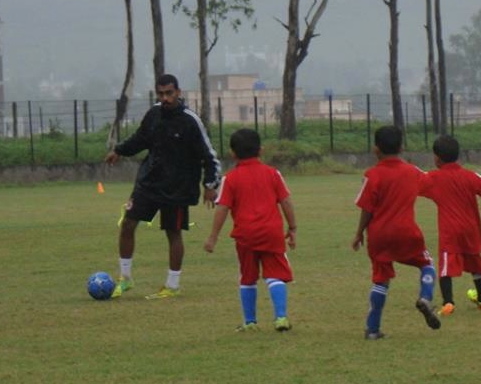
 TCD: What kind of player do you like working with?