Category: Irish Grassroots Football

  • To be or not to be, it’s all down to you!

    To be or not to be, it’s all down to you!

    You don’t send a player to the a professional academy to finish of their development. Going their they should already have Professional Habits. All the best players in the world, have these habits. They have a level of hard-work and commitment that is required to get to the elite level (paid to play). I listen to parents and players all the time saying they want to go to a pro academy to be a professional footballer but they aren’t even close to the commitment and lifestyle change required to even get noticed. 
     
    They say, “My kid is talented”. 
     
    I ask them,
    ok, so he’s talented….. “what is he doing to try and achieve this the level required to play in a pro academy?”
    If they don’t already have self managing skills and professional habits, then the professional club will probably be too much for them. We see this all the time, young players going over to the UK and coming back because they can’t handle what it takes to be stay in with the very best or to even perform at the Elite level (Paid to play I’m talking about).
     
    Along with having the talent to play….the player must also have responsibility, accountability, self management, drive, commitment, attitude and belief.
     
    Questions to can ask any teenage player looking to have a career in the game: 
    1. Did you get enough sleep or are you getting enough sleep before and after games or practice.
    2. Did you have a nutritious breakfast and did you prepare it yourself?
    3. Did you pack you’re own bag or did you mum do it?
    4. Are you drinking enough water and eating the right foods every day?
    5. Do you get to training early to start you’re warm up, dynamic stretching etc etc?
    6. Do you ask the coach to show up early to help you practice on some specific areas of the game to help you be fully prepared for the game or practice?
    7. Do you ever run home from practice to get an extra bit of fitness training in?
    8. Do you pack any half-time snacks, to help you recover?
    9. Do you pack any after game/practice snacks to help you recover.
    10. Do you ever stay back and do some extra technique training or do you ask the coach to help out after training?
    11. Do you ask the coach what you need to do to get better and are you using this advice?
    12. Do you ever ask other teams at the club if they are stuck for a player and if so to call you? (Messi played for the 1st, 2nd and 3rd teams at Barca).
    All of above are some of the behaviours you will find in players who have made it to professional academies. If a player is not showing any of the above then they do not have the passion, drive or commitment to be outstanding. So moving your kid to the best team or travelling half the country to get them playing at the best level, will not make them better.  The player must decide that this is what they want to do. They must have the commitment, desire to be the best in everything they do and it starts with answering YES to most of the above. 
    Facilities, money and equipment won’t make you successful. The commitment, being 100% committed and being obsessive about what you do and how you train, what you eat and how prepared you are, might..
    They need to be obsessive about getting better, 1% every time they play and train. Getting the most of there talent in every part of their preparation, to be the best they can be. That is what is required and more and then you need a lot of luck, the correct amount of nurture and nature will also have a say.
    So much of the success you want as a coach and your players want, is down to your coaching and guidance. This all happens with change and connections. Coaching is the art of emotional connection. We are in the business of making dreams but we need to be realistic with our players. Unless they are stepping outside of the norm they are unlikely to see that dream come through.

    -End

    I always like to hear your opinions and views. If you feel you have something to say, please comment below or email me info@thecoachdiary.com If, you don’t have anything to add then please forward this on to a friend. As always, thanks for reading.

    I’m also on twitter @Coachdiary and @LetTheKidPlay

  • u8s trials… The race to the bottom!

    u8s trials… The race to the bottom!

    This weekend clubs are holding u8 trials for 2010 kids who are starting fixtures January 2018.

    My question to all those clubs is, why are you holding “trials” if you already have kids in your academy who all believe they will be the make-up of the u8s team for 2018?

    Why are we grading children at age 8, you cannot predict at age 8 if a child is going to be good enough to go to the UK at u16s because let’s be honest thats why we are grading in the first place.

    Are you going to be telling the kids who have been with you for 2 years, that they are no longer welcome? Sorry,  but we have another u8s who is better. How ridiculous does that sound.

    This is a quote taken from Rovers Website, which is just utter nonsense saying you have 220 ELITE players from 8 to 19. u8s and so on are not Elite players.

    “The Shamrock Rovers Academy is the first professional youth academy in the history of Ireland with 220 elite players between the age of 8 and 19”

    This is a great image taken from Footblogball.wordpress site by Mark O’Sullivan. He uses this Parent Education Workshops. He say, “Though, for me the real value is within the discussions that emerge as the material is absorbed”

    “As many as possible, as long as possible in the best environment possible”

    In his article he makes two points about the club, the children and the parents:

    • This is a club for children, young players and their parents. Without parent support and involvement there is simply no club. We understand the importance of parents engaging themselves in the club. Therefore, it is vital that the club provides the parents with a clear and transparent picture as to how the club operates.
    • If we only see children as players, then we will view the family separate from the club. By this we mean that the family is expected to do its job and leave the football education solely to the club. If the club sees the young players as children, then it is possible to see both family and club as partners in the child’s learning and development. 
    • The coach and the parent are often the same person in many grassroots clubs
    You can read his article here, i'd highly recommend it for anyone involved with coaching children:  https://footblogball.wordpress.com/2017/01/25/the-race-to-the-bottom-adventures-in-early-and-earlier-talent-id/

    Finally with the season just over, I’ve heard from lots of coaches who are not happy about clubs now holding trials a week after the season has finished. We have just finished a long year of football and holding trials now is just extending it even longer.

    As always would love to hear your views?

    -End

    I always like to hear your opinions and views. If you feel you have something to say, please comment below or email me info@thecoachdiary.com If, you don’t have anything to add then please forward this on to a friend. As always, thanks for reading.

    I’m also on twitter @Coachdiary and @LetTheKidPlay

  • SWANSEA CITY’S ACADEMY WILL HOST AN EDUCATION EVENT FOR COACHES IN IRELAND THIS DECEMBER.

    SWANSEA CITY’S ACADEMY WILL HOST AN EDUCATION EVENT FOR COACHES IN IRELAND THIS DECEMBER.

    A team of Swansea City coaches, led by Swansea City’s Head of Academy – Roy Thomas and Ireland Coordinator – Aaron McNeill, will deliver presentations and practical sessions on our foundation and youth development phase at the club.

    Places on the event cost £40 per coach and will include lunch, refreshments and a certificate of attendance.

    CLICK HERE to book your place.

    Bookings close on Thursday 30th November.

    This event has been awarded 5 external CPD points for coaches who hold UEFA licences with the Irish Football Association (IFA).

    List of Swansea City Academy Coaches attending:

    Roy Thomas – Head of Academy Coaching & Coach Educator
    Andrew Sparkes – Head of Academy Goalkeeping
    Ollie Jefferies – Foundation Phase Academy Coach
    Harry Spratley – Academy Analyst
    Aaron McNeill – Ireland Coordinator

    Further details:

    Day: Sunday 3rd December 2017
    Location: Pavilion, Stormont Estate, Belfast BT4 3TA
    Time: 10-5pm
    Cost: £40 per coach (includes tea/coffee, light lunch and certificate of attendance)

    For further details please contact – aaronmcneill@swanseacity.com

    -End

    I always like to hear your opinions and views. If you feel you have something to say, please comment below or email me info@thecoachdiary.com If, you don’t have anything to add then please forward this on to a friend. As always, thanks for reading.

    I’m also on twitter @Coachdiary and @LetTheKidPlay

  • Where you are born matters for football development…

    Where you are born matters for football development…

    This is the second part of a study conducted by: Laura Finnegan O’Halloran a Lecturer in Sport Management and Talent Development in Waterford I.T, MA in Sport Psychology and currently undertaking a PhD on organisational structure and practice in Irish football (with Liverpool John Moores University).

    Laura has done this study in partnership with Liverpool John Moore University with Dave Richardson, Martin Littlewood and Mark Nesti. All of which have significant experience in youth development and identifying and managing critical transitions within youth football. 

    What influences what we play?

    Lots of sociological and environmental factors influence what and how we play, all worthy of a blog in themselves (e.g. culture, environmental issues, what your parents/family played, socioeconomic factors, peer influence, gender, ethnicity, education)…all in good time. Place of birth is another factor that can influence not only what we play but how likely we are to succeed in that sport. As in the example above, where you are born can dictate what sportyou’re likely to play (it will generally be the sport that’s valued in that setting, your school values it and wants to succeed in it so resources are found for it, clubs have a stronghold in the community, your parents/extended family/local role-models played it (often down to the specific position you want to play… I’m looking at you goal-keepers from Donegal!!) and can influence how successful you are (and organically drive these ‘hothouses’ of talent development, like the Skibereen rowers or NI golfers).
    Studies have looked at the birth place of professional athletes, analyzing athletes according to whether they were from large cities right down to those being from small rural areas. Those that were from small cities were most likely to make it into the professional game, but results depended on the context. There seems to be a sweet spot of the ideal size of a development area, where there are enough quality coaches, resources, teams, structures and opponents, balanced with being compact enough to develop relationships/socialise into particular sports, allow for informal play on streets/green areas, get enough game time and not be overlooked in favour of a larger cohort of earlier maturing players (see more about the Relative age Effect here https://talentdevelopmentinirishfootball.com/2017/06/27/relative-age-effect-in-irish-elite-youth-football/).

    What does this have to do with Irish football?

    density & crest

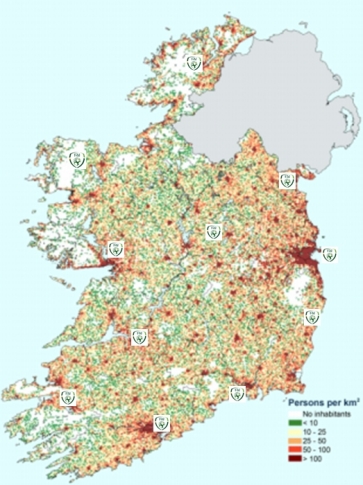
    Map of Ireland, showing population densities with FAI ETP centre locations

    For those not familiar with Irish football, the Emerging Talent Programme is the primary talent development mechanism run by the governing body for football in the Republic of Ireland, the FAI. It has undergone some restructuring lately but at the time of research it consisted of 12 centres countrywide, where the players identified as most talented in the surrounding 32 leagues combine for extra training. The location of these centres can be seen by the FAI badges plotted on the map, along with the population density of the country.

    I’ve looked at the county of birth for all of the ETP players over a 6 year period and analysed how likely you are to get onto the programme (compared to the relative populations). In the below map, the darker the county colour, the more likely a player is to make the ETP programme (ranging from A counties down to the more poorly represented E counties in white).

    We are delighted to be able to blog her research and share it with you: You can read the rest of Laura’s article by going directly to her website Talent Development In Irish Football

    -end

    I always like to hear your opinions and views. If you feel you have something to say, please comment below or email me info@thecoachdiary.com If, you don’t have anything to add then please forward this on to a friend. As always, thanks for reading.

    I’m also on twitter @Coachdiary and @LetTheKidPlay
  • Football Coaching Events This August & September 2017

    Football Coaching Events This August & September 2017

    Michael Beale and Ray Power coming to Dublin!

    MICHAEL BEALE

    Michael’s first coaching experience was within his own soccer school (a franchise of Brazilian Soccer Schools) which specialised in coaching Futebol De Salao to young school children. Prior to becoming a full-time coach at Chelsea FC, He also spent time coaching at Crystal Palace FITC Programme, as a coach for Chelsea Ladies, Crystal Palace Ladies and AFC Wimbledon u19s team.

    Michael has recently returned from Sao Paulo FC Brazil holding the position Assistant Manager – Michael has now worked with some of the most renowned Coaches in World Football: Jose Mourinho – Paul Clement – Brendan Rodgers – Jurgen Klopp – Rogerio Ceni .

    To date Micheal has coached at:

    • Jan 2017  Sao Paulo Futebol Clube – Assistant Manager
    • 2016-17  Liverpool FC Senior Development Coach / u23 Manager
    • 2015-16  Liverpool FC Senior Development Coach / u21 Manager
    • 2014-15  Liverpool FC Senior Development Coach / u21 Manager
    • 2013-14  Liverpool FC Head of YDP u16/u15 coach & assistant u21
    • 2012-13  Liverpool FC Head of YDP u16/u15 coach & assistant u21 coach
    • 2011-12  Chelsea FC Full-time youth development officer & u14 coach
    • 2010-11  Chelsea FC Full-time youth development officer & u14 coach
    • 2009-10  Chelsea FC Full-time youth development officer & u14 coach
    • 2008-09  Chelsea FC Full-time youth development officer & u13 coach
    • 2007-08  Chelsea FC Full-time youth development officer & u10 coach
    • 2006-07  Chelsea FC Full-time youth development officer & u10 coach
    • 2005-06  Chelsea FC u10 coach & Head dev. centre coach u6-u9
    • 2004-05  Chelsea FC u10 coach & Head dev. centre coach u6-u9
    • 2003-04  Chelsea FC u8 Head coach/u9 Assistant & Head dev. centre coach u6-u9
    • 2002-03  Chelsea FC Development centre coach u6-u9

    This workshop will include 4 key elements:

    1. Player Development – Technical / Tactically.
    2. Team Development – Technical / Tactically.
    3. Michael Coaching Story starting from humble beginnings with Chelsea FC U8s.
    4. Michael Coaching Philosophy which brought him on a journey to Brazil.

    Date: Wednesday 30th August

    Time: 7pm to 10pm (Registration from 6pm)

    Location: Inspire Fitness Centre, Navan Road Dublin 7 (National Deaf Village)

    Price: €25.00 (Pay at the door)

    Bookings: Paid (Cash only) to Mitch Whitty 086 8862618 or Email: mitchwhitty5@gmail.com .

    Twitter: @MichaelBeale

    RAY POWER

    Then in September, we have the Ray Power One Day Masterclass:

    Ray Power is the author of best-selling coaching books ‘Making the Ball Roll’ and the ‘Deliberate Soccer Practice’ series. He is a UEFA A Licence Coach, Coach Educator and qualified teacher. Ray has international experience having coached in England, mainland Europe and with international players in Africa.

    1-day workshop: Based on Ray Power’s Deliberate Soccer Practice book series, this one-day football coach education masterclass will give participants first-hand education and guidance on the topic of Deliberate Practice in football.

    The program mixes theoretical and practical elements to show coaches how to make their football training sessions more deliberate, purposeful and ultimately, accelerate the development of their players. It will show coaches how to engage players both physically and cognitively, allowing them to solve more problems and make better, football-related decisions on the pitch.

    The event will focus on the topics of possession, attacking and defending over the course of the day, and offer an intimate, sport-specific setting to encourage Q&A, discussion and networking between participants.

    Much has been written and commented in coaching circles discouraging ‘line’ drills, block practice and static training sessions – this course will show the coach the ‘what to do’ rather than the ‘what not to do’.

    This event may well change how you coach forever!

    Date: Saturday 23 September 2017

    Time: 09.30am to 4.30pm

    Location: Drogheda Town FC, Marian Park Drogheda.

    Twitter @RayPowerCoachE1 and @power_ray

    Book here: Deliberate-soccer-practice-one-day-masterclass-tickets

    -End

    I always like to hear your opinions and views. If you feel you have something to say, please comment below or email me info@thecoachdiary.com If, you don’t have anything to add then please forward this on to a friend. As always, thanks for reading.

    I’m also on twitter @Coachdiary and @LetTheKidPlay
  • ELITE and GRASSROOTS football should not go together!

    ELITE and GRASSROOTS football should not go together!

    ELITE

    When it comes to children at grassroots there is no basis for using the word “Elite”. It does NOT fit with children learning and playing the game for fun or even if they are dreaming of one day becoming a professional. Elite athletes are the ones at the highest level, the professionals, the people making a living from the game or Sport. They are the highest achievers and world record breakers. Children are not this, children are not Elite.

    It has crept more and more into the youth sport. Several organisations have separate, elite players try-outs; posts about looking for the elite players to join a certain group or even looking for elite coaches at grassroots. This is now relevant in every sport because parents and coaches are automatically attracted to the word Elite. It separates the so called best from the rest. It focuses more on winning than development, from as early as you associate the word with an age group.

    It’s ok to have distinctions between the better players but to label kids, as Elite and others have something else is inaccurate.

    Children at grassroots are not this!

    “Putting the word grassroots/ kids and elite together is irresponsible and simply promotes many bad intentions” – @markstkhlm 

    What does Elite mean: Is defined as a select group that is superior in terms of ability or qualities to the rest of a group or society.

    Grassroots and Elite should not go together. The problem we have is that there doesn’t seem to be another commonly used term to represent the so called better players at a particular age or time.  Out of ease, people revert to the term elite because it has become, through habit and usage the most widely understood but it is simply wrong to use Elite with Children or anyone not competing at the highest level in a particular game or sport.

    Organisations need to find far more accurate words to describe children than we are currently doing with the term elite. Elite IMO is not the word to describe the players playing at any level in Grassroots football. One thing is for sure, we do not have elite athletes or players at the grassroots level in Ireland.

    Admittedly, I have used this word in the past, although now through research and education I now find the term uncomfortable and will no longer use it.

    What do you all think?

    Does it make the most sense to continue using it because it’s the most understood word to describe a certain category of players or athletes or does it make more sense to use a word that is more accurate and doesn’t come with so much potential disregard for all the players who aren’t defined as “elite?”

    -end

    I always like to hear your opinions and views. If you feel you have something to say, please comment below or email me info@thecoachdiary.com If, you don’t have anything to add then please forward this on to a friend. As always, thanks for reading.

    I’m also on twitter @Coachdiary and @LetTheKidPlay
  • Relative Age Effect In Irish Elite Youth Football  – By Laura Finnegan

    Relative Age Effect In Irish Elite Youth Football – By Laura Finnegan

    Laura is Lecturer in Sport Management and Talent Development in Waterford I.T, MA in Sport Psychology and currently undertaking a PhD on organisational structure and practice in Irish football (with Liverpool John Moores University).

    Laura has done this study in partnership with Liverpool John Moore University with Dave Richardson, Martin Littlewood and Mark Nesti. All of which have significant experience in youth development and identifying and managing critical transitions within youth football. The study is an intensive project that will take approx 5/6 years to complete (there are periodical reports and publications throughout). Laura is immensely passionate about the potentially positive impact that producing objective insights could have on talent development in Ireland. The study consisted of 3 main studies, mainly centred on the wider talent development process in Ireland.
    1. The study involved interviews with the main stakeholders as regards development (e.g. FAI, SFAI, ETP, club personnel etc). It sought to assess philosophies/aims of these groups, what indicates a ‘successful outcome’ for elite development, views on each other/roles etc. The info will be related to organisational culture literature etc. Issues/unique characteristics of the Irish system will be identified.
    2. Study Two put some grassroots perspectives on the practices of these various bodies and personnel involved in the process. Interviews with coaches involved at different levels of Irish youth football, parents of kids involved and also with kids that have gone through the system, RDO’s etc.
    3. Study three sought to provide a real-time, real-life perspective of the various stages of talent development, all related to talent development literature. She followed a cohort of kids entering the ETP at the beginning and kept track of them as they face various transitions etc along the way, for 4 years. By keeping track of them allowed her to follow up reguarly with interviews which highlighted the various paths that they’ve taken and the different challenges/supports they’ve faced (i.e. transitions to UK, being forced to choose between county minor and LOI u17).
     This is the first publication to come from the study: Laura’s research starts here: 

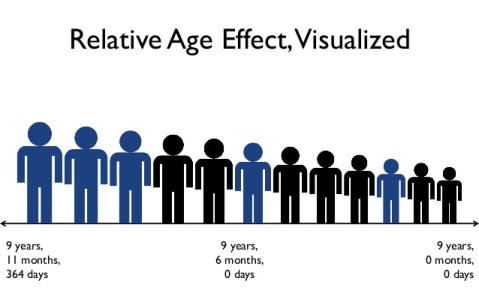
    rae visual

    What is it?

    The relative age effect (RAE) refers to a preference for selecting footballers born earlier in the year, often due to enhanced maturational factors (being bigger, faster, stronger physically but also are often more cognitively and emotionally mature) over their teammates born later in the year. As the graph above demonstrates, there is potentially the difference of a year growth between youth players!

    For research purposes nosiness on my part, I broke the most commonly represented clubs on the ETP down individually. The clubs with the most quarter one births were Cherry Orchard (51.6%), St. Kevins (43.8%), Belvedere (44%) and Malahide Utd (43.5%).

    Why is it a problem?

    This can lead to a biased view of ‘potential’, which leads to these players being exposed to more game-time, getting selected for representational squads, receiving higher standards of coaching and leading to greater training opportunities. It’s often these physical factors that make players (especially in their early teens) stand out, stamina means it’s the fittest player still being seen to make challenges late on in games, a tall player will often stand out from the rest. It’s the same reason that there was an issue with one particular scout from a big English club always coming back recommending blond players… scanning a field of players, the blond heads tended to stand out!

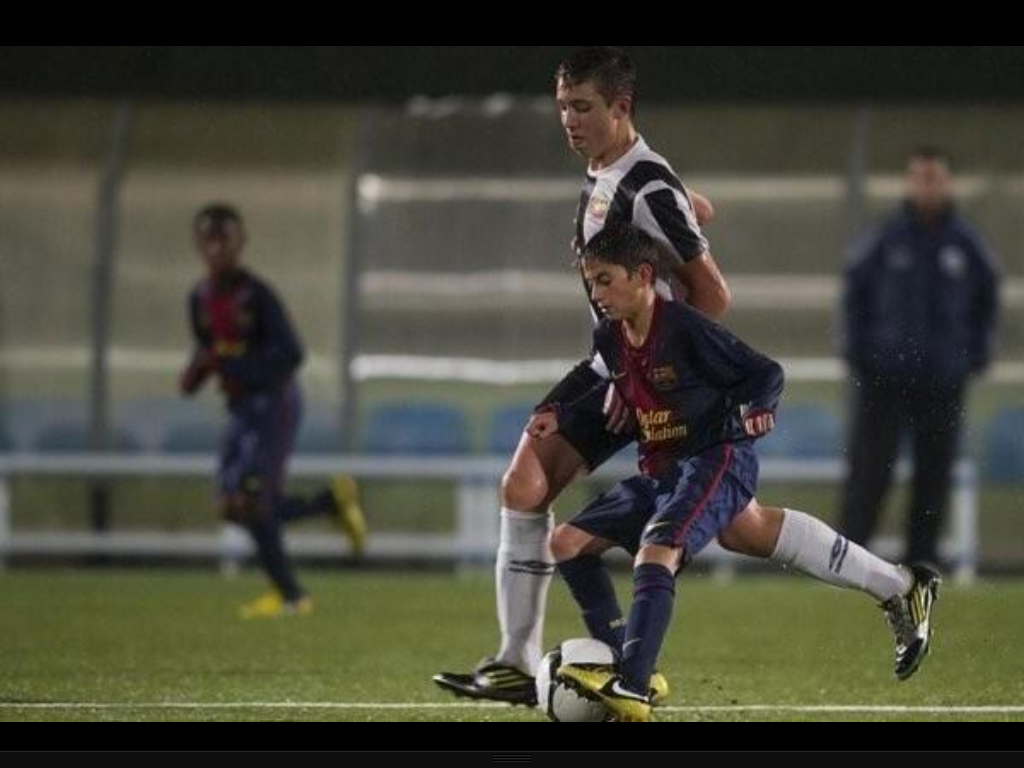
    RAE pic

    The impact of this is that less mature, talented players can often be overlooked. How many times have you seen a coach ‘picking all the big fellas to head to the Kennedy Cup’ or chatted about whether Messi would’ve come through the Irish system?


    We are delighted to the first blog to review her research and be able to share it with the world: You can read the rest of Laura’s article by going directly to her website:  https://talentdevelopmentinirishfootball.wordpress.com/

    -End

    I always like to hear your opinions and views. If you feel you have something to say, please comment below or email me info@thecoachdiary.com If, you don’t have anything to add then please forward this on to a friend. As always, thanks for reading.

    I’m also on twitter @Coachdiary and @LetTheKidPlay