Blog

  • Observation

    Observation

    My last post was about Match Analysis and the benefits of using notes during the game. With that I received an email from Paul Swenson a coach in the US. He told me about the clubs newsletter and how he had developed some game day observation sheets.  Most of the coaches are parent coaches.

    Pauls purpose was three fold:

    1. To underscore the importance of observation as a primary coaching tool.
    2. The game day sheets were a way to get coaches to think about appropriate themes they might not otherwise focus on.
    3. Most of my coaches, on some level, feel like they need to be trying to constantly “fix” things by telling players what to to during games, instead of letting the kids play and more objectively thinking about things they could work on in training. It’s my biggest problem. I have always told them they need to observe, so I finally created a tool for them to do that.

    “during games these coaches do not obsess about whether or not their team will win. They are calm and relaxed, carefully observing what their players and team are doing.”

    He went on to say “Your recent blog post inspired me to revisit this theme in my weekly email to coaches.”

    He asked the question: “What separated the best coaches from the rest of the coaches?”, “I wanted their opinion, because through their experiences they had worked with, watched and been mentored by some of the best soccer educators in the land.”

    Was the answer ‘sophisticated technical knowledge of the game?’ No. There are no secrets out there on how the game of soccer should be played. There are countless books and videos, courses and websites on how to coach soccer.” “Having an understanding of how the game of soccer should be played is certainly important, but once the wisdom is attained, how is it then taught to the players? Technical knowledge alone is not enough.”

    “Was the answer “a coach who knows how to dig deep inside their players and motivate them?” No. The best coaches understand that a player’s passion to play must come from within and not be coach dependent. In fact the best coaches understand that they will only have a player for a chapter in their playing life and it will serve their players better if they can empower players to learn to be independent, creative and self reliant whenever, and with whoever they are playing with or against, no matter the coach or the team they happen to be with.”

    Paul went on to talk about observation and the importance of taking notes.

    Obeservation

    The one thing that best summed up what separated the best coaches from the rest, was their highly developed skill of observation.”

    Through practice these coaches had learned to critically observe their teams and players play, and then put their observations through an objective analysis that would help them identify strengths and weaknesses, that would enable them to more efficiently guide their players to become better.

    “Communicate to the parents that you and you alone are the coach and that spectators shouting anything but encouragement from the sidelines is unacceptable.”

    During games these coaches do not obsess about whether or not their team will win. They are calm and relaxed, carefully observing what their players and team are doing. To be effective at this it is necessary that they write their observations down. And it is amazing, that through this practice of observing and taking notes, that a soccer coaching intellect begins to develop, and a Clear picture of where their team is really at begins to form. Through observation, a practiced skill, coaches are able to set targeted training goals, and through more observation, measure “tangible” progress.

    When Saturday Came

    On Saturday I observed a game from the parents side, where one coach in particular was non-stop directing their players and their voice was clearly heard all the way across the field, a constant stream of instruction. I was thinking, if the coach sees so many problems, it would be more effective for that coach to observe and take notes, and try to pick up on some patterns so they can effectively address them in training. The thing about a soccer game is that is DESIGNED to present problems to players, yet our tendency can be to want to solve the problems for the players while they are playing.

    How does that help to create players who are learning to solve their own problems and learning to make their own choices? In addition, on the parents side, there was a constant chorus of parents shouting instructions, often contradictory at the same time. Can you imagine what is like for the players on the field in this confusing hyped up atmosphere? With the coach and the parents shouting a jumble of instructions at players, how does that contribute to a relaxed environment where the players feel free to make their own choices and are not afraid to make mistakes, let alone try and communicate with each other?

    On game day it is so important that we let our players show us what they can do, and that we learn from it by observing and writing down our observations. It is also our responsibility as a team’s coach to protect our classroom, the game environment, and communicate to the parents that you and you alone are the coach and that spectators shouting anything but encouragement from the sidelines is unacceptable. You can’t overemphasise this one. It is interesting, because I see many coaches who do understand this importance of letting the kids play, and observing – some with notebook in hand. And more and more are jumping on board. If you haven’t, it’s not too late to start. Let your journey to be the best coach you can be begin today.

    TCD would like to Thank Paul Swenson for this content.                                                                                                  MRYSL Director of Coaching, REC                                                                                                                    www.mrysl.com

    -End

    This is a great message to all coaches, it says so much about what the role of the coach, mentor and/or parent. In this carefully crafted newsletter, Paul highlights so many great points about the benefits of taking notes and observing from the line. The very best coaches give minimal instruction and are constantly observing. Like he says, “it’s never too late to start”, it’s never too late to change your coaching mindset. Start by observing more and coaching less.

    I always like to hear your opinions. Please comment below or email me info@thecoachdiary.com If, you don’t have anything to add then please forward this on to a friend. Thanks for reading.

    I’m also on twitter @Coachdiary

  • Using Match Analysis

    Using Match Analysis

    Last weekend I started using a Match Analysis sheet for the team. I have used them before, but never really felt right at the time. This current bunch of players i’m working with, are ready. Collecting data in sports originates from the US but is widely used across the world in many sports. Soccer is certainly a late comer to analysis.

    The Concept

    This concept is widely used in the professional game and it is also part of the UEFA B license course. Personally I don’t think this is something you should use in SSG and really should only be used when coaching 11v11 or ages 13 and above. That would be Phase 3, Training to Train Phase as listed on the FAI player pathway. However there are ways of collecting very basic data in the SSG which will certainly benefit the player and coach.

    So to get everyone involved I asked the subs to split the task and share the work. This is a great way to keep them involved in the game. At halftime I allowed them to share the stats with the players, I used the same process at full-time. Even after one game, this was probably the first time ever I have heard the players be so in-tune with each others and themselves.

    As well as this I have asked the players to keep a diary of their training and match days. Noting the things they did well; how they felt before, during and after the game. Go as far as writing what they had for breakfast and how they felt before the game.

    The Benefits

    What are the benefits of Analysing a Game 

    • It’s a great way of keeping everyone involved, even the parents.
    • One thing is for sure, you will definitely see the game differently when using them.
    • It’s widely used to collect data from an opposing team, to highlight areas where they are most effective. Coaches who are aware of opponents strategies and tactics are most likely to be able to counteract the opponents strengths and exploit their weaknesses.
    • We all struggle to recall sequences of events accurately and often fail to recognise where a sequence of positive play originates, or where errors evolve and players’ view of the game can vary greatly.
    • Notational analysis gives the coach a factual record of data – of what does not lie. However, the method of data collection needs to be reliable, objective and relevant to the level of play. Most importantly it must add value to the player and coach.
    • There is no one method to collecting stats, nor is there one method for each level of the game. So use whatever you feel helps, get the best information back to your team.
    • There are two types of Analysis: team and player activity. Most generally focuses on player activity (name, position), what the action was (shot, free-kick), the time it occurred, where the action took place on the pitch (in attack or in defence) and the outcome of the event (was it a success?).
    • I would start with team performance first.
    • If using player, focus on 1-3 players per week, for them it will be more about performance improvement game by game. This could be done by a parent and again it’s another way of keeping them quiet on the line and could allow you do work on team stats also.
    • Capturing data can have a significant effective on leadership, player and team development.
    • It’s important that the data stored and even archived to see how trends and strategies develop over time.
    • Another use is to assess players pre-season over a series of matches.
    • If you can use video to back up your stats, this is best way to show the players exactly what your talking about and highlight the good aspects of a game.
    • If you are thinking of using data at the younger ages, I would suggest recording basic match information like opposition name, venue, date/time but more importantly who played and for how long, maybe even recoding how many times you played out from the back or 1v1s won etc – ensuring that an accurate record of playing time for these youngsters is kept by game, over a season.

    There are lots of data recording tools available, one which is widely used is  Stazpack, so whatever level of team you manage the collection and analysis of data aids both coach and player development. See also Performa Sports. I have attached my Match Analysis sheet, use it if you like or even add your own ideas and don’t forget to share them.

    Download TCD Match Analysis 2013 which I last updated on 29.11.13. 

    =====================================================

    Thanks to @lisafallonsport for inspiring me to devise my own. 

    I always like to hear your opinions. Please comment below or email me info@thecoachdiary.com If, you don’t have anything to add then please forward this on to a friend. Thanks for reading.

    I’m also on twitter @Coachdiary

  • We need your IDEAS!

    We need your IDEAS!

    I’m planning to send out a survey on the ‘Future of Youth Football’ in Ireland and need your help. I want to know any ideas you have and based on these ideas, we will send out a questionnaire to see what people really want. This is what will happen:

    • If you had a blank canvas, what would you do?
    • Tell me about your vision and ideas?
    • We want to narrow down 4/5 ideas and then use these ideas in a questionnaire.
    • A questionnaire will be sent to everyone involved in Grassroots football.

    Here are some I wrote in a previous post.

    1. Abolish the SFAI or at least reform and rename it. Select a committee that is not appointed by the FAI and SFAI or maybe voted in by the leagues. For instance if I wanted to put my name forward, I would be representing my local league.
    2. Create a new name for the organisation call it ‘Youth FAI’, branching from the FAI, under control of the FAI. Each League would have a presentative working with them make sure they are adopting all the proper development procedures. Those who do it well, will get extra financial funding.
    3. Implement a ten year NATIONAL plan, look at what Germany, Belgium and Spain have done.
    4. We need to value the SSG and make it much more flexible. More and better players through child-friendly football.
    5. Introduce non competition football from u9 to u12s. Start with 3v3 for u8s, 4v4 for u9s, 5v5 for u10s, 7v7 for u11 and u12s, 8v8 or 9v9 (transition stage to 11v11) for u13s and 11v11 at u14s. Leave an option open to continue with 8v8 or 9v9v in areas that may not have access to pitches and/or players. This is proven in many parts of Europe, = More TOUCHES of the Ball, More FUN, More Goals.
    6. National guidelines for competition structures for all age groups, making sure everyone is working from the same programme with the same goal. Player first mindset.
    7. Clubs must have academies, must have proper facilities and qualified coaches. Introduce a licensing and rewarding system. Some suggestions to start with leagues first and reward the League Academies if they meet the required standards.
    8. To coach a kids football team their must be at least one adult with the required qualifications specific to his/her age group.
    9. Introduce a club licence with minimum criteria needed to set-up for kids football, i.e Qualified coaches, Facilities, Equipment, Child Welfare officer, Mission statement, Vision, Goals. Again start with leagues first.
    10. Use the best volunteer coaches in ETC (not friends), reward them with free further education. Get RDO’s to work weekends, so they can monitor the game on the ground.
    11. Begin ETC at age 10-21 years. The leagues should start their academies early with the ETP starting after the Kennedy cup, so u14s. After this the league centre should be the regional centre keeping the national philosophy within the leagues. Introduce a progressive and phased player pathway.
    12. Begin a player retention programme and a programme for players returning from the abroad.
    13. Include girls soccer in this plan.
    14. Implement Futsal into all leagues. More teams entered into community games and extend the age range, bring back the coaching curriculum.
    15. Promotion of Futsal in schools programme, promoting the game nationally. How many people are aware of the Emerald League?
    16. Change the course content of the K1 and K2 making them more player focused, with emphasis on ball mastery and how to structure a session. Mindset to change from ‘Winning at all costs, to player centred coaching’. 
    17. Introduce a ‘intro to coaching’ specific course for anyone looking to get involved. Looking at what is expected of you and reasons for getting involved. This course would be the door to further education. Anyone doing their K1 or K2 should start coaching in their academies and if they are good enough only then should they be allowed to the Youth Cert. Everyone should pass the course but introduce a grading system,  grade, A= you are able to go on and do the UEFA B provided you are coaching with a team. B= You need more work, nearly there but you will need to be assessed if you want to do your UEFA B. C= Your will need to come back and do a final assessment in two months in order to receive your cert. Everyone wishing to do the UEFA B should be pre-assessed and again a pass grading system should be applied.
    18. Parent Behaviour course, mandatory for all clubs and all parents.
    19. More access to courses, make them more relevant to the needs of kids today. Look to other European nations and bring in parts of their course into ours. We can’t keep coaching the same content with the same style.
    20. Encourage coaches to develop, introduce incentives to obtain further qualifications. We will need more qualified coaches for a plan to work.
    21. Market the LOI better – More funding for LOI Academies. National broadcaster have a responsibility to promote the national league over the English league.
    22. Focus on keeping kids playing in their communities, no travelling until u13s. If they are good enough then the regional centres will be able to look after them. However we would need to be catering for more numbers then the standard. There is no point in the best regional players going to Dublin to sit on the bench. Year on year regional leagues lose tens of players to Dublin clubs, who go up and never kick a ball.
    23. The transfer window closes 15th October and some players will be in squads of over 18 players and rarely play. If you’re not playing you’re not learning. That is why we need a transfer window in December to January to help these players to play.
    24. Let’s share our ideas, we need to be open with each other.

    I have listed a lot of ideas. I’m more interested in the ones we can control. We can’t really control the ET programme that’s up to the FAI to develop but we can give ideas.

    If anyone has ideas from other country; maybe things that have worked well, please let us know.

    We need your ideas, please share them! 

    ================================================================================

    I always like to hear your opinions. Please comment below or email me info@thecoachdiary.com. If, you don’t have anything to add then please forward this on to a friend. Thanks for reading.

    I’m also on twitter @Coachdiary

  • Is the SFAI Chairman going it alone…..

    Is the SFAI Chairman going it alone…..

    or has he come up with the future blueprint for Irish football? An email has been doing the rounds; now, you probably haven’t received it because it was only sent to press. A press release about ‘vision for future of Irish Football’, apparently even members of the SFAI didn’t receive it, not sure they were meant to… I find this strange and I’ll tell you way in a sec.

    PRESS RELEASE

    INVITATION: Vision for future of Irish football

    Former Ireland international and Manchester United coach John Devine is hosting a media event to launch his “Vision for future of Irish football programme” next Wednesday, October 2nd at 11am.

    The event will be held at the South Dublin Football League headquarters, Balgaddy Road, Lucan, Co Dublin. John will be joined at fellow ex-internationals John Giles and Eamon Dunphy for the launch of a scheme which the trio believe is essential for producing future generations of Irish footballers.

    Several other figureheads in Irish football, including Liam Brady, Niall Quinn and Paul McGrath have endorsed the programme, particularly in the aftermath of Ireland’s poor performance on the international stage over the past 18 months.

    Michael O’Brien, Chairman of the Schoolboys FAI (SFAI), will also be in attendance to support the initiative.

    WHAT: Launch of John Devine’s “Vision for future of Irish football programme.”

    WHEN: Wednesday, October 2 at 11am.

    WHERE: South Dublin FL headquarters, Balgaddy Road, Lucan, Co Dublin. 

    Free car parking is available and refreshments will be served.

    There will be interview opportunities will all guests.

    For any media planning to attend, please confirm by email to John

    by 3pm on Tuesday.

    Although I think having a vision is great and the fact that it’s using Horst Wein 3v3 methods, (see them here, thebeautifulgame.ie) makes this even more attractive.  I’m just surprised this vision is being pushed by the Chairman of the SFAI and he is not even contacting any of his members, nor is there anything visual on their website. Michael O’Brien is also the CEO of the SDFL.

    This would be a great opportunity to get everyone together and start throwing out some IDEAS.

    So, why is the head of the Schoolboy Football Association of Ireland going it alone and why he is only inviting the press? Why haven’t the most important people in kids football ‘the coaches’ not been invited. Surely he should be inviting them?!

    This is a man that has done very little in terms of changing the mindset and structures of schoolboy football, he is in a very powerful position but we have yet to see this used in an constructive way. You only have to look at his own league to see how far behind they are in relation to Player Development. Their pathway goes against everything Horst Wein believes in, certainly everything listed below is way off Horst Wein’s teaching and nowhere near the changes this country so desperately requires.

    Currently the SDFL pathway looks like this:

    • They are introducing 3v3 to u8s
    • 5v5 at u9s
    • Play 9v9 at u10s. (DDSL play 7v7 at u10s)
    • They still have league tables at u10s.
    • Play with size 4 ball at u9s.
    • They move to 11v11 at u12s

    In saying this, I’m sure this pilot is about all the changes they are going to make. It’s just a shame no coaches, no other leagues have been invited and it’s scheduled for 11am on a Wednesday, when most people are at work. Also, The two people who notified me reside outside of this country.

    I’m not so sure I’ll be able to get down, but I will try my best, too.

    What do you think of this and will you be going?

    ================================================================================

    I always like to hear your opinions. Please comment below or email me info@thecoachdiary.com. If, you don’t have anything to add then please forward this on to a friend. Thanks for reading.

    I’m also on twitter @Coachdiary
  • 60+ Coaches off to Barcelona

    60+ Coaches off to Barcelona

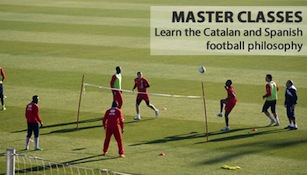
    60+ Irish coaches are heading to Barcelona next week to view the 5 star training facilities at Futbol Salou. The Trip which is being organised by Ireland’s top grassroots football tour operator, DB Sports Tours are do so with the intention of getting managers familiar with the facilities and coaching staff.

    IT’S the time of the season when amateur clubs start planning their 2014 trips and Futbol Salou is a destination Irish clubs could become very familiar with.

    Futbol Salou

    The state-of-the-art football facility just outside of Barcelona will be making its debut with the Irish market this season and promises to impress all 60+ coaches heading over next week.

    “Our main, and immediate goal, of course is to teach visiting players/coaches the Catalan philosophy.”

    The Dublin-based company are behind the combination of the Irish team tour market and this exciting Spanish destination. Next month’s club/coach inspection visit will give interested parties the chance to travel to Salou and see for themselves the benefits of exposing their young players to the Catalan way.

    From international tournaments to team bonding weeks that incorporate games against local opposition and master-class training sessions with the resident coach, Futbol Salou offers so much.

    Albert Vinas

    Former RCD Espanyol youth player and Technical Director Albert Vinas now has the same role at Futbol Salou and as the man charged with educating visit teams in the Catalan ways, he couldn’t be more experienced.

    DB Sports Tours Albert Vinas Ex-RCD Espanyol Head Coach

    Recently appointed the Director of Coach Education for Libya, Vinas tutored former Barcelona Head Coach Tito Vilanova and Liverpool Head Academy coach Rodolfo Borrell when working with the Catalan Futbol Federation.

    “For the moment I have not worked with Irish Football, but I have much experience in other countries such as Korea, Finland, Norway, USA, Japan,” says Vinas.

    He went on to say, “I look forward to the opportunity to work with the Irish market, which I believe is a very exciting market with a lot of talent and potential.

    “At Futbol Salou we want to help clubs with every aspect of football, from exposing them to different levels of teams with friendlies, to learning the Catalan philosophy with the master-class or even training the coaches themselves.”

    “Through the master-class session I organise it normally in Catalunya, because we want the players to practise and the coaches can see how we exercise and our mythology.”

    To find out more information about any trips contact DBSPORTSTOURS

    ======================================================

    I always like to hear your opinions. Please comment below or drop me an email at info@thecoachdiary.com. If, you don’t have anything to add then please forward this on to a friend, a fellow coach.  Thanks for reading, as always.

    Please follow me on twitter @Coachdiary

  • Footblogball 3 of 5 Essential Interviews, you may have missed.

    Footblogball 3 of 5 Essential Interviews, you may have missed.

    I recently posted two fantastic interview by Footblogball. In recent weeks Mark has added 3 more, which you may have missed. In his words:

    Janne Mian

    The 3rd in the series of Footblogball essential interviews we have Janne Mian who is working as a coach and fitness trainer at top Swedish club Elfsborg.

    I have known Janne for a few years and not only does he possess a brilliant football mind , he also has a great social consciousness and awareness that is seldom seem in football these days. See the Interview here JANNE MIAN.

    Mark Upton

    The 4th was with Mark Upton is an experienced coaching scientist based in Adelaide Australia. Mark works with coaches/teams/organisations seeking to enhance their coaching effectiveness through understanding and implementation of skill acquisition principles, learning environments, performance analysis processes and coaching technologies.

    Tom Turner

    Tom Turner steps up to the plate for the 5th in the FOOTBLOGBALL essential interviews series. Tom Turner PHD is director of coaching and player development at Ohio Youth Soccer Association North . He is also a USA National Instructor and is on the US Soccer national Coaching Committee . Tom kindly took time out from a very busy schedule to share his vast knowledge and experience in answering some essential questions.

    Read them all here FOOTBLOGBALL

    =======================================================

    You can follow Mark on twitter @markstkhlm

    I always like to hear your opinions. Please comment below or drop me an email at info@thecoachdiary.com. If, you don’t have anything to add then please forward this on to a friend, a fellow coach.  Thanks for reading, as always.

    Please follow me on twitter @Coachdiary

  • COACHTALK: Mark Rodricks

    COACHTALK: Mark Rodricks

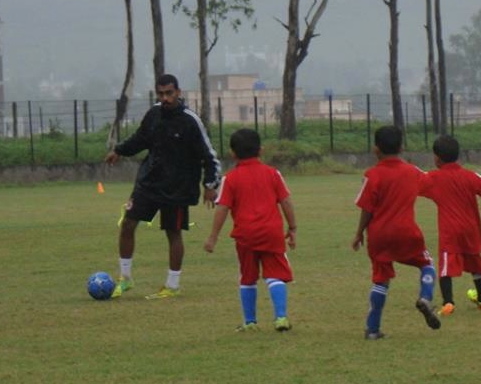
    We head to India this week and speak to u10’s Pune FC Coach Mark Rodricks.

    TCD: Did you play football before you started coaching?

    MR: I have been playing since the age of 9 and still continue do so. So that’s been almost 15 years now of playing football.

    TCD: How did you get into coaching?

    MR: Since a young age, I’ve been close to the professional clubs in India and have followed the I-League clubs. Somehow running 5 rounds of a ground and then kick the ball around didn’t seem to appeal to me as how a person became a good footballer. Football coaching methods in India are archaic and I never got taught the right way or had the chances to grow like the kids these days have. Coaching was a natural progression to the change I wanted to see.

    TCD: What is your current role at Pune FC?

    I am the head coach of the U-10’s at Pune FC. That is formulating and implementing the program in accordance with the club’s footballing policies. I work closely with the Academy Director on this program.

    TCD: What changes would you make to the grassroots game?

    MR: Since this is India centric, I have a fair few things I would like to change:

    • Indulge the kids to use a football and be comfortable with it rather than have them run around the pitch. Having a football at their feet is the most important part of their learning.
    • Take corporal punishment completely out of the game.
    • Focusing more on helping the kids love the game and cultivate that passion. This means making the sessions fun.
    • Not stifling a kid’s progress to a certain playing position on the field. A player has to play across the field and can then decide for him/herself what they like.
    • Tournaments should have rules where there’s either no substitutes bench or rules where all children get up and play the game. No kid in the age group 6 to 14 would want to be sitting on the bench and watching a game.
    • Coaches need to remember that the game is the biggest teacher of all, and what a child can learn by playing, a coach cannot explain that in words.
    • Bring other sports as part of their education. Coaching only football is dangerous. And all round development is vital.

    TCD: What age to kids move to the 11v11 game in India?

    MR: As far as my knowledge goes, school level would be as early as 10 but academies are 12+ years and above.

    TCD: What is your coaching Philosophy?

    MR: With the right amount of information at the right time, I love for players to experiment and learn things on their own. I encourage the boys to use their head and their brains! Learning something new every day is a vital part of their learning. Since I coach kids mostly who are under U-10, I do not impose a playing style on the kids other than ensuring the kids are comfortable with the ball at their feet. I encourage 1v1’s and try and cultivate fair play and a will to succeed.

    TCD: Have you any mentors?

    MR: I have a lot of people who have helped me through the years but I try and take the most out of players, coaches and anyone involved in the sport. It helps me with my learning and to be a better coach.

    kids_slumTCD: What kind of player do you like working with?

    MR: Each player brings something unique and different to the table, especially at a young age. At this age, your coaching learning sometimes gets thrown out of the window. The kids coerce you into improvising. I try and learn from each and every kid I coach.

    A love for the sport and the willingness to learn in a tiny tot is an added bonus since that’s half your work done.

    TCD: What is the future of football in India?

    As much as I’d like to sugarcoat this and paint a rosy picture, since the apex body in India doesn’t seem to be doing much for the sport in the country, even with a large talent pool being the 2nd largest population in the world, we lack far behind Asian countries, let alone European/African/South American countries.

    We need more coach educators, licensed coaches and an impetus on an all-round learning along with infrastructure easily available. These all are ingredients for shaping a positive future.

    A little nudge and football can be sent on its way in India.

    ==========================================================

    TCD would like to Thank Mark for this interview. You can follow Mark on twitter @markrodricks

    I always like to hear your opinions. Please comment below or drop me an email at info@thecoachdiary.com. If, you don’t have anything to add then please forward this on to a friend, a fellow coach.  Thanks for reading, as always.

    Please follow me on twitter @Coachdiary