Month: September 2014

  • Silent Sideline Weekend: October 04 & 05th 2014

    Silent Sideline Weekend: October 04 & 05th 2014

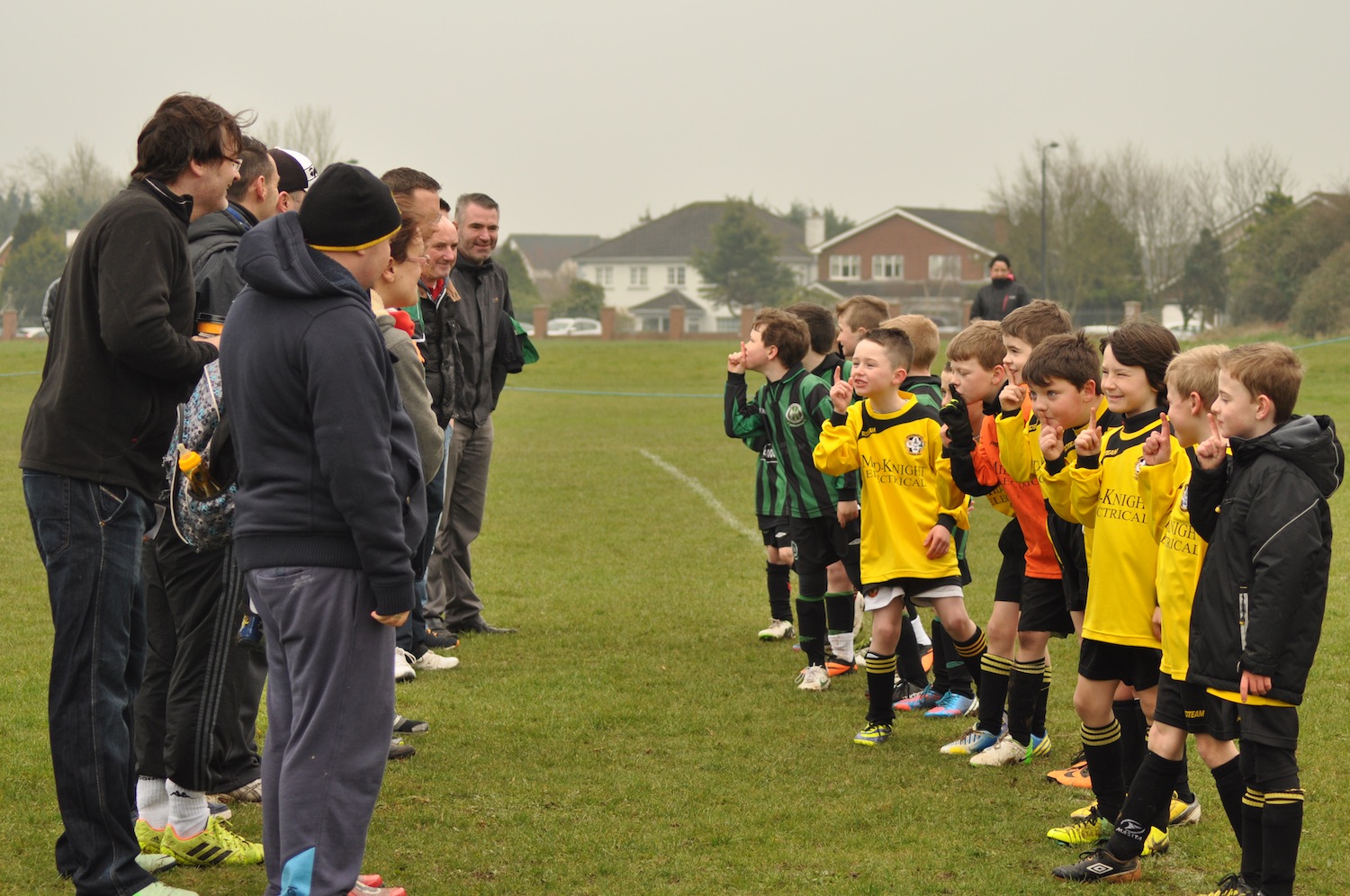
    Very often in kid’s sports adults, parents and coaches become overly vocal in their approach to working with young athletes. However well intentioned some of them may be, the results are not always positive. With a Silent Sideline Weekend, the coaches, parents and spectators are asked to keep talking to a bare minimum on the sidelines. One coach from each team will be given the task to instruct (not during the game), whilst everyone else watches on in SILENCE.

    Supporters are allowed to clap to show their enthusiasm but the adults are restricted from coaching their kids from the sideline. This is a weekend when kids can make decisions for themselves, without having adults shout 5/6 different instructions at them.

    We now know that when adults scream from the sidelines they’re not just invading the children’s play time, they’re preventing children from learning the game in a natural manner.

    With the sidelines quiet, players have the chance to concentrate, make their own split-second decisions and learn by them. Instead of being distracted by the stream of noise that usually exists, the kids on the pitch get the opportunity to communicate with one another, deciding who will take the throw ins, the goal-kicks, free-kicks and/or the corner kicks in the game. This also gives them time to think and focus on what they are about to do.

    The teeny tiny kids may need a little direction but you must try and let them figure it out for themselves before stepping in. Remember it’s only one game over one weekend.

    Why? 

    The focus of the weekend is not to take the atmosphere out of the kids’ game but instead try and encourage less coaching from the line. It’s about educating adults that screaming at children whilst they play sport is wrong.

    The aim is to eventually get every youth club in Ireland and around the world in every team sport to conform to the ‘Silent sideline weekend.’

    Initially not everyone is going to agree with the idea, but one thing is for sure the kids absolutely loved the last one and they weren’t the only ones!! The referees always appreciated the chance to be able to concentrate on the game instead of the sideline.

    What’s Expected from Participants?

    • A day when we, Let the kids play.
    • Everyone can get involved.
    • If the opposition aren’t willing to participate, no don’t worry you can learn so much from observing them.
    • Clubs to manage this initiative internally.
    • Club should select 2 sideline keepers to reinforce a positive and silent attitude on the line.
    • Each club should have a silent sideline ambassador.
    • Absolutely NO shouting or directing from the sidelines.
    • Coaching staff to speak to players at halftime and when making changes ONLY (Only when absolutely necessary).
    • Clapping & cheering allowed for goals scored and effort from both sides.
    • No directing or coaching advice from adults at anytime.
    • Absolutely no questioning of the referee in charge of game. (If required call official over).
    • Rope the pitches and provide a designated area for parents. (Stand back, observe and enjoy the game).
    • Kids voices are all we want to hear on match day.
    • Lollipops are a fun way of helping people to stay silent!

    Going forward we need less coaching and directing from the line. Encourage, Praise, Clap and Cheer. It’s really important that we allow the kids to take control of their game. I see it all the time, where parents/coaches go over the entire game and point out the child’s mistakes. Not even adults like to hear about the things they did wrong and children are no different.

    Kids need praise not criticism. Providing feedback on what he/she did wrong or expressing your disappointment in their play is NOT what they need to hear and will only serve to make a painful situation much worse. Support and encouragement does NOT mean that you coach from the sidelines. In fact, the WORST THING that you can do as a parent/coach is to continually “give instruction” from the sidelines.

    Date for your diary: 

    1. 04 & 05th Silent Sideline Weekend
    2. 29th September Silent Sideline Workshop, (Supported by Fingal City Council)

    Sign Up for the Silent Sideline Workshop

    Sign Up for Silent Sideline Weekend

    Supported by: Fingal County Council

    NEXT SILENT SIDELINE WEEKEND 26TH & 27TH SEPTEMBER 2015

    End

    I always like to hear your opinions and views. If you feel you have something to say, please comment below or email me info@thecoachdiary.com and if you don’t have anything to add, please pass this on to a friend.

    As always, thanks for reading. I’m also on twitter  @Coachdiary
  • Coach the Parent: What to expect!

    Coach the Parent: What to expect!

    One thing I’ve learnt about coaching kids is to keep parents informed on team rules but don’t get too close it may backfire at some stage. Believe it or not 99% of parents are workable and don’t get involved. To make things work for you, training the parents early on sets the standard going forward.

    The parents aren’t your best friends nor do you want them to be. For years I’ve listened to parents talk about players and coaching staff from a distance. They forget that Ireland is very windy, and sound travels easily. I respect parents, I appreciate the time and effort they make to get the kids to and from training and I enjoy seeing them there on match day. What I don’t like is when they start to interfere in things that don’t concern them.

    “Players do not need adults to question their actions, the actions of other players, or the coach’s decisions concerning team dynamics or playing time, this does not concern you!” –  TCD

    I always find it funny when unqualified parents offer their advice on the team selection or say things like, ‘I don’t agree with your changes etc etc’. If you’re one of those parents reading this article; Coaches don’t really care what you think!!! They are in it for the kids not for you. All we need from you is to support your child and don’t talk negative about his/her coach. Most kids actually like their coaches, and when you talk them down, they don’t think you’re being cool!!

    “Do not allow a player or his/her teammates to put themselves or anyone else down. We are hear to build self-esteem not destroy it.” – TCD

    One of biggest issue kids will face playing a sport is the interference from their parents in team dynamics. I see it all too often, where parents take every single decision made personally. My advice is to back-off, it’s not your game and it’s certainly not your team, so stop going on like, you’re playing.

    According to Dan Gould at the Michigan State University Institute for the Study of Youth Sports:

    • Kids want to have fun, to get better, and to be with their friends.
    • They want parental support and encouragement. 
    • They want you to watch them play and praise them for their effort.
    • They want you to be realistic about their ability.
    • And they want you to be present, and interested in what they are doing. 

    They do not want you to shout at them the coach and the refs.  They don’t want you to put too much pressure on them, or be overly critical.  They want the game to be theirs!

    John O’Sullivan from the Changing The Game Project, who recently spoke in Dublin added,  “When I grew up, it was children competing against children. With two adults on either side. Now, more often than not, it’s adults competing against other adults through their children.” “It’s know as ‘adultification’ of kids sports. It’s the introduction of adult values into kids’ games.”

    This causes myriad problems. Dan Saferstein, PhD, a sports psychologist and author of Win or Lose: A Guide to Sports Parenting, works with young athletes, including U.S. hockey national youth teams.

    “If you get a high-achieving, talented kid with a pushy, high-achieving parent, it can work out,” says Saferstein. “The kid can somehow rise to the expectations of the parent, and the kid may even share some of that drive himself.

    “What can be tragic, though, is when you get a more driven, consumed parent with a kid who somehow, in the parent’s eyes, just doesn’t measure up.” The result, says Saferstein, extends further than sports: “The kid feels like a failure.”

    Parents often misperceive their child’s natural talent. “There’s a myth in youth sports that if you work hard enough, you can achieve anything,” he says. “It’s not true.”

    Majority of kids (especially teenagers) don’t want you to fight their corner, yes they want you too support them but they don’t want you to embarrass them with your actions.

    Don’t base a football season on a single game. Parents can judge you at the end of the season by asking 3 simple questions:

    1. Has the child become a better person?
    2. Has the child improved?
    3. Was the coach fair to the child?

    What Works & What doesn’t Work?

    1. Most parents who are pushy, do so because they don’t know how to be helpful and do not understand the effects that this has on you and their child. They generally bring up issues at the wrong time. My advice is never vent before or after a game. Take 24 hours and approach the coach then.
    2. We know all parents want is for their child to be happy and successful and when they take things personally is normally cases them to say things in the heat of the moment. You are in a position as a coach to give parents the 2 things that they want the most for their child to feel happy and successful.
    3. For most coaches it’s not about winning. It’s about having fun, improving and giving the players the best chase of being successful in a game. Success is not always defined as winning. Winning is great but getting better is more important.
    4. There are lots of things in life we can’t control. For instance focusing on taking another kids spot in the team. Parents should never tell their child to focus on taking someone else’s place. The player can’t control that but he/she can focus on getting better.
    5. Communicate early on with parents. Set the sideline behaviour standards and what’s expected of them and get them to commit to the parent pledge.  For parents specifically state that coaching is something you do and they don’t. Define what it means to coach so that they won’t have any confusion.
    6. Be approachable and encourage them to come to you directly if they have any issues. Listen to them and give them the feeling that you hear them and can understand where they are coming from, even if you don’t agree with them. Allow them to talk first and finish talking before your start.
    7. If they push your hot buttons, stay in control of your emotions. If you lose control, you will say things you don’t really mean and most likely be ineffective.
    8. Do they know about your club rules, philosophy and coaching methods. If they don’t make sure your inform them.
    9. Let them know about the players rules. Try and set 3 rules for the season, for instance; 1. Respect everyone on the team 2: Commitment works both ways. If a player is not involved, he’s not committed.  3. In order to be selected a player must train with commitment and a willingness to learn. He/she must be prepared to focus close to 100% at all times.
    10. Let them know that you won’t tolerate player or parent bad behaviour and every violation carries a punishment.
    11. You won’t always get it right and if you’re starting out if can be even more daunting. Get yourself educated on the best practices, never ever act as if you’re not the expert. If you don’t know just tell them (non-conflict way) that you will get back to them and go an educate yourself on how to deal with issue or question. You can always ask a more experienced coaches.
    12. Define team goals and make sure the parents know what the goals are.
    13. Not all kids are the same. Some are better than others and some bigger than others. All kids develop and learn at different stages. It’s a natural process. Most parents don’t understand why their child may not be performing at a certain level and winning everything in sight. Tell them not to focus so much on the weekends game. Learning about the game is a long process and success should be measured long-term not short-term.
    14. I  added this after I posted the article because it was something that happened recently. You might find the reason a player is not doing what you have asked him to do week after week because (A). He still doesn’t understand what you’re asking him to do, so maybe try and explain it in a different way or (B). He’s father has been telling him to do the complete opposite (as happened to me). This is another reason why parent’s should let the coach do the coaching and they do the supporting.
    15. Finally, let them know that you don’t just show up at the weekend and decide you starts and who doesn’t. The higher the level the more the coaches and managers are in discussion about team dynamics, formations and tactics (11 aside football mostly). 99% of coaches don’t take picking starting line-ups lightly. As soon as one game is finished they are thinking about the next one. For most of us it’s a daily discussion. I’m not referring to small sided games!

    When you allow parents run your team and make decisions on your behalf, it’s time for someone to move on!!

    -end

    Date for your diary: 

    1. 04 & 05th Silent Sideline Weekend
    2. 29th September Silent Sideline Workshop, (Supported by Fingal City Council)

    Sign Up for the Silent Sideline Workshop

    Sign Up for Silent Sideline Weekend

    I always like to hear your opinions and views. If you feel you have something to say, please comment below or email me info@thecoachdiary.com and if you don’t have anything to add, please pass this on to a friend.

    As always, thanks for reading. I’m also on twitter  @Coachdiary

  • Coach the child and then coach the game!

    Coach the child and then coach the game!

    So many things stood out for me at John O’Sullivan’s Talk in Dublin recently, but one thing I took home was a little exercise he did at the start of the talk.

    So John was discussing the common issues that kids face in youth sport through out the world. He does an exercise were  he asks the coaches to list five words or phrases that describe their best coach and/or teacher. He got us to put these on sticky notes and place them up on the wall (see pic) under two categories:

    1. Technical/Tactical knowledge of the game.
    2. Connection/Emotional intelligence.

    “These master coaches have learned that you get the most out of athletes and teams by valuing them and connecting with them as people first, and players second.” – JO’S

    John has done this exercise with thousand of coaches and initially he was surprised but as workshop go by, the results are the same.

    John makes the point that, “80%-90% of the characteristics that make a great coach, as stated by coaches themselves, have nothing to do with X’s and O’s. They have nothing to do with knowledge of the game. That is a minimal requirement that a coach needs to be great. The vast majority of sticky notes describing the characteristics that make a coach great are posted under ‘Emotional Intelligence and Connection.”

    So what’s the problem?

    I’ll let John tell you:

    “We don’t teach any of this to coaches! We spend 98% of our “coaching education” collecting drills and studying tactics, yet we say that only makes up 10-20% of a great coach! I have yet to meet a coach that put more sticky notes under “Knowledge” than he or she put under “Connection.”

    John goes on to say, “most coaches I cross paths with think that collecting drills and immersing themselves in the X’s and O’s is the path to greatness. But the coaches I have been interviewing for my research into cultures of sustained excellence understand that knowledge is what all coaches need, but it does not separate the good from the great. These master coaches have learned that you get the most out of athletes and teams by valuing them and connecting with them as people first, and players second.

    Make sense, doesn’t it!!??

    Coaching sport is fundamentally about the player/coach relationship. It’s about the intellectual, moral, social, emotional, cognitive and physical needs of the child and it’s about you getting better at getting better.

    “Our professions has lasting values for life. Most of us coach how we were coached but it doesn’t have to be that way. If you are able to make one positive change to your style, consider what you are doing for the next generation of coaches and the players you currently coach.” #NeverStopEvolving -TCD

    Our knowledge of the game will only get us so far. The more we teach the better we get. The more we learn the better we become. In the world of teaching we should never cease to become better. If we become stagnant, so will the kids we coach. As we grow so does our relationships with the children we teach. We improve together.

    Think back to last year, even two years ago – look how much you have improved. When I think back, I think “wow, look how much I have grown as a coach and have the kids got better?” Sure, they have!

    To become a better coach you need to step away from the norm and search for new ways and ideas. You need to study the best coaches, take something from each of them to develop your own positive ways by taking your coaching further and further.  To quote John,

    “You can start becoming one by studying these coaches and master teachers, learning about their cultures of excellence, and taking your coaching to whole new level by leaving the X’s and O’s alone for a bit.”

    -End

    Date for your diary: 

    1. 04 & 05th Silent Sideline Weekend
    2. 29th September Silent Sideline Workshop, (Supported by Fingal City Council)

    Sign Up for the Silent Sideline Workshop

    Sign Up for Silent Sideline Weekend

    I always like to hear your opinions and views. If you feel you have something to say, please comment below or email me info@thecoachdiary.com and if you don’t have anything to add, please pass this on to a friend.

    As always, thanks for reading. I’m also on twitter  @Coachdiary


  • Silent Sideline Weekend: 04th & 05th October

    Silent Sideline Weekend: 04th & 05th October

    After the success of the previous SS Weekend, we have decide to arrange another one and will continue from hear on in as a yearly weekend event between September and October each year.

    Too often in kid’s sports adults, parents and coaches become overly vocal in their approach to working with young athletes. However well intentioned some of them may be, the results are not always positive.

    With a Silent Sideline Weekend, the coaches, parents and spectators are asked to keep talking to a bare minimum on the sidelines. Coaches from each team will be given the task to instruct (not during the game), whilst everyone else watches on in silence.

    Supporters are allowed to clap to show their enthusiasm but the adults are restricted from coaching their kids from the sideline.

    This is a weekend when kids can make decisions for themselves, without having adults shout 5/6 different instructions at them. When adults scream from the sidelines they’re not just invading the children’s play time, they’re preventing children from learning the game in a natural manner.

    With the sidelines quiet, players have the chance to make their own split-second decisions on the pitch and learn by them. Instead of being distracted by the stream of noise that usually exists, the kids on the pitch get the opportunity to communicate with one another, deciding who will take the throw ins, the goal-kicks, free-kicks or the corner kicks etc. This also gives them time to think and focus on what they are about to do.

    Check out the video I made from the weekends in March and April: 

    Why?
    The focus of the weekend is not to take the atmosphere out of the kids’ game but instead try and encourage less coaching from the line. It’s about educating adults that screaming at children whilst they play sport is wrong. I want every youth team in Ireland in organised leagues in every sport to conform to the ‘Silent sideline weekend.’ I know not everyone is going to agree with the idea, but one thing is for sure the kids absolutely loved the last weekend.

    What’s Expected from Participants?

    • A day when we, Let the kids play.
    • Everyone can get involved.
    • If the opposition aren’t willing to participate, no don’t worry you can learn so much from observing them.
    • Clubs to manage this initiative internally.
    • Club should select 2 sideline keepers to reinforce a positive and silent attitude on the line.
    • Each club should have a silent sideline ambassador.
    • Absolutely NO shouting or directing from the sidelines.
    • Coaching staff to speak to players at halftime and when making changes ONLY (Only when absolutely necessary).
    • Clapping & cheering allowed for goals scored and effort from both sides.
    • No directing or coaching advice from adults at anytime.
    • Absolutely no questioning of the referee in charge of game. (If required call official over).
    • Rope the pitches and provide a designated area for parents. (Stand back, observe and enjoy the game).
    • Kids voices are all we want to hear on match day.
    • Lollipops are a fun way of helping people to stay silent!

    What happens after the weekend?

    Slide1Going forward we need less coaching and directing from the line. Encourage, Praise, Clap and Cheer. It’s really important that we allow the kids to take control of their game. We see it all the time, where parents/coaches go over the entire game and point out the child’s mistakes, to everyone standing on the line. Not even adults like to hear about the things they did wrong.

    Children need praise not criticism. Providing feedback on what he/she did wrong or expressing your disappointment in their play is NOT what they need to hear and will only serve to make a painful situation much worse. Support and encouragement does NOT mean that you coach from the sidelines. In fact, the WORST THING that you can do as a parent/coach is to “coach” from the sidelines.

    As children grow into their teenage years, some may need a little more feedback then others. This is were the qualities of a great coach come in, knowing that every child is different and how we interact with each child also differs.

    Please share and pass on the message. It’s great to have the support from the Councils, the NDSL and clubs. how good would it be for all league to support the campaign and it doesn’t take much to get involved. Remember, this is all for the kids!!

    Date for your diary: 

    1. 04 & 05th Silent Sideline Weekend
    2. 29th September Silent Sideline Workshop, (Supported by Fingal City Council) venue tbc

    We have teamed with Spraychem Golf if any clubs wants rope (1000feet €40) and stakes (from €2.50) to create spectator areas during games. Call Yvonne Richie at 087 236 5858, you can also get the ‘Don’t x the line’ barrier packs from Paul Martin at the FAI.

    Sign Up for the Silent Sideline Workshop

    -End

    I always like to hear your opinions and views. If you feel you have something to say, please comment below or email me info@thecoachdiary.com and if you don’t have anything to add, please pass this on to a friend.

    As always, thanks for reading. I’m also on twitter  @Coachdiary

  • Coaching your own child – The parent-coach, child-player relationship.

    Coaching your own child – The parent-coach, child-player relationship.

    As many as 90% of all volunteer coaches are parent coaches. There has been 2/3 major studies in this area of coaching both showing positive and negative results.

    So many coaches start out as regular parents standing on the sideline every weekend cheering on their son or daughter. Little did they know that several days later they would be handed the club jacket, a list of players, parents details, some football, bibs, cones and a good luck and big pat on the back.

    It can very daunting for someone who has never kicked a ball in their life and now has the task of managing and coaching a bunch of kids. Not many people will get the opportunity to coach their own kid, which can be a wonderful experience working together.

    Many look back on this experience as the best moments in their lives but many kids also back on it as a very difficult time and in many cases – one that they would rather forget.

    The Butterfly: There was a great story about a young boy who observed a butterfly unable to emerge from a cocoon. The butterfly appeared to be struggling and in pain. He rushed into the kitchen and brought out a scissors. He carefully snipped the cocoon open and the butterfly was free. But the butterfly’s wings where twisted. He later learned, the struggle and pain the butterfly must endure to emerge from the cocoon were necessary for it to fly. This story is so relative to how children learn, grow and deal with struggle and disappointment. Sometimes we just need to let them figure it out for themselves and not be so quick to propel them along.


    Here are some tips I’ve learnt for making the joined experience a much more positive one for all concerned:

    • Ask you child how they feel about you being involved with the team. They may not like the fact that you are involved (unlikely) and it’s good to know before you set out on this long journey as your child’s coach.
    • Avoid parenting during training and game time.
    • You are now in a position that requires you to wear two hats, one as a coach and one as a parent. In order to be fair you will have to explain to your child that he/she will be treated like everyone else. This is probably the most difficult part of the role switching from a coach to a parent and vice versa.
    • Some people like to label the role, so during the sport you’re the coach/manager. (A bit like a teacher when teaching his/her own child(ren) in school.)
    • If the other coach also has a child on the team, when giving individual instruction use what is know as the “cross-over approach”…. You work with other coach’s child and he/she works with your child. That way it keeps things separate.
    • Never stop being a mum or dad and reaffirm how much you care for them always. You can never give enough praise once it’s specific.
    • You may need to let you child know each time you talk to them as a coach or as a parent.
    • Most parents who coach their son or daughter’s team generally end up being unfair to their child or give them more game time than the others. In many cases the child hasn’t earned that place or position through effort, skill or ability. There is nothing worse than a coach who favour his own son or daughter over others.  You can be sure that the rest of the team will know if your being unfair and if they don’t, their parents will and it won’t be long before they are talking about you to others.
    • On the other hand, the coach who is harder on his own child, can be holding that child back and preventing them from having a good relationship with that sport. It’s always good to ask your assistant if you are being fair to your child compared to the other players on the team. I’m yet to meet a coach who has gotten this part of the job 100% right all of the time.
    • Again you have to treat everyone the same for better or for worse. If your child can get away with messing about during training, giving you lip or other forms of unacceptable behaviour other players would get reprimanded for you’re not setting a very good example. Be consistent with this. 
    • The worst thing you can do is talk bad about the other players on the team to your child. This will certainly put him or her in a very difficult situation with those players. Remember those are your child’s team-mates and it’s very important that you build team cohesion (togetherness) and not destroy it.
    • Do you know enough about teaching the sport to be fair to everyone. This is probably going to be one of your biggest challenges. So you better be prepared to learn quickly. Put in the time and effort to develop your own game (Coaching).
    • You might feel that you want to do some extra coaching with your child to improve them. Make sure, if you are doing this that it’s fun and not like training. Don’t wear your coach/manager hat, this is a time when you should definitely be wearing the dad/mum hat. This way he or she will be mentally fresh for team training rather then not knowing the difference.

    ” One positive aspect includes being able to spend quality time together. Additionally, the child perceives that he/she gets special attention, praise, and perks, such as being on familiar terms with the coach. In the child’s perception, having your parent as a coach is an opportunity to receive motivation and technical instruction that others on the team do not have. In the perspective of the parent, being both coach and parent provides the opportunity to teach values and skills, the opportunity to see how their child interact with friends, and the ability to see their child’s accomplishments and take pride in them” – Weiss & Fretwell 2005

    Your time coaching your own child will pass by quickly, so make sure both of you are having a positive experience at all times. Don’t let winning get in the way of your decisions. Sport is a wonderful avenue to help your children learn valuable life long lessons. Do your part to insure that these lessons they are learning are constructive, positive and most importantly FUN! This is no easy task – so don’t be afraid to speak to other parent coaches and get their perspective on things both good and bad.

    Weiss & Fretwell study also showed the negatives side for all concerned such as:

    1. Feeling pressure and higher expectations; being subject to unfair behaviour and more criticism for mistakes.
    2. Being on the receiving end of anger.
    3. The father-coach lacked empathy and understanding of the son’s perspective.
    4. Fathers reported feeling that it was difficult to separate the role of coach from the role of parent.
    5. There is also the perception that differential treatment exists for the coach’s son. This perception exists not only in the minds of the sons, but also in the minds of the parents and other teammates.
    6. The children of the coach received more negative feedback from their fathers than the other team members.
    7. Fathers viewed themselves as placing more pressure and higher expectations on their sons.
    8. Fathers felt they gave more recognition to other players.
    9. Teammates of the coaches’ sons reinforced the fathers’ views, saying that the “the coach was more likely to disadvantage his son compared to his teammates”
    10. Also some of the teammates did report feeling that the coach showed favouritism to his son.

    These studies have limitations and cannot really be generalised to the whole population of parent-coaches and child-player. A small number of participants participated and they had not quite reached adolescence or who were just hitting adolescence. It was not the highest level of competition. The last two factors could affect the amount of pressure and anxiety perceived by the children.

    Finally, try to act on the sidelines in a way that would make your son or daughter proud to have you as a parent and a coach. Remember, your child is not the only one that’s performing during the game (don’t follow them around with a spotlight over their head). You are also a performer (A SILENT ONE) and the quality of their experience is firmly in your hands. Conduct yourself in such a way that you clearly communicate to your child and those around you that this is just a recreational game for children, played by children because it’s FUN. It’s unlikely any of these kids will turn professional even if they believe in the dream. One thing is for sure these early years of participation are some of the best years of these young players life’s and it is our job to make sure these years are just that……… And always remember children don’t value winning as much as adults do. The most important thing is they do their best (give their best effort) for the team, each and every time they play and train.

    I’ll finish by saying that without parent coaches we would have no game and most teams wouldn’t even exist. My advice is don’t coach your own child forever. It’s great at the younger ages but there is a time to step away and just watch them play. I would suggest that you devote some of your time to just being a dad or mum (supporting from the sidelines) and when it’s time to let go (as the coach), let go or else you might lose them forever.

    Do you coach your own child? Have you any advice for parent/coaches?

    -end

    This is for you Joe!

    Ref: Barber, Sukhi and White 1999, Weiss & Fretwell 2005

    Barber, H., Sukhi, H., & White, S. A. (1999). The influence of parent-coaches on participant motivation and competitive anxiety in youth sport participation.

    I always like to hear your opinions and views especially parent-coaches. If you feel you have something to say, please comment below or email me info@thecoachdiary.com If, you don’t have anything to add then please forward this on to a friend. As always, thanks for reading.

    I’m also on twitter  @Coachdiary
  • COACH TALK: Pedro Dias (Sporting FC Toronto)

    COACH TALK: Pedro Dias (Sporting FC Toronto)

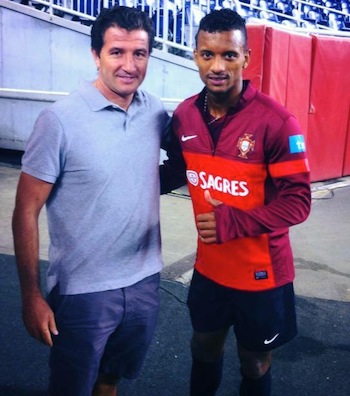
    This week I spoke to former Sporting player Pedro Dias (CHIQUINHO). Pedro is the Technical Director at Sporting FC Academy Toronto.

    Pedro a former professional footballer who retired due to injury after 15 years in the game. Pedro has been coaching for over 10 years in Portugal, the USA and Canada.

    TCD: Talk to me about your love for football, when did it begin? 

    PD: Since I born, I guess….lol I grow up playing soccer in my street with my friends and peers… It was a way of life, natural.

    TCD: You played for Sporting Club Portugal the 2nd biggest sporting club in the world after FC Barcelona. When did start playing there? 

    PD: I start my soccer career at Petrogal (U10) and then I play for Sacavenense (U14). Until I was scouted to try out at Sporting, and I made it. It was a new world for me and change my life. By that time, Sporting have the old stadium and the conditions were very different from now, but the coaches, players and staff make all the difference. It was fantastic playing beside Figo, Peixe, Porfirio.. and I have the opportunity to excel my qualities and sign as a professional Soccer Player at Sporting CP.

    TCD: How did you get into coaching? 

    PD: While I was playing, I decide to start my coaching education, I had 2 Acl´s operation and I start thinking in my next step. I have the passion and the drive for it, so it was a very natural process.

    TCD: What is your current role at Sporting FC? 

    PD: Im the Technical Director and Head Coach and I also run international programmes outside of Portugal. In my current role of Youth Technical Director and Head Coach at Sporting FC Academy, I am responsible for the day-to-day operations of a soccer academy for new/inexperienced players, as well as a competitive program consisting of 8 age groups – U8, U9, U10, U12, U13, U15, and U17.  I currently lead a technical staff of 16, in delivering the OSA’s Long Term Player Development strategy to develop young players properly and to their full potential.

    In addition to my coaching responsibilities, I oversee all administrative duties for the club, including: developing technical curriculums & manuals; overseeing recruitment and on-boarding of new players; and managing internal/external communications & marketing.

    TCD: What is the most important skill for a coach to have? 

    PD: Patience, Passion and knowledge.

    TCD: How long as SFC been in Toronto and what is the clubs philosophy? 

    PD: Sporting FC is a youth soccer academy opened in 2011, operating as a non-profit organisation in Toronto, Ontario.  Our club serves the broader GTA community, and has a membership base of approximately 300 athletes ranging in age from 4 to 18 years.  Sporting FC’s motto is to “educate for life through soccer”.  This philosophy of imparting valuable life lessons through a soccer curriculum is unique to our club, and is what gives our players the confidence and conviction to succeed in soccer and in life!

    TCD: What changes would you make to the grassroots game to benefit the development of children?

    PD: In Canada, I would like the new LTPD, which I support could be adjusted according to whats happening right now… for example I cancel the retreat line, definitely.

    TCD: Why would you remove it? 

    PD: In Canada we have the retreat line from u9s to u12s. “The Retreat Line has been introduced in the Toronto Soccer Association (U11/U12) Development Leagues to allow our young players to learn and gain confidence in how to play the ball out from the back and play forward to attack, as opposed to the goalkeeper “Sending It” aimlessly down the field.” “The Retreat Line will be positioned at halfway at the U9 and U10 age levels, while at the U11 and U12 age groups the Retreat Line will be signified by off-field cones (or flags), supplied by the home team and placed 1/3 distance of the field from each end.”

    My view is allowing the player 3 seconds to touch the ball, or allowing them not doing a oriented reception neither attacking the ball, the rule is not giving to the players the right tools to solve “problems” during the game. What the rule is giving is “laziness” I order they don’t attack the ball, and they let the ball be rolled in order to avoid the others players can attacking them. This is not game related. In my perspective “its a pill like pain killer” doesn’t solve the game, only create more problems on the long run. It’s not realistic.

    Also, this allows some coaches to neglect the basic principals of the progression: Attacking the ball, oriented reception and decide what will be the next step.

    What my players and team do is: They stay on the retreat line and don’t attack the player with ball, and do you know what opposition do? They just kick the ball away…. because they don’t have pressure and they don’t know what to do… “Kick and rush”

    TCD: What concerns you most about Canadian Youth soccer?

    PD: Many, the league system, the different leagues, low referee quality, low coaching quality, the winter and the indoor facilities are way too expensive, just a few aspects to change.

    TCD: What age do kids move to the 11v11 (Full Size) game in Canada?

    PD: They move at under 13. I agreed, because I consider this is the natural progression of the game with 7×7 on U9 to U10 and 9×9 on U11 and U12, if the coaching staff do their job properly the players should progress smoothly for the “bigger picture”. They should understand the game and they are mature enough to development and continually optimised  the routines of the 11×11 game.

    TCD: Have you any mentors?

    PD: Yes, Professor Rui Mâncio from Madeira Island.

    TCD: What kind of player do you like working with? 

    PD: Players willing to learn, and with drive to be better.

    TCD: Can Canadian soccer grow as big as US soccer?

    PD: Yes, definitely! But we are still little bit away…We need indoor facilities, and organize the grassroots until to build a national mens league. Long way to go.

    The Coach Diary would like to thank Pedro for this interview. You can find out more about Sporting FC Toronto on their website Sporting FC Toronto.

    Why not like their page on FB Sporting FC on Facebook

    -End

    I always like to hear your opinions and views. If you feel you have something to say, please comment below or email me info@thecoachdiary.com If, you don’t have anything to add then please forward this on to a friend. As always, thanks for reading.

    I’m also on twitter  @Coachdiary

  • Coaching Seminars This September 2014

    Coaching Seminars This September 2014

    COACHING IRELAND

    11th National Coaching Forum at the Institute of Technology Sligo, 26th-27th of September 2014. This Forum promises to be the biggest and most extensive gathering of professionals and volunteers involved in Sport Coaching. The Forum will attract coaches, physical education teachers, sports scientists, National Governing Body personnel and policy makers. Leading National and International presenters will take part in this event titled “Fun to Full Potential – Coaching the whole Athlete”

    The 11th National Coaching Forum will combine Keynote speakers, with practical and applied sessions, with opportunities to network with coaches from different sports. Previous National Coaching Forum has welcomed up to 800 coaches, both National and international. The Forum has become a “can’t be missed” event on the sporting calendar, involving coaches at all levels from up to 48 different sports.

    Key Note Speakers Include:

    • Billy Walsh: Title – Combat Leadership – Current Challenge Facing Coaches
    • Richard Bailey: Title – How People Learn (and how we should coach them) Applying Research Into Learning To Sport Coaches
    • Niels De Vos: Title – The British Atheltics Athlete Development Model- Ensuring Age Appropriate Coaching And Competition To Enable All Athletes To Deliver Their Best Performance As Senior Athletes
    • Sergio Lara-Bercial: Title: Coaching Children Holistically – Spinning Plates & Moving Goalposts
    • Missy Parker: Title: Getting it Right In the Early Years

    More Detail Here

    BOOK NOW

    NDSL

    Albert Vinas (Football Salou) will host the NDSL Coaches Club: 24th September 2014

    Vinas is a Spanish coach who has a wealth of knowledge in elite youth coaching, having spent 20 years developing some of Europe’s young stars of today. Throughout the workshop Albert Vinas will reveal the methods behind arguably the most successful style of football ever witnessed.

    Vinas has not only helped develop some of the best players around, but coaches too. Vinas has mentored and assessed coaches such as the late Tito Vilanova who managed Barcelona before he died earlier this year, and Rodolfo Borrell, who previously at Barcelona’s famous academy La Masia, Liverpool FC and more recently been appointed Academy Director at Manchester City.

    Vinas will be taking the workshop on Wednesday 24th at the Oscar Trainer Development Centre, Dublin 13.

    • Venue : NDSL – Oscar Trainer Development Centre
    • Date : Wednesday 24th September , 2014
    • Time : Reg @ 6pm – Workshop 6.30pm – 10.00pm
    • Cost : 25 Euro per Coach / Club Deal 5 Coaches for 100 Euro.
    • Contact : Mitch Whitty for Information @ 087 9513624.

    SWIM IRELAND

    National children in Sport Conference Sligo IT: 17 & 18 september 2014.

    • Highlighting
    • Examining
    • Exploring
    • Improving

     SILENT SIDELINE WORKSHOP: Monday 29th September

    • Have you noticed children playing the game with fear of making mistakes?
    • Does your child’s coach constantly scream and shout at the kids and officials?
    • Has your child given up the game, because it’s no longer fun?
    • Are you a parent, a coach, a manager, a grandparent or a friend?
    • Have you said yes to one of the above? Then you need to attend!!

    When: Monday 29th September:

    Where: NDSL Oscar Traynor Coaching & Development Centre, Oscar Traynor Rd Coolock D.17.

    Time: 7.30pm-9pm: Cost: €5

    Content: Giving the game back; Mistakes; Playing with Freedom; Winning & Losing; Self control; Observation; Prevention; Intervention; Sideline Keeper.

    Sign Up for the Silent Sideline Workshop

    SILENT SIDELINE WEEKEND: 04th & 05th October

    • Let the kids play.
    • All clubs, codes can get involved.
    • If the opposition aren’t willing to participate, no don’t worry we can learn so much from observing them.
    • Clubs to manage this initiative internally.
    • Club should select 2 sideline keepers to  reinforce a positive and silent attitude on the line.
    • Each club should have a silent sideline ambassador.
    • Absolutely NO shouting or directing from the sidelines.
    • Coaching staff to speak to players at halftime and when making changes ONLY.
    • Clapping & cheers allowed for goals scored and effort for both sides.
    • No directing or advice from adults at anytime.
    • Absolutely no questioning of referee in charge of game at anytime. (If required call ref over to your side)
    • Rope the pitches and provide a designated area for parents. (Stand back and observe)
    • Kids voices are all we want to hear on match day
    • Lollipops are a fun way of helping people to stay silent!

    To sign up go to silentsideline.org 

    -End

    I always like to hear your opinions and views. If you feel you have something to say, please comment below or email me info@thecoachdiary.com If, you don’t have anything to add then please forward this on to a friend. As always, thanks for reading.

    I’m also on twitter  @Coachdiary