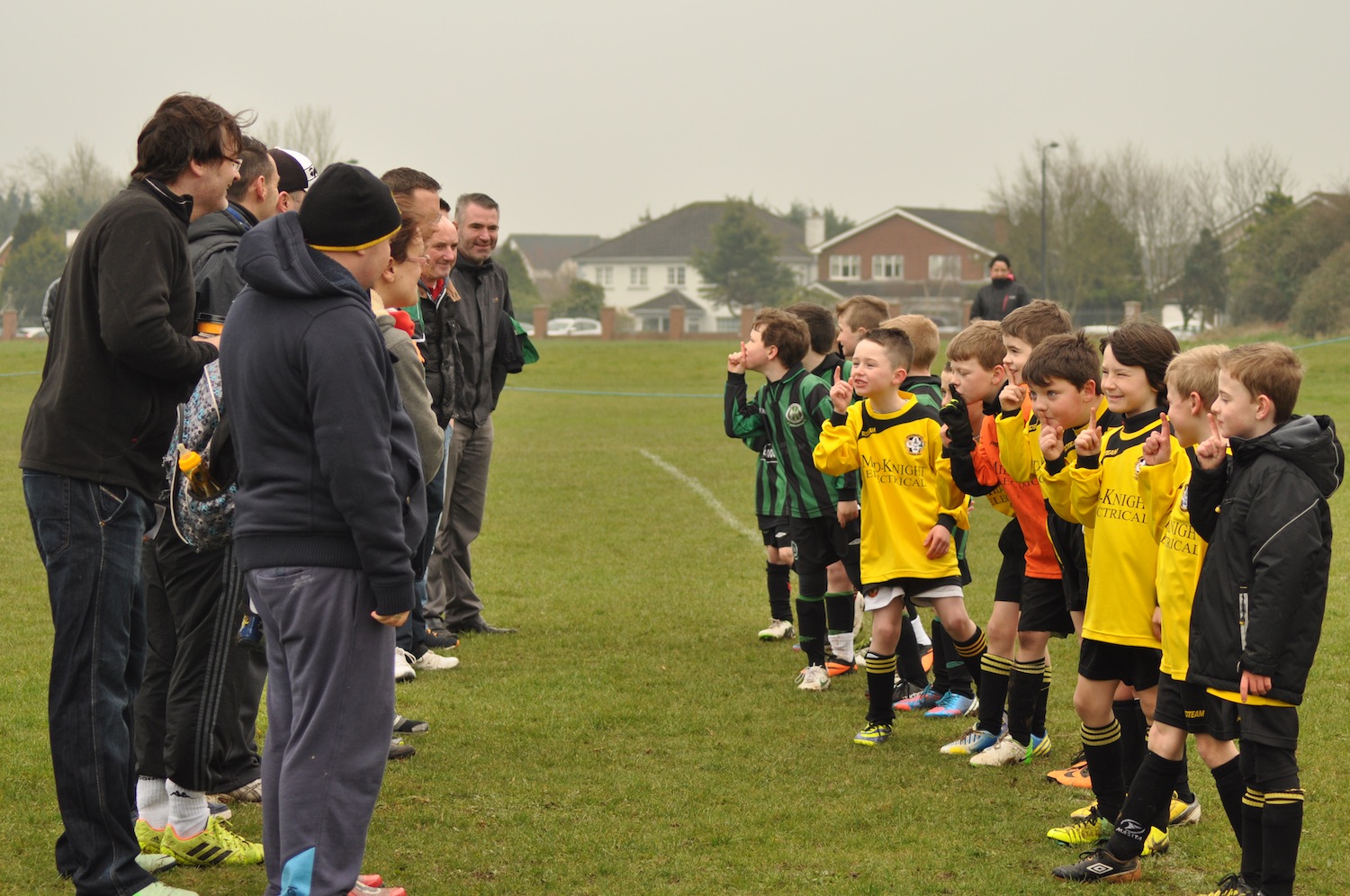
The Silent Sideline Weekend inspired me to let my daughter play on her own. If the basis of the weekend was to let kids play without constant adult instruction, then why was I allowing my daughter to be instructed. This weekend has taught her and I that she doesn’t need to go to an organised Gymnastics to learn gymnastics.
This weekend, whilst trying to convince people to get involved with the SSW by letting the kids figure it our for themselves. I had my own moment of letting my daughter do just that.
In-between radio interviews, roping pitches, putting up banners and my own game I tried to get my daughter into a gymnastics class. What was I thinking!!!
When I arrived they told me there was a 4 month wait. We sat and observed for 30 minutes and I listened carefully to the instruction and watched how the kids lined up to take their turn. In the 30 minutes we were there the kids didn’t move very much and the instruction at times was somewhat negative. It certainly wasn’t constructive or progressive (these were paid coaches). What I mean was, there was lots of 1v1 teaching moments but the coach never addressed them. Sometimes silence is the best response.
“If you control everything your child does, they will never take responsibility”
After 30mins my daughter grabbed my hand and said, ‘lets go and buy our own matt’. Off we went to Argos and bought a matt for 30 euros; back to the house to get the ipod and around to the club we went.
Whilst I spectated at 3/4 games (3+ hours of football), she did her own gymnastics, at her own pace, learning from her own mistakes. No coach, no waiting in line, no instruction, no one to tell she did that wrong or right. Free-play at her own pace. She was fully in control of her surroundings and movements. She was in control of the risk and I felt secure because I knew the surroundings were safe.
Over the 3 hours, other kids entered the hall and got involved. At one point my daughter was coaching them and they were coaching her. What they did in 3+hours the kids at gym may not have done in an entire term, who knows. One thing is for sure, she didn’t need a coach.
Kids Play
Look at where we are now in relation to children and play. We have now come to a point where kids feel they need adults to help them learn and play. I haven’t been in favour of anyone under the age of 7 participating in organised sports (unless they are begging to go every-weekend), many reports show that early sport specialisation does not lead to the performance advantages over other kids. Rather, children who specialised at a later age performed better than those who specialised earlier. I believe we should instead be focusing on the fundamentals of multi directional movement and reaction but not even the schools allow for this anymore.
“Athletic skills such as speed, balance, mental focus, jumping and reacting are all stressed differently in different sports. These athletic skills will later transfer to the child’s primary activity, so everything a child does to become a better all-around athlete will make the child a better soccer player, for instance.”
I plan to keep my daughter away from organised sports and instead push her to teach herself how to play, whilst providing opportunities for her to improve her fundamental movement skills at her own pace. I know there are coaching moments in my daughters (sport) upbringing, however each moment is not necessarily a coaching moment.
There are many benefits to unsupervised outdoor play and experiences in nature, including a reduction in obesity and the symptoms of anxiety, depression and ADHD. Research has also shown that children learn self-control over their own actions and decisions in this time alone without their parents or coaches. Without time unsupervised, children may not develop a sense of self-control or an ability to judge and manage risk on their own. Free play allows for this.
Playing without Adults
So, joining the nearest sports clubs, gymnastics club, swimming club because your friends child has joined is not always the answer. What your child needs and what your friends child needs most certainly won’t be the same thing.
Allow children to be active on their own, get them out of the house, out in the air. If you feel they’re safe, leave them on their own for a while and allow them to discover without you hovering (helicopter style parenting) over their heads.
We talk about the death of street play but at the same time when we see kids playing on the road we see this as a treat. There has been many cases in the US and Australia of parents being arrested for letting their kids play unsupervised. Kids playing on their own is now seen as a crime in some parts of the world. Can you believe it!!!
Outdoor play is vital for a child’s development and connection to the outside world but if we are arresting parent’s rather than encouraging this, what hope do our kids have. Am I doing the right thing?? It certainly feels right, even if it is a crime!
Please do let me know what you thought of the Silent Sideline Weekend and most importantly what the kids thought?
-End
I always like to hear your opinions and views. If you feel you have something to say, please comment below or email me info@thecoachdiary.com and if you don’t have anything to add, please pass this on to a friend.
As always, thanks for reading. I’m also on twitter @Coachdiary
One thing I’ve learnt about coaching kids is to keep parents informed on team rules but don’t get too close it may backfire at some stage. Believe it or not 99% of parents are workable and don’t get involved. To make things work for you, training the parents early on sets the standard going forward.
The parents aren’t your best friends nor do you want them to be. For years I’ve listened to parents talk about players and coaching staff from a distance. They forget that Ireland is very windy, and sound travels easily. I respect parents, I appreciate the time and effort they make to get the kids to and from training and I enjoy seeing them there on match day. What I don’t like is when they start to interfere in things that don’t concern them.
“Players do not need adults to question their actions, the actions of other players, or the coach’s decisions concerning team dynamics or playing time, this does not concern you!” – TCD
I always find it funny when unqualified parents offer their advice on the team selection or say things like, ‘I don’t agree with your changes etc etc’. If you’re one of those parents reading this article; Coaches don’t really care what you think!!! They are in it for the kids not for you. All we need from you is to support your child and don’t talk negative about his/her coach. Most kids actually like their coaches, and when you talk them down, they don’t think you’re being cool!!
“Do not allow a player or his/her teammates to put themselves or anyone else down. We are hear to build self-esteem not destroy it.” – TCD
One of biggest issue kids will face playing a sport is the interference from their parents in team dynamics. I see it all too often, where parents take every single decision made personally. My advice is to back-off, it’s not your game and it’s certainly not your team, so stop going on like, you’re playing.
According to Dan Gould at the Michigan State University Institute for the Study of Youth Sports:
Kids want to have fun, to get better, and to be with their friends.
They want parental support and encouragement.
They want you to watch them play and praise them for their effort.
They want you to be realistic about their ability.
And they want you to be present, and interested in what they are doing.
They do not want you to shout at them the coach and the refs. They don’t want you to put too much pressure on them, or be overly critical. They want the game to be theirs!
John O’Sullivan from the Changing The Game Project, who recently spoke in Dublin added, “When I grew up, it was children competing against children. With two adults on either side. Now, more often than not, it’s adults competing against other adults through their children.” “It’s know as ‘adultification’ of kids sports. It’s the introduction of adult values into kids’ games.”
This causes myriad problems. Dan Saferstein, PhD, a sports psychologist and author of Win or Lose: A Guide to Sports Parenting, works with young athletes, including U.S. hockey national youth teams.
“If you get a high-achieving, talented kid with a pushy, high-achieving parent, it can work out,” says Saferstein. “The kid can somehow rise to the expectations of the parent, and the kid may even share some of that drive himself.
“What can be tragic, though, is when you get a more driven, consumed parent with a kid who somehow, in the parent’s eyes, just doesn’t measure up.” The result, says Saferstein, extends further than sports: “The kid feels like a failure.”
Parents often misperceive their child’s natural talent. “There’s a myth in youth sports that if you work hard enough, you can achieve anything,” he says. “It’s not true.”
Majority of kids (especially teenagers) don’t want you to fight their corner, yes they want you too support them but they don’t want you to embarrass them with your actions.
Don’t base a football season on a single game. Parents can judge you at the end of the season by asking 3 simple questions:
1. Has the child become a better person?
2. Has the child improved?
3. Was the coach fair to the child?
What Works & What doesn’t Work?
Most parents who are pushy, do so because they don’t know how to be helpful and do not understand the effects that this has on you and their child. They generally bring up issues at the wrong time. My advice is never vent before or after a game. Take 24 hours and approach the coach then.
We know all parents want is for their child to be happy and successful and when they take things personally is normally cases them to say things in the heat of the moment. You are in a position as a coach to give parents the 2 things that they want the most for their child to feel happy and successful.
For most coaches it’s not about winning. It’s about having fun, improving and giving the players the best chase of being successful in a game. Success is not always defined as winning. Winning is great but getting better is more important.
There are lots of things in life we can’t control. For instance focusing on taking another kids spot in the team. Parents should never tell their child to focus on taking someone else’s place. The player can’t control that but he/she can focus on getting better.
Communicate early on with parents. Set the sideline behaviour standards and what’s expected of them and get them to commit to the parent pledge. For parents specifically state that coaching is something you do and they don’t. Define what it means to coach so that they won’t have any confusion.
Be approachable and encourage them to come to you directly if they have any issues. Listen to them and give them the feeling that you hear them and can understand where they are coming from, even if you don’t agree with them. Allow them to talk first and finish talking before your start.
If they push your hot buttons, stay in control of your emotions. If you lose control, you will say things you don’t really mean and most likely be ineffective.
Do they know about your club rules, philosophy and coaching methods. If they don’t make sure your inform them.
Let them know about the players rules. Try and set 3 rules for the season, for instance; 1. Respect everyone on the team 2: Commitment works both ways. If a player is not involved, he’s not committed. 3. In order to be selected a player must train with commitment and a willingness to learn. He/she must be prepared to focus close to 100% at all times.
Let them know that you won’t tolerate player or parent bad behaviour and every violation carries a punishment.
You won’t always get it right and if you’re starting out if can be even more daunting. Get yourself educated on the best practices, never ever act as if you’re not the expert. If you don’t know just tell them (non-conflict way) that you will get back to them and go an educate yourself on how to deal with issue or question. You can always ask a more experienced coaches.
Define team goals and make sure the parents know what the goals are.
Not all kids are the same. Some are better than others and some bigger than others. All kids develop and learn at different stages. It’s a natural process. Most parents don’t understand why their child may not be performing at a certain level and winning everything in sight. Tell them not to focus so much on the weekends game. Learning about the game is a long process and success should be measured long-term not short-term.
I added this after I posted the article because it was something that happened recently. You might find the reason a player is not doing what you have asked him to do week after week because (A). He still doesn’t understand what you’re asking him to do, so maybe try and explain it in a different way or (B). He’s father has been telling him to do the complete opposite (as happened to me). This is another reason why parent’s should let the coach do the coaching and they do the supporting.
Finally, let them know that you don’t just show up at the weekend and decide you starts and who doesn’t. The higher the level the more the coaches and managers are in discussion about team dynamics, formations and tactics (11 aside football mostly). 99% of coaches don’t take picking starting line-ups lightly. As soon as one game is finished they are thinking about the next one. For most of us it’s a daily discussion. I’m not referring to small sided games!
When you allow parents run your team and make decisions on your behalf, it’s time for someone to move on!!
-end
Date for your diary:
04 & 05th Silent Sideline Weekend
29th September Silent Sideline Workshop, (Supported by Fingal City Council)
I always like to hear your opinions and views. If you feel you have something to say, please comment below or email me info@thecoachdiary.com and if you don’t have anything to add, please pass this on to a friend.
As always, thanks for reading. I’m also on twitter @Coachdiary
So many things stood out for me at John O’Sullivan’s Talk in Dublin recently, but one thing I took home was a little exercise he did at the start of the talk.
So John was discussing the common issues that kids face in youth sport through out the world. He does an exercise were he asks the coaches to list five words or phrases that describe their best coach and/or teacher. He got us to put these on sticky notes and place them up on the wall (see pic) under two categories:
Technical/Tactical knowledge of the game.
Connection/Emotional intelligence.
“These master coaches have learned that you get the most out of athletes and teams by valuing them and connecting with them as people first, and players second.” – JO’S
John has done this exercise with thousand of coaches and initially he was surprised but as workshop go by, the results are the same.
John makes the point that, “80%-90% of the characteristics that make a great coach, as stated by coaches themselves, have nothing to do with X’s and O’s. They have nothing to do with knowledge of the game. That is a minimal requirement that a coach needs to be great. The vast majority of sticky notes describing the characteristics that make a coach great are posted under ‘Emotional Intelligence and Connection.”
So what’s the problem?
I’ll let John tell you:
“We don’t teach any of this to coaches! We spend 98% of our “coaching education” collecting drills and studying tactics, yet we say that only makes up 10-20% of a great coach! I have yet to meet a coach that put more sticky notes under “Knowledge” than he or she put under “Connection.”
John goes on to say, “most coaches I cross paths with think that collecting drills and immersing themselves in the X’s and O’s is the path to greatness. But the coaches I have been interviewing for my research into cultures of sustained excellence understand that knowledge is what all coaches need, but it does not separate the good from the great. These master coaches have learned that you get the most out of athletes and teams by valuing them and connecting with them as people first, and players second.
Make sense, doesn’t it!!??
Coaching sport is fundamentally about the player/coach relationship. It’s about the intellectual, moral, social, emotional, cognitive and physical needs of the child and it’s about you getting better at getting better.
“Our professions has lasting values for life. Most of us coach how we were coached but it doesn’t have to be that way. If you are able to make one positive change to your style, consider what you are doing for the next generation of coaches and the players you currently coach.” #NeverStopEvolving -TCD
Our knowledge of the game will only get us so far. The more we teach the better we get. The more we learn the better we become. In the world of teaching we should never cease to become better. If we become stagnant, so will the kids we coach. As we grow so does our relationships with the children we teach. We improve together.
Think back to last year, even two years ago – look how much you have improved. When I think back, I think “wow, look how much I have grown as a coach and have the kids got better?” Sure, they have!
To become a better coach you need to step away from the norm and search for new ways and ideas. You need to study the best coaches, take something from each of them to develop your own positive ways by taking your coaching further and further. To quote John,
“You can start becoming one by studying these coaches and master teachers, learning about their cultures of excellence, and taking your coaching to whole new level by leaving the X’s and O’s alone for a bit.”
-End
Date for your diary:
04 & 05th Silent Sideline Weekend
29th September Silent Sideline Workshop, (Supported by Fingal City Council)
I always like to hear your opinions and views. If you feel you have something to say, please comment below or email me info@thecoachdiary.com and if you don’t have anything to add, please pass this on to a friend.
As always, thanks for reading. I’m also on twitter @Coachdiary
As many as 90% of all volunteer coaches are parent coaches. There has been 2/3 major studies in this area of coaching both showing positive and negative results.
So many coaches start out as regular parents standing on the sideline every weekend cheering on their son or daughter. Little did they know that several days later they would be handed the club jacket, a list of players, parents details, some football, bibs, cones and a good luck and big pat on the back.
It can very daunting for someone who has never kicked a ball in their life and now has the task of managing and coaching a bunch of kids. Not many people will get the opportunity to coach their own kid, which can be a wonderful experience working together.
Many look back on this experience as the best moments in their lives but many kids also back on it as a very difficult time and in many cases – one that they would rather forget.
The Butterfly: There was a great story about a young boy who observed a butterfly unable to emerge from a cocoon. The butterfly appeared to be struggling and in pain. He rushed into the kitchen and brought out a scissors. He carefully snipped the cocoon open and the butterfly was free. But the butterfly’s wings where twisted. He later learned, the struggle and pain the butterfly must endure to emerge from the cocoon were necessary for it to fly. This story is so relative to how children learn, grow and deal with struggle and disappointment. Sometimes we just need to let them figure it out for themselves and not be so quick to propel them along.
Here are some tips I’ve learnt for making the joined experience a much more positive one for all concerned:
Ask you child how they feel about you being involved with the team. They may not like the fact that you are involved (unlikely) and it’s good to know before you set out on this long journey as your child’s coach.
Avoid parenting during training and game time.
You are now in a position that requires you to wear two hats, one as a coach and one as a parent. In order to be fair you will have to explain to your child that he/she will be treated like everyone else. This is probably the most difficult part of the role switching from a coach to a parent and vice versa.
Some people like to label the role, so during the sport you’re the coach/manager. (A bit like a teacher when teaching his/her own child(ren) in school.)
If the other coach also has a child on the team, when giving individual instruction use what is know as the “cross-over approach”…. You work with other coach’s child and he/she works with your child. That way it keeps things separate.
Never stop being a mum or dad and reaffirm how much you care for them always. You can never give enough praise once it’s specific.
You may need to let you child know each time you talk to them as a coach or as a parent.
Most parents who coach their son or daughter’s team generally end up being unfair to their child or give them more game time than the others. In many cases the child hasn’t earned that place or position through effort, skill or ability. There is nothing worse than a coach who favour his own son or daughter over others. You can be sure that the rest of the team will know if your being unfair and if they don’t, their parents will and it won’t be long before they are talking about you to others.
On the other hand, the coach who is harder on his own child, can be holding that child back and preventing them from having a good relationship with that sport. It’s always good to ask your assistant if you are being fair to your child compared to the other players on the team. I’m yet to meet a coach who has gotten this part of the job 100% right all of the time.
Again you have to treat everyone the same for better or for worse. If your child can get away with messing about during training, giving you lip or other forms of unacceptable behaviour other players would get reprimanded for you’re not setting a very good example. Be consistent with this.
The worst thing you can do is talk bad about the other players on the team to your child. This will certainly put him or her in a very difficult situation with those players. Remember those are your child’s team-mates and it’s very important that you build team cohesion (togetherness) and not destroy it.
Do you know enough about teaching the sport to be fair to everyone. This is probably going to be one of your biggest challenges. So you better be prepared to learn quickly. Put in the time and effort to develop your own game (Coaching).
You might feel that you want to do some extra coaching with your child to improve them. Make sure, if you are doing this that it’s fun and not like training. Don’t wear your coach/manager hat, this is a time when you should definitely be wearing the dad/mum hat. This way he or she will be mentally fresh for team training rather then not knowing the difference.
” One positive aspect includes being able to spend quality time together. Additionally, the child perceives that he/she gets special attention, praise, and perks, such as being on familiar terms with the coach. In the child’s perception, having your parent as a coach is an opportunity to receive motivation and technical instruction that others on the team do not have. In the perspective of the parent, being both coach and parent provides the opportunity to teach values and skills, the opportunity to see how their child interact with friends, and the ability to see their child’s accomplishments and take pride in them” – Weiss & Fretwell 2005
Your time coaching your own child will pass by quickly, so make sure both of you are having a positive experience at all times. Don’t let winning get in the way of your decisions. Sport is a wonderful avenue to help your children learn valuable life long lessons. Do your part to insure that these lessons they are learning are constructive, positive and most importantly FUN! This is no easy task – so don’t be afraid to speak to other parent coaches and get their perspective on things both good and bad.
Weiss & Fretwell study also showed the negatives side for all concerned such as:
Feeling pressure and higher expectations; being subject to unfair behaviour and more criticism for mistakes.
Being on the receiving end of anger.
The father-coach lacked empathy and understanding of the son’s perspective.
Fathers reported feeling that it was difficult to separate the role of coach from the role of parent.
There is also the perception that differential treatment exists for the coach’s son. This perception exists not only in the minds of the sons, but also in the minds of the parents and other teammates.
The children of the coach received more negative feedback from their fathers than the other team members.
Fathers viewed themselves as placing more pressure and higher expectations on their sons.
Fathers felt they gave more recognition to other players.
Teammates of the coaches’ sons reinforced the fathers’ views, saying that the “the coach was more likely to disadvantage his son compared to his teammates”
Also some of the teammates did report feeling that the coach showed favouritism to his son.
These studies have limitations and cannot really be generalised to the whole population of parent-coaches and child-player. A small number of participants participated and they had not quite reached adolescence or who were just hitting adolescence. It was not the highest level of competition. The last two factors could affect the amount of pressure and anxiety perceived by the children.
Finally, try to act on the sidelines in a way that would make your son or daughter proud to have you as a parent and a coach. Remember, your child is not the only one that’s performing during the game (don’t follow them around with a spotlight over their head). You are also a performer (A SILENT ONE) and the quality of their experience is firmly in your hands. Conduct yourself in such a way that you clearly communicate to your child and those around you that this is just a recreational game for children, played by children because it’s FUN. It’s unlikely any of these kids will turn professional even if they believe in the dream. One thing is for sure these early years of participation are some of the best years of these young players life’s and it is our job to make sure these years are just that……… And always remember children don’t value winning as much as adults do. The most important thing is they do their best (give their best effort) for the team, each and every time they play and train.
I’ll finish by saying that without parent coaches we would have no game and most teams wouldn’t even exist. My advice is don’t coach your own child forever. It’s great at the younger ages but there is a time to step away and just watch them play. I would suggest that you devote some of your time to just being a dad or mum (supporting from the sidelines) and when it’s time to let go (as the coach), let go or else you might lose them forever.
Do you coach your own child? Have you any advice for parent/coaches?
-end
This is for you Joe!
Ref: Barber, Sukhi and White 1999, Weiss & Fretwell 2005
Barber, H., Sukhi, H., & White, S. A. (1999). The influence of parent-coaches on participant motivation and competitive anxiety in youth sport participation.
I always like to hear your opinions and views especially parent-coaches. If you feel you have something to say, please comment below or email me info@thecoachdiary.com If, you don’t have anything to add then please forward this on to a friend. As always, thanks for reading.
Last week it was the parent’s turn to take the pledge and be a supportive parent. Responsibility also falls on the players to commit to their game, do the best they can possible do and respect the opposition, their fellow players and the officials.
“When I grew up, it was children competing against children. Now, more often than not, it’s adults competing against other adults through their children.” – John O’Sullivan
Kids can provide a positive attitude and be a honourable participator.
I pledge to have a positive attitude and to do my very best each and every time I play sports:
I will be a good sportsperson and respect my fellow players, coaches, officials, parents and the opposition.
I will arrive on time to training and games.
I will do my best in training and not miss a session when it is reasonably possible.
I will make sure if I’m missing training or a game, my parents notify the coach at all times.
If I train I will expect to receive a fair and equal amount of playing time.
I will always treat people with respect, including my fellow players; coaches and parents. I will expect the same from them.
I will always play with a smile and have fun and will notify parents or coaches if it stops being fun.
I deserve to play in a healthy, safe and friendly environment and I expect adults to make sure my wish is respected.
I will encourage my parents to come to my game and support me in a positive way. I want to make them proud of me today.
I will do my very best in school. I know that sport is very important part of growing up and I also know that education is even more important.
I will wear my club colours with pride and make sure I always have my full kit in training and on match day.
I will play in any position my coach asks me to play in. I will put my team first and give 100% effort every time.
“When a kids plays sport the most important thing is that they have a good time, having fun is one way of making sure of that” – TCD
I always like to hear your opinions and views. If you feel you have something to say, please comment below or email me info@thecoachdiary.com If, you don’t have anything to add then please forward this on to a friend. As always, thanks for reading.
I regularly get emails from parents looking for advice on their kids football. This time of year kids are either settling into their new team or still waiting to find out if they are going to make the squad. For many parents and their children it can be a very anxious time and a coach holding off on communicating his intentions, can make it even more worrying for the child.
In an ideal world, we would never drop anyone but then that wouldn’t be realistic – to how teams are organised for various reasons. Also if we had the option to move players up and down during the season this would also help with player development, however kids football/sport is not is mostly run by people who don’t understand how children develop so therefore they aren’t thinking of development when they set out the rules. If children could play mixed age groups this would also help with making sure everyone is playing at the level to best suit them. Not all kids of the same age are the same size or have the same ability. Allowing for mixed age group would help the smaller and weaker late developers.
There is nothing worse than having to shatter a kids dreams and dent their self-esteem. After all sports should be about having FUN and everyone should be able to play with their friends but unfortunately competitive (organised) youth sports does not work that way and for many kids this is a lesson they learn very early in life and it certainly won’t be the last time they experience the disappointment of being dropped from the team.
Many clubs have an ethos that sport should be fun, that learning the game and developing skills takes precedent over everything else and that all kids will be given a fair opportunity to play. However, in reality and with the best intentions it’s doesn’t always workout that way. Many coaches are about getting the best kids in, so as to boost the chances of winning the game (league), so too feel a sense of achievement, it’s good for their egos and makes them look good.
The Process
Those who are deemed “good enough” by the coach’s judgment make the team and get their name on the panel.
Every child wants to start back in school bragging to his mates about his new team but as we know, so many are still left wondering who they are going to be togging our for the season ahead. Those unfortunate individuals who didn’t or haven’t lived up to the coach’s expectations; who weren’t considered talented enough, quick enough, hard enough, technical enough, big enough or in any other way worthy of a spot on the team don’t have their names on the final squad! Unless your child as all or some of the things mentioned or unless he’s the managers son or daughter then he/she could be in for a disappointing year. Cutting squads down is a necessary evil and it’s the hardest part of the job, I’m yet to meet a coach who likes to cut players. The biggest issue I find it many don’t have the decency to do it correctly, taking the child feelings into consideration.
Personally I feel the July 1st transfer (football open season in Ireland) date does not give coaches enough time to look at players. If teams could try-out new players once their season was completed it may prevent so many holding onto 20+ players a week before or after the season has started. Coaches already volunteer a huge amount of time and coming back into training a two weeks after they have just finished doesn’t give the coaches and players enough time to re-charge. That’s my own feelings on this.
“Getting cut is one of those major emotional setbacks for most serious athletes. It’s frustrating, depressing and a tremendous blow to your ego. In a sense, what the coach is saying to you when he/she cuts you is that, in his opinion “you’re simply not good enough to be on the team” and that he believes “all those others chosen are better than you.” (Keep in mind this is NOT fact. It’s merely this coach’s opinion!) – Dr.Goldberg
When taking on new players, try not to be so quick to make a decision, the best way to evaluate kids is to see them play in competitive games. One thing is for sure, a single game or just training won’t tell you very much about a player. This pre-season it has taken as us many as 8 games to tell if a player can add something to the squad, philosophy or not and even then most players are likely to go through a purple patch for a period of time, that’s were the real coaching comes in, trying to get him back to his best again.
I always want to be fair to the kids that were showing up and also to the ones who weren’t quite there yet.
The most important issue here is how a Coach drops the players:
Does he text the players?
Does he hold final training session and tell the players after in a group?
Does he hold a team meeting and call the players out one by one?
Does he tell the player or tell the parent first?
We all know whatever the coach decides to do, most coaches do it very badly. The reason being that it’s not something everyone likes doing and process of being dropped can be devastating for the child to the extent where they carry emotional scars that can last a lifetime and you will be remembered more for this than the few years you spent helping the child to where he or she is now. Still to this day I remember calling players in to a meeting with parents and after all the success we’ve had this moments are the ones that stick in my mind to this day.
Dr.Goldberg talks about the process,
he says, “Adolescents as a rule are uncertain of themselves. They typically have very low or shaky self-esteem. They are looking for mentors to connect with or other adults that they can begin to model themselves after. They are looking to fit in with their peer group and the fear of not being accepted is frequently intense and foremost in their mind. While an adolescent may come to your tryouts with an outer sense of bravado and cockiness, not too deep inside of them they are fairly insecure and burdened by feelings of inadequacy.”
“The process of tryouts with the prospective of getting cut puts most kids this age under a significant amount of stress and further feeds their sense of insecurity and aloneness. This is even truer for those athletes who do not have the caliber of athletic skills that their older, more experienced teammates may possess.”
He goes on to say,
“Most kids who get cut do not know how to handle this potentially significant failure. They do not know how to put this kind of experience into a healthy perspective. They do not know how to separate their sense of self worth as an individual from this massive blow to their ego. As the designated adult and educator in this situation they need your help. You may not have to deal with them until the next year, but because they showed up for this season’s tryouts you have a responsibility to them. To put it bluntly, you owe them!”
The rest of what he says is so good not to post, as coaches we owe it to the kids that show up. We owe to the ones that have just spent a season or two with the team. They have contributed to the success, the journey, the high and the low’s. No matter how you feel about that kid, the coach owe’s him that respect.
Dr. Goldberg says,
” You owe them courtesy, respect and, most of all, sensitivity. You owe them a minimal amount of help in handling their failure of not making your team. You owe them honest feedback about what they need to do to increase their chances of having a more successful tryout the next year. In other words, you owe them more courage, directness and decency than is usually provided by impersonally posting a list of names with theirs omitted. When I say that you owe them I am making some critical assumptions about you. I am assuming that you are committed to the coaching profession, that you truly have your athletes’ best interests in mind and far in front of your own, that you sincerely care about these kids that you’re working with as individuals well beyond their athletic skills and performances and that you are interested in and committed to encouraging personal potential in the youngster s that you come in contact with.”
Dr. Goldberg he’s a “terminal optimist” but not stupid and he’s well aware there are coaches out there who truly don’t give a rat’s ass about these personal qualities and commitments that he has addressed above. Either the lack sensitivity or they lack the experience and knowledge in dealing with letting players go.
Goldbery say, “These individuals are not in the business of shaping today’s youth in healthy and positive ways. They are, instead in the sport for themselves. They are too selfish and immature to really care about the kids that they come in contact with. As a consequence they are totally insensitive to the impact that they may have on their young athletes. These are the kinds of coaches who are destructive, end up traumatising many of the kids they work with and who give the coaching profession a bad name.”
Remember, if you have to cut, do it with courage and class. Your kindness, sensitivity and the minimal amount of extra effort and time that you take with the young athletes that you drop today can make all the difference in their athletic career tomorrow. As I right this I know I have got it wrong in the past but I will do my best never to get it wrong again. My apology now won’t change how I made that kid feel. That feeling will stick with him forever.
Below are some questions I ask myself when evaluating a player, I know that attitude can be as much as 70% of what makes a an excellent player. Respect, hard work, commitment to the team are very important to me as a coach. Having a set of core values which define you, is one way of getting the right players for your team. You won’t alway get it right but having some sort of process will certainly help.
Evaluating a Player (in this case a 13/14 year old) you’re keen to take on:
Is the player as technically proficient as current one on the team?
Can he use both feet?
Has he got the right attitude?
Is he respectful?
Is he willing to learn?
Does he listen to you?
Can he play in different positions and is he willing to do so?
Has he been measured against players of similar ability (Test him in games)?
He is going to add to what you already have?
Can he take direction and constructive feedback?
Is he committed and are his parents committed?
Does he work hard to help out?
It’s best not to judge after just one game and a few training sessions. Unless you can clearly see he or she is not at the same level for now, otherwise give them some time.
Also ask the old guard about new players, get their opinions. Kids are very honest. Sometimes things have been said that you may not have heard. You’d be amazed to hear what some of the current players think.
Releasing A Player:
I will give my honest opinion based on what I have seen.
I will make reference to areas a player can work on, if I’m asked.
If the player has potential but may not be ready for a certain level, I would suggest he drop down for a year and play under less pressure.
Come back next year and try again.
Each year is a clean slate.
Every month is another month to improve.
“A child failures hold very valuable life lessons, lessons that contain the keys to future success. Failures provide players valuable information about certain weaknesses, about what you did wrong, about what you need to work on. Valuable information to getting better and reaching a higher level in the game”
If you have doubts about player don’t be rash with your decision. Try and organise more games to see the player in action. Even if it means playing other teams within the club or older teams. The more games, the more you see. At least you have given him the best possibility to shine over a series of games and even then you may not make the correct call.
Dealing with the disappointment
The one thing Parents don’t want to hear, is negative information about their child’s ability; so be very cautions how you address the situation and certainly don’t leave the player or parent angry with what you have said.
When dealing with a parent:
Try and keep it sort and simple.
The longer the player has been with the team the more effort you should make.
Listen to what they have to say and don’t interrupt.
Be specific and gage the tone of the conversation.
If it starts to get heated it’s best to try and finish the conversation on a positive.
If that player lacks the qualities you are looking then be specific to those things.
In certain situation it may be that you have to0 many players, in this case communicate to the parents the obvious argument that you have to limit the size of the team because there just aren’t enough resources, equipment, playing time and possibly coaches available to keep everyone on the squad who tries out.
“Failing is something that happens to us on the road to success. Failing does not define whether we are good enough or not. Failure is great feedback and we can’t learn, grow or get better at anything without enough of this kind of feedback in ours lives” TCD
Questions the player can ask the coach, after being cut:
Last season I was playing every game, whats changed?
What specifically do you think I need to work on to make me a better player?
What do you think are my weaknesses?
What suggestions would you have on how I can directly work on strengthening those weaknesses?
What skills and strengths did the players chosen have that you think I lack and need work on?
Any other advice you could give me to help me get better?
What should you do when your child gets cut and how to deal with their devastation:
Listen Carefully:
Try to be empathetic and understanding,
Don’t interrupt them.
Try and see it from theirs eyes, they may not be able to use your words and advice at this time.
Don’t take their feelings away, allow them to feel sad.
Don’t Assume everything they say is right:
Of course you want to believe everything they say.
They’re emotional and sometimes what the coach said, may not be exactly what they are telling you.
Contact the coach and to try and understand the situation.
Gather as much info as possible.
Arrange a meeting.
Don’t criticise your child:
Focus on the positive of their game and be specific.
They need your support, understanding and love.
Remember your the parent now not the coach.
Turn every situation into a learning experience:
Set backs can form the foundation for future successes in life.
This is an opportunity to focus on the suggestions given by the coach.
This information is vital for your child to develop,
This does not mean they have failed:
When we fail it’s natural to see ourselves as a failure.
Failing is how we learn, it’s part of the process.
It doesn’t define us as a person, learning from those mistakes might.
To be a success in life our job is to learn how to effectively deal with being cut.
Don’t let them give up:
Failings are nothing more than speed bumps on the road along their journey in life.
When they hit one, fall, they simply keep going.
Encourage them not to give up and keep working hard on getting better.
This is only one persons opinion.
These messages may not be what you child needs to hear straight away. It may be later that night, the next day or even later in the week.
Share your own set-backs:
Be calm when you talk to them about their situation.
Kids learn sometimes better with how we say things.
When the time is right, share some of your heartbreaking setbacks and how you overcame them.
Talk to them about your failures.
“Your failures do NOT reflect your potential”
Conclusion
The next time you cut players try and be a little more sensitive. Try to show respect and have the decency to let players know they are being let go for now. It’s takes courage to do it the right way and it’s not easy.
If you can take the extra time to sit down individually with each and every one of the players.
You don’t need to justify your decision, that is entirely up to you, however it’s better you give some feedback for all concerned.
And make them understand what they need to work on to get better.
He may have been key for the team last season and all of sudden he’s getting released.
For kids who have been with the team for a long time, it’s the time to empathise with them and encourage them to use the disappointment to progress. A motivation to improve and to come back next year and try again.
Kids develop at different rates through the various stages, so don’t be quick to write them off. 6 months is a long time in a child’s development. Always inspire them to keep going and never give up and make sure you invite them back next year. If you can take time out to go and watch them play.
Check out Rasmus Ankersen (www.rasmusankersen.com) video of travelling around the world to crack the secrets of the world’s best performance hotbeds. In this video he explains how you can improve your ability to spot undervalued talent.
Reposted and updated August 2015 and January 2016
-END
I always like to hear your opinions and views. If you feel you have something to say, please comment below or email me info@thecoachdiary.com If, you don’t have anything to add then please forward this on to a friend. As always, thanks for reading.
Why not start the season and take the pledge to be more encouraging at your kids match. This way you commit to implementing a healthier and sustainable pathway to success, which falls on the shoulders of everyone involved with Kids Sports – especially Parents.
TCD wants to insure that Kids Sport can be enjoyed in a safe and positive environment. Remember that football and all sport provide kids with the opportunity to develop, their Technical, Physical, Tactical (older) and social skills.
Winning is not the number 1 reason they get involved.
Parents are continually asked by clubs to get involved and be a supportive spectator, here is one way to can be just that.
I here by pledge to provide positive support, praise and encouragement for my child participating in this game, by following the Parent Pledge.
I will let my child play and have fun in a safe environment.
I will let my child choose the sport(s) he/she wants to play.
I will get my child to and from training/matches on time.
I will remember that the game is for kids and not for adults.
I will let the coaches take responsibility for instructing and teaching my child.
I will refrain from making negative comments about my child’s coach in my child’s presence. I understand that everyone is trying their best and sometimes people make mistakes. By doing this I understand this will avoid planting negatives thoughts in my child’s head that can negatively influence his/her motivation and sports experience.
I will focus on using sports to teach life lessons to my child and his teammates.
I will teach my child what it is to be a ‘Winner’. A winner is someone who gives their best Effort, always want to Learn and does not let Mistakes, or fear of making mistakes stop them from improving.
I will provide positive encouragement to my child and his or her teammates and will never ridicule or yell at my child for losing a game or competition.
I will limit my comments during the game. The game can be a very chaotic experience for my child, especially trying to deal with the fast-paced action and having to listen to teammates directions, as well as blank out, all the sideline noise and focus on things the coaching staff are saying. I will not at to the confusion.
I will set an example to always respect the game and encourage my child to remember the ROOTS (Respect for the Rules, Opponents, Officials, Teammates & Self). I will never engage in, or tolerate, offensive, insulting, or abusive language or behaviour towards any official, coach, player or spectator.
I will be in control of my self and my emotions on the sideline and pledge to stay quiet if I have nothing positive to say.
I will ensure the trip back home in the car is a positive one.
I will always say things like, ‘I love watching you play’ and ‘Did you have fun?’ and “Did you do your best?’ to my child after their game.
I will always make sure my child has fun. I understand that the top 3 reasons kids play sport are to 1. Have fun 2. Make New Friends. 3. Learn new skills and that far less than 1% of all participants ever make it to the professional level of the game.
I will not live my dreams through my child.
Yes, I commit to making my child’s sport experience a Healthy and Enjoyable one!
DOWNLOADThe Parent Pledge,sign it and hand the top half to your child’s coach. Have a great season supporting your child’s team!
I always like to hear your opinions and views. If you feel you have something to say, please comment below or email me info@thecoachdiary.com If, you don’t have anything to add then please forward this on to a friend. As always, thanks for reading.
This website uses cookies to improve your experience. We'll assume you're ok with this, but you can opt-out if you wish. Cookie settingsACCEPT
Privacy & Cookies Policy
Privacy Overview
This website uses cookies to improve your experience while you navigate through the website. Out of these cookies, the cookies that are categorized as necessary are stored on your browser as they are essential for the working of basic functionalities of the website. We also use third-party cookies that help us analyze and understand how you use this website. These cookies will be stored in your browser only with your consent. You also have the option to opt-out of these cookies. But opting out of some of these cookies may have an effect on your browsing experience.
Necessary cookies are absolutely essential for the website to function properly. This category only includes cookies that ensures basic functionalities and security features of the website. These cookies do not store any personal information.
Any cookies that may not be particularly necessary for the website to function and is used specifically to collect user personal data via analytics, ads, other embedded contents are termed as non-necessary cookies. It is mandatory to procure user consent prior to running these cookies on your website.
Manage Consent
To provide the best experiences, we use technologies like cookies to store and/or access device information. Consenting to these technologies will allow us to process data such as browsing behavior or unique IDs on this site. Not consenting or withdrawing consent, may adversely affect certain features and functions.
Functional
Always active
The technical storage or access is strictly necessary for the legitimate purpose of enabling the use of a specific service explicitly requested by the subscriber or user, or for the sole purpose of carrying out the transmission of a communication over an electronic communications network.
Preferences
The technical storage or access is necessary for the legitimate purpose of storing preferences that are not requested by the subscriber or user.
Statistics
The technical storage or access that is used exclusively for statistical purposes.The technical storage or access that is used exclusively for anonymous statistical purposes. Without a subpoena, voluntary compliance on the part of your Internet Service Provider, or additional records from a third party, information stored or retrieved for this purpose alone cannot usually be used to identify you.
Marketing
The technical storage or access is required to create user profiles to send advertising, or to track the user on a website or across several websites for similar marketing purposes.